

When fountain pens stop writing smoothly, the issue often boils down to ink flow problems. These can include clogs, skipping, leaks, or excessive ink output, all of which disrupt the pen's performance. The good news? Most of these issues are easy to fix with simple cleaning, adjustments, or proper storage. Here's a quick overview of common problems and their solutions:
- Dry Nib or No Ink Flow: Caused by dried ink, debris, air bubbles, or improper cartridge installation. Fix it by cleaning the pen with water or a mild solution, checking the cartridge seal, or soaking the nib.
- Skipping: Results from dried residue, misaligned nib tines, or unsuitable paper. Regular cleaning, switching to smoother paper, or adjusting the nib can help.
- Excessive Ink Flow: Often due to broad nibs, low-quality paper, or loose fittings. Use drier inks, adjust nib tines, or improve storage methods.
- Leaks and Burping: Caused by air pressure changes, loose connections, or worn seals. Tighten connections, replace seals, or adjust storage and handling to prevent these issues.
Regular cleaning, proper storage, and using quality materials can prevent most ink flow problems. Small tweaks can keep your fountain pen writing effortlessly.
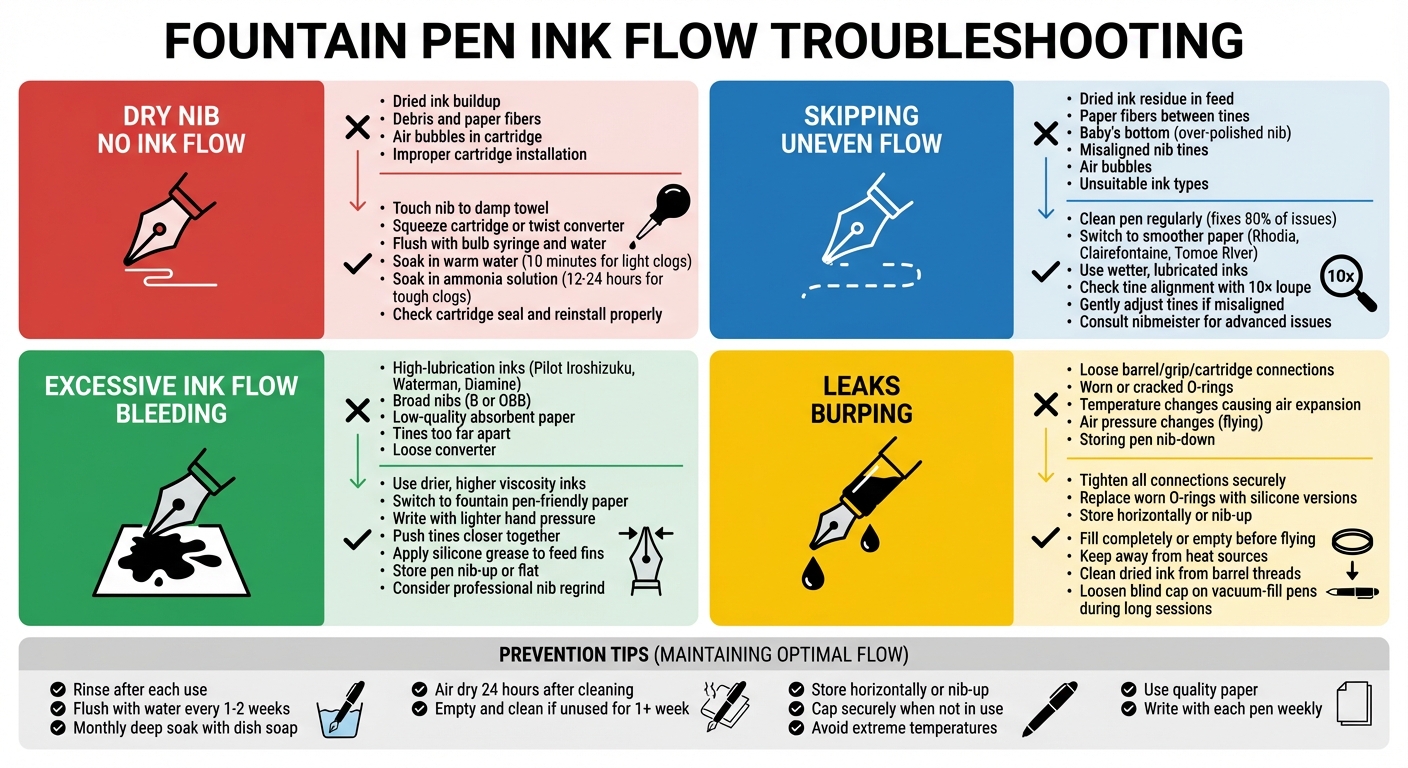
Common Fountain Pen Ink Flow Problems and Solutions Guide
Dry Nib with No Ink Flow
Why Ink Stops Flowing
A dry nib can happen for a few reasons: dried ink buildup, debris, or even air bubbles in the ink system. If you leave your pen uncapped or unused for too long, ink residue can harden and block the capillary action needed for smooth ink flow. Dust, paper fibers, and dried ink particles can also clog the feed, making it harder for ink to reach the nib. Air bubbles in the cartridge or converter can act like a cork, stopping the ink from flowing altogether. Another common issue is improper cartridge installation - if the feed nipple doesn’t fully puncture the cartridge seal, the ink won’t flow as it should.
How to Fix a Dry Nib
Start simple: touch the nib to a damp towel. This can help draw ink through the feed and get things moving again. If that doesn’t work, gently squeeze the cartridge or twist the converter until you see a drop of ink appear on the nib.
For more stubborn clogs, you’ll need to flush the pen. Use a bulb syringe filled with room-temperature water to clean the pen section. If the pen has been sitting unused for months, soak the nib and feed in warm water for about 10 minutes to loosen any light clogs. For tougher dried ink, try soaking the nib and feed in a cleaning solution made of equal parts clear ammonia and water, with a few drops of dish soap added. Let it soak for 12 to 24 hours for the best results.
Don’t forget to check your cartridge installation. Remove the cartridge and make sure the feed nipple has fully punctured the seal. If the puncture looks too small or blocked by debris, carefully use the end of a large paperclip to clear it. When reinstalling the cartridge, listen for a firm click to confirm it’s securely in place. A loose cartridge can break the vacuum seal and stop the ink flow.
Once you’ve addressed the dry nib, you’ll be ready to tackle other issues like skipping, which is covered in the next section.
sbb-itb-1dd4fe9
Skipping and Uneven Ink Flow
What Causes Skipping
Ink skipping occurs when ink doesn't flow evenly, leaving behind gaps or faint lines. One common cause is dried ink residue. Over time, this residue hardens in the feed or nib slit, obstructing fresh ink from flowing smoothly. Another culprit is paper fibers, which can get trapped between the nib tines, particularly when using rough or low-quality paper.
Nib design can also play a role. Over-polishing can lead to a condition called "baby's bottom", where the nib tip becomes too rounded. This creates a small gap that prevents consistent contact between the nib slit and the paper. Brian K. from The Goulet Pen Company explains:
Baby's bottom... is when your nib's been over-polished, leaving a gap between the nib slit and the paper. The little valley in the center is supposed to touch the page but the shape created by over-polishing means it can't hit the page.
Misaligned nib tines, where one tine is higher than the other, can also result in scratchy writing and uneven ink flow.
Other factors include air bubbles in the cartridge or converter, which can interrupt the ink supply mid-sentence. Additionally, using thick inks or formulas not suited for fountain pens, like India ink or calligraphy ink, can clog the feed and cause skipping issues.
How to Stop Skipping
To tackle skipping, start with regular cleaning and proper storage. Keeping ink levels full and storing the pen horizontally or nib-up can help reduce air bubbles. As Brian K. from The Goulet Pen Company advises:
Clean your pen! Seriously, it's the magical cure for about 80% of pen issues.
If rough paper is causing fibers to snag, switch to smoother, fountain pen–friendly brands like Rhodia, Clairefontaine, or Tomoe River. For pens that write on the dry side, try wetter, more lubricated inks to enhance flow. Fountain Pen Revolution offers a variety of inks designed to work seamlessly with different pen types, which can help address skipping problems.
To check for misaligned tines, use a 10× loupe or magnifying glass. If one tine is higher, gently press it down with your fingernail. For tines that are too tight, carefully nudge them apart to allow ink to flow more freely. If you suspect "baby's bottom" or need more advanced adjustments, it's best to consult a professional nibmeister to avoid causing damage.
With proper care and occasional nib tweaks, you can resolve most ink flow issues. Up next, we’ll look at how to manage problems with oversaturated ink.
Too Much Ink Flow and Bleeding
Why Ink Flows Too Heavily
Excessive ink flow can lead to thick, uneven lines, soggy paper, and even ink bleeding through to the other side. This happens when ink properties, nib design, and paper quality interact in specific ways.
Some inks, like those from Pilot Iroshizuku, Waterman, and Diamine, are designed with high lubrication or low viscosity, which makes them flow more freely. While this enhances color saturation and shading, it can overwhelm absorbent paper. Broad nibs, such as B or OBB, also release more ink due to their larger surface area. Pens with broad nibs - often found in piston-fillers and premium models - naturally deliver a heavier ink flow.
Paper quality is another key factor. Low-quality or highly absorbent paper pulls more ink from the nib, causing feathering (where ink spreads into the fibers) and bleed-through (where ink soaks through to the back). Mechanical issues, like nib tines being too far apart or a poorly seated converter, can also cause flooding.
Understanding these factors is the first step toward finding effective solutions.
How to Reduce Ink Flow
To manage heavy ink flow, start by choosing drier inks with higher viscosity. These inks naturally restrict flow and work well with fountain pen-friendly paper brands like Rhodia, Midori, Tomoe River, or Clairefontaine. These papers help keep ink on the surface, reducing feathering and bleed-through.
You can also adjust your writing technique. Writing with a lighter hand minimizes the amount of ink drawn onto the page. For mechanical fixes, try gently narrowing the gap between the nib tines. As EndlessPens explains:
"To decrease the flow, you would have to push the tines closer together. You can do this by pushing the back of the point against a firm surface. Doing so will make the nib bend over slightly and the flow of the ink to the tip slower."
For more advanced adjustments, apply a small amount of silicone grease to the bottom fins of the feed. This reduces airflow and slows ink delivery without contaminating the main ink channels. If these steps don’t solve the problem, a professional nibmeister can regrind the nib to a finer point, which reduces ink output.
Proper storage also helps. Store your pen nib-up or flat to prevent ink from pooling in the feed. When flying, either fill the pen completely to eliminate air bubbles or empty it entirely to avoid pressure-related leaks.
For additional tools and accessories, Fountain Pen Revolution offers a variety of nib options to help you fine-tune your pen's performance.
Leaking and Burping Problems
What Causes Leaks and Burping
Leaks and burping happen when air disrupts the vacuum seal inside a pen. Loose connections between the barrel, grip section, and cartridge are often to blame, as they break this seal. Another culprit? Worn or cracked O-rings and gaskets - those small rubber seals at connection points. When these wear out, air sneaks into the reservoir, pushing ink out through the nib. Essentially, a broken vacuum seal is at the heart of this issue.
Temperature changes can also stir up trouble. As air inside the pen heats up, it expands, forcing ink out suddenly in messy blobs - a phenomenon known as "burping." You might notice ink splattering on your paper or fingers. Air travel can trigger similar problems due to pressure shifts, especially if the pen isn’t filled to capacity. This often results in a flooded nib that leaves behind thick, inky stains.
Even how you store your pen matters. Storing it nib-down allows gravity to pull ink into the feed and cap, causing pooling. This pooling can lead to leaks, hard starts, or inconsistent ink flow. All of these factors disrupt the delicate balance of ink movement and contribute to leaks and burping, making it essential to clean and maintain your fountain pen regularly.
How to Stop Leaks and Burping
First, check all the connections. Make sure the barrel screws tightly into the section and that cartridges snap securely into place. If you’re using a converter, twist it fully to ensure an airtight seal. Take a close look at the O-rings - if they’re cracked, flattened, or dried out, replace them. Silicone O-rings are a better option than standard rubber ones because they seal more effectively and last longer.
Store your pens horizontally or nib-up to stop gravity from pulling ink into the feed. If you’re flying, either fill the pen completely or empty it to avoid pressure issues. Also, keep your pens away from heat sources like windowsills or car dashboards, as heat causes air to expand and disrupt the ink flow.
For vacuum-fill pens, you can loosen the rear blind cap slightly during long writing sessions. This helps regulate internal pressure and prevents burping. If you notice dried ink on the barrel threads, clean it off with a damp cloth - ink buildup here can prevent a proper seal, leading to small, persistent leaks. And if environmental factors cause a leak, try squeezing the cartridge or twisting the converter to get the ink flowing smoothly again.
How to Prevent Ink Flow Problems
Cleaning and Maintenance Schedule
Keeping your fountain pen clean is key to avoiding ink flow issues. A quick rinse after each use can prevent residue buildup. For frequent users, flushing the nib with lukewarm water every 1–2 weeks is a great habit. Rinse until the water runs clear - this helps maintain a steady ink flow and keeps clogs at bay.
For deeper cleaning, a monthly soak works wonders. Submerge the nib and feed in lukewarm water with a single drop of dish soap for several hours or even overnight. This method tackles stubborn ink deposits that regular rinsing might miss. If you’re dealing with particularly tough buildup, try a specialized pen flush or a diluted ammonia solution. After cleaning, allow all parts to air dry completely - 24 hours is ideal. Any leftover moisture can dilute fresh ink and create new flow problems.
If you’re not planning to use your pen for over a week, it’s best to empty the ink, flush the pen, and store it dry without the converter. Ink left in the feed can dry out and harden, leading to clogs that are tough to clean. By sticking to these maintenance routines, you can unclog a fountain pen and resolve most ink flow issues and keep your pen performing smoothly.
Storage and Handling Tips
Proper storage is just as important as cleaning. Always store your pens horizontally or with the nib pointing up - never nib-down. Storing a pen nib-down can cause ink to pool in the feed or cap, leading to leaks and hard starts. Make sure the cap is securely in place when the pen isn’t in use to prevent the ink from drying out.
Extreme temperatures are another thing to watch out for. Heat can thin the ink, while cold can thicken it, both of which can disrupt flow. In very dry climates, storing pens in a sealed plastic container can help reduce evaporation. Also, using smooth, fountain pen–friendly paper minimizes the risk of nib clogs. If you own several pens, try to write with each one at least once a week to keep the ink flowing properly. These small steps can make a big difference in maintaining your pen’s performance.
What to do when your fountain pen won't write.
Conclusion
From clogged feeds to unexpected leaks, most fountain pen issues have straightforward solutions. The majority of ink flow problems arise from clogged feeds, improper storage, or skipping regular cleaning routines. Often, a quick rinse with room-temperature water can resolve blockages, while stubborn residue may require a touch of dish soap for a deeper clean. Addressing these problems early ensures your pen continues to glide effortlessly across the page. Proper technique and maintenance to improve handwriting can further enhance your experience.
"A regular, simple cleaning routine keeps most fountain pen issues away." - Admin, The Composed Man
Having the right tools also plays a big role. Starting with dependable products from Fountain Pen Revolution sets you up with affordable, high-quality pens and inks designed for smooth, consistent performance.
"Ink flow is everything in a fountain pen. It is essential for writing to happen smoothly and without any issues like hard starts or skipping." - EndlessPens
FAQs
How can I tell if my pen’s feed is clogged?
A clogged feed can lead to issues like uneven ink flow, skipping, or trouble getting the pen to start writing. This often happens when dried ink, debris, or tiny paper fibers block the ink channel. Giving the feed a thorough cleaning can usually bring back smooth and consistent ink flow.
What inks should I avoid in a fountain pen?
Avoid using calligraphy or artist inks that contain solid pigments or particles. These can clog the delicate mechanisms of your fountain pen or even cause damage over time. Instead, opt for water-based, dye-based inks that are specifically formulated for fountain pens. These inks ensure smooth flow and help keep your pen in good working condition.
Why does my pen leak more when traveling?
When you're traveling, especially by plane, your pen might be more prone to leaking. This happens because altitude and air pressure changes can make the ink expand and push its way out. The risk is higher during takeoff and landing when pressure shifts are most pronounced.
To avoid messy leaks, try keeping your pen upright and resist the urge to overfill it before your trip. These small precautions can make a big difference.