

To keep your fountain pen ink in good condition, focus on three main points: store bottles upright with tightly sealed caps, keep them in a cool, dark place, and avoid contamination by using clean tools. Using an inkwell can help prevent cross-contamination of your main bottles. Proper storage can extend the life of most inks to 3–5 years. Here's a quick summary of what to do and what to avoid:
Key Tips:
- Do: Seal caps tightly, store upright, and use airtight containers for long-term storage.
- Do: Maintain a stable temperature between 60–70°F and humidity levels of 40%–60%.
- Do: Check periodically for spoilage signs like bad smells, slime, or color changes.
- Avoid: Sunlight, heat, and leaving bottles open.
- Avoid: Refrigerating ink or using dirty tools that could contaminate it.
By following these simple steps, you can preserve your ink's quality and keep your pens flowing smoothly.
What You Should Do When Storing Ink Bottles
Close Caps Tightly and Store Bottles Upright
After using your ink, wipe the bottle rim with a lint-free cloth to keep it clean and prevent residue buildup. Then, seal the cap securely to avoid evaporation or contamination. Be careful not to overtighten, as this can damage the glass threads or distort plastic seals, especially over time.
Always store your ink bottles upright. This keeps the ink away from the cap threads, helping maintain a proper seal. For long-term storage, consider placing the sealed bottles in an airtight container or a ziplock bag to provide extra protection against evaporation. When stored correctly, high-quality glass bottles can preserve ink for up to 3–5 years.
Next, make sure your storage environment supports these efforts by maintaining the right conditions.
Store in a Cool, Dark Location
For ink stability, it’s best to store bottles in a cool, dark, and dry place. The ideal temperature range is between 64°F and 72°F (18°C to 22°C). A drawer or cupboard works well, as it shields your ink from UV exposure and reduces the risk of accidental breakage.
Heat can cause air inside the bottle to expand, potentially leading to leaks. To avoid this, keep your ink away from heat sources like heating vents, gaming PCs, or even cars, where temperatures can fluctuate dramatically.
These precautions ensure your ink remains in great condition for longer periods.
Use Stable Shelves for Organization
Once your bottles are sealed and stored, proper organization can help prevent spills and contamination. Arrange your shelves to make access easy and reduce the risk of accidents. Place heavier, larger bottles on the lower shelves and smaller ones on top - this keeps the center of gravity low and minimizes the chance of anything being knocked over.
When choosing bottles, stability matters. Here’s a quick guide:
| Bottle Shape | Stability Rating | Best Use |
|---|---|---|
| Wide rectangular base | Excellent | Great for desk displays and extra stability |
| Triangular base | Very good | Ideal for preventing spills in tight spaces |
| Round traditional | Good | Perfect for collections and easy cleaning |
Avoid overcrowding your shelves. Leaving some space between bottles makes them easier to grab without risking spills. If your collection is large, consider using desk organizers or compartments to keep everything secure and neatly arranged.
With these steps, you can protect your ink and enjoy a well-organized collection for years to come.
sbb-itb-1dd4fe9
What You Should Avoid When Storing Ink Bottles
Keep Away from Sunlight and Heat Sources
Sunlight and heat can wreak havoc on your ink by breaking down pigments and causing trapped air to expand. As EndlessPens explains:
"Exposures to sunlight or UV light may desaturate or change the color of your ink, resulting in faded or less vibrant colors".
This is particularly true for inks with high pigment concentrations, which are more prone to fading and degradation.
Heat also alters the physical properties of ink. EndlessPens further notes:
"High temperatures result in air bubbles making the ink expand and leak out from the ink bottle".
Additionally, heat speeds up water evaporation, leaving behind thickened ink that can clog your pen's feed and nib. Even artificial lighting can emit UV rays, which may fade your ink over time. To prevent this, store your ink bottles in their original cardboard boxes to block UV light. If your ink has been stored in a cold area, let it warm to room temperature for about three hours before use to ensure smooth flow.
Never Leave Bottles Open
Leaving ink bottles open is a big no-no. Air exposure accelerates evaporation and invites dust, bacteria, and mold, all of which can thicken the ink and clog your pen.
Be on the lookout for warning signs of spoiled ink, like a musty, rotten-egg smell, visible slime, cloudiness, or changes in color. EndlessPens cautions:
"If the ink inside the bottle is already smelling musty or foul like rotten eggs, this is a significant sign that it is already spoiled".
Shawn Buckles, owner of One Pen Show, adds:
"The easiest way to contaminate your ink is by putting in your contaminated pen when filling straight from the bottle".
To avoid contamination, use a clean syringe to transfer ink instead of dipping your pen directly into the bottle. Also, wipe the bottle's neck and cap threads before sealing it tightly. Modern inks, especially those from the EU with milder biocides, are more prone to spoilage, so proper sealing is critical.
Don't Refrigerate Ink
While refrigeration might seem like a logical way to preserve ink, it can actually do more harm than good. Cold temperatures increase ink viscosity and can lead to separation, causing clogs in your pen and potential damage to the bottle. Always store your ink at a consistent room temperature, ideally between 60°F and 70°F (16°C to 21°C).
Unless explicitly recommended by the manufacturer - which is rare - avoid refrigerating your ink. If your ink has been exposed to extreme cold, check for separation or sediment before using it. Degraded ink can damage your fountain pen's delicate parts, leading to writing issues.
Do's and Don'ts of Storing Fountain Pen Ink - The Write Stuff ep. 33
Environmental Conditions to Monitor
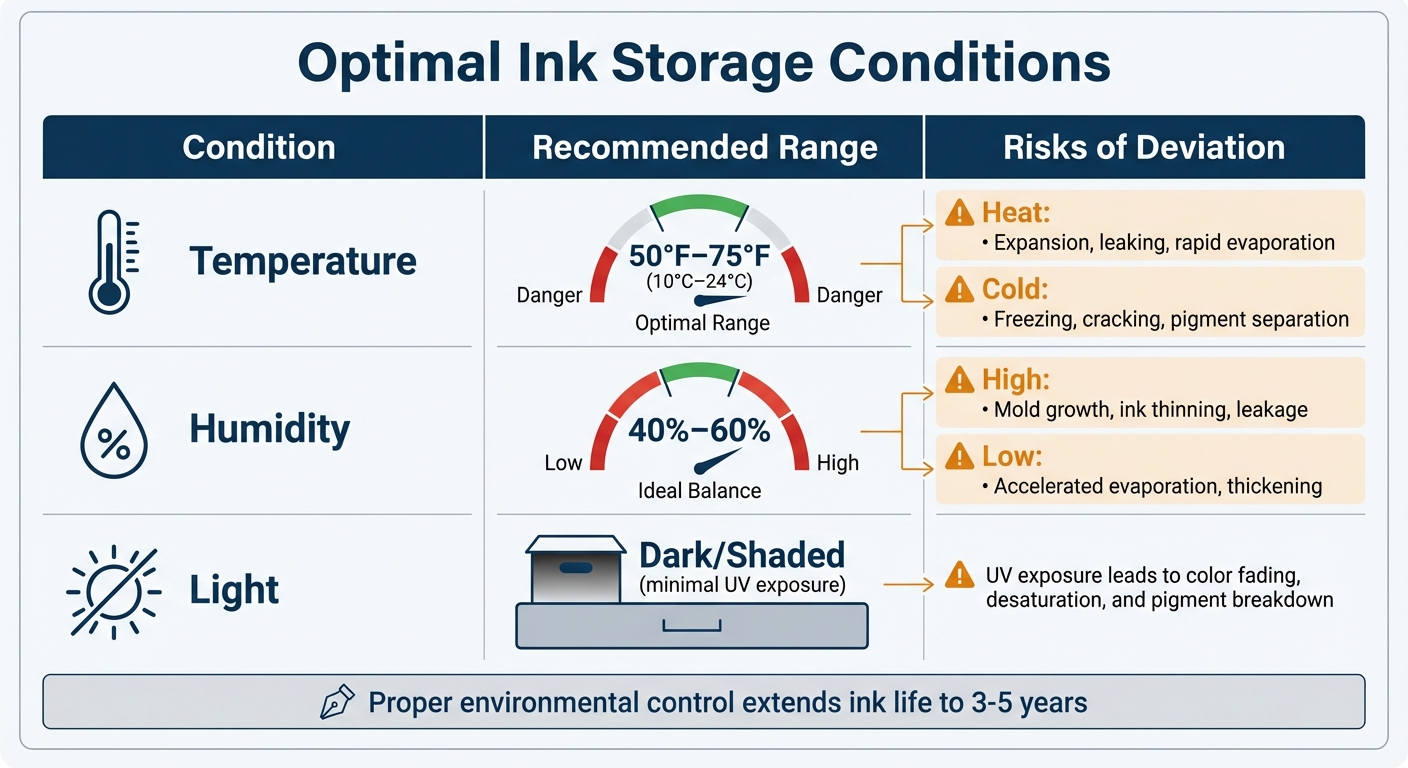
Optimal Ink Storage Conditions: Temperature, Humidity, and Light Requirements
Control Temperature and Humidity
Keeping a stable temperature and humidity is crucial to maintaining the quality of fountain pen ink. The ideal range for storage is between 50°F and 75°F, with humidity levels maintained at 40% to 60%. Liz, Founder of Longhand Collective, emphasizes this point:
"Fountain pens perform best when stored in moderate temperatures between 50°F and 75°F and 40%-60% humidity".
Avoid placing ink near heat sources or areas prone to temperature swings, such as vents, radiators, or electronics, as these conditions can destabilize the ink. Excessive humidity can thin the ink, leading to smudging, bleeding, or even mold growth. On the flip side, low humidity accelerates evaporation, causing the ink to thicken, which may lead to flow issues.
For long-term storage, consider using airtight containers or ziplock bags to shield the ink from humidity fluctuations. Opt for glass bottles over plastic ones since plastic is more porous, allowing water content to escape more easily.
Once temperature and humidity are under control, it’s time to think about light exposure.
Limit Light Exposure
Light, particularly UV rays from sunlight, can degrade ink pigments, causing colors to fade or shift. Even artificial light can contribute to pigment breakdown over time. This issue is especially pronounced with high-pigment inks, where UV exposure triggers chemical reactions that compromise the ink’s integrity.
To protect your ink, store bottles in opaque containers or their original boxes to block UV rays. Keep your collection in closed cabinets, drawers, or other shaded areas, away from windows and bright lights. If you enjoy showcasing your inks, limit displays to the bottles you use most frequently, keeping the rest stored in darkness to extend their shelf life.
Lastly, don’t overlook the importance of clean air in your storage environment.
Maintain Clean Air
While secure caps and proper storage positioning help prevent contamination, clean air in the storage area adds another layer of protection. Dust, smoke, and moisture can all compromise ink quality, so it’s best to store your ink in clean, dry spaces. Avoid areas like garages, damp basements, or spaces near smoking. Instead, choose a stable, interior location - such as a drawer or closet - that stays free from contaminants. This reduces the risk of bacterial growth or other alterations to the ink’s properties.
| Condition | Recommended Range | Risks of Deviation |
|---|---|---|
| Temperature | 50°F–75°F | Heat: Expansion, leaking, rapid evaporation. Cold: Freezing, cracking, pigment separation. |
| Humidity | 40%–60% | High: Mold growth, ink thinning, leakage. Low: Accelerated evaporation, thickening. |
| Light | Dark/Shaded | UV exposure leads to color fading, desaturation, and pigment breakdown. |
Handling and Maintenance Steps
Once you've set up the right storage conditions, regular care and proper handling can go a long way in maintaining your ink's quality.
Clean Bottle Necks and Caps After Use
After using your ink, take a moment to clean the bottle neck and the inside of the cap with a lint-free cloth. This simple step helps reduce the risk of bacterial contamination. Avoid touching the bottle's mouth with your fingers, as oils and bacteria from your skin can transfer easily. Regular fabrics might leave fibers behind, which could clog your pen's feed.
If you're filling a pen directly from the bottle, learn how to flush the pen's feed with clean water before refilling. Also, wipe the pen's section to remove any residue. Always close the bottle tightly after use to limit exposure to airborne contaminants. This practice complements the airtight seals that are critical for proper storage.
Decant Ink for Daily Use
To keep your main ink supply fresh, transfer a small amount - about 1 ml - into a clean container for daily use. This reduces the chances of contaminating the original bottle. Dipping a pen directly into the main bottle can introduce bacteria or leftover ink from the pen's section, which over time may lead to contamination, sometimes called "STIB" (slime or mold).
For safe ink transfer, use a sterilized syringe with a blunt needle. As EndlessPens advises:
"Contaminated inks can be easily avoided by keeping your ink bottles sealed and stored away from light and extreme temperatures. Using a clean syringe and disinfecting your needles will also help avoid contamination."
Whenever possible, opt for glass containers instead of plastic. Glass is less permeable, meaning it slows down water evaporation better than plastic.
After decanting, make it a habit to inspect your ink periodically to catch any early signs of spoilage.
Check Bottles Periodically
Give your ink bottles a quick check every now and then for evaporation, leaks, or changes in color. With proper storage, high-quality inks generally retain their chemical stability for 3–5 years. Regular inspections help ensure your ink stays in good condition. Watch for spoilage signs like unpleasant odors, sliminess, cloudiness, or noticeable color changes.
| Sign of Spoilage | Description | Likely Cause |
|---|---|---|
| Foul Odor | Musty or sulfur-like smell | Bacterial or fungal growth |
| Slime/Mold | Stringy or fuzzy buildup | Contamination from dirty pens or fingers |
| Color Change | Darkening, fading, or cloudiness | UV exposure or chemical breakdown |
| Gelling | Thick or jelly-like texture | Severe degradation or evaporation |
Also, check for dry pigment around the bottle neck or a noticeable drop in liquid level. These could signal water evaporation, which can make the ink overly concentrated. Ensure caps are tightly secured and seals remain intact to keep air out and preserve the ink's quality.
Storage Duration Guidelines
How long you plan to store ink determines the level of care it needs. Short-term storage is relatively simple, but longer periods require closer attention to factors like temperature, humidity, and container quality. Below are specific tips for storing ink safely, whether for a few months or several years.
Short-Term Storage (Under 6 Months)
If you're using ink within six months, basic precautions are usually enough. Store bottles at room temperature, ideally between 60–70°F (16–21°C), and keep them upright with the caps tightly sealed. A desk drawer or shelf works fine as long as the bottles are away from direct sunlight and heat sources, like computer fans, which could accelerate evaporation.
As Shawn Buckles, Owner of One Pen Show, explains:
"Most ink can be stored on top of your desk and stay good for 2-3 years without problems".
For added protection, keep the bottles in their original boxes to shield them from UV light and make stacking easier. If you plan to store ink beyond six months, you'll need to take extra steps.
Medium-Term Storage (6-12 Months)
When storing ink for six months to a year, you'll need to be more cautious. Temperature control becomes crucial, and glass bottles are preferred over plastic, as plastic containers can allow slow evaporation, which might thicken the ink or leave dried residue. Store bottles in a cool, dark place like a drawer or cabinet, away from windows and air vents.
To avoid contamination, use a sterilized syringe when transferring ink. Before using ink that's been stored for several months, check for any unusual smells, like a musty or sulfur-like odor. Some shimmering and sheening inks may develop sediment over time, but this can usually be resolved with a gentle shake.
Long-Term Storage (Over 1 Year)
Storing ink for more than a year requires careful planning to prevent evaporation and chemical degradation. Proper storage can extend the life of most inks to 3–5 years, although iron gall inks may need more frequent replacement, according to Scriveiner London:
"Most ink bottles maintain optimal chemistry for 3–5 years when stored properly, though iron gall formulations may require more frequent replacement".
To ensure longevity, keep bottles upright in their original boxes, maintaining a temperature range of 60–70°F and a humidity level of 45–55%. For added security, place the bottles in an airtight container. Avoid opening bottles stored long-term, as breaking the factory seal can accelerate deterioration.
Label each bottle with the purchase or opening date to track its age, and rotate your collection to use older inks first. Periodically inspect the bottles for signs of spoilage, such as cloudiness, color changes, or a slimy texture. If you notice any of these, it's best to discard the ink.
Conclusion
Keeping your ink in good condition comes down to three simple steps: tightly sealing bottles, storing them upright in a cool, dark spot, and maintaining a stable environment of 60–70°F with 45–55% humidity. These habits help prevent common issues like evaporation (which thickens ink), fading from UV light, and contamination from bacteria or mold.
Whenever possible, opt for glass bottles - they’re less prone to water loss compared to plastic. For pricier inks, consider pouring a small amount into a separate container to avoid contaminating the main bottle.
It’s also a good idea to check your bottles regularly for spoilage. Look out for bad smells, cloudiness, or a slimy texture. Wiping the bottle neck after each use can help maintain a tight seal. Storing bottles in their original boxes adds extra protection from UV exposure.
With proper care, most inks will stay in great shape for 3–5 years, though iron gall inks might need replacing more often. A little effort in storage goes a long way in preserving your ink collection and keeping your fountain pens safe from damage caused by degraded or contaminated ink. If you're just starting out, choosing one of the best fountain pens for beginners can help ensure a smooth experience while you learn these maintenance habits.
FAQs
How can I tell if my fountain pen ink has expired or gone bad?
You can spot spoiled fountain pen ink by watching for a few telltale signs. If the ink has a strange or unpleasant odor, stringy blobs, or sediment collecting at the bottom of the bottle, it’s likely gone bad. Another clue is if you’re having trouble filling a syringe or converter smoothly - this can point to contamination or spoilage.
To prevent these issues, store your ink in a cool, dry spot and make sure the bottle is sealed tightly after every use.
Why should fountain pen ink bottles be stored upright?
Keeping fountain pen ink bottles upright is crucial for a few reasons. First, it prevents leaks that could ruin surfaces and waste your precious ink. It also keeps the ink away from the cap and seal, reducing the chance of dust or debris contaminating it. Plus, upright storage helps minimize evaporation, so your ink stays fresh and performs as it should for longer. By storing your ink properly, you're not just protecting it - you’re ensuring a smoother, more enjoyable writing experience.
Is it okay to store fountain pen ink in plastic bottles instead of glass?
While it's possible to store ink in plastic bottles, glass bottles are a better choice for long-term storage. Glass offers greater durability, is less likely to react chemically with the ink, and provides better protection against contamination or spoilage. On the other hand, plastic containers can degrade over time or allow air to seep in, which can compromise the ink's quality and shelf life.
For optimal preservation, always store your ink in an airtight container, keeping it away from direct sunlight and extreme temperatures. This helps maintain its freshness and ensures it's ready whenever you need it.