

Looking for the perfect metal pen? Here's what you need to know:
- Aluminum pens are lightweight, affordable ($20–$50), and great for long writing sessions. They often feature colorful, anodized finishes but are more prone to scratches and acidic ink corrosion.
- Stainless steel pens are heavier, more durable, and resistant to scratches and corrosion. They cost more ($44–$170) but offer a premium, long-lasting feel.
Quick Takeaway: Choose aluminum if you want a light, budget-friendly pen for daily use. Go for stainless steel if you value durability and a solid, professional feel.
Quick Comparison
| Feature | Aluminum Pens | Stainless Steel Pens |
|---|---|---|
| Weight | Lightweight (1/3 of steel) | Heavier, solid feel |
| Durability | Softer, prone to scratches | Scratch-resistant, long-lasting |
| Corrosion | May react with acidic inks | Highly resistant |
| Price Range | $20–$50 | $44–$170 |
| Style Options | Colorful anodized finishes | Sleek, industrial designs |
Tip: For beginners, aluminum pens like the Lamy AL-Star are ideal. Collectors or EDC enthusiasts might prefer stainless steel options like the Kaweco Liliput.
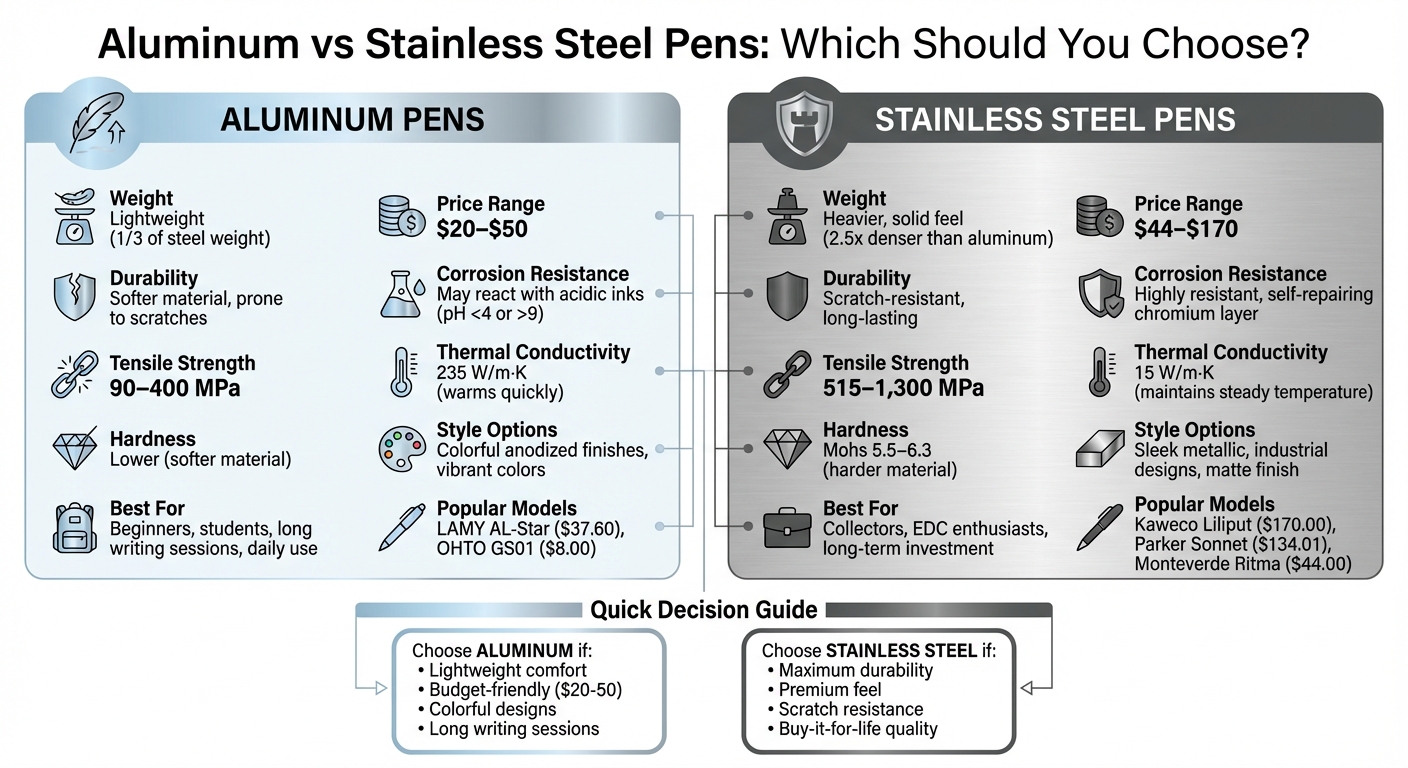
Aluminum vs Stainless Steel Pens: Complete Comparison Guide
Material Properties and Construction
Aluminum: Light Weight and Flexibility
Aluminum stands out for its ease of workability. Its softness allows manufacturers to cut, shape, and machine it into intricate designs with relative ease. As Metal Supermarkets explains:
Aluminum is fairly soft and easier to cut and form. This workability [enables] diverse designs.
However, this softness comes with a downside - raw aluminum is prone to scratching. To combat this, manufacturers often use anodizing, an electrochemical process that thickens the natural oxide layer. This not only improves scratch resistance but also creates vibrant, chip-resistant finishes, unlike traditional paint. While aluminum naturally forms a passivation layer for protection, it reacts more readily with acidic inks, so extra care is recommended for eyedropper-filled reservoirs.
On the other hand, stainless steel offers a completely different set of advantages.
Stainless Steel: Strength and Longevity
Stainless steel is known for its durability and resistance to scratches, with a Mohs hardness ranging from 5.5 to 6.3. It’s a material built to last.
JetPens guide author Connie highlights this durability:
Steel pens offer exceptional durability with a firm, lasting feel. With a steel pen in your hand, you can tell that it'll outlast anything you could possibly throw at it.
When it comes to nib construction, manufacturers often choose austenitic grades like 316L. These grades are strengthened through cold-rolling, which increases their yield strength dramatically - from about 240 MPa to 760 MPa. Additionally, the presence of chromium ensures excellent corrosion resistance, making stainless steel an ideal choice for components that come into direct contact with fountain pen inks.
Weight and Portability
How Weight Affects Writing Comfort
Stainless steel is about 2.5 times denser than aluminum, which means aluminum pens weigh roughly one-third as much. This lighter weight can help reduce hand fatigue during long writing sessions. While aluminum pens are known for their lightweight feel, stainless steel pens bring a heft that many users appreciate. However, larger stainless steel models might lead to discomfort during extended use.
For those transitioning from plastic to metal pens, aluminum strikes a balance between added durability and manageable weight. On the other hand, if you associate weight with a sense of quality, a stainless steel pen might be more appealing. These weight differences not only impact writing comfort but also affect how well the pen fits into your daily habits.
Daily Carry and Transportation
Weight is equally important when it comes to portability. Aluminum pens, being lightweight, are easy to carry in pockets or bags, making them a great choice for students, professionals, or anyone frequently on the move.
Stainless steel pens, known for their resistance to bending and crushing, are ideal for those who prioritize durability over lightness. That said, their added weight might become a drawback for extended pocket carry. Whether you lean toward the convenience of aluminum or the sturdiness of stainless steel depends on your daily needs and preferences.
Durability and Maintenance
Resistance to Scratches and Corrosion
When it comes to durability, stainless steel takes the lead. Its tensile strength ranges from 515 MPa to 1,300 MPa, compared to aluminum's 90 MPa to 400 MPa. This strength makes stainless steel much better at resisting dents, scratches, and structural damage during regular use. On the other hand, raw aluminum, being softer, tends to scratch more easily. To counter this, aluminum pens are often anodized, which enhances their natural oxide layer and helps prevent chipping.
Both materials offer protection against corrosion through their natural coatings. Aluminum forms a thin oxide layer, about 5 nanometers thick, while stainless steel benefits from a chromium-based layer that can self-repair if damaged. However, aluminum has a notable weakness: it corrodes quickly in environments with a pH below 4 or above 9. This is especially relevant for fountain pen users, as many inks are acidic. For example, Pelikan 4001 Black Blue has a pH of 2.1, and Diamine Oxblood sits at 2.6. Because of this, stainless steel is far less likely to corrode when exposed to ink, making it a more reliable choice for fountain pens.
"Stainless steel will be the least prone to corrosion." - Shawn Buckles, Owner, One Pen Show
If you prefer aluminum, opt for pens with anodized finishes and stick to pH-neutral inks (around pH 7), like Herbin Blue Pervenche, to reduce the risk of internal corrosion. Also, avoid filling the pen body directly with ink (a practice known as "eyedropping"), as prolonged ink contact can degrade the aluminum over time. While material resilience is important, regular care can significantly extend the life of your pen.
Cleaning and Upkeep
Even the most durable materials benefit from proper care. Stainless steel maintains a polished, tarnish-free appearance for years with minimal effort, while anodized aluminum remains sturdy with basic maintenance.
For internal cleaning, both materials follow similar routines. Flush the nib and feed with clean water at least once a month or when changing inks to prevent clogging. For stubborn blockages, use a bulb syringe or a pen flush solution every three to six months. To avoid ink pooling, store your pen capped and upright. Since aluminum is more vulnerable to surface wear, consider using a leather pen case for daily protection.
Cost and Value
Budget-Friendly Options for Beginners
Aluminum fountain pens are a fantastic starting point for anyone venturing into metal writing instruments without breaking the bank. The raw material cost of aluminum ranges from $30–$120 per kilogram, which is higher than stainless steel's $20–$45 per kilogram. However, aluminum's softer composition makes it easier and less expensive to machine, which helps keep production costs - and, by extension, retail prices - lower.
For beginners, entry-level aluminum pens like the LAMY AL-star (around $37.60) and Monteverde Ritma are typically priced between $20 and $50. If you're looking for an even more budget-conscious option, the OHTO GS01 is available for as little as $8.00.
"For a beginner-friendly metal pen that isn't too heavy, expensive, or high maintenance, aluminum is a perfect choice." – JetPens
A study of 443 aluminum writing instruments showed that 120 models were priced between $20 and $50, while 162 fell in the $50 to $100 range. While aluminum pens are affordable and accessible, stainless steel pens, though pricier, offer a different kind of value for those willing to invest.
Long-Term Investment
If durability and longevity are top priorities, stainless steel pens are worth the higher upfront cost. Known for their strength and scratch resistance, these pens are often seen as "buy it for life" tools. Entry-level stainless steel options like the Monteverde Ritma start at approximately $44.00, while premium models such as the Parker Sonnet and Kaweco Liliput are priced around $134.01 and $170.00, respectively.
Stainless steel naturally resists wear and corrosion, unlike aluminum, which often requires anodizing to improve its scratch resistance. For seasoned users or collectors who value durability and minimal upkeep, the higher price tag of stainless steel pens is offset by their long-lasting performance and premium feel. Over time, this investment proves its worth in reliability and craftsmanship.
sbb-itb-1dd4fe9
Performance and Appearance
Heat Transfer and Grip Comfort
Aluminum and stainless steel pens offer distinct experiences when it comes to thermal properties and comfort. Aluminum, with its high thermal conductivity (235 W/m·K), adjusts quickly to your hand's temperature. This means an aluminum pen might feel cold initially but warms up almost instantly as you hold it. On the other hand, stainless steel, with a much lower thermal conductivity (15 W/m·K), maintains a steady temperature, offering a consistent feel without the initial chill.
"The pen is solid aluminum. It is sleek, cold, and features a guilloche grip... despite being made of aircraft-grade metal, it is shockingly light. I wrote for a couple of pages and experienced zero fatigue." – Ben Ng, Reviewer
The weight of the material also plays a role in comfort. Stainless steel pens have a heft that many writers find satisfying, though larger models can become unwieldy during extended use. Aluminum, being lighter, is often favored for long writing sessions or note-taking marathons, as it reduces hand fatigue. These physical and performance differences set the stage for the unique aesthetic characteristics of each material.
Design and Finish Options
The visual appeal of aluminum and stainless steel pens is shaped by their material properties. Aluminum offers versatility in design, thanks to its ability to be anodized. This process creates vibrant, durable colors that resist chipping and flaking, and the material can also be polished to achieve a sleek, mirror-like shine. In contrast, stainless steel typically presents a darker, industrial gray tone with a matte finish. While its color options are more limited, some manufacturers apply special techniques like hand-torching to create unique effects. For instance, the Kaweco Liliput Fireblue showcases a striking multi-colored finish achieved through heat treatment.
| Feature | Aluminum Pens | Stainless Steel Pens |
|---|---|---|
| Aesthetic Style | Bright, colorful, modern | Industrial, professional, rugged |
| Color Range | Extensive via anodizing | Limited (metallic or torched) |
| Surface Luster | High (mirror shine available) | Typically matte or dull |
| Design Complexity | Intricate textures and shapes | Simpler, robust designs |
Aluminum's softness makes it easier to machine, allowing for intricate patterns and detailed textures, such as guilloche grips. Stainless steel, being about three times harder to cut, often results in cleaner, minimalist designs that highlight durability and simplicity over elaborate ornamentation. These design differences not only influence the pen's appearance but also reflect the practical and stylistic preferences of the user.
How to Choose Between Aluminum and Stainless Steel
Key Factors: Budget, Usage, and Style
Deciding between aluminum and stainless steel pens boils down to three main factors: budget, usage, and style.
If you're working with a tighter budget, aluminum pens are a great option, typically priced between $20–$50. Stainless steel pens, on the other hand, are more expensive due to the complexities of machining the harder material.
For long writing sessions, aluminum's lightweight nature makes it a comfortable choice - it’s about one-third the weight of stainless steel, reducing hand fatigue. However, if you’re someone who carries a pen in your bag or pocket daily, stainless steel might be the better pick. Its durability means it’s less prone to scratches and dents, making it a reliable companion for everyday use.
Style is another important consideration. Aluminum pens come in vibrant anodized finishes, offering a range of colorful options. Stainless steel pens, by contrast, exude a sleek, professional vibe with their natural metallic sheen. A standout example is the Kaweco Liliput Fireblue, which showcases a hand-torched finish that accentuates stainless steel's unique character.
These three factors - budget, usage, and style - serve as the foundation for selecting the right pen to match your needs and preferences.
Recommendations by User Type
Tailoring your choice to your specific needs can make the decision even clearer.
For beginners or those looking for an everyday pen, aluminum is an excellent choice. It’s affordable, lightweight, and easy to handle during extended writing sessions. As Connie from JetPens puts it:
For a beginner-friendly metal pen that isn't too heavy, expensive, or high maintenance, aluminum is a perfect choice.
If you’re a collector or an Everyday Carry (EDC) enthusiast, stainless steel is likely to appeal more. Its durability and heft make it a "buy it for life" option. Connie from JetPens explains:
With a steel pen in your hand, you can tell that it'll outlast anything you could possibly throw at it.
The added weight of stainless steel not only enhances its durability but also provides a solid, satisfying feel that many seasoned writers appreciate.
MUJI Aluminium VS Wingback Stainless Steel Fountain Pen Comparison
Conclusion
The material you choose for your pen can significantly influence your writing experience. Aluminum stands out for its lightweight nature, making it ideal for long writing sessions and those on a budget. With prices ranging from $8.00 to about $37.60 for popular models, aluminum pens often feature vibrant anodized finishes that let you express your personal style.
On the other hand, stainless steel offers exceptional durability and a satisfying heft that many seasoned writers enjoy. While it comes with a higher price tag due to the challenges of machining, stainless steel pens are built to last. They resist scratches, dents, and corrosion far better than aluminum, making them a reliable choice for long-term use.
Ultimately, the best material comes down to your specific needs. If you value comfort and affordability, aluminum might be your go-to. However, if you’re drawn to rugged durability and an industrial design, stainless steel could be the better fit. Students and beginners often lean toward aluminum, while collectors and everyday carry (EDC) enthusiasts appreciate the longevity and aesthetic of stainless steel.
Both materials are low-maintenance and designed to last for years. The key is aligning the pen’s features with your writing habits, budget, and style preferences. Whether you opt for the lightweight convenience of aluminum or the sturdy dependability of stainless steel, you're choosing a tool that enhances your writing experience.
FAQs
What are the advantages of choosing an aluminum fountain pen over stainless steel?
Aluminum fountain pens are an excellent option if you're looking for a lightweight writing tool. Weighing in at roughly 10 to 20 grams, they’re significantly lighter than their stainless steel counterparts. This lighter weight helps minimize hand fatigue, making them an ideal choice for long writing sessions or everyday use.
On top of that, aluminum pens often boast a sleek, contemporary design. They’re also generally more budget-friendly compared to stainless steel pens. With their mix of comfort, style, and affordability, it’s no wonder they’re a favorite among fountain pen enthusiasts.
How does the weight of a pen impact writing comfort and ease of use?
The weight of a pen is a crucial factor when it comes to writing comfort and ease of use. Lighter pens are often preferred for long writing sessions since they’re less likely to cause hand fatigue. Meanwhile, heavier pens can provide added stability and control, making them a better choice for tasks that require precision. Striking the right balance between weight and usability is key to preventing strain and ensuring a more comfortable writing experience.
How can I maintain my metal fountain pen to ensure it lasts longer?
Taking good care of your metal fountain pen ensures it lasts for years and performs beautifully. The key? Regular cleaning and mindful storage.
Start by cleaning your pen often to prevent ink buildup, which can cause clogs or even corrosion. Flush it with cool water, and if needed, use a mild cleaning solution or a specialized pen flush. Disassemble the pen carefully, clean each part, and make sure everything is completely dry before putting it back together or storing it.
When it comes to storage, keep your pen in a stable environment. Avoid exposing it to extreme temperatures, high humidity, or direct sunlight, as these can damage the metal and other components. Be cautious with the ink you use - steer clear of those with high acidity or reactive ingredients, as they can lead to corrosion, particularly in aluminum or stainless steel pens.
By cleaning your pen regularly, handling it gently, and storing it thoughtfully, you’ll keep your metal fountain pen in top shape for years to come.