

Cleaning fountain pens after using glitter inks is crucial to maintain their performance and avoid clogs caused by shimmering particles. Here's a quick guide:
- Disassemble the Pen: Take apart the nib, feed, and converter, as glitter tends to settle in these areas.
- Flush with Water: Use lukewarm distilled water and a bulb syringe to clear out ink and glitter particles.
- Use Cleaning Solutions: For stubborn residue, soak parts in a mild dish soap solution or a commercial pen flush. Avoid ammonia on metal components like aluminum or brass.
- Deep Cleaning Tools: Consider tools like ultrasonic cleaners or brass sheets for persistent clogs.
- Dry and Reassemble: Allow all parts to air dry completely before reassembly.
Pro Tips:
- Clean glitter ink pens every 1-2 weeks.
- Store pens upright with the nib pointing up to prevent glitter from settling in the feed.
- Rotate the pen daily and use it regularly to minimize buildup.
These steps help protect your pen and ensure smooth writing, even with challenging inks like glitter.
How to Clean out Fountain Pen after using Shimmer Inks || Mandy Lynn Plans
Tools and Supplies You'll Need
For most fountain pen cleaning tasks, all you need is a glass of water, a towel, and a bulb syringe. These simple tools are usually enough to handle glitter ink cleanup effectively.
Basic Cleaning Supplies
Start with lukewarm distilled or filtered water to avoid leaving mineral deposits behind. Avoid using hot water - it can warp the internal components of your pen. A 2 oz bulb syringe (priced around $4.25) is a game-changer for flushing cartridge or converter pens. It can replace up to 50 manual fill-and-flush cycles and forces water through the feed much faster than a standard converter flush. For drying, opt for lint-free microfiber towels to prevent scratching the nib or other delicate parts.
When it comes to scrubbing away glitter particles, a soft toothbrush or a dedicated feed brush (about $3.00) works well without damaging the nib or feed. For those tight spots that a bulb syringe can’t reach, blunt-tip syringes (roughly $5.50 for a set of two) are a great option.
Cleaning Solutions
For routine cleaning, plain water works just fine. However, mild dish soap can be helpful for glitter inks. Mix a few drops of a gentle dish soap, like Dawn, with water to break down stubborn shimmer residues without being too harsh. For more challenging clogs, consider a commercial pen flush (around $12.00 for 8 oz), which is designed for dried or crusty glitter deposits.
If you prefer a DIY solution, mix 10 parts water with 1 part household ammonia. Just be cautious - ammonia should never be used on aluminum, brass, or copper components. Steer clear of acetone and rubbing alcohol altogether, as they can permanently damage your pen.
Advanced Cleaning Tools
Sometimes, basic tools just aren’t enough to tackle stubborn glitter clogs. For those cases, advanced cleaning tools can make a difference. An ultrasonic cleaner, which uses high-frequency sound waves, can dislodge glitter particles from the feed and internal parts of the pen. These cleaners are especially useful for hooded nibs that restrict water flow, with budget-friendly models starting at around $40.00.
Another handy tool is a brass sheet (about $4.25 for a set of two), which lets you "floss" between the nib tines to remove trapped glitter particles. While these advanced tools aren’t necessary for everyday cleaning, they’re invaluable for dealing with persistent shimmer ink residues that won’t budge with basic methods.
How to Clean Your Pen After Using Glitter Ink
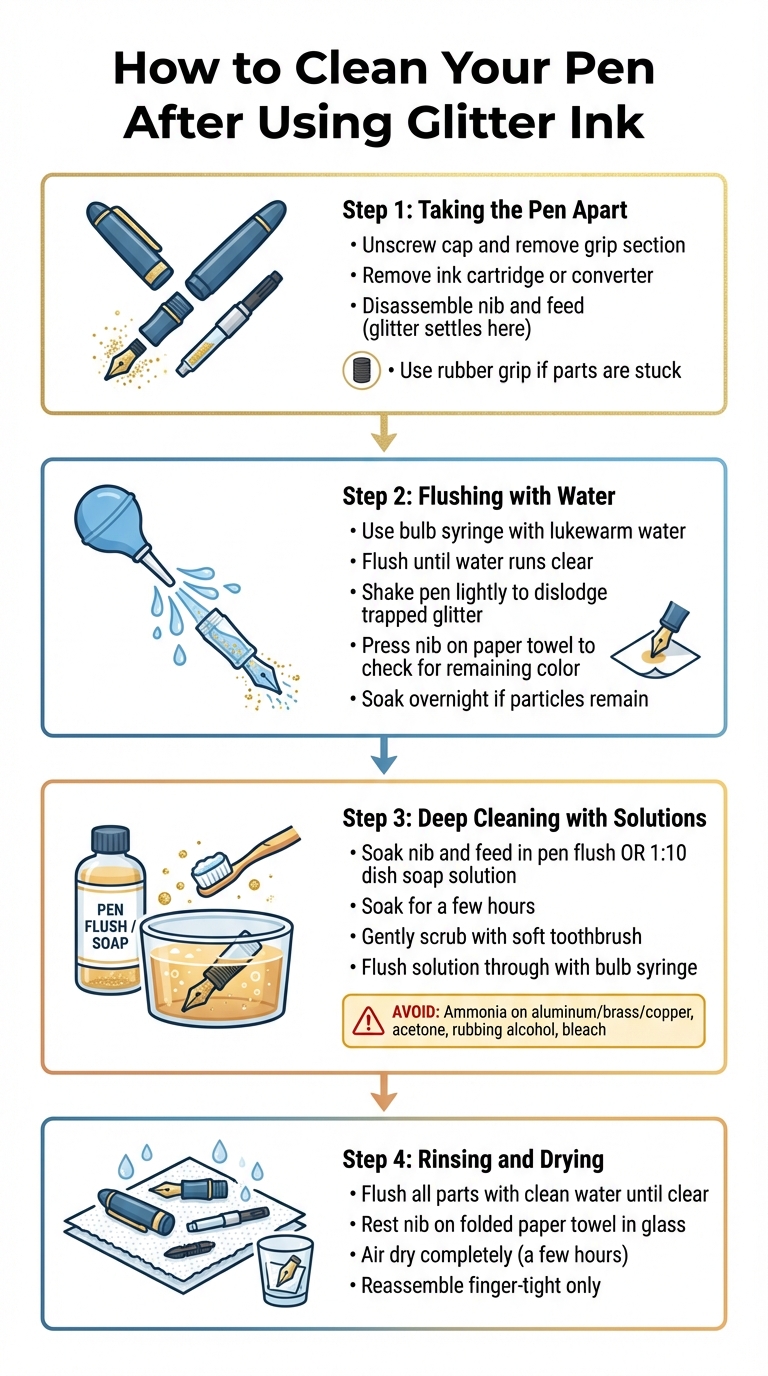
Step-by-Step Guide to Cleaning Fountain Pens After Using Glitter Ink
Cleaning your pen after using glitter ink is essential to prevent clogging from the shimmering particles left behind. A step-by-step approach is the best way to ensure your pen stays in good condition.
Taking the Pen Apart
Start by disassembling your pen. Unscrew the cap, remove the grip section, and take out the ink cartridge or converter. If you’re using a converter, unscrew it carefully by holding the metal collar or the flared end - avoid twisting the knob. To clean thoroughly, disassemble the nib and feed, as glitter particles often settle in these channels.
If any part feels stuck, use a rubber grip to assist with removal rather than forcing it. While this level of disassembly isn’t typically necessary for standard inks, it’s crucial for pens used with glitter inks.
Flushing with Water
Once disassembled, flush out the pen to remove loose glitter particles. Use a bulb syringe filled with lukewarm water for this step. Attach the syringe to the grip section and flush until the water runs clear. Lightly shake the pen during flushing to help dislodge trapped glitter. This method is much faster and more efficient than relying on the converter alone.
As Brian Goulet, Founder of The Goulet Pen Company, explains:
"For cartridge/converter pens, it's a game changer, as you can just plug the bulb syringe onto the back of the grip and flush clean water straight through the pen in what would probably take 50 fill/flush cycles using the converter!"
After flushing, press the nib against a clean paper towel. If you see any remaining color or glitter, continue flushing. For stubborn particles, soak the nib and grip section in a cup of clean water overnight.
Deep Cleaning with Cleaning Solutions
If water alone isn’t enough, turn to a cleaning solution. Begin by flushing with plain water to remove as much glitter as possible, then apply a cleaning solution to tackle the stubborn residue. Soak the nib and feed in either a commercial pen flush or a solution made from one part dish soap to ten parts water for a few hours.
Gently scrub the nib and feed channels with a soft toothbrush to loosen any remaining particles. Use the bulb syringe again to push the cleaning solution through the grip section. As Brian Goulet points out:
"Pen flush is a proprietary mixture of ink cleaning solution that's slightly more aggressive than dish soap. This is handy for really stubborn and crusty ink, especially if it's completely dried up in your pen."
Be cautious: never use ammonia-based solutions on aluminum, brass, or copper components, as ammonia can cause corrosion. Similarly, avoid acetone, rubbing alcohol, or bleach, as these can permanently damage your pen’s finish and materials.
After deep cleaning, rinse the pen thoroughly to prevent any residue from interfering with ink flow.
Rinsing and Drying
After using a cleaning solution, flush all parts with clean water to remove any remaining chemicals. Continue until the water runs completely clear. To dry, rest the nib on a folded paper towel placed in a glass; this will wick away moisture.
Allow all components to air dry completely, which usually takes a few hours. When reassembling, tighten parts only finger-tight to avoid damaging threads or causing leaks. Over-tightening can lead to cracks or other issues, so handle the pen parts with care.
sbb-itb-1dd4fe9
Tips for Preventing Clogs and Maintaining Your Pen
Keeping your pen clog-free is just as important as cleaning it thoroughly. These habits can help maintain its performance over time.
Handling Glitter Ink Properly
Glitter ink requires a bit of extra care. Before filling your pen, shake the ink bottle to keep the glitter particles evenly distributed. Once filled, make it a habit to rotate your pen daily to prevent the glitter from settling. As EndlessPens explains, "Rotating pens every day can also keep the ink flowing properly to reduce clogs". If your pen sits unused for a few days, gently shake or brush the nib to keep it primed. Using your pen regularly - every few days or at least weekly - can also help avoid clogs. These small steps can reduce the need for frequent deep cleaning.
How Often to Clean Your Pen
Cleaning frequency depends on the type of ink and how often you use your pen. For standard inks, a monthly cleaning is typically enough. Glitter inks, however, demand more attention - clean pens filled with glitter ink every one to two weeks. If you use your glitter ink pen daily, stick to this routine to prevent stubborn clogs. Planning to set the pen aside for more than a week? Empty and clean it thoroughly before storage. Dried glitter particles are much harder to remove than fresh ink. At the first sign of clogging, take action. A quick rinse of the nib after each use can also minimize buildup. For deeper maintenance, aim for a full cleaning every 4 to 8 weeks.
Storing Your Pen Correctly
Proper storage can make a big difference, especially with glitter ink. Always store glitter ink pens vertically with the nib pointing up. Gravity helps keep glitter particles away from the feed, reducing the chance of clogs or hard starts. Liz from Longhand Collective advises, "When not in use, store your pen capped and upright in a pen case or holder with the nib pointing up. This helps prevent ink from settling in the feed and causing clogs or hard starts".
Additionally, keep pens in a cool, dry place, away from direct sunlight. Extreme temperatures can cause ink to evaporate or change consistency. If vertical storage isn’t practical, horizontal storage can work, but vertical positioning provides the best protection against glitter settling when using these specialty inks.
Conclusion
The way you care for your glitter ink fountain pen has a direct impact on how well it performs. Glitter inks add a dazzling sparkle to your writing, but they also demand consistent upkeep. Glitter particles can accumulate in your pen's feed, disrupting the ink flow. A regular cleaning routine can help restore your pen to peak performance.
To avoid problems, it's essential to clean your pen more often when using glitter inks - about every one to two weeks. This prevents particle buildup and keeps your pen functioning smoothly. Thankfully, basic maintenance, such as flushing with water and soaking the nib, covers most of what your pen needs. It’s a straightforward process that doesn’t take much time.
Taking care of your fountain pen not only ensures reliable performance but also extends its lifespan. As The Hamilton Pen Company puts it:
"Proper cleaning, storage and maintenance is an investment in the longevity and performance of your fountain pen collection".
FAQs
How often should I clean my fountain pen when using glitter inks?
To keep your fountain pen running smoothly and avoid clogs, it's important to clean it after using glitter ink. Glitter particles can accumulate in the nib or feed, which can affect how well the pen writes.
For basic cleaning, flush the pen with lukewarm water until the water runs clear. If there’s any stubborn residue, try adding a tiny amount of gentle dish soap or use a specialized pen flush solution. Make sure the pen is completely dry before refilling it or putting it away - this simple step helps preserve its performance and lifespan.
How can I properly clean my fountain pen after using glitter ink?
To keep your fountain pen in top shape after using glitter ink, you'll need a few tools and simple techniques. Start by thoroughly flushing the pen with water. A bulb syringe works great for this, as it helps wash out most of the ink and glitter particles from the nib and feed.
If you notice stubborn residue that water alone can't handle, turn to a specialized pen cleaning solution. These are specifically made to safely break down glitter particles and pigmented inks without harming your pen.
For deeper cleaning, consider disassembling the pen to access tricky areas like the feed and nib. A soft brush or even an old toothbrush can be used to gently scrub away any leftover glitter. Regular cleaning like this will keep your fountain pen working smoothly and help it last much longer.
Is it safe to use household cleaners on my fountain pen?
No, you should avoid using household cleaning products, particularly those with acetone or rubbing alcohol, on fountain pens. These chemicals can seriously harm the pen, potentially damaging parts like the nib and feed beyond repair.
For proper care, use lukewarm water or a specialized fountain pen cleaning solution. These are gentle enough to clean away ink residue without risking damage. Regular cleaning with the right tools ensures your pen stays in good working condition for years to come.