

When your fountain pen struggles with scratchiness, skipping, or dry lines, the issue often lies with ink flow. The good news? These problems are usually easy to fix with a few simple adjustments. Here's a quick summary of what you'll learn:
- Align the nib tines: Uneven tines can cause scratchiness.
- Adjust tine spacing: Too-tight tines may restrict ink flow.
- Unclog the nib and feed: Dried ink or residue often blocks the feed.
- Use pen flush for tough clogs: Especially helpful for shimmer or waterproof inks.
- Smooth the nib surface: Fix imperfections in the nib tip.
- Choose a wetter ink: Some inks flow more smoothly than others.
- Keep the pen inked and used: Regular use prevents dried ink buildup.
These steps don’t require expensive tools or advanced skills. By cleaning, fine-tuning, and choosing the right ink, you'll restore your pen's performance and enjoy smooth, consistent writing again.
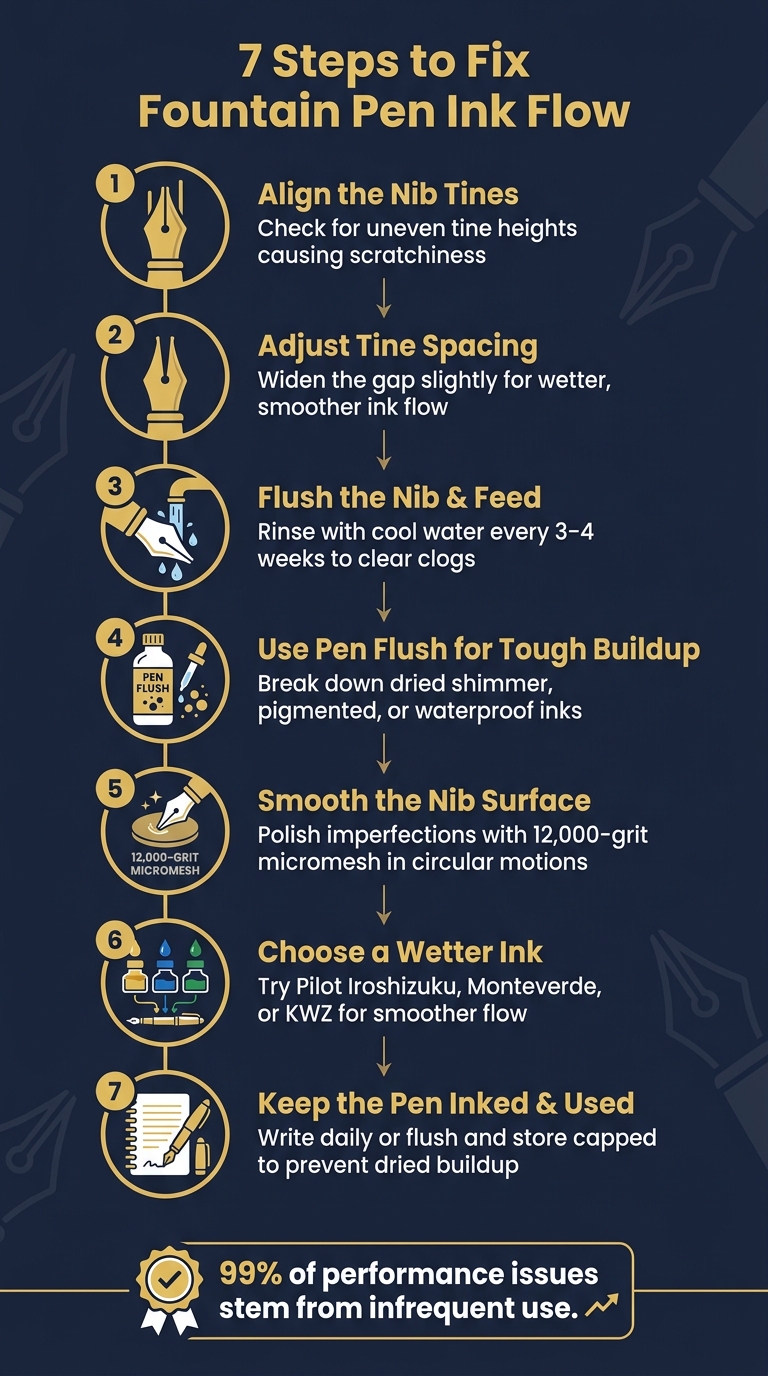
7 Steps to Fix Fountain Pen Ink Flow Problems
Adjusting Your Fountain Pen - Part 1: Ink Flow
sbb-itb-1dd4fe9
1. Check the Nib Alignment
The tines - those two small prongs at the tip of your nib - play a key role in ensuring smooth ink flow from your pen to the page. When they're properly aligned, the ink transfer feels seamless. But if one tine is higher or lower than the other, it can cause the lower tine to drag across the paper, creating an unpleasant, scratchy sensation. To check for this, start by examining your nib under a good light source.
"If you are holding your pen and it's scratchy in one direction only, it's likely a misalignment." - Brian K., The Goulet Pen Company
Hold the nib (dry, of course) up to the light and look straight at the slit. The gap between the tines should narrow slightly as it approaches the tip, and the tines themselves should stay evenly separated. If you have access to a 10× loupe, it can help you spot issues like uneven tine heights, tines pressed too tightly together, or a nib that's off-center on the feed. A scratchy writing experience is often the clearest indicator of misalignment.
For uneven tines, you can try a simple fix: gently press and rock the nib's tip against a hard surface covered with paper for about 5–10 seconds. Test frequently to avoid overcorrecting. If the tines are too close together, you can carefully separate them by pressing lightly or using a thin brass shim to create a small gap of about 1–2 mm. These adjustments are a good starting point before moving on to other fountain pen troubleshooting techniques.
It's also worth noting the difference between natural feedback and scratchiness. Feedback is a slight resistance you might feel while writing, which is normal and even desirable for some pens. Scratchiness, on the other hand, feels like the nib is catching on the paper or leaving unwanted marks.
"A properly tuned nib may have feedback, but it should never dig into the paper or leave scratch marks on it." - Stephanie, JetPens
2. Adjust Tine Spacing for a Wetter Flow
Once your nib is properly aligned, the next step is to fine-tune the tine spacing to achieve smoother, wetter ink flow.
The spacing between the tines plays a crucial role in how ink flows. If the gap is too narrow, the ink flow becomes restricted, leading to dry, faint lines, hard starts, or even skipping mid-stroke. By carefully widening the gap - even just a little - you can allow more ink to reach the page, resulting in richer, wetter lines.
Start by flushing your pen with water to clear any dried ink or residue, as these can mimic the symptoms of a dry nib. Also, check that the feed is properly centered beneath the nib. An off-center feed can create uneven pressure on the tines, causing ink flow issues that no amount of spacing adjustment will resolve.
When you're ready to adjust, use a 10× loupe to examine the nib head-on. If the tines are touching or nearly touching at the tip, you’ve likely found the issue. Here are two reliable methods to adjust the spacing:
- Shoulder Pull: Gently pull the outer shoulders of the nib apart to create more space between the tines.
- Shim Wiggle: Insert a thin brass shim into the slit and carefully wiggle it near the tip to open up the gap slightly.
To avoid scratching the nib, cover it with a tissue when applying pressure with your fingers. Make small adjustments and test the results on high-quality paper after each tweak. Be cautious - spreading the tines too far can lead to excessive ink flow, potentially flooding the page and producing a broader line than intended.
3. Flush the Nib and Feed
Cleaning your fountain pen is just as important as adjusting its nib. Even if your nib is perfectly aligned, clogged feed channels can cause issues like skipping or dry lines. These channels, which use capillary action to deliver ink, can easily get blocked by dried ink, evaporated water from ink, or even leftover manufacturing residue in new pens.
Luckily, clearing out these clogs is simple. Start by removing the ink cartridge or converter. Then, rinse the grip section under cool or lukewarm running water until the water runs clear. For a deeper clean, use a bulb syringe to push water through the grip section. This method effectively clears out any stubborn residue in the internal channels, ensuring your pen writes smoothly.
Once flushed, place the nib on a soft cloth to air dry completely before refilling. Skipping the drying step can dilute your ink and mess with its flow and color. And remember - never use hot water, as it can damage seals and loosen parts of your pen.
For regular use, aim to flush your pen every 3–4 weeks. If you’re using shimmer, highly saturated, or waterproof inks - known for leaving more residue - clean it more often. Also, make it a habit to flush your pen when switching ink colors or after it has been unused for a while. This keeps your pen in top writing condition.
4. Use Pen Flush for Stubborn Buildup
When water alone doesn’t fix issues like skipping or hard starts, the culprit might be dried ink stuck in the feed channels. This is especially true if you’ve been using shimmer, pigmented, iron gall, or waterproof inks. Even some colors, like purples, reds, and oranges, are known for being tougher to clean out. In these cases, you’ll need a stronger cleaning method.
That’s where pen flush comes in. Pen flush is a cleaning solution designed to break down stubborn ink residue. It’s more effective than water or dish soap because it contains surfactants and a small amount of ammonium hydroxide. Brian Goulet, Founder of The Goulet Pen Company, explains:
"Pen flush is a proprietary mixture of ink cleaning solution that's slightly more aggressive than dish soap. This is handy for really stubborn and crusty ink, especially if it's completely dried up in your pen."
Here’s a simple way to use pen flush for cleaning: Start by flushing the pen with plain water. Then, use a bulb syringe to push pen flush through the feed, breaking up any dried ink. Finally, rinse thoroughly with clean water to remove any leftover chemicals. That last rinse is crucial - it ensures no residue remains that could react with your next ink fill. This "sandwich" method of water, pen flush, and water keeps your pen’s feed channels clean and ready for smooth ink flow.
Pen flush can also help remove any leftover mold-release agents found in new converters, which can improve ink performance. If you don’t have commercial pen flush on hand, you can make a DIY version by mixing 1 tablespoon of clear household ammonia with 2⁄3 cup of water. However, store-bought pen flush is usually a safer choice to protect your pen’s materials.
5. Smooth the Nib Surface
Once you've aligned the tines and adjusted their spacing, the next step is refining the nib surface to improve ink flow.
A scratchy nib can ruin the writing experience by disrupting the ink's flow. This often happens when the tipping material has imperfections from the factory grind. Instead of gliding over the paper, the nib catches on fibers, interfering with the capillary action that moves ink from the feed to the page.
To figure out the cause of the roughness, check if it's due to a poor factory grind or slight tine misalignment. As Brian K. from Goulet Pen Company notes:
"The grind may have an imperfection even if the tines, nib, and feed are all in their proper alignment."
A 10× loupe is a handy tool to inspect the nib tip closely for any rough spots on the tipping material. If you spot minor imperfections, you can use 12,000-grit micromesh or mylar paper to polish the nib. Work in light, circular motions and test the nib frequently to avoid over-smoothing.
It's important to distinguish between "feedback" and "scratchiness." Feedback refers to a slight, intentional resistance that some nibs are designed to have, giving a textured feel when writing. Scratchiness, on the other hand, is a flaw where the nib snags or cuts into the paper. If your pen feels pleasantly textured rather than catching, it might not need any additional smoothing.
Once the nib is smooth, you’re ready to pair it with an ink that enhances its refined surface, ensuring an even smoother, wetter writing experience.
6. Choose a Wetter Ink
The type of ink you use can play a big role in how well your fountain pen writes. Even after adjusting your nib, the ink itself can influence the flow of writing. Using a "wet" ink often means smoother, more consistent performance.
The wetness of an ink is determined by its surface tension and lubricity. Some inks are specially formulated with added lubricants, like Monteverde's ITF technology, or surfactants to lower surface tension. These features create a smoother, more fluid writing experience. As Shawn Buckles, Owner of One Pen Show, explains:
"Lubricated inks have a pleasant round or velvety feel to them, and they can really improve your writing experience if you enjoy smooth writing."
If your pen feels scratchy or the ink flow seems uneven, fixing common nib issues or switching to a wet ink could solve the problem. Popular wet ink options include Pilot Iroshizuku, Monteverde, De Atramentis, and KWZ. For those wanting to experiment without spending too much, Fountain Pen Revolution offers a variety of inks to try.
However, wet inks come with some trade-offs. They tend to dry more slowly, which increases the risk of smudging, especially for left-handed writers. Additionally, they may feather or bleed on lower-quality paper. Wet inks also create more saturated colors, which can reduce visible shading. To get the best results, pair wet inks with high-quality, non-absorbent paper and a well-tuned nib.
| Feature | Wet Ink | Dry Ink |
|---|---|---|
| Writing Feel | Smooth, lubricated, velvety | More feedback, can feel scratchy |
| Dry Time | Slow (prone to smudging) | Fast (better for left-handers) |
| Shading | Lower (ink pools heavily) | Higher (shows light/dark transitions) |
| Paper Compatibility | Best on high-quality, non-absorbent paper | Better for absorbent or lower-quality paper |
7. Keep the Pen Inked and Ready
Beyond nib adjustments and routine cleaning, using your fountain pen regularly is one of the easiest ways to prevent ink buildup and maintain smooth performance.
Fountain pen ink depends on moisture to flow properly. When a pen goes unused, that moisture evaporates, leading to issues. As Art Brown explains:
"As the moisture evaporates, the remaining ink becomes thicker and eventually forms residue inside the feed. Once enough ink dries there, the flow gets restricted and the pen starts skipping - or stops writing altogether."
Using your pen frequently keeps things running smoothly. Fresh ink moving through the feed prevents clogs and keeps the channels hydrated. Try to write with your pen daily or at least a few times each week. Patrick Maness emphasizes this point, noting, "Regular cleaning keeps a fountain pen performing reliably and helps prevent ink buildup inside the feed and nib."
If your pen sits unused for more than a few days, flush it with cool water using a fountain pen cleaning kit (as described in section 3) and store it capped. Infrequent use is the cause of 99% of performance issues, including hard starts, skipping, or complete clogs.
Choosing the right ink can also make a difference. For pens that might sit idle, opt for low-residue inks to reduce the risk of dried buildup. Avoid India ink or shellac-based calligraphy inks altogether - if they dry inside the feed, the damage may be irreversible. If dried ink does cause problems, start with a thorough flush using cool water. This simple routine pairs well with the nib and feed care practices already discussed, ensuring your pen remains reliable and ready to write.
Comparison Table
The table below highlights the main differences between wet and dry inks, offering a handy guide for making informed choices when buying a pen or dealing with ink flow issues.
Wet inks, like Pilot Iroshizuku or Private Reserve Tanzanite, are perfect for pens that feel scratchy or tend to skip. On the other hand, dry inks, such as Pelikan 4001 or Rohrer & Klingner Salix, are better suited for pens that write heavily or when using standard office paper to avoid feathering. Wet inks pair well with fine nibs, while dry inks are a better match for broad or stub nibs. As Daniel from Street Pens puts it:
"If your pen is gushing or writing too broadly, give a dry ink a try!"
Goulet Pens also notes that wet inks "tend to flow generously and result in smoother and more saturated writing. They are known for easily gliding from pen nib to paper."
| Feature | Wet Inks | Dry Inks |
|---|---|---|
| Smoothness | High - flows smoothly | Increased resistance |
| Color Saturation | Vibrant and deep | Lighter, more muted |
| Smudge Resistance | Lower - slower to dry | Higher - dries faster |
| Best For | Dry pens; fine nibs | Wet pens, broad/stub nibs, office paper |
| Examples | Pilot Iroshizuku, Private Reserve | Pelikan 4001, Rohrer & Klingner Salix |
This table ties together the earlier tips, helping you choose the right ink for your needs. Keep in mind that climate can also play a role: warmer conditions often make inks flow more freely, so drier inks may offer better control in such settings.
Conclusion
Smooth ink flow in a fountain pen often boils down to a few key factors: properly aligned tines, a clean feed, and selecting the right ink for your pen. Whether it's adjusting the nib, flushing out dried ink, polishing the tip, or opting for a wetter ink like Diamine Writer's Blood, each step directly addresses potential issues.
Consistency in performance also relies on regular upkeep. Simple habits - like capping your pen when it's not in use or rinsing it before refilling - can go a long way in ensuring dependable ink flow. Routine maintenance isn't just a chore; it's the secret to keeping your pen writing flawlessly.
For budget-friendly maintenance tools, Fountain Pen Revolution offers a variety of essentials: brass flossing sheets ($2.60–$3.25), pen flush ($4.00–$5.00), micro-mesh smoothing sheets ($4.00–$5.00), replacement nibs starting at $3.20, and ebonite feeds for steady ink flow.
Achieving smooth ink flow isn't complicated. It’s about tuning your nib, cleaning the feed, and using ink that complements your pen. By tackling these steps one at a time, you'll likely resolve any issues well before running out of options.
FAQs
How do I tell feedback from scratchiness?
Feedback refers to the natural, tactile sensation you experience when using a fountain pen - often noticeable with finer nibs. It feels controlled and deliberate, unlike scratchiness, which comes across as harsh, as though the nib is dragging or catching on the paper.
Scratchiness typically stems from misaligned tines or rough spots on the nib. To identify alignment issues, try drawing figure-eights or cross-hatched lines. If you notice directional drag, it could indicate a problem. Another method is to gently run your fingernail along the nib's edge to detect any bumps or snags.
What’s the safest way to increase ink flow without ruining the nib?
To get better ink flow from your pen, start by giving it a good cleaning. Use lukewarm water or a pen flush to clear out any dried ink or debris that might be clogging things up. If that doesn't solve the issue, check the nib for any misalignment. If the tines are out of place, you can gently realign them or floss the gap using brass shims. For finer adjustments, you can lightly polish the nib tip with fine Micro-Mesh or Mylar paper. Be careful, though - avoid using too much pressure or abrasive tools, as they might cause permanent damage.
When should I use pen flush instead of just water?
When dealing with stubborn clogs or dried ink that plain water can't handle, you can try a commercial pen flush or a mild detergent solution. For routine cleaning or ink changes, start with lukewarm water - it often does the trick. However, if dried ink, oily residue, or persistent clogs remain after flushing, switching to a specialized cleaning solution might be the answer. Brands like Fountain Pen Revolution offer tools designed to keep your pen's ink flow smooth and consistent.