

The right nib tuner depends on three things: the problem, the service, and the wait time. If your pen only needs alignment or smoothing, a basic tune is often enough. If you want a stub, architect, or other custom feel, you need a grind specialist. And if the nib is bent, cracked, or worn, you may need a repair-focused shop.
Here’s the short version:
- I’d name the writing problem first: scratchy, dry, skipping, hard starts, or misaligned tines
- I’d match that problem to the service: basic tuning, custom grind, or repair
- I’d check lead times and shipping rules before sending anything
- I’d look at communication: a good provider should ask about paper, hand, pressure, and flow
- I’d confirm the full cost in U.S. dollars, not just the starting price
A few price and timing ranges help set expectations:
- Basic tuning: about $25–$40
- Custom grind: about $45–$85+
- Repair work: about $50–$110+
- Basic turnaround: about 3–10 business days
- Custom grind turnaround: about 2–4 weeks
- Repair turnaround: about 4–8 weeks or more
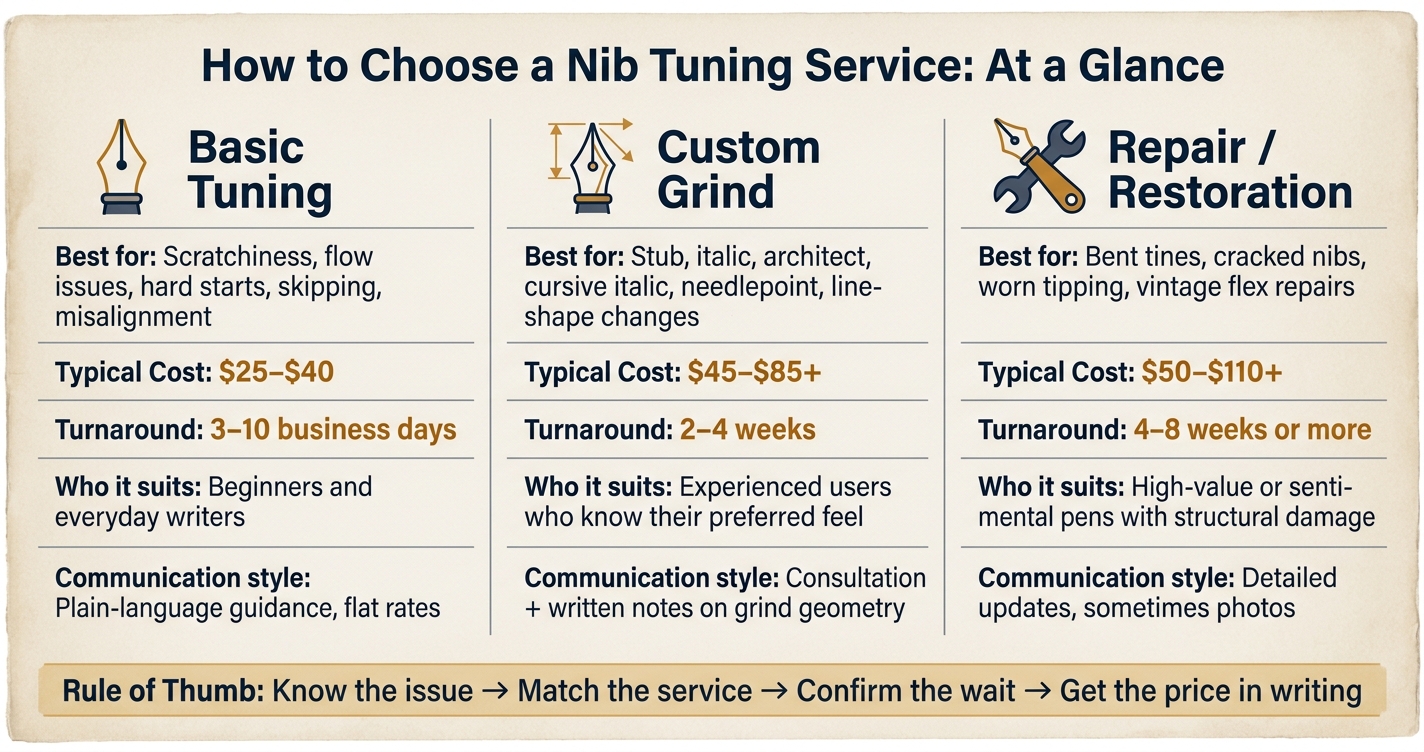
Nib Tuning Service Types: Cost, Wait Time & Best Use
Quick Comparison
| Need | Best provider type | Typical price | Typical wait |
|---|---|---|---|
| Scratchiness, flow issues, or hard starts | Basic tuner | $25–$40 | 3–10 business days |
| Stub, italic, architect, line-shape change | Grind specialist | $45–$85+ | 2–4 weeks |
| Bent tines, cracks, worn tipping | Repair-focused provider | $50–$110+ | 4–8 weeks or more |
My rule of thumb: if you’re new, pick clear communication and plain pricing over fancy options. If you already know the exact feel you want, go with a specialist who can match that target.
That’s the whole decision in one view: know the issue, match the service, confirm the wait, and get the price in writing before you ship.
sbb-itb-1dd4fe9
Step 1: Confirm What Services the Provider Offers
Not every provider does the same kind of work. Some stick to tuning. Others also handle custom grinds or nib repairs. Before you mail out a pen, make sure the service matches the problem you're trying to fix.
Basic tuning, alignment, and flow adjustment
Basic tuning usually covers tine alignment, scratchiness, hard starts, skipping, wetness or dryness changes, and baby's bottom - an overly polished tipping surface that can lead to hard starts or skips. You’ll often see this listed as tune and smooth, basic nib adjustment, or standard tuning. In the U.S., this usually runs $25–$30 per nib.
This is the right fit for a pen that already writes but feels scratchy, uneven, too dry, or too wet. It also makes sense for newer users and for pens that aren’t damaged.
Custom grinds and feel changes
A custom grind changes the actual shape of the nib tipping. Common choices include stub, cursive italic, crisp italic, architect, and needlepoint. These grinds change line width, line variation, and the way the nib feels on paper. In the U.S., custom grinds usually cost $60–$80, which reflects the extra time and skill the work takes.
Go this route only if you already know what kind of line width, writing angle, and feedback you like. Many providers will ask for a writing sample, your hand dominance, and the paper you use most often before they start.
If you're still figuring out your preferences, a well-tuned round nib is often the better move.
Repair limits and what falls outside normal tuning
Some problems go beyond normal tuning. Severely bent tines, cracked nibs, worn tipping, and vintage flex repairs usually fall into a separate repair category. Some providers take on that work. Others don't touch it at all.
Check the site for separate repair listings. If a provider handles repairs, you’ll often see items like Bent Nib Repair or Cracked Gold Nib Repair listed next to tuning services. If the site only mentions smoothing and adjustment, it’s safest to treat that shop as tuning-only, as there are custom nibs vs. standard nibs: key differences in the level of work required.
If you’re not sure where your nib fits, send a photo and ask. That one email can save you time, shipping costs, and a lot of back-and-forth. Once the service scope is clear, the next thing to check is turnaround time and intake instructions.
Step 2: Check Turnaround Time, Intake Process, and Shipping
Turnaround time by service type and current workload
Once you know what kind of help your pen needs, compare timelines and intake rules side by side. Turnaround time changes a lot by service type. Basic tuning often takes 3–10 business days, custom grinds usually take 2–4 weeks, and repairs can take 4–8 weeks or more if parts are needed.
Workload matters too. Popular specialists may be booked 8–10 weeks ahead, and the busiest ones can run 15–20 weeks out. That’s why it helps to check current lead times before you ship anything. Many providers post them on their website or social media. If they don’t, send a short email. That’s extra helpful around pen shows and holidays, when backlogs often jump.
What to send and how to package your pen
Before mailing your pen, check if the provider wants the full pen or only the nib unit. Some need the whole pen so they can test ink flow and filling behavior. The intake form should spell this out. If it doesn’t, ask if you should include a converter or cartridge and whether the pen should be cleaned first.
For packing, use a rigid box, not a padded envelope. Wrap the pen in bubble wrap and make sure the cap is secure. Also account for both outbound and return shipping costs. If the pen has high dollar or personal value, insurance is often money well spent.
A clear shipping setup tends to go hand in hand with a smoother intake process. This is a key part of any fountain pen buying checklist when considering long-term maintenance.
Signs of a clear and reliable intake process
A solid intake form should ask for the basics:
- Pen model
- Nib size
- Writing hand
- Paper type
- A short problem description
They should also give plain instructions on what to send and how to pack it. After your pen arrives, you should get a confirmation email within 1–2 business days that notes receipt, the requested services, and an estimated completion date. Return shipping should come with tracking.
Red flags are usually easy to spot:
- Vague turnaround claims
- No written intake form
- Hidden fees not listed up front in USD
- No mention of tracking or confirmation emails
When those pieces are missing, delays and mix-ups become much more likely. You may also end up paying for the wrong service.
If the intake process looks solid, the next thing to check is communication quality and total cost.
Step 3: Assess Communication, Writing Samples, and Pricing
Once shipping and intake look straightforward, communication and pricing usually make the weak options fall away.
How to assess communication quality
The first reply tells you a lot. Strong providers usually respond within 1–3 business days, answer your questions directly, spell out limits, and explain how each change will affect the writing feel.
They should also ask a few basic questions before they quote anything, such as your writing angle, grip pressure, handedness, paper type, and the ink flow you like. That kind of reply shows they’re paying attention.
A vague answer, or one that sounds the same for every customer, is a red flag.
Writing samples and preference details
If they ask for a writing sample, use the paper you use every day. That gives the tuner a better read on how the nib behaves in your normal setup.
Include:
- Your normal handwriting
- A few full sentences
- Loops and cross-strokes, so they can see how the nib moves in different directions
It also helps to mark the trouble spots and say exactly what you want changed. Along with the sample, mention whether you are right- or left-handed, how much pressure you use, and whether you want a drier or wetter flow.
A drier flow can work well for small handwriting or office forms. A wetter flow often suits journaling or more expressive writing.
Pricing tiers, extra fees, and total cost
In the U.S., prices usually fall into three main tiers. Basic tuning often costs $25–$40. Custom grinds usually land in the $45–$85+ range. Repairs often start at about $50 and can go past $110 for more involved work.
That base price isn’t always the whole story. Shipping, handling, assessment, and rush fees can change the final number quite a bit. So a lower starting rate can still end up costing more once the extras are added.
| Service Type | Typical Cost (USD) | What It Covers |
|---|---|---|
| Basic tuning | $25–$40 | Alignment, smoothing, flow adjustment |
| Custom grind | $45–$85+ | Stub, italic, architect, oblique, size reduction |
| Repair / bent nib | $50–$110+ | Bent tines, damaged tips, restoration |
| Rush service | ~$50 add-on | Faster turnaround than standard queue |
Once you’ve narrowed the list to the clearest communicators and the cleanest quotes, match those options to your own skill level and the kind of nib work you need.
Step 4: Pick the Right Provider for Your Situation
At this point, you’re putting three things together: scope, timing, and communication. The goal is simple: pick the provider that fits your pen, not just the one with the nicest website or the lowest price.
Use a comparison table before you decide
This table helps you narrow your list without wasting time.
| Provider Profile | Communication Style | Repair Scope |
|---|---|---|
| Budget tuner | Brief email updates | Routine tuning: alignment, flow, smoothing |
| Custom grind specialist | Consultation plus written notes | Custom grinds, moderate repairs |
| Vintage/repair expert | Detailed updates with photos | Major restoration, cracks, replacement parts |
A budget tuner makes sense for routine adjustments. If the pen is high-value or has sentimental weight, a repair expert is usually the better fit.
Beginner priorities versus advanced user priorities
If two providers seem close, let your experience level break the tie. A newer user often wants a pen that just writes well every day. A more experienced user may care about tiny changes in feel, line shape, or feedback.
| Priority | Beginner | Advanced User |
|---|---|---|
| Service type | Needs predictable everyday writing | Needs a specific line shape or feedback |
| Communication style | Plain-language guidance, before/after notes | Technical detail on grind geometry and ink behavior |
| Pricing transparency | Flat rates, no hidden fees | Comfortable with extra fees for specialized work |
| Desired result | Reliable, consistent performance | Micro-adjustments for angle, pressure, and writing speed |
That difference matters more than people think. If you’re new, plain-English notes and clear pricing can save you a lot of frustration. If you know exactly how you hold the pen and what kind of line you want, deeper technical detail may be worth paying for.
Final checklist before you ship your pen
Before you mail the pen, check the basics one more time:
- Service type confirmed in writing, and matched to the provider’s order form
- Repair limits understood - you know whether bent tines, cracks, or past damage are covered
- Turnaround and round-trip shipping confirmed
- Communication quality checked - you have a contact, and your questions were answered clearly
- Writing sample included on your everyday paper, with your usual ink
- Total cost in USD confirmed, including the service fee, any surcharges, and round-trip shipping with insurance
- Packaging checked, and tracking saved
If you’re still not sure what nib size or feel you want, try the service on a less valuable pen first. That way, your instructions will be much more specific when it’s time to send in the pen that matters.
FAQs
How do I know if my nib needs tuning or repair?
First, clean the pen well to rule out dried ink or debris. Then let it dry and inspect the nib with a 5x–10x loupe.
You’ll likely need professional help if you spot misaligned tines, a bent nib, cracks, or missing tipping. The same goes if the pen still feels scratchy or keeps having hard starts, skipping, or uneven ink flow after cleaning. If the damage is extensive, replacing the nib is often the more efficient fix.
Should I send the whole pen or just the nib?
Usually, it’s best to send only the nib or nib unit. In many cases, that’s enough to fix alignment or ink flow problems.
Send the entire pen only when the issue involves the feed or fit, when the nib unit is hard to remove, or when the pen has structural damage.
If you’re not sure, contact the service provider first. Share your pen model and nib size, then follow the packing instructions exactly.
What should I include in a writing sample?
Include details that help the technician match the nib to your natural writing style. That means sharing things like:
- your usual writing angle
- whether you’re left- or right-handed
- whether you rotate the pen
It also helps to note the line profile you want, your target width, and how wet or smooth you want the pen to feel on the page.
If something feels off, say that too. For example, mention if the nib catches on certain strokes, feels scratchy in one direction, skips, writes too broad, or puts down more ink than you want.