

If a fountain pen skips, hard-starts, or writes pale lines, I start with cool water, then soak, then use a bulb syringe, and only use pen flush or diluted ammonia if ink is still stuck.
Most dried fountain pen ink can be cleared without taking the nib apart. I keep the process simple: flush with cool water, soak for 15–30 minutes or longer for heavy buildup, then push water through the feed with a bulb syringe 5 to 10 times. If the pen has been unused for more than 2 weeks, or if I use shimmering or pigmented ink, I expect to clean it sooner. For routine care, I flush every 4–8 weeks.
Here’s the short version:
- Start with cool water only
- Do not use hot water
- Keep the nib and feed assembled
- Soak longer if ink has dried inside
- Use a bulb syringe for stuck residue
- Rinse well after pen flush or a 1:10 ammonia mix
- Air-dry nib-down for several hours or overnight
| Step | What I do | When I do it |
|---|---|---|
| 1 | Cool-water flush | First try |
| 2 | Short or overnight soak | If the pen still skips |
| 3 | Bulb syringe flush | If soaking isn’t enough |
| 4 | Pen flush or diluted ammonia | Only for stubborn dried ink |
In short: I use the mildest fix first, move up only if needed, and clean and maintain your fountain pen on a regular schedule to help stop dried ink from clogging the nib again.
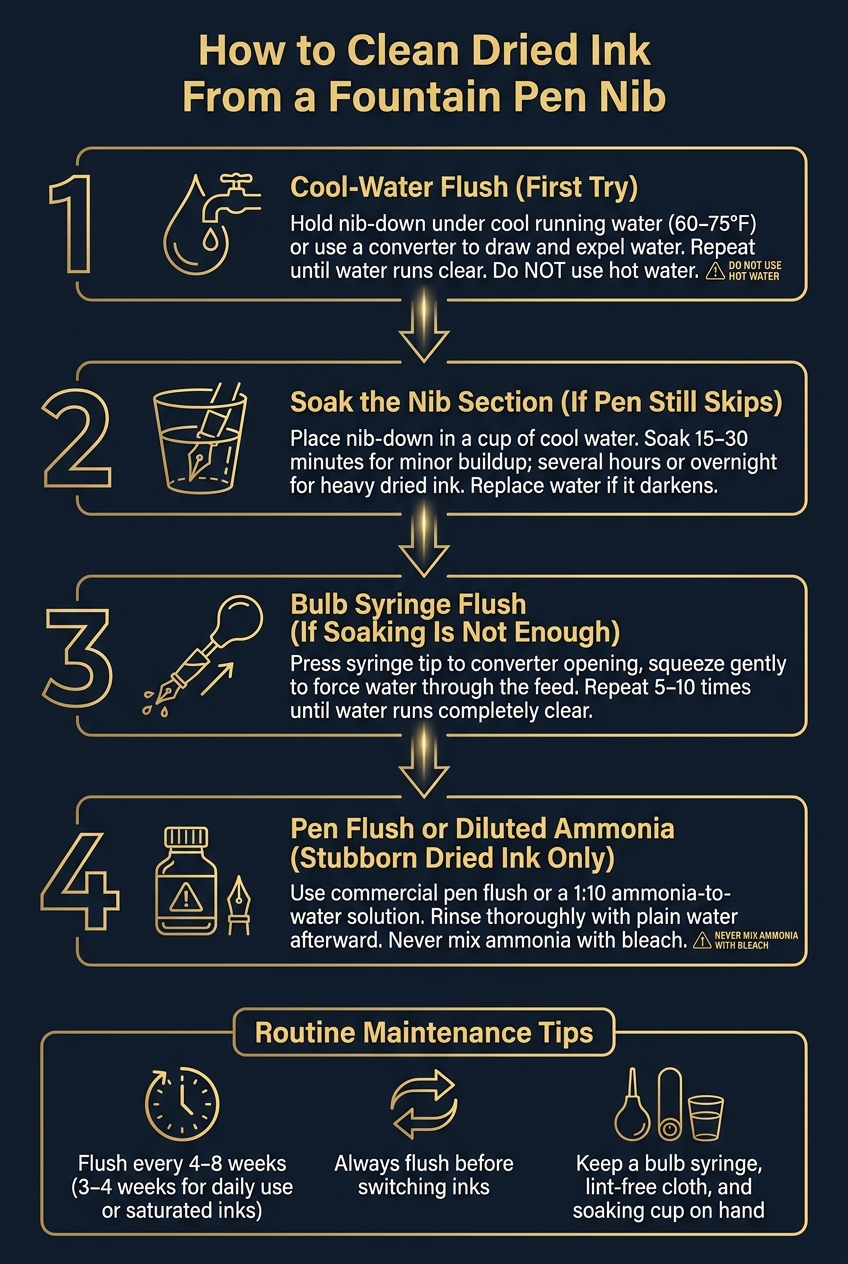
How to Clean Dried Ink From a Fountain Pen Nib
Dried Out Fountain Pen? How To Do A Full Restart
If a simple water rinse doesn't do the trick, you may need a dedicated fountain pen cleaning solution to break down stubborn clogs.
sbb-itb-1dd4fe9
Start With a Basic Water Flush
Begin with plain water. Grab a small cup, cool tap water or distilled water, paper towels, and a lint-free cloth like microfiber. If your tap water is hard, use distilled water instead. Mineral deposits can build up in the feed.
Uncap the pen, unscrew the barrel, and remove the cartridge or converter. Keep the nib and feed assembled. Taking them apart can throw the section out of alignment.
Flush the Nib and Feed With Cool Water
Hold the nib section nib-down under a gentle stream of cool running water, around 60–75°F. Let the water run until it comes out clear, not tinted. Do not use hot water. It can warp plastic feeds, weaken adhesives, and harm plated finishes or seals.
If the pen uses a converter, there’s a better way. Submerge the nib and feed in a cup of clean water, then use the converter to draw water up through the feed and push it back out into the cup. Repeat this draw-and-expel cycle until the rinse water looks mostly clear, swapping in clean water as needed.
This works better than just rinsing the outside because it forces water through the same internal channels that carry ink.
Blot and Air-Dry the Section Correctly
Shake out extra water over a paper towel with the nib pointing down. Blot the nib gently on a folded paper towel or lint-free cloth. Don’t drag the cloth across the tines. It can catch on the nib slit or push the tines out of line.
Set the section nib-down on a folded paper towel and let it air-dry for several hours or overnight. Skip hair dryers and any other heat source. Room-temperature air-drying helps prevent heat damage. If the pen still skips after drying, move on to a soak and bulb syringe. Using a bulb syringe is often the most effective way to clear stubborn clogs.
Use Soaking and a Bulb Syringe for Stubborn Dried Ink
If cool-water flushing doesn't do the job, the next step is soaking. The goal is simple: let dried ink soften up so it's easier to wash out. If residue is still hanging around, soak the nib section in cool water first, then flush it with a bulb syringe.
Soak the Nib Section in Cool Water
Set the nib section nib-down in a small cup of cool water. For minor buildup, 15–30 minutes is often enough. If ink has been sitting in the feed for days or longer, give it a few hours or even leave it overnight. If the water starts to darken, pour it out, add fresh water, and keep going.
Force Water Through the Feed With a Bulb Syringe
After the soak, the feed may still look stained, or the pen may still skip. That's where a bulb syringe helps. Fill it with cool water, press the tip against the converter opening, and squeeze gently. This sends water through the feed channels and out through the nib, which helps push out trapped residue faster than soaking alone.
Use steady pressure and repeat the flush 5 to 10 times, or until the water runs completely clear.
If you still see residue on the nib after that, wipe it gently and decide if the pen needs a deeper clean.
When to Use Pen Flush or Diluted Ammonia
If soaking and syringe flushing still don't clear things out, move to a commercial pen flush or a 1:10 diluted clear ammonia solution. Afterward, rinse the pen well with plain water.
A couple of rules matter here:
- Never mix ammonia with bleach.
- Use ammonia only on materials that can handle it.
Wipe Gently and Know When Deeper Cleaning Is Needed
Use a Soft Cloth Without Pushing Fibers Into the Slit
After flushing and soaking, dry the nib with a light touch. Microfiber or another lint-free cloth is your safest bet. Facial tissue and rough paper towels can leave fibers behind, and those bits can get stuck in the nib slit or feed fins and bring hard starts right back.
If the pen writes smoothly and the line looks normal after a few minutes, stop there. A faint line right after flushing often just means there’s still water in the feed, so give it a little time.
When you wipe the nib, go from the base toward the tip. Wipe lengthwise along the nib, not across the slit. Rubbing across the slit, or twisting cloth around the nib tip, can push fibers between the tines or knock them out of line. If that feels too risky, lightly blot the nib instead of wiping.
Signs a Full Deep Clean Makes Sense
If the nib still acts up after drying, use the signs below to figure out whether you should repeat the basic cleaning or move to a deeper one.
| Symptom | Likely Cause | Recommended Action |
|---|---|---|
| Hard starts on every first stroke, even after flushing | Residual dried ink still restricting flow in the nib or feed | Repeat a 20–60 minute cool-water soak, then flush again. |
| Discolored ink after refilling | Leftover ink contaminating the feed | Flush until the water runs clear, then soak again |
| Visible crust or flakes under the nib or in the feed | Heavy dried ink buildup | Overnight cool-water soak, then a pen-safe cleaning solution if needed. |
| Inconsistent flow - alternating wet and dry lines | Partial obstruction or uneven wetting in the feed | Repeat deep cleaning and inspect the tines for alignment |
For these symptoms, start with another water flush and soak. If residue still hangs on, then move to a pen-safe cleaning solution. Don’t use metal tools, and don’t spread the tines by hand. Both can throw the nib out of alignment.
A Short Note for Fountain Pen Revolution Users
If you're cleaning a Fountain Pen Revolution pen or nib, follow the same routine.
Conclusion: Keep Cleaning Simple, Safe, and Regular
Start with the easiest fix first: a cool-water flush. If that doesn’t do the job, move to a soak, then a bulb syringe, and only after that use pen flush or diluted ammonia for stubborn residue. That order matters. It keeps cleaning simple and lowers the chance of doing more than the pen needs.
Once the nib is clear, the goal is to keep it that way with regular flushing.
Flush every 4–8 weeks. If you use the pen every day or fill it with saturated inks, shorten that to 3–4 weeks. And always flush before switching inks so residue doesn’t build up.
A few basics make routine cleaning much easier:
- A bulb syringe
- A lint-free cloth
- A small soaking cup
Regular care keeps ink flow predictable and helps any fountain pen last longer.
FAQs
Can I clean a fountain pen nib without taking it apart?
Yes. For routine cleaning, you can flush the nib and feed without taking the pen apart. Just attach a converter, then draw water in and out until it runs clear.
You can also use a bulb syringe to push room-temperature water through the feed channels. For light buildup or when you're switching ink colors, that's often all you need.
How do I know if dried ink is still trapped in the feed?
Watch for hard starts, skipping, uneven ink flow, or a pen that only writes when you press harder than normal.
You can also check the nib and feed under bright light. If you see crusty or thickened residue, that's a red flag. And if repeated water flushes still come out tinted, or the feed channels look clogged, dried ink is probably still stuck inside.
What should I do if my pen still skips after cleaning?
If your pen still skips after a basic water flush, it’s time for a deeper clean. Soak the nib and feed in pen flush, or in distilled water with one drop of dish soap, for 15 to 60 minutes.
Still having the same problem? Take a close look at the nib with a 10x loupe. Check for misaligned tines or poor contact between the nib and feed. You can gently realign the tines or run a brass shim through to clear out debris. If that still doesn’t fix the skipping, it may be time to replace the nib.