

Usually, no. If I buy a fountain pen today, I should expect most modern pens to sell later for about 50% to 70% of retail, not more.
Here’s the short answer:
- Most modern pens drop in price once used
- Mass-made and starter pens fall the most
- Rare vintage and some limited runs do better
- Condition, box, papers, and original parts matter
- Fees, shipping, and inflation can turn a flat resale price into a loss
If I’m thinking about resale, I’d keep this in mind: a pen that cost $150 new may sell for much less on the used market, while low-cost pens in the low-cost pens in the $10 to $40 range0 to $40 range are usually better treated as use-and-enjoy items.
A good rule is simple: buy for writing first, resale second. That view fits most of the pen market and keeps expectations clear.
Which Fountain Pens Usually Lose Value Fast
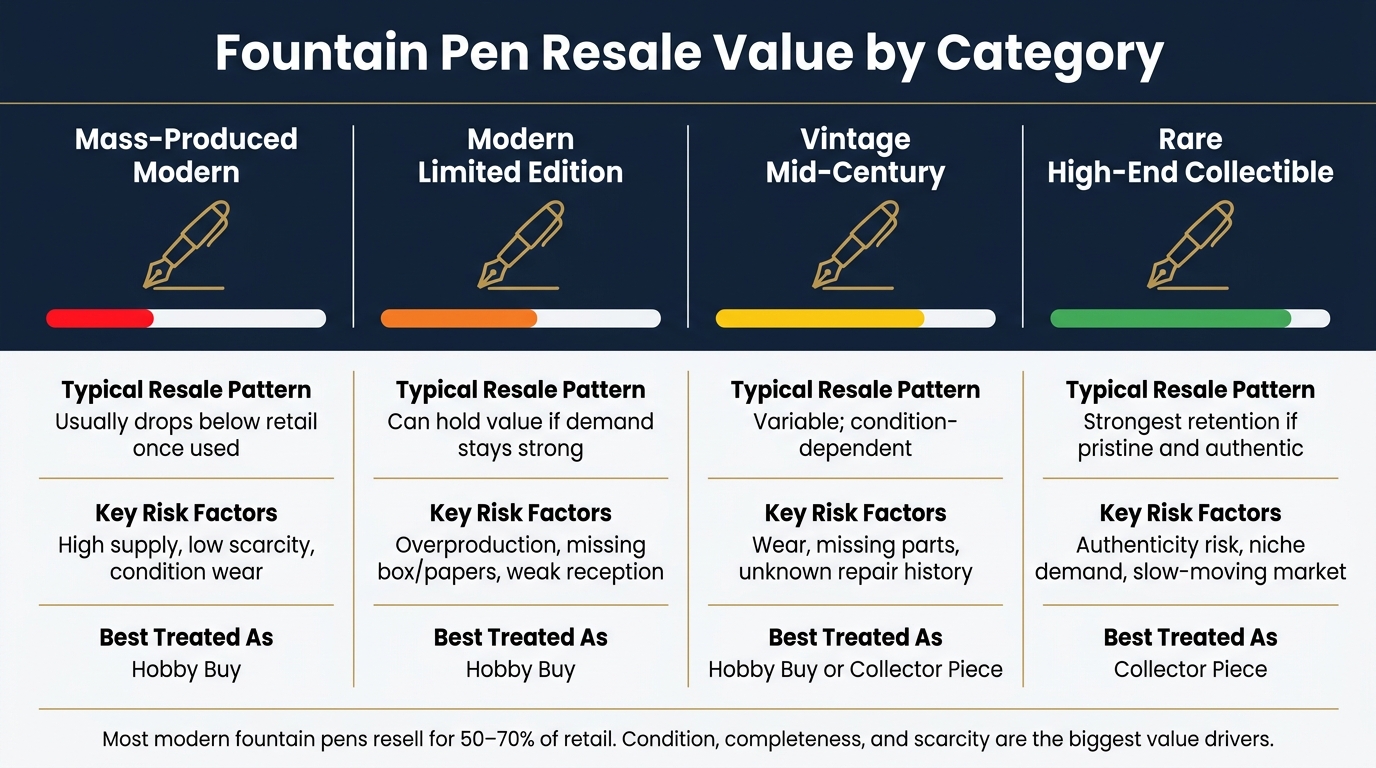
Fountain Pen Resale Value by Category: What to Expect
The steepest drops usually hit pens that are easy to find, easy to replace, and still sold new. Once a pen becomes used, it’s no longer competing in its own lane. It’s up against cleaner secondhand listings and brand-new stock at retail. That price gap shows up most in mass-produced modern pens and entry-level models.
Mass-Produced Modern Pens and Starter Models
Widely available pens with no real scarcity are usually the weakest picks for resale. If a buyer can scroll through dozens of near-identical used listings - or just spend a bit more and buy new - your used pen has less pull. Most buyers would rather get a fresh pen with a warranty and original packaging. That’s why a $150 pen can sell for much less after use; the Pelikan M200 is a clear example of that spread.
Choosing starter pens can be even tougher. They’re made to be easy to buy, not to hold price over time. Brands sell them in high volume, people use them hard, and many hit the resale market with scratches or other wear. That makes them common and harder to move at a higher price. The same thing tends to happen with other standard releases once used examples are all over the market.
Standard Production Models and Heavily Used Pens
Non-limited modern releases often fall into a lower used-price range for one simple reason: they stay in production for years. If buyers can still get the same pen new, there’s little reason for them to pay extra for a used one. Heavy wear pushes the price down even more. Scratches, staining, dried ink, or a nib that writes unevenly all add risk for the buyer, especially when they can compare your listing with cleaner pens - or with a new one that comes with a return policy.
Missing extras can hurt resale more than many sellers expect. No box, no converter, no paperwork - it all chips away at buyer confidence. Swapped nibs, rough repairs, or changed trim can lower the price even further, since buyers may not be sure what’s original and what isn’t.
Pen Categories and Typical Resale Behavior: A Comparison
| Category | Usual Resale Pattern | Key Risk Factors | Better As |
|---|---|---|---|
| Mass-produced modern | Usually drops below retail once used | High supply, low scarcity, condition wear | Hobby buy |
| Modern limited edition | Can hold value better if demand stays strong | Overproduction, missing box/papers, weak reception | Hobby buy |
| Vintage mid-century | Variable; condition-dependent | Wear, missing parts, unknown repair history | Hobby buy or collector piece |
| Rare high-end collectible | Strongest retention if pristine and authentic | Authenticity risk, niche demand, slow-moving market | Collector piece |
The pattern is pretty straightforward: common modern pens usually don’t keep their retail price. The exceptions tend to come from scarcity, buyer interest, strong condition, and a full set of original extras.
sbb-itb-1dd4fe9
What Helps a Fountain Pen Hold Resale Value
Some pens sell again more easily than others, but no fountain pen promises a profit. When a pen does have resale appeal, the usual drivers are condition, rarity, and buyer demand, not age by itself.
Condition, Completeness, and Original Parts
Condition is one of the biggest factors behind resale price. A pristine pen that works exactly as it should will usually bring stronger offers, mainly because the buyer is taking on less risk. If something about the pen feels uncertain, buyers often pull back on price.
Original parts matter more than many sellers think. An original nib, an untouched filling system, and full packaging can all help support a better price. Once a pen has a swapped nib or non-original parts, buyers may hesitate. And when the box, papers, or other extras are missing, confidence tends to slip a bit more.
Limited Editions, Discontinued Models, and Special Nibs
Scarcity only helps if people actually want the pen. That’s the key point. A pen that is no longer made and hard to find sits in a very different spot from one that just says “limited” on the box. If demand is there and condition is excellent, a discontinued model can still sell close to its original price.
Special nibs can help too, especially when they offer a clear flex feel that buyers are looking for. For example, on the Pilot 742, a 14-karat gold FA (Falcon) nib retails for around $300. Standard nibs usually don’t get the same resale premium.
Vintage Pens and Established Maker Demand
With vintage pens, brand reputation matters just as much as age. Well-known makers tend to draw steadier collector interest than more common modern pens. That said, missing parts, replaced pieces, or repairs can still drag the price down.
Why Demand Shifts and Resale Is Hard to Predict
Even pens that catch collectors’ attention can lose steam when tastes change. The fountain pen market is small, and in a market like that, buyer interest can move fast.
Collector Interest Goes In and Out of Favor
A lot of the time, buyers care more about how a pen writes than the name on the barrel. If a lower-priced pen gives a similar writing feel, a more expensive model can get much harder to sell on the used market.
Being discontinued can help, but only if collector demand stays there. That’s the tricky part. A pen can seem highly wanted one year and then cool off once newer options show up or people start leaning toward something else. So even when demand looks strong today, that doesn’t mean resale will stay strong later.
Inflation, Selling Costs, and Long Selling Times
Condition, scarcity, and completeness still matter. But time changes buyer interest in ways that are hard to call. And even if you sell a pen later for the same dollar amount, you can still come out behind once you factor in inflation, shipping, and selling fees.
In plain English: the resale price you see isn’t the same as the return you keep. A flat resale number can still mean a loss in practical terms.
That’s why resale makes more sense as a secondary factor, with the writing experience coming first.
A Better Approach: Buy for Writing Enjoyment and Long-Term Use
With demand and resale hard to predict, the safest move is simple: buy a pen to write with. Most modern fountain pens resell for about 50–70% of retail, based on condition and buyer interest. If you go in knowing that, the hobby feels a lot less stressful.
It still makes sense to keep the box, take care of the pen, and skip extra modifications if you might sell it later. But those habits should make ownership easier, not turn the pen into something you’re scared to touch. A pen that sits unused because you don’t want to affect resale kind of misses the point.
That’s even more true with lower-priced pens, where day-to-day use matters far more than what you might get back later.
Where Affordable Pens Fit In
Affordable pens are one of the easiest ways into the hobby. At $10–$40, resale usually matters less, so you can ink the pen, test different nib sizes, and figure out what you like without overthinking every choice.
Fountain Pen Revolution sells affordable fountain pens, starter sets, nibs, ink, pen stands, and cases for both beginners and more experienced fountain pen fans. That kind of starting point makes it easier to pay attention to the writing experience instead of future demand.
Key Points to Keep in Mind Before You Buy
Before you buy, it helps to ask a few plain questions:
- Will you actually use this pen often?
- Is it comfortable in your hand?
- Does the nib fit your handwriting and the paper you use?
- Can you pay for it without relying on resale to make the purchase feel okay?
Put use first and resale second. Most fountain pens are illiquid, and selling costs can eat into any upside. The best long-term outcome usually comes from buying a pen you’ll want to use again and again.
FAQs
How much can I usually resell a fountain pen for?
Usually, it’s less than the original price. Most fountain pens make more sense as tools for personal enjoyment than as financial investments.
Resale value mostly comes down to three things: brand reputation, material quality, and condition. Entry-level pens are often affordable and built to last, but they usually don’t hold their full purchase price on the secondary market.
Which fountain pens hold value best?
Pens with strong reliability, solid build quality, and long-term durability usually hold their value better, though demand can shift over time.
That said, most fountain pens make more sense as hobby purchases than as investments. For many owners, the best return comes from the writing experience, personal meaning, and years of use - not resale profit.
What lowers a fountain pen’s resale price?
A fountain pen’s resale value can fall fast when the pen has physical damage, a worn nib, or signs of poor care.
Heavy writing pressure, rough paper, and accidental drops can wear down the nib or damage other parts of the pen. Poor upkeep can hurt value too, especially when old ink builds up because the pen wasn’t cleaned on a regular basis.
Counterfeit pens usually have little to no resale value. Material choice matters as well. For example, ebonite can crack if it’s dropped, and it may discolor over time because of oxidation from sunlight and moisture.