

If you want less trash from fountain pen use, the short answer is simple: use bottled ink, refill instead of toss, clean your pen on a set schedule, and use paper that lets you write on both sides.
I’d sum it up like this: a 50 mL bottle can give about 50 fills, while a short cartridge may cover only about 18 pages. A converter often costs just $5–$10, and a basic pen flush uses about 8–16 fl oz of water. So the low-trash setup is usually the lower-cost setup too.
Before you read the full piece, here are the main points:
- Bottled ink usually means less packaging waste than cartridges.
- Cartridges still have a place if you want easy travel or less mess.
- Empty bottles can often be reused for samples or small ink portions.
- Old ink needs care: small diluted rinse amounts can go down the drain, but larger amounts and waterproof inks may need local waste drop-off.
- A cartridge can be refilled until it stops sealing well or shows cracks or warping.
- Better paper can cut page waste by reducing bleed-through and feathering.
- Cleaning every 4–8 weeks for frequent use can help keep a pen in service for years.
- Converter-ready pens and piston-fill pens often cost less over time than cartridge-only use. If you are just starting out, consider one of the best fountain pens for beginners to find a durable, low-waste option.
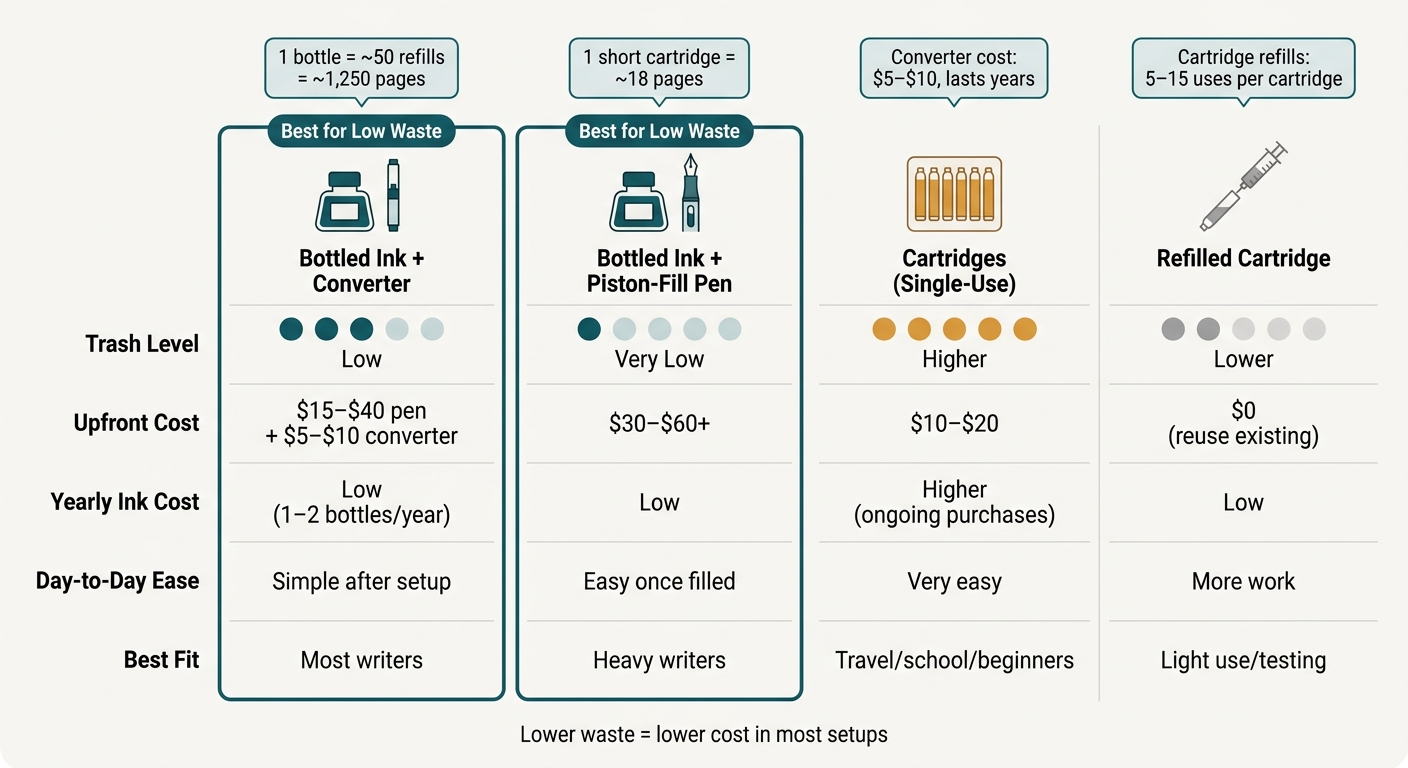
Fountain Pen Ink Options: Waste, Cost & Convenience Compared
Quick Comparison
| Option | Trash Level | Upfront Cost | Day-to-Day Ease | Best Fit |
|---|---|---|---|---|
| Bottled ink + converter | Low | About $15–$40 for pen, $5–$10 for converter | Simple after setup | Most writers |
| Bottled ink + piston-fill pens | Very low | About $30–$60+ | Easy once filled | Heavy writers |
| Cartridges | Higher | About $10–$20 for pen | Very easy | Travel, school, beginners |
| Refilled cartridge | Lower than single-use cartridges | Often $0 if you reuse one | More work to clean and refill | Light use, testing the setup |
For me, the big takeaway is clear: the ink matters, but the daily habits matter just as much. The full article walks through the seven questions that shape how much you throw away, how much you spend, and how long your pens stay in use.
sbb-itb-1dd4fe9
1. Bottled Ink vs. Cartridges
The biggest gap in waste comes from packaging, not the ink itself. For most people who write often, bottled ink creates much less trash than cartridges. A 50 mL bottle gives you about 50 refills, or roughly 1,250 pages with a medium nib. A short cartridge, by contrast, covers about 18 pages. That gap gets even bigger or smaller based on how you fill the pen.
With cartridges, the waste keeps coming back. You throw away the cartridge shell, the blister pack, and sometimes extra plastic caps or inserts. Bottled ink puts most of that packaging into a single container. In some cases, that bottle can be reused for ink samples or pen cleaning. It may also be recyclable, depending on your local rules.
When bottled ink cuts the most waste
Bottled ink makes the most sense with a converter, a piston-fill pen, or a refillable cartridge.
- A converter lets a cartridge pen pull ink from a bottle, so you get the low-waste side of bottled ink without buying a new pen.
- A piston-fill pen has the filling system built into the barrel, which removes disposable cartridges from the picture.
- A refillable cartridge can be used many times, though it takes more care to clean and is less easy to swap between pens.
If you write a lot, keep a journal, take class notes, or rotate through several pens, the volume edge of bottled ink shows up fast.
When cartridges still make sense
Cartridges aren't a bad pick. They're just a different tradeoff.
They're sealed, small, and easy to carry. That makes them handy for travel, school, or fast pen swaps when carrying a bottle would be a hassle. They're also easier for beginners who don't want to deal with bottle filling or possible ink spills. And if you refill cartridges with a syringe, you can cut some waste. Even so, the trade is pretty clear: less mess and better portability, but more packaging waste.
| Bottled Ink | Cartridges | |
|---|---|---|
| Packaging waste | Low (one container, many fills) | Higher (recurring cartridge shells and packaging) |
| Reusability | High (with converter, piston filler, or refillable cartridge) | Lower (can be refilled, but less convenient) |
| Travel convenience | Less convenient (spill risk, bulk) | More convenient (sealed, compact) |
| Typical lifespan per unit | ~50 refills per 50 mL bottle | ~18 pages per short cartridge (medium nib) |
If you use cartridges, the next waste issue is what to do with the bottle and how to get rid of old ink safely. Next comes bottle reuse and safe disposal.
2. Reusing Bottles and Disposing of Ink Safely
Start with reuse. Recycle only if your local program says the bottle is accepted.
How to reuse or recycle empty ink bottles
Rinse empty bottles with cool to lukewarm water. Skip hot water, since it can make leftover residue harder to remove. Then wash the bottle with a drop of mild dish soap and let it dry all the way. If you're recycling it, take off caps and inserts first, and check local rules for glass or rigid plastic.
Never pour used or mixed ink back into the original bottle. Even a small bit of contamination can spoil the whole bottle.
Once a bottle is clean and dry, you can use it again for ink samples or decanted portions from a larger bottle. That's a simple way to keep packaging in use longer. If you go the recycling route, many U.S. municipal programs accept glass and rigid plastic containers that are empty, clean, and dry, with caps and mixed-material parts removed.
| Option | Practical Benefit |
|---|---|
| Home reuse (samples, desk storage) | Keeps bottle out of the waste stream entirely |
| Municipal recycling | Returns glass or plastic to the material stream |
What to do with unwanted or old fountain pen ink
Reuse comes first. Disposal is the backup plan when a bottle or ink is no longer safe to use.
Small amounts of diluted rinse water can usually go down the sink with plenty of running water. Bigger amounts, unknown inks, and waterproof or archival inks should go to a local hazardous-waste drop-off.
| Disposal Method | Best For | Key Consideration |
|---|---|---|
| Rinse-out during cleaning | Small, diluted amounts from routine pen flushing | Dilute thoroughly; keep volumes low |
| Local hazardous-waste drop-off | Large volumes, unknown formulations, specialty inks | Handled by local waste programs |
| Locally permitted solid disposal | Small quantities solidified with absorbent material | Check local rules; some jurisdictions allow dried water-based ink in household trash |
Once the bottle is dealt with, the next low-waste moves come down to refill habits, paper choices, and how often you clean your pen.
3. Refilling, Paper Choice, and Cleaning Frequency
How many times you can refill a cartridge
There isn't a set refill limit. A cartridge is fine to reuse as long as it still seals tightly and doesn't show cracks, warping, or other shape changes. The moment you notice a loose fit, a weak seal, or damage, it's time to stop using it.
A good habit helps here: flush the cartridge with cool water as soon as it runs empty, then refill it and put it back in right away. If ink dries inside, cleaning gets harder fast.
If refilled cartridges start failing often, a converter is usually the better move. A converter costs about $5–$10 and can last for years, replacing hundreds of cartridges over time.
Once you've sorted out the refill setup, the next place waste shows up is on the page.
| Refilled Cartridges | Converter | |
|---|---|---|
| Lifespan | 5–15 refills per cartridge; varies by condition | Years with routine care |
| Maintenance | Syringe flushing; harder to clean if ink dries | Piston or squeeze mechanism flushes quickly and thoroughly |
| Waste reduction | Reuses existing plastic at no extra cost | Can replace hundreds of cartridges over its life |
| Upfront cost | $0 (reuse what you have) | ~$5–$10 |
How paper choice affects ink and page waste
Refilling cuts material use, but paper choice decides how much of each sheet you can use. If the paper feathers, bleeds through, or shows heavy ghosting, the back side may be useless. That means rewrites, torn-out pages, and a notebook that disappears sooner than it should.
Low-grade recycled copy paper tends to cause the most trouble, especially with wetter nibs or heavily saturated inks. Midrange copy paper is a decent step up. Fountain-pen-friendly paper gives the cleanest result. These papers are often 68–80 gsm, better sized, and smoother, which helps keep feathering and bleed under control. In practice, that often means you can use both sides of the page with little show-through, so one notebook page can do the work of two or more sheets of cheap copy paper for the same writing.
| Paper Type | Page Performance | Approx. Cost per Sheet (U.S.) |
|---|---|---|
| Low-grade recycled copy paper (often 20 lb) | High feathering and bleed-through; back side often unusable | ~$0.014–$0.018 |
| Standard office paper (20–24 lb) | Moderate ghosting; some bleed with wet nibs | ~$0.012–$0.016 |
| Fountain-pen-friendly notebook | Minimal feathering and bleed; both sides usable | ~$0.09–$0.16 |
How often to clean your pen for lower-impact use
Even the right paper won't help much if dried ink shortens the life of the pen itself. Regular flushing keeps ink from clogging the feed and helps the pen last longer, which protects the refillable setup doing most of the waste-cutting work.
How often you clean depends on how often you write. Daily users can usually go 4–8 weeks between flushes, or clean the pen whenever they change inks. If you only write a few times a month, rinsing every 1–2 months is a safer rhythm. For long-term storage, clean the pen well, empty it fully, and store it dry. Before using it again, give it a quick flush first.
Use only cool or lukewarm water. Hot water can damage seals and finishes, and harsh chemical cleaners can wear down plastics over time. A small cup or bowl works better than letting the faucet run. A basic flush uses about 8–16 fl oz of water.
| Use Pattern | Cleaning Interval | Approx. Water Use per Session |
|---|---|---|
| Daily writer | Every 4–8 weeks, or when changing inks | ~8–16 fl oz (0.25–0.5 L) |
| Occasional user (a few times/month) | Every 1–2 months | ~8–16 fl oz (0.25–0.5 L) |
| Long-term storage | Before storing and before returning to use | ~16 fl oz (0.5 L) or slightly more for a thorough flush |
4. Cost and Setup Choices for Lower Waste
Where affordable refillable setups fit in
After you pick a refillable system, cost mostly depends on how you buy ink. The good news? Lower-waste habits don't have to mean spending more. In many cases, the setup that cuts waste also keeps yearly costs down.
Converter-ready pens often start at $15–$40, while piston-fillers usually begin around $30–$60. Both use bottled ink, which helps keep refill costs low over time. Piston-fillers also tend to hold more ink, so you refill less often from the same bottle.
That difference can add up fast if you write a lot. Compared with cartridge-only pens, yearly ink costs are usually lower.
| Setup | Upfront Cost | Approx. Yearly Ink Cost | Packaging Waste |
|---|---|---|---|
| Cartridge-only pen | ~$10–$20 | Higher; ongoing cartridge purchases | High; one plastic cartridge per refill |
| Converter-ready pen + bottled ink | ~$15–$40 | Low; one or two bottles per year | Low; one bottle and box per purchase |
| Piston-filler + bottled ink | ~$30–$60+ | Low; similar bottled ink use | Minimal; no cartridges at all |
For most writers, the lowest-cost setup is also the lowest-waste one. Fountain Pen Revolution offers affordable pens, nibs, ink, stands, and cases, with starter sets from $35 and bundles from $29.
Conclusion: The Low-Waste Habits That Matter Most
Looking across all seven answers, one pattern stands out: bottled ink and refillable setups usually create less waste and often cost less over time. And the waste issue doesn't come down to just one choice. It comes from the whole system - ink format, bottle reuse, cartridge refills, paper choice, and how you clean your pen.
Empty bottles can be reused or recycled where local rules allow. Cartridges are worth refilling only as long as they still seal well. If one is cracked or leaking, swap it out. Paper matters too. Smoother, fountain-pen-friendly paper helps cut down on feathering, bleed-through, and wasted pages, while scrap paper is fine for quick flow tests.
The thread running through all of this is pretty simple: less disposable packaging, fewer wasted pages, and a longer life for your pen. Small habits like refilling, reusing, and picking better paper do most of the work.
FAQs
Which ink types are hardest to clean out of a pen?
The hardest inks to clean are usually the ones with solid particles or stickier binders. Shimmer inks can leave glitter buildup behind, and pigment-based inks can collect in the feed. That means both usually need more frequent, deeper cleaning.
It’s also smart to avoid India, calligraphy, or drawing inks in fountain pens. These can clog a pen for good. Iron gall inks can leave residue too, so they call for careful, regular maintenance.
Is a piston-fill pen worth it if I only write occasionally?
It comes down to a simple trade-off: more ink, more upkeep.
Piston-fill pens usually hold about 1.5 mL to 2.5 mL of ink. That’s more than most standard cartridges or converters, which is a big plus if you write a lot and don’t want to refill all the time.
But if you only use your pen now and then, maintenance starts to matter more. In that case, you’ll want to flush it with cool water every 4 to 6 weeks. And if the pen sits unused for more than a week, clean it before ink dries out and causes clogs or flow problems.
How do I store bottled ink so it lasts longer?
Store bottled fountain pen ink in a cool, dark place, away from direct sunlight and swings in temperature. Keep the bottle tightly sealed when you’re not using it. That helps cut down on evaporation and lowers the chance of contamination.
If you travel with ink, pour a small amount into a plastic sample vial. It’s a simple way to lower the risk of leaks and keep your main bottle from getting exposed to travel-related messes or changes in heat and pressure.