

If I want to keep metal pen parts from rusting or tarnishing, I keep them dry, cool, and able to breathe. Once humidity gets above 60% RH, corrosion risk goes up. Around 70%–75% RH, steel parts can start to rust faster, especially when damp air turns into condensation on cooler metal.
Here’s the short version:
- I store pens in a climate-controlled room
- I aim for 40%–50% relative humidity
- I avoid sealed boxes, bathrooms, kitchens, basements, and parked cars
- I use silica gel in drawers or cases when needed
- I wipe and dry nibs, clips, and trim before storage
- I open closed cases once a week for 15–30 minutes
- After cleaning or travel, I make sure the pen is fully dry before putting it away
The main point: humidity alone is bad, but trapped moisture is worse. Rust, tarnish, dull plating, and dark spots often start in closed sleeves, drawers, or cases where air can’t move.
Here’s a fast breakdown:
| What I watch | Good target | What I avoid |
|---|---|---|
| Room humidity | 40%–50% RH | Above 60% RH |
| Storage type | Open tray, vented case, cabinet opened often | Tight sealed box or zip case |
| Drying after cleaning | Air-dry for a few hours | Storing while still damp |
| Travel care | Wipe metal parts, use small silica gel packet | Leaving pens in a parked car |
So if I had to boil the whole article down to one routine, it would be this: wipe, dry, and store in a spot with airflow.
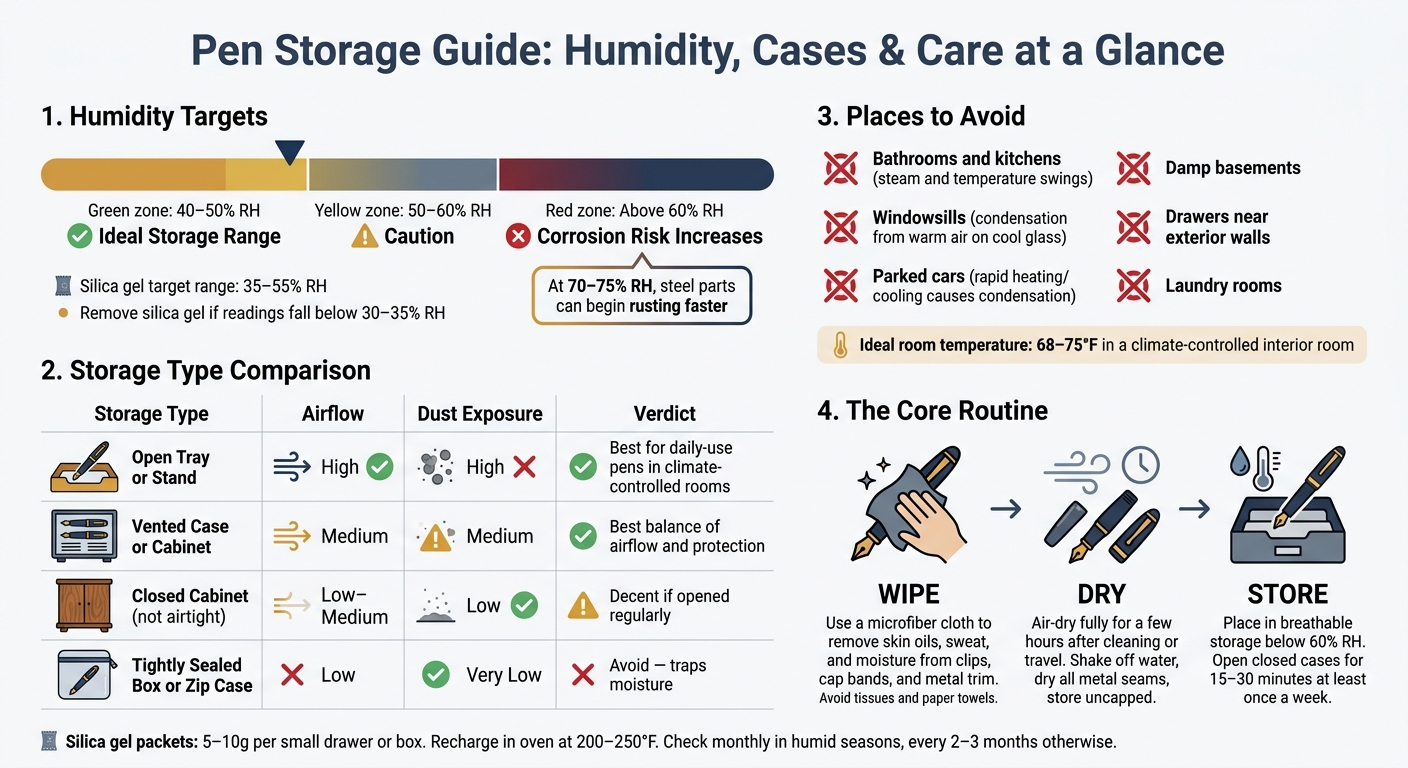
Pen Storage Guide: Humidity, Cases & Care at a Glance
A Guide to Basic Fountain Pen Care
sbb-itb-1dd4fe9
Set up storage that stays cool, dry, and breathable
Where you keep your pens matters almost as much as the case or tray you put them in. The main job is simple: stop moisture from sitting on metal parts. That’s a big deal right after cleaning or handling, when a little dampness can hang around longer than you think. In a typical U.S. home, a climate-controlled interior room around 68–75°F with 40–50% relative humidity is a good target.
Some places just aren’t worth the risk. Bathrooms and kitchens go through constant steam and temperature swings. Windowsills bring direct sun, plus the condensation that shows up when warm air meets cooler glass. Parked cars are one of the worst spots because fast heating and cooling can lead to condensation on metal parts. Damp basements and drawers near exterior walls can also cause trouble since they often stay cooler than the rest of the room, which makes condensation more likely during humid weather or sudden weather shifts.
Choose cases and trays that let air move
The sweet spot is storage that cuts down on dust without trapping moisture inside. In plain terms: use the least sealed option that still keeps your pens protected.
| Storage Type | Airflow | Dust Exposure | Best Use |
|---|---|---|---|
| Open tray or stand | High | High | Good if room is climate-controlled |
| Vented case or cabinet | Medium | Medium | Good - balances airflow with some protection |
| Closed cabinet (not airtight) | Low–Medium | Low | Decent if opened regularly |
| Tightly sealed box or zip case | Low | Very low | Poor - traps existing moisture inside |
Open trays are a strong fit for pens you reach for every day. A vented case, or even a cabinet that gets opened on a regular basis, works well for pens you use less often. Tightly sealed containers are the problem option because they can hold onto leftover moisture, especially after cleaning.
Use pen sleeves and closed boxes with care
Pen sleeves, leather pouches, and zip cases are handy when you’re taking pens with you, but they’re not the best pick for long-term storage. Leather and fabric can soak up moisture from the air, and a closed sleeve keeps that moisture pressed against clips and trim. If a pen goes in slightly cool or damp after cleaning, that closed space keeps the problem right where you don’t want it.
For daily carry or a short trip, they’re fine. Just make sure the pen is fully dry and back to room temperature first. For longer storage at home, move pens into an open tray or a cabinet that lets air move. If you keep pens in closed cases at home, open the case for 15–30 minutes at least once a week so fresh air can get in and stale, damp air doesn’t build up.
Storage accessories from Fountain Pen Revolution

Fountain Pen Revolution sells pen cases and stands that fit well into this kind of setup. Their stands make sense on an open desk or shelf in a climate-controlled room. Their cases can also help organize a collection, especially if you get into the habit of opening them often and storing them in a climate-controlled room instead of a basement or parked car.
Control moisture with silica gel and airflow
Even a solid tray or cabinet needs backup if the air stays damp. Silica gel is a simple way to keep humidity in check inside drawers, pen boxes, and display cabinets. A good target is 35–55% RH. That range helps slow rust and tarnish without drying out the case itself.
Where to place silica gel for best results
Place packets along the sides or back of a drawer, box, or cabinet. Don’t let them sit directly on the pens.
If you can, use indicating silica gel. It changes color when it’s saturated, which takes the guesswork out of the process. Most silica gel containers can be recharged in a conventional oven at 200–250°F, then cooled all the way before they go back into storage. Check them monthly during humid parts of the year, then every 2–3 months the rest of the time. For a single pen box or small drawer, one or two small packets of about 5–10 grams each is usually enough. More than that can dry out leather, wood, or other case materials, so it helps to watch conditions with a simple room hygrometer. If readings keep falling below 30–35%, remove a packet.
Avoid sealed, damp spaces and trapped damp air
If a drawer or box still feels cool or clammy, open it on a regular basis until the inside stays dry. Open drawers or cabinet doors weekly. In summer, or after heavy rain, do it every few days.
For larger collections stored in a closet or on a dedicated office shelf, a room dehumidifier set to 40–50% relative humidity can deal with what silica gel alone can’t handle. Place it away from the pen cabinets so it treats the whole room more evenly instead of blowing dry air right onto leather, wood, or other delicate materials. Keep pens away from laundry rooms, exterior walls, and any spot with regular temperature swings. That’s where condensation shows up most often, and silica gel won’t fully make up for a place that stays damp.
Use that same dry-air routine before travel, when temperature swings can make condensation more likely.
Adjust pen care for travel and daily handling
Good storage habits help at home. Travel is where things change fast.
A pen can go from cool and dry to hot and humid in minutes. When that happens, condensation may form on metal parts. That moisture can speed up corrosion and tarnish.
Pack pens for humid trips and temperature shifts
For travel, a fabric or leather pen wrap with separate slots usually works better than a hard plastic case. It gives each pen some breathing room, and it’s easier to manage when air and temperature keep shifting.
Slip a small silica gel packet into the wrap to pull in extra moisture during transit. If you can, store pens nib-up, especially on flights. That helps lower the odds of ink moving toward the cap and clip area. After the trip, give the pen a quick wipe before putting it back into storage.
And one rule is non-negotiable: never leave a pen in a parked car. On a road trip, take it with you instead of leaving it in the glove box or center console.
Wipe down metal parts after use and transit
If you’ve been writing outside in humid weather, wipe the clip, cap band, and any exposed metal trim with a soft microfiber cloth afterward. Sweat and skin oils can leave salts behind, and with humidity in the mix, those salts can speed up corrosion.
Skip tissues and paper towels. They can leave lint on nibs and along fine metal edges. A small microfiber cloth in the case makes this easy.
If ink leaks onto metal trim during travel, clean it right away with a lightly dampened cloth. Then dry the area all the way. Ink that sits on metal - especially near trim rings or the nib collar - can stain the surface and react with it over time. If the case feels damp after a day in a backpack or a humid trunk, open it all the way and leave it out overnight in an air-conditioned room before putting the pens back in.
Dry metal parts fully after cleaning
The same rule applies after any cleaning. After rinsing, shake off the water, dry all metal seams, and leave the pen uncapped in a dry room for a few hours before storage.
Conclusion: A simple routine to prevent rust and tarnish
The fix is simple: keep moisture off metal. And the routine is just as simple.
Start with breathable storage. Keep pens in a drawer, shelf, or cabinet that gets some airflow, inside a climate-controlled room. Aim for storage below 60% RH. If you use a closed case or box, add silica gel packets and check them every month so you can refresh or replace them when needed.
Before storage or travel, dry the nib, trim, and other metal parts all the way. First, wipe them down with a microfiber cloth to remove skin oils and moisture.
Use the same routine every time: wipe, dry, and store.
Keep pens dry, keep air moving, and corrosion stays slow.
FAQs
How can I tell if a pen case is trapping moisture?
Check the humidity where the case is stored. If it’s outside the 40% to 60% range, the inside of the case may be too humid too.
You can often spot the problem on metal parts. Common signs include oxidation, such as reddish-brown rust on steel nibs, deep dark discoloration on gold alloy nibs, or a dull film that doesn’t wash away with water.
Do gold-plated or stainless steel pen parts still need humidity control?
Yes. Even gold-plated or stainless steel parts still need humidity control.
Gold can resist some reactions, but that doesn’t mean the whole part is safe. Thin plating can wear down. The metal underneath may still react. And if moisture gets trapped in small gaps, it can lead to oxidation, corrosion, or damage to the plating itself.
A steady 40% to 60% humidity range is a good target for metal parts. Also, make sure the pen is fully dry before you store it. That helps cut the risk of rust, pitting, and damage inside the pen.
What should I do if my pen already has rust or tarnish spots?
First, rinse the nib with water to check whether the spot is just dried ink or actual metal damage. If the discoloration stays, it’s likely tarnish or rust.
For tarnish on gold nibs, use a jeweler's polishing cloth and wipe from the base to the tip. If that doesn’t do the trick, apply a small amount of metal polish. For rust on steel nibs, which often shows up as rough, reddish-brown spots, the damage is often permanent. If it doesn’t go away, talk to a professional nib meister.