

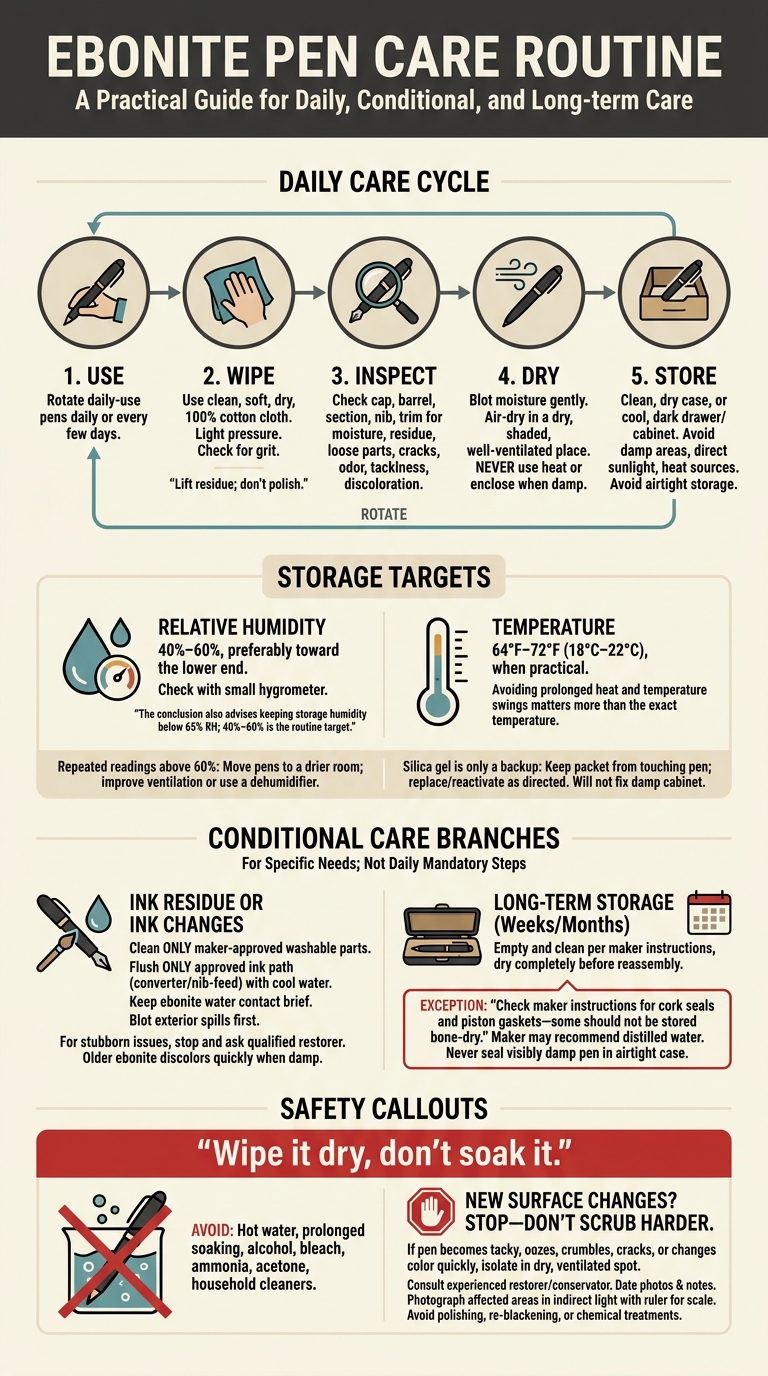
My rule for ebonite in humid weather: wipe it dry, don’t soak it. I aim for storage humidity of 40%–60%, toward the lower end, and keep pens away from sunlight and heat.
Here’s the care routine I follow - and what I suggest for your pen:
- Wipe after use: Use a soft, dry cloth with light pressure.
- Store away from damp air: Choose a cool, dark spot and check humidity.
- Avoid heat and sunlight: Aim for 64°F–72°F when practical; never heat a damp pen to dry it.
- Check for changes: Watch for unusual odor, tackiness, or discoloration.
- Remove ink carefully: Clean only parts the maker says are washable; keep water contact with ebonite brief.
- Prepare for long-term storage: Empty, clean, and dry as directed, checking any special instructions for seals. This is especially important for pens with ebonite feeds that require specific care.
- Rotate daily-use pens: Inspect each pen before putting it back into use.
I treat <u>new surface changes as a reason to stop</u> - not a reason to scrub harder. If your pen becomes sticky, cracks, or changes color quickly, I’d ask a pen restorer before cleaning further.
Ebonite Pen Care in Humid Weather
1. Wipe the Barrel and Cap After Use
Humidity can leave moisture on your pen, while handling leaves oils. Wipe it promptly and gently with a clean, soft, dry, lint-free 100% cotton cloth. Check the cloth for grit or dried ink first - trapped particles can scratch the finish.
Use light, slow strokes on the barrel, cap, grip section, and metal trim. Pay extra attention to areas your fingers touch, the cap lip, and the threads. Switch to a clean part of the cloth when moisture or residue transfers, and keep fibers away from the nib slit and feed channels.
Lift residue; don’t polish. Skip rough paper towels, abrasive cloths, and forceful rubbing. If ink won’t come off easily, stop and clean it separately.
Wipe the pen daily, or sooner if it feels damp or oily. Stop if the cloth snags on a crack or loose trim. Once the pen is dry, store it away from damp air.
sbb-itb-1dd4fe9
2. Store Pens Away From Damp Air
Once the pen is dry, move it to a storage spot with steady conditions.
Choose a cool, dark drawer or cabinet away from bathrooms, sinks, and windows. Avoid damp basements and garages.
Keep relative humidity (RH) around 40%–60%, preferably toward the lower end, and check it with a small hygrometer. Persistent dampness can speed up oxidation and mold growth.
Use a clean, dry case or drawer. Avoid airtight storage that can trap condensation. If readings repeatedly exceed 60%, move the pens to a drier room and improve ventilation or use a dehumidifier.
If humidity stays high, place a silica-gel packet nearby without letting it touch the pen. Replace or reactivate it according to the package directions, and don’t heat it unless the package allows it. Silica gel is only a backup - it won’t fix a damp cabinet. Even in dry storage, pens need protection from heat and sunlight.
3. Keep Pens Away From Heat and Sunlight
Once the pen is dry, heat is the next risk. It can worsen moisture damage, so keep ebonite pens away from direct sunlight, hot cars, radiators, and heating vents. UV exposure can also fade and degrade hard-rubber surfaces over time.
Aim for 64°F–72°F (18°C–22°C) when practical. Avoiding prolonged heat exposure and temperature swings matters more than controlling the exact temperature. UV-blocking glass still lets heat through, so it doesn’t offer complete protection.
Heat can trap moisture left on the pen. Never put a damp pen in a warm, enclosed case. Blot the barrel and cap with a soft, lint-free cloth, then let the pen air-dry in the shade before storing it. Don’t use a hair dryer, heat gun, or radiator to speed up drying.
4. Check for Odor and Surface Changes
After exposure to heat or humidity, check for a strong or unusual rubber, sulfur, or acidic smell. Look over the barrel and cap for dullness, tackiness, brown or olive patches, mottling, or a powdery bloom. A new smell paired with tackiness or spreading discoloration needs a closer look.
Move the pen to a dry, ventilated spot, and keep it separate from other pens while you monitor it. As ebonite degrades, its surface can become acidic, or it can release vapors that may harm nearby materials.
Date your photos and notes. Record the smell, texture, storage conditions, and any recent exposure to water, sunlight, heat, or cleaning products. Photograph affected spots in consistent indirect light, with a ruler beside them for scale.
Avoid polishing, re-blackening, or chemical treatments. To remove surface moisture, use a soft, dry cloth with as little contact as possible. Do not soak the pen. Contact an experienced pen restorer or conservator if it becomes tacky, oozes, crumbles, or changes color quickly.
5. Remove Ink Residue Without Soaking
If ink residue remains, clean only the washable parts. Leftover ink and moisture can speed discoloration. Before changing ink or storing the pen, empty it and flush only the ink path the maker says is safe to flush - usually the removable converter or nib-and-feed assembly. Use cool or room-temperature water.
Keep the barrel, cap, trim, threads, seals, and unknown internal parts dry. If you’re unsure about the pen’s material, filling system, or construction, stop and ask a qualified pen restorer.
Blot newly spilled exterior ink with a soft, dry, lint-free cloth. If residue remains, wipe it with a cloth or swab lightly dampened with cool or room-temperature water, then dry the surface immediately. Older or oxidized hard rubber can discolor quickly when damp, so keep wiping to a minimum on fragile surfaces.
Avoid hot water, prolonged soaking, alcohol, bleach, ammonia, acetone, and household cleaners. They can damage hard rubber or affect seals, adhesives, and other parts. For stubborn deposits, stuck parts, or uncertain vintage construction, stop and ask a qualified pen restorer.
After flushing, let the ink system drain as the maker recommends, and blot any moisture you can reach. Leave the pen uncapped in a dry, shaded place with good airflow until it’s fully dry before reassembly or storage. Don’t trap moisture inside the pen.
6. Clean and Dry Pens Before Long-Term Storage
Putting your pen away for weeks or months? Empty and clean it first to prevent ink from drying out. Follow the maker’s instructions to flush the nib/feed and filling system until the rinse water runs clear. Leftover ink and trapped moisture can cause problems when you store a pen in humid weather.
Let the pen air-dry completely before reassembly - but check the maker’s storage instructions for cork seals and piston gaskets. Some pens shouldn’t be stored bone-dry. The maker may recommend distilled water to keep those seals supple. Don’t use ink or tap water unless the maker says to.
Once the pen is fully dry - or prepared according to the maker’s seal instructions - put it back in storage. Never seal a visibly damp pen in an airtight case. Any remaining moisture needs a way to escape, especially during humid weather.
7. Rotate Your Daily-Use Pens
Once a pen is dry and stored properly, rotate it with your other daily-use pens so each gets inspected and dried between uses. Switch pens daily or every few days, depending on how often you use them. Keep the cycle consistent: use → wipe → inspect → dry → store.
Before using a pen again, check the cap, barrel, section, nib, and trim for moisture, ink residue, loose parts, damaged threads, and nib misalignment. Look for new discoloration, a chalky surface, tackiness, or an unusual odor on the ebonite. These checks help you spot small changes early.
If ink flow remains abnormal after gentle cleaning, don’t force the pen. Consult a qualified pen technician. Set aside any pen with cracks, warping, or surface changes that persist, and photograph it before seeking advice.
Conclusion: Keep Ebonite Dry and Check It Regularly
Make care a simple routine: dry, store, and inspect. Dry the pen gently, and keep it away from heat, UV light, and damp air.
Before storage, flush only as needed, empty the pen, and let it dry completely as part of your maintenance routine. Don’t soak ebonite: aged hard rubber can discolor quickly when wet, especially in warm or hot water. Keep storage humidity below 65% relative humidity.
Check regularly for odor, tackiness, discoloration, cracks, or other surface changes.
FAQs
How can I distinguish normal ebonite odor from damage?
Ebonite has a faint rubber or sulfur-like scent by nature. You may notice it more when the material warms up or you rinse it with warm water.
Surface oxidation occurs as sulfur reacts with moisture and light. Look for a brownish, olive, or dull gray film that feels rough, dry, or chalky compared with the protected areas under trim rings. If that discoloration comes with an unpleasant odor, it often means humidity has interacted with released sulfur.
How do I know my pen is fully dry?
Wipe all metal seams, the nib, and trim thoroughly with a microfiber cloth to remove moisture and skin oils. After cleaning or rinsing, shake off excess water. Then leave the pen uncapped in a dry, well-ventilated room for a few hours.
Before storing the pen, make sure it’s at room temperature and check the surface. If you notice a dull film or moisture, give it more time to air dry.
Can humidity-related discoloration be reversed?
Yes, often. Oxidation usually affects only the surface, leaving the darker ebonite underneath intact. Gentle polishing can remove the dull gray or brown film. But go slowly: polishing can wear down imprints or change the pen’s shape.
Surface dyeing is another option. It’s largely reversible and preserves the original texture and historical details. Severe fading, however, may not be fully restorable.