

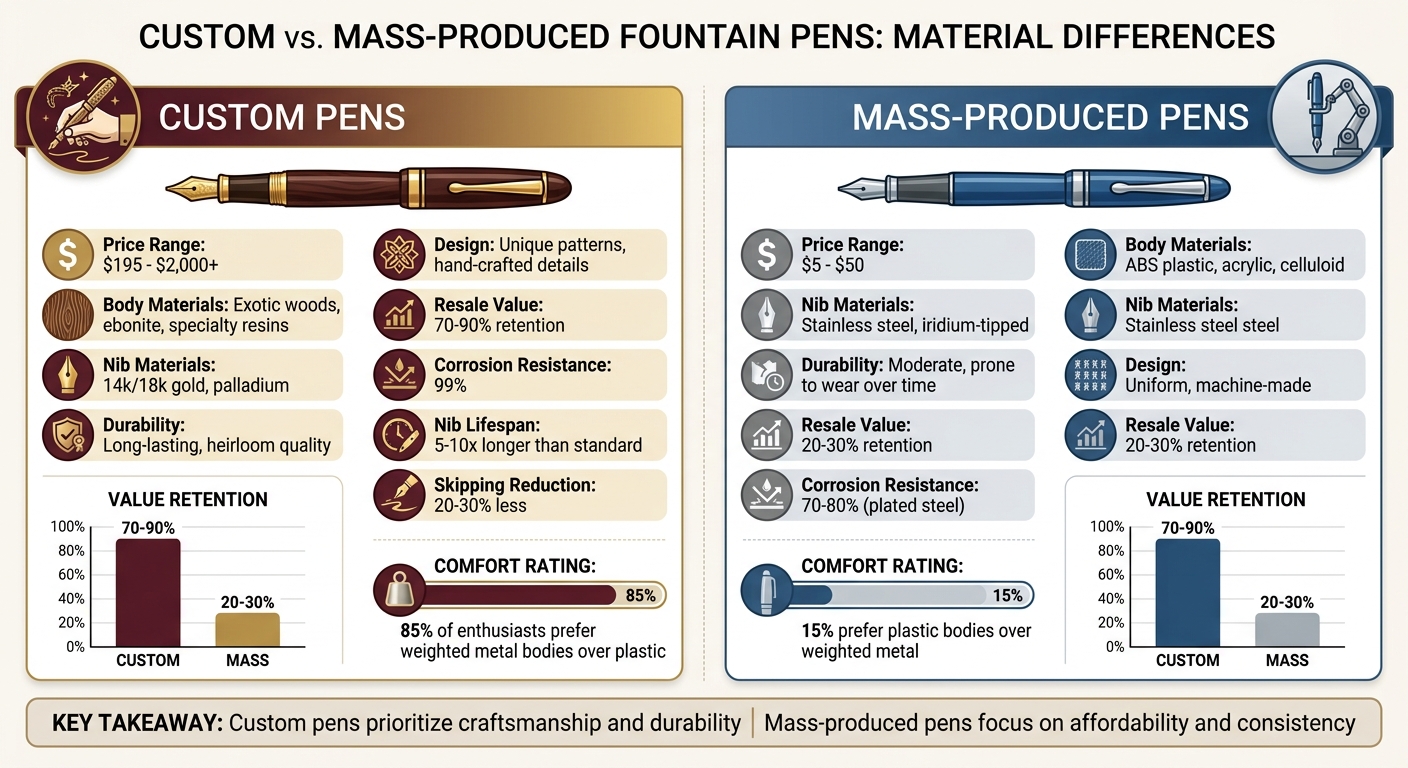
When choosing between custom and mass-produced fountain pens, the materials make all the difference. Custom pens prioritize craftsmanship, using exotic woods, precious metals, and specialty resins, offering a personalized feel and long-lasting quality. Mass-produced pens, on the other hand, focus on affordability and consistency, relying on plastics, steel nibs, and basic alloys. Here's a quick breakdown:
- Custom Pens: Made with premium materials like stabilized wood, 14k/18k gold nibs, and hand-poured resins. These pens offer a smooth writing experience, unique designs, and heirloom durability. Prices range from $195 to over $2,000.
- Mass-Produced Pens: Built for affordability with materials like ABS plastic, brass, and stainless steel nibs. They are reliable and functional but lack the individual character of custom options. Prices typically fall between $5 and $50.
Quick Comparison
| Feature | Custom Pens | Mass-Produced Pens |
|---|---|---|
| Body Materials | Exotic woods, ebonite, specialty resins | ABS plastic, acrylic, celluloid |
| Nib Materials | 14k/18k gold, palladium | Stainless steel, iridium-tipped steel |
| Price Range | $195–$2,000+ | $5–$50 |
| Durability | Long-lasting, heirloom quality | Moderate, prone to wear over time |
| Design | Unique patterns, hand-crafted details | Uniform, machine-made |
Custom pens stand out for their durability, aesthetic appeal, and smoother writing experience, while mass-produced options are budget-friendly and consistent. Whether you value artistry or affordability, the choice depends on your priorities.
Custom vs Mass-Produced Fountain Pens: Material and Cost Comparison
Making Custom Resin & Pens with Jonathon Brooks
sbb-itb-1dd4fe9
Materials in Mass-Produced Fountain Pens
Mass-produced fountain pens focus on affordability and consistent quality by using materials suited for large-scale manufacturing. From plastics to metals and specialized tip alloys, each material contributes to the pen's function and style. When selecting a pen, it is helpful to follow a fountain pen buying checklist to ensure the materials meet your needs.
Plastics and Synthetic Resins
Mass production often relies on ABS plastic and other injection-moldable polymers due to their flexibility in design and cost-efficiency. For instance, premium models like the Parker 51 use acrylic resin, which offers improved durability and a sleek, polished look. Another popular option is cellulose acetate, valued for its ability to create visually appealing designs without significantly raising manufacturing expenses.
The Lamy 2000 stands out with its use of Makrolon polycarbonate resin, a material known for its impact resistance and long-lasting appearance. While plastics dominate the outer structure, metals are equally crucial in defining a pen's durability and functionality.
Basic Metals and Alloys
Stainless steel is a cornerstone material in mass-produced pens, used for nibs, barrels, and clips. Its appeal lies in its strength, resistance to corrosion, and affordability. As EndlessPens explains:
Gold vs steel nibs are a key consideration for manufacturers; gold eventually became too expensive to produce in larger quantities, which is why they turned to lower-cost alternatives such as stainless steel.
For decorative elements, gold-plated steel is a popular choice, offering the look of precious metals without the high price tag. Pens like the Pelikan Classic M200 use brass for internal parts, adding both sturdiness and a satisfying weight. These materials ensure reliability while keeping costs manageable, especially when paired with advanced nib technology.
Tungsten Carbide and Other Tip Materials
In mass production, stainless steel nibs are standard, but their tips are often reinforced with hard-wearing alloys to improve longevity. Although marketed as "iridium", modern tipping materials typically include platinum-group metals such as tungsten, osmium, rhenium, and ruthenium. Tiny pellets of these metals are welded to the nib tip, which is then slit and ground to create a smooth, durable surface.
Untipped steel or titanium nibs, while functional, wear down faster due to paper abrasion. In contrast, nibs with reinforced tips can last for decades, often outliving their original owners. Although true iridium has not been widely used since the 1950s, the term persists in marketing. These reinforced tips, while durable, tend to offer a stiffer writing experience compared to the more flexible nibs found in custom or high-end pens.
Materials in Custom Fountain Pens
When it comes to custom fountain pens, the materials used are what truly set them apart. Unlike mass-produced pens that focus on consistency, custom creations embrace rare and distinctive materials to craft writing instruments that feel personal and unique. These materials bring a level of artistry and individuality that transforms each pen into something truly special.
Exotic Woods and Natural Materials
Custom pen artisans often turn to exotic hardwoods to showcase nature's intricate designs. Take African Gaboon Ebony, for instance - it offers a rich, deep black finish that feels both luxurious and timeless. Meanwhile, woods like East Indian Rosewood and Bethlehem Olivewood bring warm, golden hues and striking grain patterns that make each pen completely one-of-a-kind. Burls such as Thuya, Amboyna, and Jarrah are especially sought after for their chaotic, almost sculptural patterns that elevate the pen's visual appeal.
At Highlander Pen in Lone Tree, Colorado, every piece is meticulously hand-turned using certified historic woods and museum-grade burls. Prices for these handcrafted pens range from $112 to $247 USD, depending on the rarity of the wood and the trim material selected. The woods are carefully air-dried for years and then treated with stabilizing solutions to ensure durability. Similarly, Silverburl Pens takes extra steps to reinforce their wooden pens by lining critical areas with acrylic resin, preserving the natural beauty while adding structural strength. For those who want something beyond wood, custom pen makers also work with high-quality specialty resins and fountain pens crafted from unique materials.
High-Quality Resins and Specialty Materials
In contrast to the injection-molded plastics used in mass production, custom pen makers use premium resins that are visually stunning and durable. These resins often include hand-poured acrylics that are embedded with natural elements like pearl, opal, or even snake skin, creating a mesmerizing depth and texture. Some artisans take it a step further by incorporating eco-friendly materials such as wheat straw into their resin blends. This approach combines the strength and durability of modern materials with the organic charm of natural elements. These choices not only enhance the pen's appearance but also make them highly collectible and treasured by enthusiasts.
Material Comparison: Custom vs. Mass-Produced Pens
Looking at the materials used in custom and mass-produced pens, the differences are striking. Mass-produced pens, typically priced between $5 and $50, often use synthetic resins and steel nibs. For example, Fountain Pen Revolution offers pens in the $20 to $40 range, designed for everyday use and durability.
On the other hand, custom pens are crafted with premium materials like exotic woods (e.g., cocobolo, stabilized burl), precious metals like 14k or 18k gold, and specialty finishes such as ebonite or urushi lacquer. These materials not only make custom pens visually stunning but also ensure they last for generations. Prices for custom pens start around $195 for an Edison Collier and can exceed $2,000 for artisan-made pieces like those from Nakaya.
Comparison Table
| Material Type | Mass-Produced Examples | Custom Examples | Key Differences |
|---|---|---|---|
| Body Materials | ABS plastic, celluloid (e.g., Pilot Varsity, Lamy Safari) | Exotic woods (burl, cocobolo), ebonite (Edison Collier) | Mass-produced: Lightweight and uniform but more prone to scratches ($10–$50). Custom: Heavier, with unique grain patterns and superior durability ($200–$1,000+). |
| Nib Materials | Stainless steel, iridium-tipped (e.g., Kaweco Sport, Platinum Preppy) | 14k/18k gold, palladium (e.g., Pelikan M1000 custom) | Mass-produced: Reliable but stiffer, with faster wear. Custom: Smoother ink flow and higher corrosion resistance (up to 99% vs. 70–80% for plated steel). Costs 2–10x more. |
| Trim & Accents | Brass plating, chrome (e.g., Parker IM, Sheaffer Prelude) | Sterling silver, rhodium, solid gold (e.g., Visconti Homo Sapiens) | Mass-produced: Susceptible to tarnish and peeling. Custom: Polished finishes with hypoallergenic properties and heirloom quality ($50–$500 extra). |
| Specialty Materials | Basic injection-molded resins (e.g., TWSBI Eco) | Stabilized mammoth ivory, urushi lacquer (Nakaya Piccolo) | Mass-produced: Synthetic uniformity. Custom: Features natural patinas and artisanal craftsmanship, often costing 10–50x more. |
Custom pens stand out for their durability and craftsmanship. For instance, gold nibs in custom pens resist corrosion indefinitely, while steel nibs in mass-produced pens may rust over time if not properly plated. Similarly, stabilized woods used in custom designs can handle flexing without cracking, unlike ABS plastic, which may split under stress. While mass-produced pens offer a consistent, glossy finish, custom pens showcase natural grain patterns and intricate hand-engraved details, enhancing their resale value by as much as 200% to 500%.
Benefits of Custom Materials for Pen Collectors
Custom pens bring a range of perks to the table, from enhancing the writing experience to boosting their collectible appeal and offering a more sustainable option for pen enthusiasts.
Better Writing Experience
Custom materials can completely transform how a pen feels in your hand. Materials like wood and metal often provide a more comfortable grip compared to plastic, especially during long writing sessions. For example, the Waterman Hémisphère incorporates slim, chiseled detailing that improves tactile feedback and focus. Author Stephen King once shared how writing by hand offers a unique mental benefit:
It slows you down. It makes you think about each word as you write it.
The texture and feel of premium materials - like exotic woods or precious metals - add a level of sophistication that mass-produced plastics just can’t match. Take Montegrappa’s tobacco and amber patterned barrels, which were designed with ergonomic comfort in mind for extended writing sessions. These small but meaningful details elevate the overall experience, making writing not just functional but genuinely enjoyable.
Collectible and Artistic Designs
Pens crafted from rare or unique materials often double as works of art. Whether it’s stabilized burl wood or urushi lacquer, each pen carries its own character, with natural variations that make it stand out from mass-produced options. A great example is the Montegrappa "Ernest Hemingway" Limited Edition, which features intricate designs and rare materials, priced at around $1,100. Additions like hand-engraved details and the use of precious metals further enhance their value as collectible items.
Durability and Eco-Friendliness
Custom pens are built to last, often using high-quality materials and refillable ink systems that outlive disposable pens. For instance, the Pelikan 100N features a specialized refilling system designed to make ink replenishment clean and easy, encouraging long-term use. By choosing a pen designed for longevity, you’re not just investing in a durable writing tool - you’re also making a more sustainable choice by reducing waste over time.
Custom pens strike a balance between function, artistry, and environmental awareness, making them a thoughtful choice for collectors and writers alike.
Conclusion
Custom pens focus on craftsmanship and durability, while mass-produced pens prioritize affordability and consistent performance. Mass-produced options typically use cost-effective materials like plastics, basic alloys, and stainless steel nibs, ensuring predictable results at a lower price point. On the other hand, custom pens often incorporate exotic woods, precious metals such as 14k or 18k gold nibs, and hand-poured resins, delivering a superior writing experience and heirloom-level quality.
The materials used in custom pens truly set them apart. Where mass-produced pens rely on synthetic materials for uniformity, custom pens elevate writing into an art form with natural grains, rich finishes, and exceptional durability. Gold nibs in custom pens, for instance, can last 5–10 times longer than standard nibs and reduce skipping by 20–30%. The tactile experience is also a game-changer - 85% of surveyed writing enthusiasts report greater comfort when using pens with weighted, precious metal bodies compared to plastic ones.
Custom pens also excel in retaining value. They often hold 70–90% of their resale value after years of use, while mass-produced pens typically retain just 20–30%. As pen expert Stephen Brown puts it, custom materials can transform a simple tool into something more - a true writing companion.
If you're intrigued by the idea of custom-quality pens without the hefty price tag, check out Fountain Pen Revolution (https://fprevolutionusa.com). They offer custom-tuned steel nibs and high-quality resins starting at under $20, with starter sets from $35 and premium options from $44. It’s a great way to experience the charm of custom pens without breaking the bank.
FAQs
Do gold nibs actually write better than steel nibs?
Gold nibs are known for offering a smoother and more flexible writing experience, particularly in 14k and 18k versions. Their softness adds a touch of luxury and allows for greater responsiveness while writing. Plus, they resist corrosion, ensuring consistent performance over time. On the other hand, steel nibs are less flexible but far more durable and budget-friendly, making them perfect for everyday use or those new to fountain pens. In short, gold nibs shine in elegance and responsiveness, while steel nibs are all about reliability and affordability.
How do I care for a wood or resin custom pen so it lasts?
To keep your wood or resin custom pen in good shape, steer clear of exposing it to excessive moisture, heat, or direct sunlight. Regularly clean the nib and barrel using a soft, damp cloth, and store the pen in a cool, dry spot. If you have a wooden pen, applying a light coat of a suitable oil from time to time can help preserve its finish. Resin pens are lower maintenance but should always be kept away from harsh chemicals.
Which materials make a pen feel heavier or more comfortable in hand?
Heavier pens that prioritize comfort often incorporate dense materials such as brass, ebonite, and exotic woods. These materials not only improve weight distribution but also offer a more satisfying tactile experience. Custom pens sometimes include specialized materials like titanium alloys, stainless steel, or gold alloys. Titanium stands out for its strength while remaining lightweight, whereas brass and stainless steel provide durability and a solid, weighty feel - ideal for extended writing sessions.