

When choosing a fountain pen, carbon fiber and resin are two popular materials, each offering distinct benefits. Here's a quick breakdown:
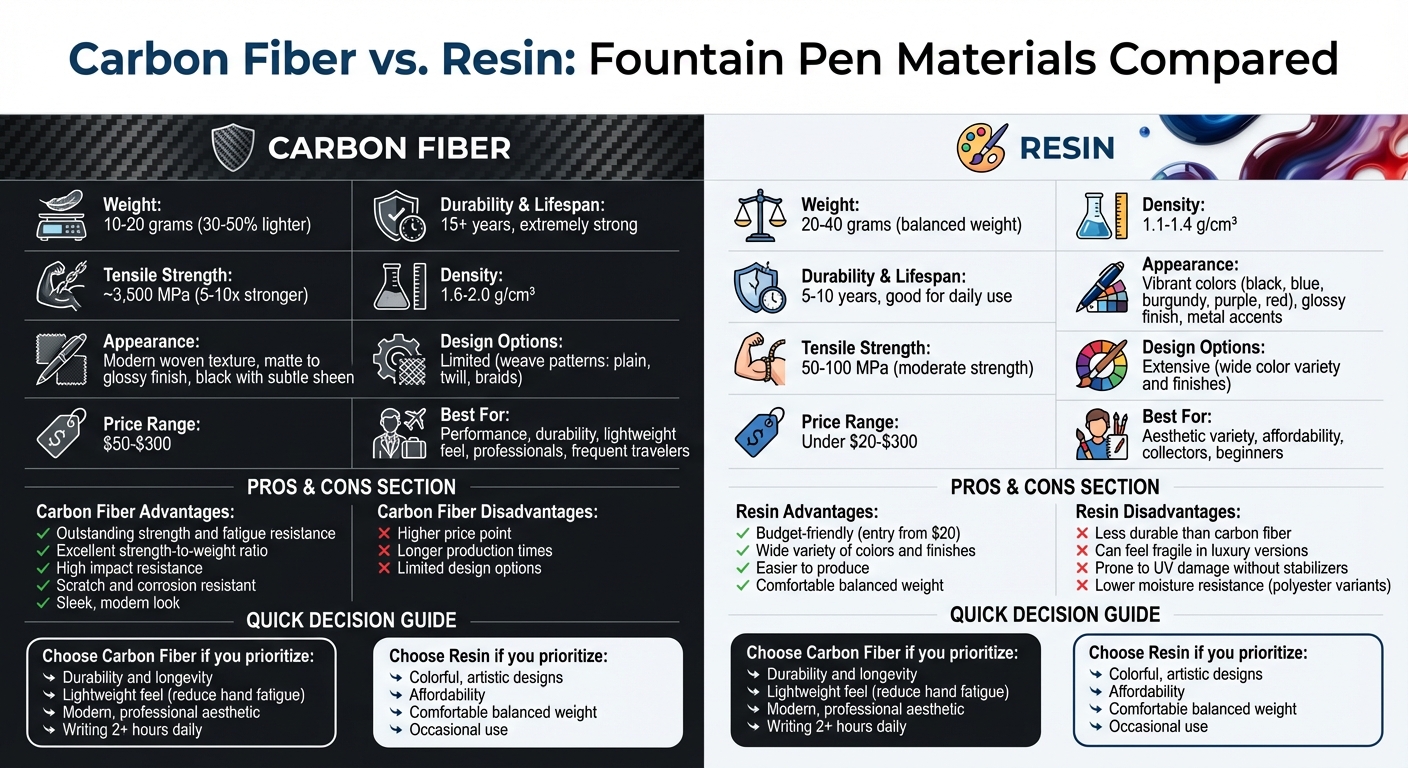
- Carbon Fiber: Durable, lightweight (10–20 grams), and resistant to scratches and corrosion. It has a modern, woven texture but fewer design options. Prices typically range from $50 to $300.
- Resin: Offers vibrant colors, glossy finishes, and a balanced weight (20–40 grams). It's more affordable, starting under $20, but less durable than carbon fiber. Resin pens can last 5–10 years with moderate use.
Quick Tip: If you prioritize durability and a lightweight feel, carbon fiber is ideal. For colorful designs and affordability, resin is the way to go.
Quick Comparison
| Feature | Carbon Fiber | Resin |
|---|---|---|
| Durability | Extremely strong, long-lasting | Good for daily use, less durable |
| Weight | Lightweight (10–20 grams) | Balanced (20–40 grams) |
| Appearance | Modern, woven texture | Glossy, vibrant colors |
| Price Range | $50–$300 | $20–$300 |
| Lifespan | 15+ years | 5–10 years |
Your choice depends on your priorities: performance or aesthetic variety.
Carbon Fiber vs Resin Fountain Pens: Complete Material Comparison
Monteverde Innova Fountain Pen - Carbon Fiber/Gunmetal (Limited Edition) Long Term Review
sbb-itb-1dd4fe9
Carbon Fiber Properties
Carbon fiber stands out for its incredible strength, lightweight nature, and striking appearance. This composite material marries durability with comfort, making it a popular choice for various applications. Let’s dive into the specific properties of carbon fiber and see how they compare to resin.
Durability of Carbon Fiber
When it comes to tensile strength, carbon fiber is in a league of its own, exceeding 3,500 MPa - about 5 to 10 times stronger than standard resins, which typically range between 50 and 100 MPa. Its composite structure also makes it highly resistant to abrasion, chemical exposure, and even ink-induced corrosion caused by humidity. Unlike some resins that may discolor over time or metals that are prone to rust, carbon fiber maintains its structural integrity for decades when crafted with care. Now, let’s explore its lightweight advantages.
Weight of Carbon Fiber
Carbon fiber's density falls between 1.6 and 2.0 g/cm³, making it impressively light. For example, carbon fiber pens generally weigh between 10 and 20 grams, which is 30–50% lighter than resin pens that usually range from 25 to 40 grams. Some carbon fiber pens even tip the scales at under 15 grams, offering a well-balanced feel that minimizes hand strain. Its lightweight design naturally complements its unique visual appeal.
Style and Appearance of Carbon Fiber
One of carbon fiber’s most recognizable traits is its woven pattern, which exudes a sleek, modern aesthetic. The layering of carbon filaments within a resin matrix, followed by curing, creates finishes that range from matte to glossy. The result is a distinctive black weave with a subtle sheen that many describe as having a "stealth fighter" vibe. This contemporary yet understated style makes carbon fiber an excellent choice for fountain pens that are both functional and visually appealing.
Resin Properties
Resin stands out for its vibrant finishes and a comfortable, balanced feel in hand. This synthetic polymer blends functionality with visual appeal, making it a favorite among both writers and collectors.
Durability of Resin
While resin doesn't match the extreme toughness of carbon fiber, it holds up well for everyday use. It resists minor scratches and dings, maintaining its look even after years of regular handling. This durability makes it a practical choice for daily writing needs and beginners.
Weight of Resin
Resin fountain pens are known for their comfortable weight, striking a perfect balance for long writing sessions. They feel solid in the hand without being too heavy, helping to reduce fatigue during extended use.
Style and Appearance of Resin
One of resin's standout qualities is its design versatility. It offers a wide range of colors, from timeless blacks and burgundies to striking blues and purples. The material's smooth, glossy finishes enhance its depth and vibrancy, making it visually appealing. Resin pens often feature metal accents, such as gold or rhodium-plated trims, creating countless aesthetic possibilities. Its ability to hold rich, saturated colors makes it a go-to choice for collectors seeking artistic and unique pens. Popular options include black, blue, brown, burgundy, purple, and red. For instance, the Pilot Falcon Resin Blue, priced at approximately $224, showcases resin's ability to combine stunning aesthetics with personalized touches like engraving.
These features highlight resin's appeal and set the stage for comparing its qualities with carbon fiber.
Carbon Fiber vs. Resin: Side-by-Side Comparison
Comparison Table
When deciding between carbon fiber and resin for fountain pens, it's helpful to compare their key traits. Each material offers unique benefits, from durability to visual appeal, making the choice largely dependent on personal preferences and priorities. Beyond material, your fountain pen nib size also plays a crucial role in the writing experience.
| Feature | Carbon Fiber | Resin |
|---|---|---|
| Density | ~1.6 g/cm³ | Typically 1.1–1.4 g/cm³ |
| Tensile Strength | ~3,500 MPa | Moderate; suitable for daily use |
| Weight | Extremely lightweight; great for long writing | Balanced weight; comfortable for hours |
| Corrosion Resistance | Excellent; non-metallic | Good; resists minor scratches |
| UV Resistance | High with protective coating | Moderate; stable indoors |
| Thermal Expansion | Almost zero | Minimal under typical conditions |
| Design Options | Limited to weave patterns (plain, twill, braids) | Extensive colors and finishes |
| Appearance | Sleek, technical look with visible fiber patterns | Glossy and vibrant |
| Durability | Extremely strong but prone to brittle failure | Durable for everyday handling |
| Best For | Those prioritizing performance and lightness | Writers who value variety and comfort |
This breakdown highlights the strengths of both materials, offering a clearer picture of what each brings to the table. Whether you're drawn to carbon fiber's high-performance edge or resin's vibrant versatility, the choice ultimately depends on your priorities.
Pros and Cons: Carbon Fiber vs. Resin
Advantages and Disadvantages
When deciding between carbon fiber and resin, it’s all about balancing their strengths and limitations to suit your needs. Here's a quick breakdown of their key pros and cons:
| Aspect | Carbon Fiber | Resin |
|---|---|---|
| Advantages | • Outstanding strength and resistance to fatigue • Excellent strength-to-weight ratio (weighs half as much as aluminum but retains its strength) • High impact resistance and durability over time • Sleek, modern look with visible weave patterns |
• Budget-friendly (entry-level options like LAMY Safari cost $20–$35) • Wide variety of colors and finishes • Smooth, glossy surface with a timeless design • Easier to produce and process |
| Disadvantages | • Higher price due to complex materials and manufacturing • Longer production curing times |
• Can feel fragile, especially in luxury "precious resin" versions • Less rigid compared to carbon fiber • Prone to UV damage without stabilizers (may yellow or crack) • Polyester variants have lower moisture resistance • May feel less solid or substantial |
These comparisons highlight the key factors to consider when choosing between the two materials.
Carbon fiber pens, often priced around $280, are a premium choice for those seeking durability and performance. In contrast, resin pens range from $20 to $300, offering options for various budgets and aesthetic preferences. However, as Sam Di Nardo from Dayspring Pens pointed out regarding luxury resin pens:
Montblanc's signature resin barrel seemed to be brittle, and I do have a concern about the durability of the pen and how much usage it will be able to withstand.
This insight underscores that while resin pens can look stunning, their durability might not always match their appearance. On the other hand, The EXBuild Team suggests a practical approach when working with these materials:
Print quick, accurate prototypes with resin for testing and validation, then switch to carbon fiber for parts that need strength, longevity and performance.
So, whether you prioritize lightweight strength or a variety of designs, your choice will ultimately depend on what matters most to you - performance or visual versatility.
How These Materials Are Used in Modern Fountain Pens
Carbon fiber has carved out a space in luxury fountain pen design, thanks to its impressive strength-to-weight ratio. This material is often used to create pens that are both lightweight and highly durable. For example, models like the Montblanc Heritage Rouge et Noir and certain Pilot Custom 823 variants feature carbon fiber shells layered with epoxy resin, creating a smooth, polished finish. The Montegrappa Chaos takes it a step further by incorporating forged carbon patterns into its barrel, resulting in a pen that weighs just 18 grams while offering exceptional impact resistance. These properties make carbon fiber pens a favorite among professionals and frequent travelers, providing excellent balance and reducing vibration for those who write for extended periods, making it easier to maintain your fountain pen for long-term use.
On the other hand, resin stands out for its versatility and vibrant aesthetic appeal. Found in both budget-friendly and premium fountain pens, resin is a go-to material for its adaptability. Acrylic and celluloid-based resins are used in everything from Fountain Pen Revolution's beginner models, priced under $50, to high-end options like the Pelikan Souverän [3, 23]. The ability to cast and shape resin allows for intricate color patterns and striking designs that attract collectors. Pens like the Faber-Castell Loom highlight resin's ergonomic capabilities with seamless body-cap integration, while luxury models such as the Aurora Optima use stabilized resin for glossy, fade-resistant finishes.
Current design trends reflect these materials' unique strengths. Carbon fiber has seen a 20% increase in pen releases since 2020, with woven patterns contributing to a sleek, modern look. Examples like the Caran d'Ache Varius pair carbon fiber with titanium hardware, creating a minimalist yet luxurious aesthetic. Meanwhile, resin designs are leaning into marbled and stabilized finishes, often incorporating embedded particles for a one-of-a-kind, artisanal appearance. Translucent resins that mimic a glass-like effect have also gained traction, catering to enthusiasts seeking personalized, standout designs.
When it comes to the writing experience, these materials shine in different ways. Carbon fiber's lightweight nature is ideal for those prone to hand fatigue or involved in long writing sessions, offering durability without adding bulk. Resin, with its density of around 1.2 g/cm³, provides a warm and tactile feel that many beginners and artists appreciate. Its lightweight structure and stable balance enhance comfort during extended use, while its non-conductive properties help minimize issues like static ink buildup, which can prevent a fountain pen from not writing properly. Whether through cutting-edge engineering or eye-catching artistry, both carbon fiber and resin bring distinct advantages to modern fountain pens, elevating the writing experience in unique ways.
How to Choose Between Carbon Fiber and Resin
This guide will help you align material features with your personal writing preferences.
Start by evaluating your writing habits. If you write for more than two hours daily, carbon fiber might be your best bet. Its lightweight design (12–18 g) can help minimize hand fatigue. On the other hand, ebonite and acrylic pens, which weigh slightly more (20–35 g), are a great choice for occasional use.
Next, think about your budget. Resin pens are generally more affordable, starting at less than $20 and going up to around $100. Carbon fiber pens, however, tend to be pricier, with options ranging from $50 to $300. For those on a tighter budget, Fountain Pen Revolution offers resin pens for under $30 and carbon fiber models in the $50–$100 range.
Appearance also plays a role. Surveys reveal that 62% of people prefer resin pens for their vibrant, classic designs, while 38% lean toward the modern, matte finish of carbon fiber. If you're after a sleek, professional vibe, carbon fiber is the way to go. But if you want something artistic and customizable, resin offers plenty of charm.
Durability is another factor to consider. Carbon fiber pens are built to last, often enduring 15+ years of heavy use while resisting scratches. Resin pens, though less durable, can still hold up for 5–10 years with moderate use and can be polished to maintain their appearance.
Finally, try before you buy. Visit a store to test out different pens or explore Fountain Pen Revolution's starter sets, which start at $35. This hands-on approach can help you find the perfect grip and balance for your writing style.
Conclusion
When it comes to choosing between carbon fiber and resin, the decision ultimately hinges on your personal needs and preferences. Carbon fiber stands out for its durability and lightweight feel, making it a favorite for professionals on the go or anyone looking for a pen that can handle daily use without showing wear. On the other hand, resin offers an array of vibrant designs and budget-friendly options, appealing to collectors and casual users alike.
Each material has its strengths, and neither is a one-size-fits-all solution. If you’re looking to reduce hand fatigue during long writing sessions, carbon fiber’s lighter weight (10-20 grams) might be the better fit. But if you’re drawn to colorful patterns or working within a tighter budget, resin’s 20-40 gram range provides both visual appeal and affordability. Both materials cater to different priorities, making it easier to find one that aligns with your lifestyle.
Think about how you’ll use your pen. A business professional carrying a pen daily in a briefcase may appreciate carbon fiber’s scratch resistance and impressive longevity of over 15 years. Meanwhile, a student or hobbyist writing at a desk might prefer resin’s vibrant designs and accessible price point, with a lifespan of 5-10 years. These practical considerations can simplify your choice.
Fountain Pen Revolution offers a variety of pens in both carbon fiber and resin, with resin models starting at under $20 and carbon fiber options ranging from $25 to $50. Their starter calligraphy sets, priced from $35, allow you to try both materials and find the one that best suits your grip and style.
Ultimately, the best pen is the one that feels right in your hand and meets your needs. Take the time to explore different weights and finishes to discover your perfect match.
FAQs
How can I tell if a pen is real carbon fiber or just a carbon-look wrap?
Real carbon fiber pens stand out with their deep, consistent woven pattern that subtly reflects light. This texture gives them a sleek and polished appearance, unlike wraps, which often look flat or printed. Genuine carbon fiber is known for being lightweight yet strong, offering a smooth and tactile feel. On the other hand, wraps can feel overly light or unbalanced, with a plastic-like surface prone to scratching or peeling. To ensure authenticity, look for sharp and precise engravings.
Will carbon fiber or resin crack if I drop my fountain pen?
Carbon fiber pens are known for their strength and durability, making them resistant to cracking during regular use. However, they aren't indestructible and can break if exposed to excessive force. On the other hand, resin pens, particularly those with transparent barrels, tend to be more fragile. Their brittleness and the possibility of weakening over time make them more susceptible to cracks. To keep both types of pens in good condition, careful handling and proper maintenance are crucial.
How do I clean and store carbon fiber or resin to prevent fading or damage?
To keep your carbon fiber fountain pens in great condition, clean them gently using a pH-neutral shampoo and a microfiber cloth. Avoid using any harsh chemicals that could damage the material. After cleaning, rinse thoroughly and dry with a soft cloth to prevent water spots.
For resin pens, a simple wipe with a lint-free cloth on a regular basis will do the trick. Make sure to store these pens in a cool, dry place to help maintain their shine and longevity.
Always cap your pens when not in use, keep them in protective cases, and avoid exposing them to extreme temperatures or high humidity. These steps will help preserve both the appearance and durability of your pens.