

Ebonite pens lose their deep black color due to oxidation caused by UV light, heat, and moisture. Over time, these factors break down the material’s chemical bonds, releasing sulfur that reacts with air and water, leaving a gray or brown surface. While this discoloration is only surface-deep, it dulls the pen's appearance and can worsen with improper care.
Key Points:
- What causes greying? UV light, heat, and humidity trigger oxidation in ebonite, leading to discoloration.
- How to restore? Clean and maintain your pen gently, polish to remove oxidation, or use black dyes for stubborn discoloration.
- Prevention tips: Store pens in cool, dry, dark places and avoid prolonged sunlight or high humidity.
By understanding these causes and taking preventive steps, you can maintain your ebonite pen’s original look and extend its lifespan.
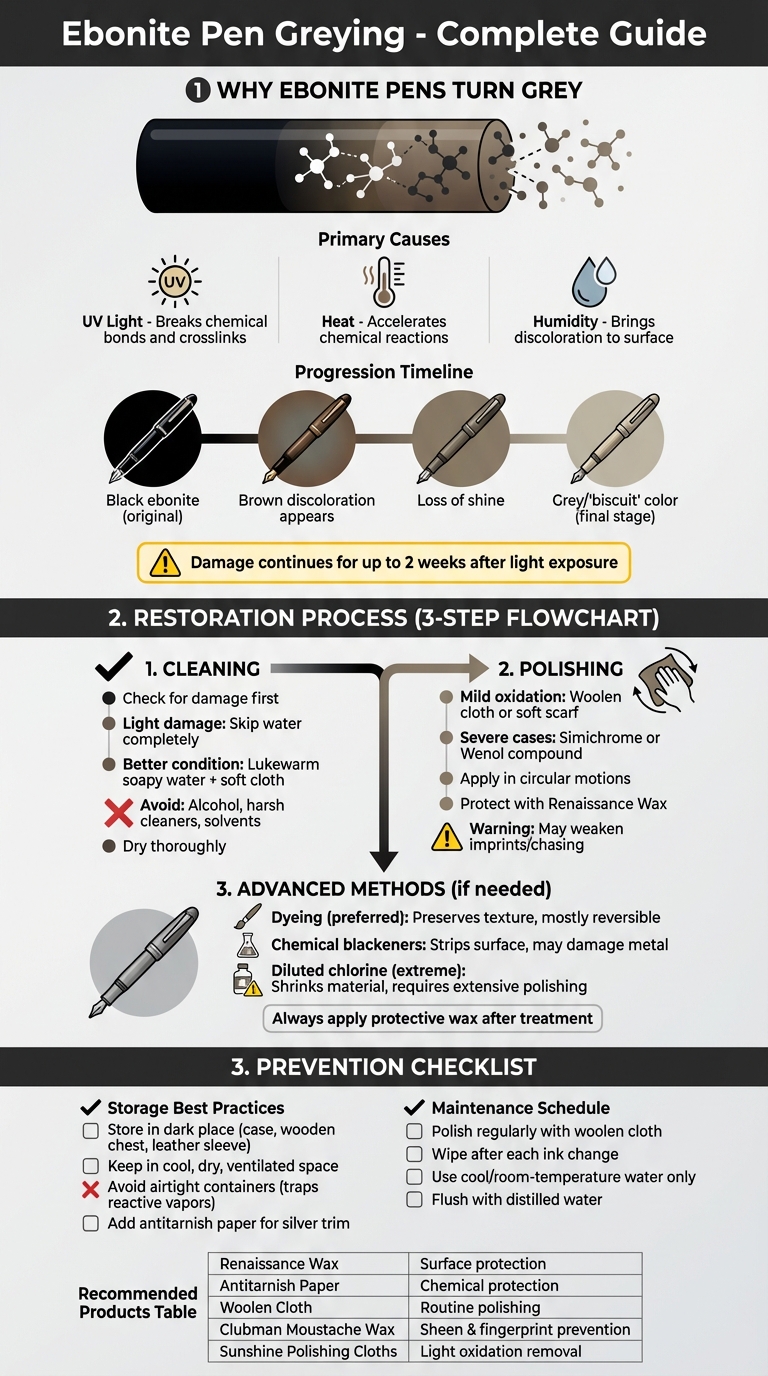
Ebonite Pen Greying: Causes, Restoration Steps, and Prevention Guide
Why Ebonite Pens Turn Grey
Oxidation and Material Composition
The greying of ebonite pens starts at the molecular level. Ebonite is made from rubber molecules bonded together during vulcanization, a process that uses sulfur to create strong chemical crosslinks. These bonds provide the material with its durability and resistance to water and chemicals. This material is also commonly used for ebonite feeds due to its heat-sensitive properties. However, exposure to UV light disrupts these crosslinks, leading to damage.
"The damage done to hard rubber by exposure to light is done by the breaking of chemical bonds, the crosslinks that make the molecular structure of intact hard rubber so impervious to chemical action." - VintagePens.com
When these bonds break, sulfur is released. This free sulfur reacts with moisture in the air, producing acidic vapors and surface oxidation. The result? A brownish or greyish film forms on the pen's surface. Interestingly, this chemical reaction doesn’t stop immediately - it can continue for up to two weeks after the pen is removed from light exposure.
The discoloration process follows a consistent pattern. Black ebonite first turns brown, then loses its shine, and eventually fades to a "biscuit" or grey hue, as collectors often describe it. Thankfully, this damage is superficial - the darker material underneath remains untouched, which is why restoration is possible. These changes, however, make ebonite especially sensitive to environmental conditions, as discussed below.
What Speeds Up the Greying Process
While UV light triggers the initial damage, environmental factors can significantly accelerate the greying process. Sunlight is the primary offender, but heat also plays a major role. Higher temperatures speed up the chemical reactions, while cooler conditions slow them down. For instance, leaving an ebonite pen on a sunny windowsill or inside a hot car creates the perfect environment for greying.
Humidity further exacerbates the problem. UV light may start the damage, but moisture brings the discoloration to the surface. When atmospheric humidity interacts with the sulfur released from light-damaged ebonite, it washes away the degraded surface layer, exposing the grey or brown coloration beneath. This explains why a pen might appear fine when dry but show discoloration or spots after coming into contact with water.
sbb-itb-1dd4fe9
Deoxidizing Blackened Hard Rubber Fountain Pens - with La Belle Epoque Deoxidizer
This restoration process is particularly effective for vintage models and handmade ebonite fountain pens that have lost their original luster.
How to Restore the Original Color
Restoring an oxidized ebonite pen is a step-by-step process that ranges from gentle cleaning to more intensive polishing and, if necessary, chemical treatments. The good news is that the discoloration is only surface-level, meaning the darker ebonite underneath is still intact. Your approach will depend on how severe the oxidation is and whether you need to preserve decorative imprints or chasing.
Cleaning the Pen
Start by checking the pen for signs of damage. If there’s light damage, avoid water-based cleaning altogether - even lukewarm soapy water can worsen fading. For pens in better condition, mix lukewarm water with a mild soap and gently clean the surface with a soft cloth. This will help remove dirt and ink buildup. Stay away from alcohol, harsh cleaners, or solvents. Once cleaned, dry the pen thoroughly using a soft cloth.
If the pen is already significantly faded, skip water-based cleaning and move straight to polishing.
Polishing to Remove Surface Oxidation
Polishing is the next step if cleaning doesn’t restore the pen’s original color. This process removes the oxidized layer to reveal the darker ebonite beneath. For mild oxidation, you can use a clean woolen cloth or even an old scarf to polish the pen’s body and cap. For more severe cases, a specialized polishing compound like Simichrome or Wenol can deliver better results. Apply the compound with a soft cloth, working in small, circular motions. After polishing, protect the surface by applying a thin coat of paste wax or Renaissance Wax, then buff it with a soft cloth.
"By abrasive removal of that surface layer, the original, darker color beneath is revealed. The problem with polishing is that removal of the outer layer also removes or weakens imprints and chasing." - David Nishimura, Vintage Pens
Be cautious when polishing pens with decorative imprints or chasing, as the process can weaken or even erase these details. If polishing doesn’t fully restore the color, it might be time to consider advanced restoration techniques.
Advanced Methods for Stubborn Discoloration
When polishing isn’t enough, you can turn to more advanced options like chemical reblackening or dyeing. Dyeing is often the better choice because it preserves the pen’s original texture and is mostly reversible. Black dyes penetrate the ebonite without significantly altering any imprints.
Chemical blackeners, on the other hand, strip the faded surface while staining the remaining material. However, this method can leave the surface rough and may damage any metal parts. To protect metal components, coat them with petroleum jelly before starting the treatment.
"As a whole, adding pigment to the surface is the preferred method. It is largely, if not completely, reversible, and it leaves the original surface essentially intact." - VintagePens.com
For extreme cases, diluted chlorine can dissolve the damaged surface. But this method will shrink the material and leave it rough, requiring extensive polishing afterward. After any chemical treatment, always apply a protective layer of wax or oil to seal the surface and reduce residual texture.
These advanced methods come with risks, so proceed carefully and weigh whether aggressive techniques are worth it for your pen’s condition.
How to Prevent Greying
Protecting your ebonite pens from greying starts with understanding the main cause: UV light. To minimize exposure, store your pens in a dark place when not in use. Options like a protective case, wooden pen chest, or leather sleeve work well. Avoid leaving pens near windows or in direct sunlight, as light exposure can cause chemical damage that lasts up to two weeks after the initial incident. While restoration methods can help faded pens, these preventive steps are crucial for keeping your ebonite in top condition.
Storage Best Practices
Proper storage is essential for slowing down deterioration. Opt for a cool, dry, and ventilated space. Cooler temperatures help delay wear. Avoid airtight containers, as they can trap reactive vapors, which may harm the pen over time. If your pen has silver trim, consider adding antitarnish paper to the storage area. This paper absorbs free sulfur, protecting both the ebonite and the metal components.
"Hard rubber should be stored away from light and humidity. Lower temperatures will also slow down any deterioration." - vintagepens.com
In addition to thoughtful storage, regular maintenance plays a key role in reducing oxidation.
Regular Maintenance Schedule
Routine care goes a long way in preserving your pen’s finish. Use a clean woolen cloth or soft scarf to polish regularly and maintain its natural shine. After each ink change, wipe the pen with a damp cloth to prevent ink stains on the porous surface. Always use cool or room-temperature water to avoid speeding up fading. For flushing, pen flush or distilled water is ideal since it doesn’t leave mineral deposits behind.
Care Products for Ebonite Pens
Specialized products can help maintain your ebonite pen’s appearance. Renaissance Wax or similar paste waxes create a protective layer against moisture and oxidation. Apply a thin coat after polishing and buff with a soft cloth. For everyday use, some collectors recommend Clubman Moustache Wax, a beeswax-based product that prevents fingerprint stains and adds a protective sheen. If minor oxidation appears, Sunshine Polishing Cloths are great for gently removing it without harsh chemicals.
Here’s a quick look at products that can help preserve your pen’s luster:
| Product | Purpose | Key Benefit |
|---|---|---|
| Renaissance Wax | Surface protection | Shields against humidity and oxidation; smooths residual roughness |
| Antitarnish Paper | Chemical protection | Absorbs sulfur to safeguard ebonite and metal trim |
| Woolen Cloth | Routine polishing | Offers safe, chemical-free shine |
| Clubman Moustache Wax | Sheen & protection | Prevents fingerprints with a beeswax-based barrier |
| Sunshine Polishing Cloths | Light restoration | Removes minor oxidation with gentle abrasion |
Conclusion
UV light weakens ebonite by breaking its chemical bonds, releasing sulfur that reacts with moisture to cause discoloration. Interestingly, this damage may not show immediately - it can take up to two weeks after exposure to become visible, especially when the surface encounters humidity. Understanding this process is crucial when deciding how best to restore and preserve these items.
When it comes to restoration, two main approaches are polishing and dyeing. Polishing removes the damaged, oxidized layer to reveal the original dark color beneath. However, this method comes with risks, such as erasing imprints or slightly changing the pen’s shape. Dyeing, on the other hand, involves adding pigment to the surface. This method preserves historical details and is mostly reversible. Both techniques are effective because the damage primarily affects the surface, leaving the pen structurally intact. This highlights the delicate balance between addressing chemical changes and preserving the pen's appearance.
Preventive care is just as important. To avoid further damage, store pens in a cool, dry place with good ventilation, away from direct light. Also, avoid soaking light-damaged ebonite in water - even cold water can cause immediate fading. Regularly wiping the surface with a soft cloth can help protect against oxidation and maintain the pen’s condition, a simple task for easy disassembly and maintenance pens.
While the molecular damage caused by UV exposure cannot be undone, proper storage, routine upkeep, and thoughtful restoration efforts can keep your pen looking its best for years to come. Taking these preventive steps now can reduce the need for more extensive restoration down the line.
FAQs
Is ebonite greying permanent damage?
Ebonite discoloration caused by light exposure typically results in surface fading rather than permanent damage. This fading can often be improved through polishing or reblackening. However, completely restoring its original look might not always be achievable, especially in cases of severe fading or if the material itself has sustained damage.
How can I restore color without losing imprints?
To bring back the original color of an ebonite pen without harming its imprints, you can try gentle abrasive polishing. This technique carefully removes the faded outer layer, exposing the pen's original color beneath. However, proceed cautiously - overdoing it can weaken or even erase the imprints.
Another option is using staining methods. These can mask discoloration while posing less risk to the imprints, making them a safer alternative for preserving delicate details.
If you're unsure or want to ensure the best outcome, it's wise to consult a professional restoration expert. They have the tools and expertise to handle the process with care.
What’s the safest way to store ebonite pens long-term?
To store ebonite pens safely for the long haul, start by giving them a thorough cleaning to remove any ink or residue. Once cleaned, make sure they are completely dry to avoid any moisture-related damage. Protect the pens from exposure to light, heat, and moisture by keeping them in soft-lined cases or individual slots to prevent scratches. The ideal storage environment is a cool, dark place with a temperature range of 50–75°F and humidity levels between 40–60%. These steps will help prevent oxidation, discoloration, and ensure the pens maintain their appearance over time.