

Budget fountain pens, typically priced between $5 and $20, are affordable and great for beginners. However, they often come with issues like scratchy nibs, inconsistent ink flow, leaks, and ink drying out. The good news? Most of these problems are easy to fix at home with simple tools like water, a soft cloth, and dish soap.
Key Takeaways:
- Scratchy nibs: Misaligned tines or rough edges can be fixed with careful adjustments or smoothing tools like micro-mesh pads.
- Ink flow issues: Clean the nib and feed thoroughly to remove dried ink or residue.
- Leaks: Check for loose or damaged parts, and replace worn-out components like cartridges or converters.
- Dry starts: Regular cleaning and proper storage (nib-up, capped) help prevent ink from drying out.
With a little maintenance, even inexpensive pens can write smoothly and last longer. Tools like bulb syringes, high-quality inks, and replacement parts can further improve performance.
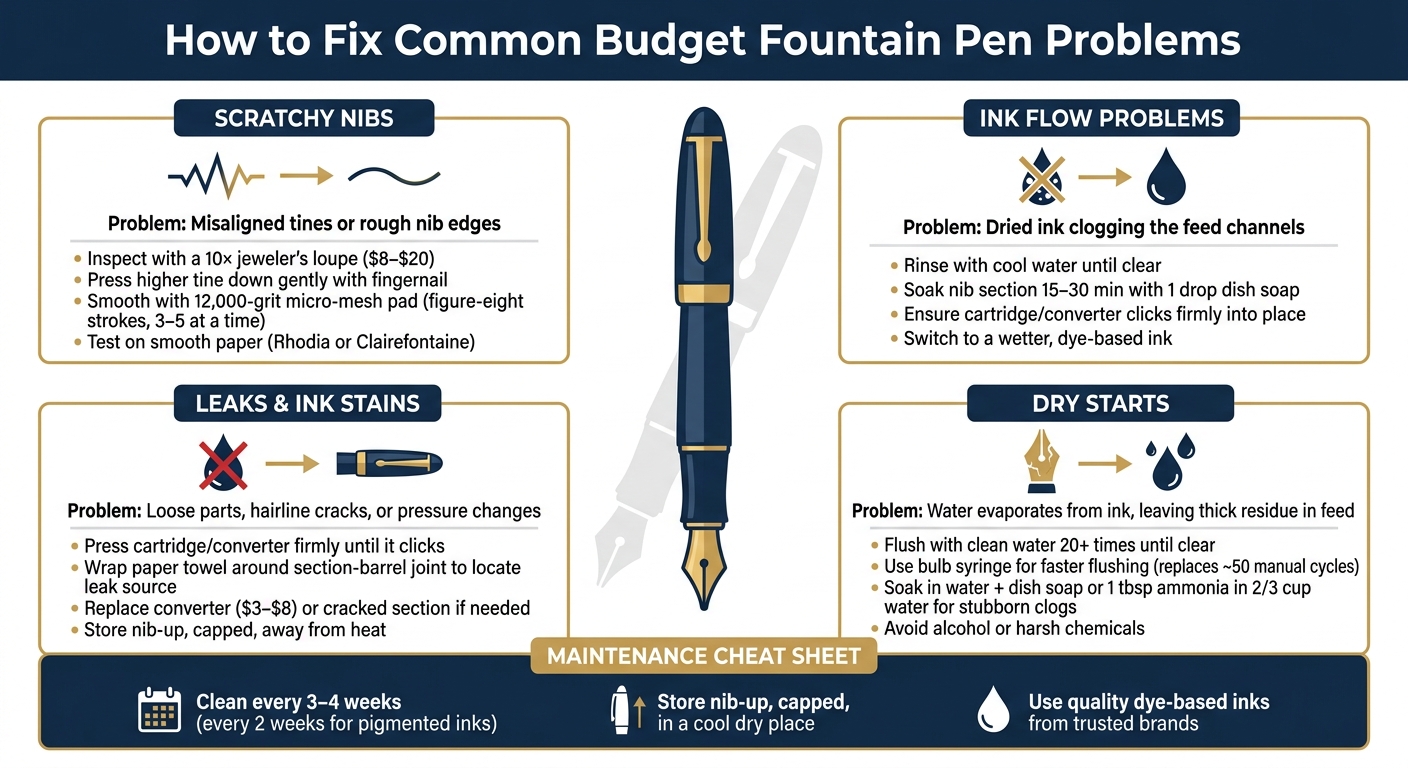
How to Fix Common Budget Fountain Pen Problems
Pen Not Writing? Here's 13 Tips To Get It Working Properly
sbb-itb-1dd4fe9
Scratchy Nibs and How to Fix Them
A scratchy nib is one of the most common frustrations for budget fountain pen users. The usual suspects? Misaligned tines - when one side of the nib sits higher than the other - and rough nib edges, often due to less precise manufacturing. The upside? Most scratchy nibs aren’t damaged; they just need a little fine-tuning and troubleshooting.
How to Spot a Misaligned Nib
Before diving in with tools, take a close look at the nib. A 10× jeweler's loupe (available for $8–$20) and a good light source can help you see the details. Look directly at the nib's tip from the front: the tines should line up evenly, with neither side sitting higher. You can also run the nib gently over your fingertip - if one side catches more than the other, that’s a clear sign of misalignment.
To fix it, use your fingernail to lightly press the higher tine downward in small increments. Check your progress under magnification after each adjustment. Take your time - over-bending can damage the nib or disrupt its ink flow.
How to Smooth a Scratchy Nib
If the tines are aligned but the nib still feels rough, it’s time for some smoothing. A 12,000-grit micro-mesh pad is your go-to tool. Gently write figure-eights on the micro-mesh with very light pressure. After every 3–5 strokes, wipe the nib clean, rinse off any abrasive dust, and test it on smooth paper. Stop as soon as the nib feels better - removing too much material is a common rookie mistake, especially since budget nibs often have minimal tipping material. For slight roughness, writing a few lines on a brown paper bag can act as a gentle polish without overdoing it. Test the nib on quality paper to confirm the improvement.
Testing on the Right Paper
The type of paper you use plays a big role in how a nib feels. Rough or fibrous paper, like standard copier paper, can create drag, even with a well-tuned nib. For accurate results, test your adjustments on smooth, high-quality paper like Rhodia or Clairefontaine. These papers reduce feedback from the texture and let you focus on the nib’s actual performance. Write a mix of upstrokes, downstrokes, and curves to identify and address any lingering rough spots.
Ink Flow Problems and How to Solve Them
Ink flow problems can lead to skips, uneven lines, or even a complete stop in writing. The usual suspect? Dried ink inside the feed. When a pen sits idle for just a few days, the ink's moisture can evaporate, leaving behind a thicker residue. This buildup clogs the narrow feed channels, disrupting the ink flow and causing those frustrating skips or stops.
Cleaning the Nib and Feed
The first step to fixing flow issues is cleaning the nib and feed. Start by rinsing the pen under cool water - warm or hot water can damage internal seals. Continue rinsing until the water runs completely clear. For a more thorough clean, use a converter to draw water in and push it out repeatedly. This helps flush out residue that a simple rinse might miss.
If the clog is particularly stubborn, soak the nib section in cool water for 15–30 minutes. Adding a single drop of mild dish soap can help loosen older ink buildup. After soaking, rinse thoroughly to remove all soap and residue. As Art Brown explains:
"As the moisture evaporates, the remaining ink becomes thicker and eventually forms residue inside the feed. Once enough ink dries there, the flow gets restricted and the pen starts skipping - or stops writing altogether."
Once cleaned, let the nib section air-dry completely on a soft cloth before reassembling. Reassembling while it's still wet can dilute your fresh ink, leading to flow issues right from the start.
Ensuring the Cartridge or Converter Fits Properly
Another common cause of ink flow problems is a loose cartridge or converter. If the connection isn't snug, air can enter and disrupt the ink supply. Make sure the cartridge or converter is firmly seated until you hear a click. Then, give it a gentle tug to confirm it's secure. If it still feels loose, the fitting may be worn out. In this case, replacing the cartridge or converter is a quick and easy fix.
Choosing the Right Ink
The type of ink you use can also affect flow. Inks with higher water content (often referred to as "wet" inks) tend to flow more smoothly and reduce skipping. On the other hand, drier or highly saturated inks can struggle in pens with tighter tolerances, which is a common issue in budget models. Switching to a well-flowing ink can often resolve persistent skipping, even after cleaning.
How to Handle Leaks and Ink Stains
Leaks in budget fountain pens can be frustrating, but they’re often misunderstood. A light mist inside the cap or on the nib is usually harmless - it’s often just nib creep or condensation. A true leak, however, is when ink transfers to your fingers, seeps into threads, or reappears even after cleaning. These leaks are commonly caused by loosely fitted components, tiny cracks in the plastic, or changes in environmental pressure that push ink out. Here’s how to figure out the issue and fix it.
Checking for Loose Parts
Start by inspecting the cartridge or converter. Press it firmly onto the feed nipple until you feel resistance or hear a click. Then, give it a gentle tug to confirm it’s secure. A cartridge that isn’t fully seated is a common cause of leaks and is usually easy to fix. Next, check the nib and feed. The feed should sit flush with the back of the nib when viewed from the side, and the tines at the front should be evenly spaced. Misalignment here is one of many common nib issues that can lead to flow problems. If either feels loose when you wiggle it, the seal may be incomplete, allowing ink to gather in the joint.
To pinpoint the source of the leak, wrap a paper towel around the section-barrel joint. If the towel stays dry but your fingers end up ink-stained, the problem is likely with the nib, feed, or a crack in the grip section. If the towel gets damp, the leak probably comes from the cartridge or converter connection. If none of these adjustments solve the issue, it may be time to replace some parts.
Replacing Worn Components
Sometimes, the best solution is to replace a faulty part. If you see ink inside the piston seal of your converter or if the converter slides too easily, the seal is likely failing. Replacing a standard international converter typically costs between $3 and $8, making it an affordable fix. Similarly, if a cartridge feels loose or has dried ink crusting around the opening, it’s better to replace it than try to salvage it.
Hairline cracks in the section or barrel can be trickier. Use bright light and gently flex the pen to check for cracks. If you find one, replacing the damaged part is the only reliable fix, as tape or glue rarely holds up long-term. Websites like Fountain Pen Revolution offer affordable replacement nibs, feeds, and converters, so you can swap out the problematic part instead of buying a whole new pen.
How to Store a Pen to Prevent Leaks
Proper storage is key to avoiding future leaks and keeping your pen in good shape. Always store your pen capped and nib-up. This position uses gravity to keep ink away from the nib and cap seal, reducing the chance of pooling or leaking. Avoid storing the pen horizontally or nib-down, especially in bags or drawers, as budget pens often have less effective inner caps and seals.
Temperature control is also important. Heat can thin the ink and expand the air inside the pen, causing ink to be forced out through weak seals. To avoid this, keep your pen away from hot environments, like a car parked in direct sunlight. These simple habits can help ensure your budget fountain pen stays leak-free and lasts longer.
Dry Starts and Dried-Out Pens
Cleaning can fix many ink flow problems, but dry starts often need extra attention. A dry start happens when a pen refuses to write after sitting idle for a while. This is especially common with fountain pens for beginners under $50 and usually occurs because ink has dried inside the feed, partially blocking the flow. Since fountain pen ink is water-based, the water evaporates over time when the pen isn’t used, leaving behind a thick residue that clogs the feed's tiny channels.
Flushing and Soaking the Nib
To fix this, start by expelling all the remaining ink, then fill the pen with clean water and flush it repeatedly. A bulb syringe can make this process faster and more effective, pushing water through the grip section with much more force than the pen’s internal mechanism. In fact, it can replace about 50 manual fill-and-flush cycles. Continue flushing until the water runs clear, which may take more than 20 cycles.
For minor dryness, you can simply dip the nib and feed into a small cup of water. This rehydrates the feed and restores ink flow without needing a full cleaning. If the clog is more stubborn, you can add a few drops of dish soap to the water or mix one tablespoon of clear household ammonia with 2/3 cup of water to dissolve dried ink. However, avoid using harsh chemicals like alcohol or Formula 409, as they can damage plastic parts and seals.
"Cleaning a fountain pen is essentially rebooting it, you'll flush out any dried ink or blockages that may have developed over time, and you'll get that ink flowing again as it was originally intended!" - Brian Goulet, Founder, The Goulet Pen Company
Once your pen is clean, how you store it becomes key to avoiding future dry starts.
How to Store a Pen to Keep Ink Fresh
Proper storage is one of the best ways to prevent dry starts. If you won’t be using a pen for more than a few days, rinse the nib and feed with water until it runs clear, then let it air dry completely before capping it. Leaving old ink in the pen can lead to clogs. Store your pen in a cool, dry place away from direct sunlight or heat to slow evaporation and preserve any remaining ink. If your tap water has a high mineral content, consider using distilled water for the final rinse to avoid mineral buildup.
Why Regular Use Helps
Another way to keep your pen in top shape is simply to use it regularly. Fresh ink flowing through the feed naturally helps loosen dried particles and prevents buildup.
"The more you use a pen, the less frequently it needs flushing... because the more ink you run through a pen, the more foreign material it loosens and takes with it." - RichardsPens.com
Even with regular use, pens should still be fully flushed every two to four weeks to avoid issues. If you rotate between several pens, try writing a few lines with each one every few days. It only takes a minute and ensures your collection is always ready to write.
Basic Maintenance Tips for Budget Fountain Pens
Taking care of your budget fountain pen doesn’t have to be complicated. A few consistent habits can keep even an inexpensive pen working smoothly for years instead of just months. Here’s how to make sure your pen stays in top shape.
Clean Your Pen Regularly
Regular cleaning is key. Every 3–4 weeks, flush your pen to clear out dried ink and paper fibers. Start by removing the cartridge or converter, then use cool tap water to rinse the nib and feed. Repeat until the water runs clear. If you’re using highly pigmented inks, you might want to clean it every 2 weeks since these inks leave more residue in the feed’s fine channels. For pens that sit unused for long periods, it’s a good idea to flush them both before and after storage.
A quick monthly inspection will also help you catch any wear before it turns into a bigger problem.
Check for Wear and Tear
Once a month, take a close look at the nib, feed, and converter to spot any signs of damage. Under good lighting, check for issues like misaligned nib tines, bent tips, or small cracks in the grip section. Pay attention to the converter - look for stress marks, cloudiness, or a loose fit on the nipple, as these can cause inconsistent ink flow or messy ink blobs on your paper.
If something seems off, start by giving your pen a thorough cleaning. If the problem doesn’t go away, replacing the damaged part is often the easiest fix. Converters typically cost $3–$6, while nibs range from $8–$20, making replacements affordable and worthwhile.
Choosing the right ink and accessories can also make a big difference in how well your pen performs.
Use Quality Inks and Accessories
Stick with water- and dye-based inks from trusted brands. Cheap or poorly formulated inks can clog or even damage your pen, and budget pens are often more sensitive to ink quality due to less refined feed systems.
To protect your pen, consider using a pen case or sleeve to prevent cracks when carrying it in a bag. A bulb syringe is another handy tool - it makes flushing faster and more effective. For a more comprehensive solution, you can check out the Fountain Pen Tuning/Cleaning Kit from Fountain Pen Revolution ($31.00). This kit includes essentials like pen flush, micromesh, brass flossing sheets, silicone grease, and syringes. It’s well-regarded, holding a 5.0/5 rating from 11 verified reviews as of April 2026.
Conclusion: Getting the Most from Your Budget Fountain Pen
When it comes to budget fountain pens, common problems often stem from issues with the nib, feed, ink, component fit, or storage. The good news? You don’t need pricey tools or expert-level skills to fix them. A scratchy nib can often be smoothed with a light adjustment, dry starts can be resolved with a simple water flush, and leaks are usually fixed by ensuring the cartridge or converter is properly seated.
Taking a step-by-step approach can help you get the best performance from your pen. Start with the basics - rinse the pen, test a different ink, or inspect the nib under good lighting - before jumping to conclusions about defects. With just a little care, even inexpensive fountain pens can provide years of reliable writing.
"This kit makes me feel more competent than I really am. I have fixed a nib with crossed tines, flossed a nib with the brass sheet, [and] changed out nibs successfully." - Colt R., Verified Customer
If you’re thinking about upgrading or need spare parts, Fountain Pen Revolution is a great option. They offer affordable pens, replacement nibs, inks, cases, and essential maintenance tools - including starter kits starting at $35 - so you can keep writing without breaking the bank.
FAQs
How do I know if my pen is actually leaking or just nib creep?
Nib creep happens naturally and results in tiny traces of ink appearing on the nib. A leak, on the other hand, is a bigger issue and can show up as ink pooling around the feed, overly thick or uneven lines, or even ink dripping when the pen isn't being used. To troubleshoot, inspect for a loose cartridge or converter, or hold the pen up to the light to spot any gaps between the nib and feed.
What’s the safest way to clean a clogged feed without damaging the pen?
To clean a clogged feed without risking damage, steer clear of harsh chemicals and excessive force. Start by soaking the nib and feed in room-temperature distilled water for a few hours to help loosen dried ink. If the blockage remains, use a bulb syringe to gently flush lukewarm water through the grip section. For tougher residue, mix in a drop of mild, additive-free dish soap. Be cautious - avoid high water pressure or water temperatures exceeding 100°F, as these can harm the components.
When should I replace the nib, feed, or converter instead of trying to fix it?
If the nib continues to perform poorly even after thorough cleaning and troubleshooting, replacing it is usually the easiest and most budget-friendly solution. Similarly, converters with ongoing problems, such as poor fitting or air leaks, may need to be replaced to maintain consistent ink flow. In cases of severe damage, like a deeply scratched nib, a replacement becomes necessary. Fountain Pen Revolution provides affordable replacement parts, making it simple to get your pen back in working order.