

Brass fountain pens are loved for their durability, heft, and classic look. Compared to plastic, steel, and aluminum, brass offers a unique writing experience:
- Durability: Brass resists dents, scratches, and corrosion better than most materials, ensuring it lasts for decades.
- Weight: Heavier than plastic or aluminum, brass provides better control and stability for smoother writing.
- Aesthetic Appeal: Its golden tone develops a patina over time, creating a personalized, vintage charm.
- Eco-Friendly: Refillable and long-lasting, brass pens reduce waste compared to disposable options.
While plastic is lightweight and colorful, and steel or aluminum offer modern designs, brass stands out for its balance of strength, elegance, and timeless appeal. Whether you're a collector or daily writer, brass pens deliver a premium experience.
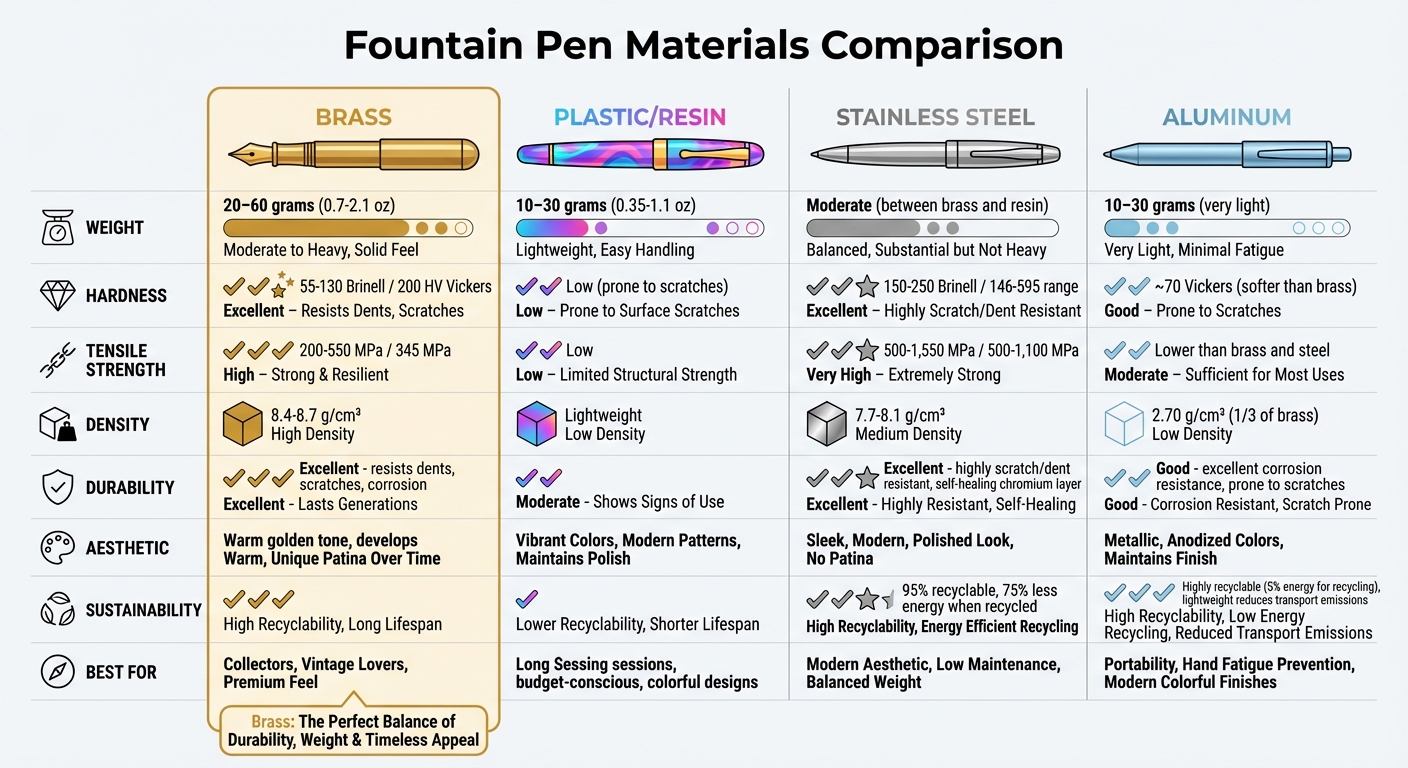
Fountain Pen Materials Comparison: Brass vs Plastic vs Steel vs Aluminum
1. Brass
Durability
Brass, an alloy of copper and zinc, is known for its toughness and long-lasting performance. It's resistant to scratches, dents, and everyday wear, making it ideal for daily use. Unlike steel, brass won't rust, and its precisely machined threads remain reliable for decades. With proper care, a brass pen can become a cherished item passed down through generations. Its durability, paired with its weight, also contributes to a more stable writing experience.
Weight and Balance
Weighing between 20 and 60 grams (around 0.7–2.1 ounces), brass pens offer a solid, substantial feel. This weight provides excellent stability and control, allowing the pen to glide effortlessly across the page. The added heft reduces the need for extra pressure, which helps minimize hand fatigue during extended writing sessions. The cool, solid touch of brass adds to the experience, although it might not appeal to those who prefer lightweight pens.
Aesthetic Appeal
Brass pens go beyond functionality, offering a warm, golden hue that reflects traditional craftsmanship. You can choose a lacquered finish to maintain its shine or let it develop a natural patina over time. This patina evolves uniquely based on handling, skin oils, and the surrounding environment, giving each pen its own distinct personality.
Sustainability
Brass fountain pens are a sustainable option for writing enthusiasts. Their refillable design and lasting durability help reduce the plastic waste associated with disposable pens. By investing in a brass pen, you're not just choosing a reliable tool - you’re also opting for something that can last for decades and even become a treasured heirloom.
sbb-itb-1dd4fe9
2. Plastic/Resin
Durability
Plastic and resin pens hold up well for everyday use, though they don’t match the toughness of brass. Over time, these materials can show scratches and wear more easily than metal pens. That said, high-quality resin pens are a step above disposable options, lasting much longer without the need for polishing to keep their appearance intact. Beyond just durability, their lighter weight also makes them comfortable for regular use.
Weight and Balance
Resin pens are much lighter compared to brass. Most resin fountain pens weigh between 10 and 30 grams (around 0.35–1.1 ounces), which is about half the weight of their brass counterparts. This lighter design makes them a great choice for long writing sessions, especially for those who prefer a pen that doesn’t tire out their hand. While brass pens offer a solid, stable feel, resin provides a smooth, lightweight alternative that many writers find appealing.
Aesthetic Appeal
Resin and acrylic pens shine when it comes to variety and style. They come in a stunning range of colors and designs, from swirled marble patterns to translucent finishes. This gives them a modern, eye-catching look, standing apart from the classic metallic tones of brass. Plus, resin pens maintain their polished appearance effortlessly, requiring little to no extra care.
"Resin fountain pens are lightweight, smooth, and often come in various vibrant colors. They are a popular choice for those looking for a modern and stylish pen." - Wood Fountain Pen Team
Sustainability
While brass pens are known for their longevity and ability to be passed down through generations, resin pens offer a lightweight, low-maintenance alternative that’s still environmentally friendly. Both materials, when used in refillable pens, contribute to reducing plastic waste. Resin pens, in particular, deliver dependable, long-term use with minimal upkeep required.
3. Steel
Durability
Stainless steel stands out for its impressive tensile strength, ranging from 500 to 1,550 MPa, and hardness (Brinell 150–250), far surpassing brass, which typically measures 200–550 MPa and 55–130 on the Brinell scale. This makes steel significantly more resistant to scratches and dents. Its durability is further enhanced by the inclusion of chromium (at least 10.5%), which forms a self-healing layer that protects against corrosion, even in tough environments. Unlike brass, steel doesn’t require regular polishing to maintain its polished look - it stays pristine with minimal upkeep.
Weight and Balance
Steel strikes a perfect middle ground between the heavier weight of brass and the lighter feel of resin. For comparison, brass pens weigh around 20–60 grams (roughly 0.7–2.1 ounces), while steel's density of 7.7–8.1 g/cm³ offers a substantial yet manageable weight. Brass, with its density of 8.4–8.7 g/cm³, can feel heavier in hand, but steel delivers that premium heft without being overly cumbersome. This balance ensures a smooth writing experience, even with low-pressure strokes.
Aesthetic Appeal
Steel is all about sleek, modern elegance. Its silver-gray finish provides a sharp contrast to brass’s warm, golden tones. While brass develops a patina over time, lending it a vintage charm, steel retains its polished, like-new appearance without fading or discoloration. This makes it the ideal choice for contemporary designs that emphasize clean, streamlined aesthetics. Plus, steel components maintain their sharp, polished look with virtually no maintenance required.
"Steel or aluminum can be lighter or more corrosion-resistant depending on finish." - ttxpens
Sustainability
Steel is a highly eco-conscious material. Over 95% of steel is recycled, and producing recycled steel uses about 75% less energy compared to new production. Its durability ensures pens made from steel last for years, reducing the need for replacements. Both steel and brass pens also help combat plastic waste by offering refillable, lifetime-use alternatives.
Up next, we’ll dive into aluminum - a material celebrated for its combination of lightness and resilience.
Hongdian M2 Brass VS Standard AL Version
4. Aluminum
Aluminum presents a different option in the pen world, offering its own set of strengths and characteristics.
Durability
Aluminum is softer than brass, scoring around 70 on the Vickers hardness scale compared to brass's 200 HV. This makes it more susceptible to scratches and minor damage. However, aluminum compensates for this with excellent corrosion resistance, thanks to a natural oxide layer that regenerates itself. Many manufacturers enhance this protection through anodization, creating a tougher surface layer.
Weight and Balance
One of aluminum's standout features is its lightweight nature. With a density of about 2.70 g/cm³ - approximately one-third that of brass - it offers a much lighter alternative. This reduced weight can be a game-changer for writers prone to hand fatigue during extended writing sessions, providing a more comfortable and effortless experience compared to the heavier brass pens. Additionally, the lighter design makes aluminum pens easy to carry, perfect for daily use, and often rank among the best fountain pens for beginners.
"The AL-Sport and AC-Sport models are made of aluminum, which makes them very light in the hand." - EndlessPens
Aesthetic Appeal
Aluminum pens bring a sleek, modern vibe with their metallic finish, standing in sharp contrast to the warm, golden hues of brass. Unlike brass, which develops a patina over time, aluminum maintains its original clean finish. This consistency appeals to those who prefer a polished, contemporary style over the aged look of patina. Anodization not only enhances durability but also allows for vibrant, colorful finishes, offering a range of customization options. The cool, smooth feel of aluminum adds a distinct sensory experience, setting it apart from the warmer touch of brass.
Sustainability
Aluminum also shines in terms of environmental impact. It is highly recyclable, with the recycling process requiring only about 5% of the energy needed to produce new aluminum. Its lightweight properties further reduce transportation emissions over its lifecycle. Like brass, aluminum pens are designed for longevity, featuring refillable ink systems that minimize waste compared to disposable plastic pens. Additionally, aluminum is less expensive per pound than brass, making it an economical choice.
Advantages and Disadvantages
Here’s a breakdown of the strengths and weaknesses of each material:
Brass stands out for its durability and resistance to corrosion. It has a Brinell hardness of 55–73, which is lower than stainless steel's range of 146–595, making it softer in comparison. Weighing between 20–60 grams, brass provides a stable feel, though it might cause fatigue during extended use. Over time, brass develops a distinctive patina that adds character with minimal maintenance. It's also highly recyclable and built to last generations, making it a sustainable choice, even though copper mining has environmental downsides. Compared to brass, plastic and resin emphasize lightweight construction but sacrifice durability, though options like the Falcon Ebonite or Acrylic offer a more robust alternative to standard plastic.
Plastic/Resin is the lightest material option, with a weight range of 10–30 grams. However, it’s more susceptible to cracking and structural wear over time. It lacks the premium feel of metal alternatives and has lower recyclability, contributing to a shorter lifespan and reduced sustainability.
Stainless Steel excels in hardness and abrasion resistance, with a tensile strength of 500–1,100 MPa compared to brass's 345 MPa. Its moderate weight strikes a balance between heft and comfort, while its polished, industrial look resists tarnishing and retains its shine. Stainless steel is highly recyclable and built for long-term use, making it ideal for high-wear applications. While it offers durability and strength, aluminum shifts the focus toward portability, as seen in the aluminum Kaweco AL Sport.
Aluminum combines durability with lightweight portability, weighing just 10–30 grams. It resists corrosion effectively through natural oxidation. Although softer than brass, with a Vickers hardness of about 70 compared to brass's 200, it is surprisingly resistant to denting. Its anodized finish ensures a sleek, consistent appearance over time. Additionally, recycling aluminum requires only about 5% of the energy needed for new production, adding to its appeal as an eco-friendly option.
This comparison highlights why brass remains a standout choice among these materials, offering a unique blend of durability, recyclability, and timeless character.
Conclusion
Brass fountain pens have a timeless appeal that sets them apart. With a weight of 20–60 grams, they provide a sense of stability in hand, while their patina evolves over time, giving each pen a character that plastic, steel, or aluminum simply can't replicate.
But it's not just about looks. Brass stands out for its antimicrobial properties and its ability to be machined into intricate designs. These qualities also make it ideal for sustainable, refillable systems, aligning with modern preferences for durability and eco-conscious choices.
"Brass fountain pens strike the perfect balance between weight and control, resulting in a comfortable and enjoyable writing session." - Wood Fountain Pen Team
For those interested, Fountain Pen Revolution offers brass fountain pens starting at just $35. Whether you're a beginner or a seasoned writer, these pens make the exceptional qualities of brass accessible to all.
With their longevity, refined writing experience, and classic charm, brass pens remain a top choice for anyone looking to invest in a writing instrument that truly stands the test of time.
FAQs
How do I prevent a brass pen from smelling like metal?
To prevent a brass pen from giving off a metallic smell, make sure to clean and polish it regularly. You can use simple household items like a mixture of vinegar and baking soda or a brass cleaner to remove tarnish and any lingering odors. Additionally, store the pen properly in a dry place to reduce exposure to moisture and other elements that might lead to tarnishing or unpleasant smells. Regular care keeps your pen looking great and odor-free.
Will a brass fountain pen’s patina rub off on my hands or paper?
A brass fountain pen can develop a patina over time, which might leave residue on your hands or paper if the surface becomes scratched or oxidized. To keep it looking great and minimize residue transfer, regular cleaning with the right products is key.
Is a heavier brass pen better for handwriting, or can it cause fatigue?
A heavier brass pen provides stability and control, which can improve your handwriting. That said, the extra weight might cause hand fatigue if you're writing for extended periods. The key is finding a pen that feels comfortable and suits your writing style.