

Fountain pens made from upcycled materials are changing how we think about writing tools. They combine reduced waste with long-lasting craftsmanship, offering a practical alternative to disposable pens. With over 1.6 billion pens discarded annually in the U.S., these pens help tackle plastic pollution while delivering unique designs.
Key takeaways:
- Materials: Recycled plastics, reclaimed wood, and natural fiber composites are common, each offering durability and individuality.
- Environmental benefits: Upcycled pens use less energy and raw materials, cutting down on waste and emissions.
- Unique designs: Patterns from spalted wood or colorful recycled resins make every pen stand out.
- Durability: Built to last, with refillable systems and replaceable parts.
Whether you're drawn to the grain of reclaimed wood or the vibrant swirls of recycled plastic, upcycled fountain pens are a smart choice for reducing waste without sacrificing quality.
What Are Upcycled Materials?
Upcycled materials are discarded items or waste products that are repurposed into items with greater value. In the world of fountain pen design, this could mean using wood chips left over from industrial sawing, plastic scraps, or even vintage pen blanks from closed factories. These materials are transformed into high-quality pen components, maintaining their original character while serving a new, enhanced purpose.
Upcycling vs. Recycling
Though both upcycling and recycling aim to reduce waste, their processes are quite different. Recycling involves breaking materials down to their raw form - like melting plastic into pellets - which often requires heavy industrial processing. This process can result in materials of equal or even lesser value. Upcycling, however, works by directly transforming materials without breaking them down, creating products of higher value.
"The decisive factor here is that the materials used are upgraded and often receive a new destiny. This is the key difference to recycling or downcycling, where used materials tend to lose value." - STAEDTLER SE
This distinction is particularly relevant for fountain pens. For example, an upcycled pen made from reclaimed ebonite blanks preserves the vintage charm of the original material while transforming it into a functional writing tool. In contrast, a recycled plastic pen starts from melted-down pellets, losing any connection to its original form. This difference highlights the unique appeal of upcycled materials in pen design.
Why Use Upcycled Materials in Fountain Pens
The choice to use upcycled materials often stems from their benefits in terms of sustainability, aesthetics, and durability. For instance, some pens now feature bodies made from 97% recycled plastic, significantly cutting down the use of new raw materials. Pens crafted from upcycled wood - such as waste chips from the sawing industry - offer exceptional durability and break-resistance. Spalted wood, which naturally forms intricate patterns as it starts to decompose, adds a one-of-a-kind texture and visual appeal to each pen.
"By giving new life to these materials, we celebrate the natural beauty of wood while reducing environmental impact." - Spencer Peterman
These advantages reflect the growing trend of combining sustainability with craftsmanship in fountain pen design. When exploring upcycled pens, look for certifications like the Green Product Label from TÜV Rheinland, which evaluates environmental and energy efficiency. Additionally, ensure that any wood materials come from PEFC-certified forests to support responsible sourcing.
Types of Upcycled Materials Used in Fountain Pens
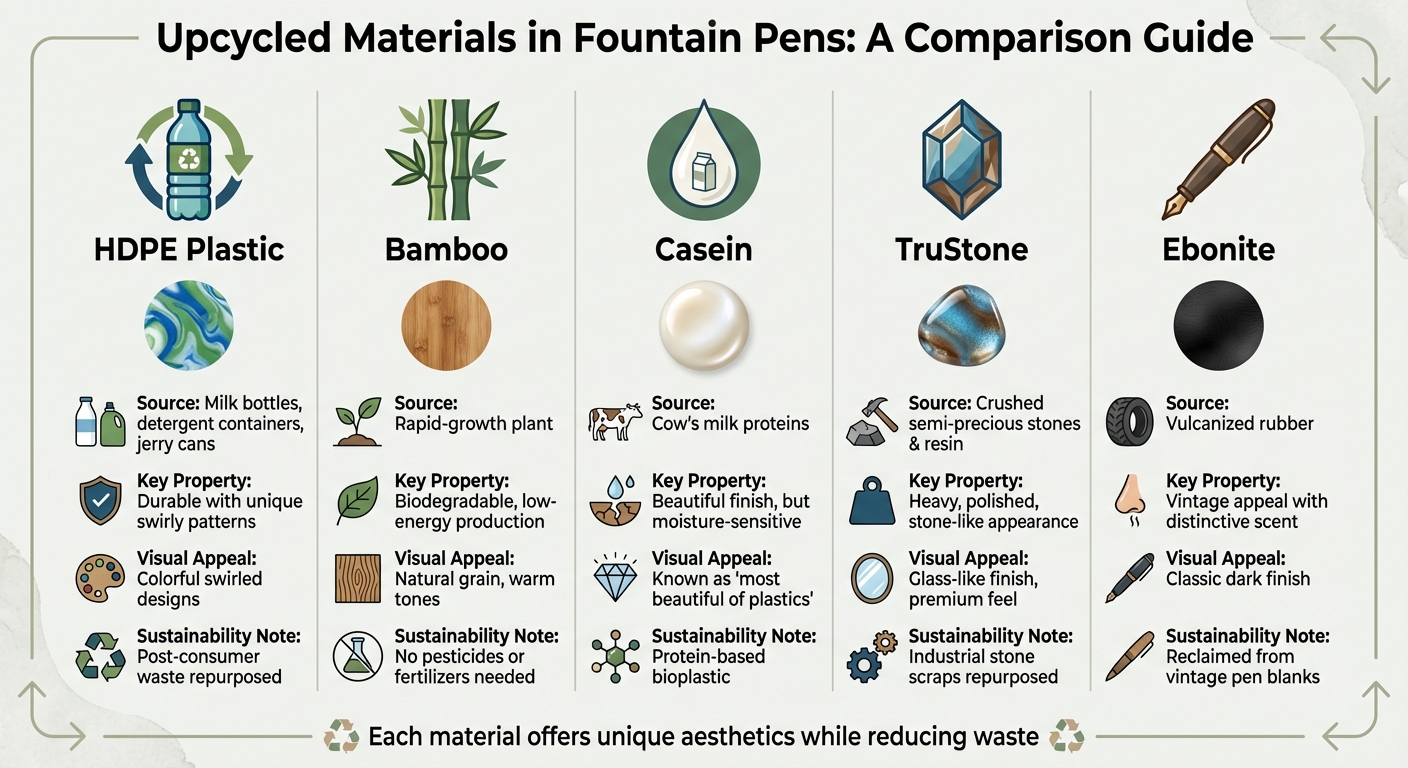
Types of Upcycled Materials Used in Fountain Pens: Properties and Sources
Fountain pen makers are increasingly turning to upcycled materials, blending functionality with eco-conscious design. These materials not only reduce waste but also bring unique aesthetics and durability to pen craftsmanship. Let’s dive into some standout examples.
Recycled Plastics
Recycled plastics are a prime example of turning waste into something meaningful. Post-consumer HDPE (high-density polyethylene) waste - think milk bottles, detergent containers, and jerry cans - is melted down and reshaped into pen bodies with stunning swirly patterns. In May 2019, Dennis Marechal of Wooden Gifts And More introduced "The Waste Pen", crafted from locally recycled HDPE plastic. Impressively, 20% of the sales revenue goes to the Great Barrier Reef Foundation to fight plastic pollution.
Montegrappa took this idea further with their "Elmo Ambiente" series, launched in February 2026. Collaborating with Smile Plastics, they used recycled architectural waste to create translucent resin pens in shades like "Ocean" and "Charcoal." Even the packaging reflects this commitment, utilizing Ricuoio® (recycled leather waste) and Ristoffa (recycled textile waste).
Reclaimed Wood
The natural charm of reclaimed wood adds a warm, organic touch to fountain pens. For example, wood salvaged from retired bourbon barrels showcases unique grain patterns, making each pen one of a kind. Retro51’s "Tornado Woodworks" collection, released in August 2024, features pens made from reclaimed American oak bourbon barrels. To give back, the company plants a tree for every pen sold. As Maclovio Morales, Retro51’s Creative Designer, put it:
"By repurposing wood from reclaimed barrels, we're not only creating exquisite and functional pens but also supporting a broader effort to promote environmental awareness."
Additionally, bamboo - a fast-growing plant that doesn’t require pesticides or fertilizers - has gained traction as a sustainable material option.
Natural Fiber Composites
Natural fiber composites are another exciting avenue. These materials, derived from plants, provide eco-friendly alternatives to petroleum-based plastics. Cornstarch-based bioplastics, for instance, can decompose in compost environments, while recycled paper and cardboard are being used for pen barrels, significantly cutting down water and air pollution during production.
Casein, a plastic made from cow's milk proteins, is another noteworthy material. Known for its striking appearance, casein is often referred to as the "most beautiful of plastics." However, it does come with a catch - its moisture sensitivity makes it less durable than some alternatives.
Reclaimed Resin and Acrylic
Resin and acrylic scraps from other industries are being repurposed into top-tier pen bodies. A standout example is TruStone, a material that combines crushed semi-precious stones with resins. This blend mimics the look and feel of real stone, offering a polished, glass-like finish. TruStone pens are heavier than wood or standard acrylic options, providing a premium feel that collectors appreciate.
Here’s a quick snapshot of some key upcycled materials and their standout features:
| Material | Source | Key Property |
|---|---|---|
| HDPE Plastic | Milk bottles, jerry cans | Durable with unique swirly patterns |
| Bamboo | Rapid-growth plant | Biodegradable, low-energy production |
| Casein | Cow's milk proteins | Beautiful finish, but moisture-sensitive |
| TruStone | Crushed stone & resin | Heavy, polished, stone-like appearance |
| Ebonite | Vulcanized rubber | Vintage appeal with a distinctive scent |
These materials are redefining how fountain pens are crafted, proving that sustainability and style can go hand in hand. Whether it’s the swirling patterns of recycled plastics or the rich grains of reclaimed wood, each material tells a story of repurposing waste into something extraordinary.
Benefits of Upcycled Fountain Pens
Environmental Impact
Opting for an upcycled fountain pen is a small choice that can make a big difference for the planet. By repurposing materials like plastic waste, these pens help keep trash out of landfills and oceans, giving discarded items a second chance at life. Plus, the production process for upcycled pens uses far less energy and releases fewer carbon emissions compared to making pens from new, fossil-fuel-based plastics. This approach also reduces the demand for raw materials like wood, bamboo, or metals, easing the strain on natural resources. As the Wood Fountain Pen Team aptly states:
"Using a fountain pen is a small but impactful choice towards a more sustainable future"
Some upcycled materials, such as bamboo or cornstarch-based bioplastics, even have the added benefit of being biodegradable, unlike traditional plastics that linger for decades. This eco-conscious choice doesn’t just help the environment - it also results in pens built with durability in mind.
Quality and Longevity
Upcycled materials are not only sustainable but also incredibly durable. Recycled aluminum, stainless steel, and premium resins are crafted into pens designed to last for decades. The refillable design eliminates the need for disposable plastic ink cartridges, further cutting down on waste. And because these pens are often modular, you can replace individual parts instead of discarding the whole pen, extending its lifespan even further. When you choose an upcycled fountain pen, you’re investing in a writing tool that’s built to stick with you for the long haul. Beyond their practicality, these pens also stand out for their beauty and individuality.
Appearance and Individuality
One of the most striking aspects of upcycled fountain pens is their distinctive appearance. Each pen tells its own story, whether it’s through the unique grain patterns of reclaimed wood or the bold, colorful layers of repurposed skateboards. For instance, skateboard materials bring a vibrant, multi-layered aesthetic that reflects the energy of the skating community, while reclaimed wood offers a rustic charm with one-of-a-kind grain patterns. Some artisans take it a step further, incorporating geometric designs or blending different materials for a truly eye-catching finish. These pens aren’t just writing tools - they’re conversation starters, showcasing your values and personal style while blending sustainability with artistic craftsmanship.
sbb-itb-1dd4fe9
How to Choose an Upcycled Fountain Pen
Selecting the right upcycled fountain pen involves balancing durability, style, and sustainability. Let’s break down what to look for.
Material Considerations
The material of your pen plays a huge role in its longevity and upkeep. Metals like brass and stainless steel are tough, withstanding daily wear for years without issue. If you prefer something lighter, high-grade resin or ebonite is a great choice - they’re durable, resistant to ink, and, when properly treated, won’t warp over time.
For an eco-conscious option, look for pens crafted from post-consumer recycled materials, like plastic bottles, or renewable resources such as bamboo or FSC-certified wood. A good example is the Pilot Begreen series, which incorporates at least 70% recycled plastic. To further reduce waste, opt for pens with refillable systems, like piston or vacuum fillers.
Once you’ve found a material that meets both your practical and environmental goals, think about how it aligns with your personal style.
Style Preferences
Upcycled materials offer a wide range of unique looks. Reclaimed woods, for instance, feature natural grain patterns that make each pen one of a kind. Recycled resins or celluloid can deliver striking, glossy finishes in vibrant colors. If you’re intrigued by the inner workings of your pen, demonstrator models made from clear recycled plastics let you see the mechanics and ink color in action. Beyond aesthetics, these designs reflect the craftsmanship behind sustainable practices.
However, some materials require extra care. Exotic wood varieties like Pink Ivory or Ebony are visually stunning but sensitive to changes in temperature and humidity, which can lead to damage over time. Similarly, clear resins may discolor if exposed to direct sunlight for long periods. For a personal touch, consider laser engraving to customize your upcycled pen.
Budget-Friendly Options
Eco-friendly pens don’t have to break the bank. Handmade wood and brass models start at around $49, while beginner-friendly options made from recycled plastics or paper are even more affordable. Overall, fountain pens typically range in price from $5.00 to $200.00, depending on the materials and nib quality.
To get the most for your money, pick a pen with a converter or piston-filling system. These allow you to use bottled ink, which is both cost-effective and waste-reducing. For durability on a budget, stainless steel nibs are reliable and less expensive than gold. Nibs tipped with hard-wearing alloys like iridium or tungsten can also ensure your pen stands up to years of consistent use. Lastly, confirm that the materials are certified - such as FSC-certified wood or recycled plastics - to ensure they meet environmental standards.
Caring for Your Upcycled Fountain Pen
Taking care of your upcycled fountain pen ensures its longevity, functionality, and distinct charm. While specific materials may need tailored attention, a few general practices can help keep your pen in excellent condition.
Material-Specific Care Instructions
If your pen features reclaimed wood, moisture is its biggest threat. Exposure to water or high humidity can cause the wood to warp or crack. Always handle wooden pens with dry hands, and to maintain their finish, reapply a layer of renaissance or carnauba wax every 3–6 months.
Pens made from resin or acrylic are more durable but still vulnerable to heat. Avoid leaving them in hot environments, like a car on a sunny day, as extreme temperatures can warp the material. Direct sunlight can also fade the finish over time. To keep these pens looking their best, wipe them with a soft microfiber cloth regularly and store them in a protective leather case.
Metal accents, such as stainless steel, chrome, or silver, require minimal upkeep. A simple wipe with a microfiber cloth is usually enough. For sterling silver or silver-plated parts, use a silver polishing cloth and a liquid polish with a soft brush for detailed areas.
Proper storage is equally important. Keep your pen in a cool, dry place, away from direct sunlight or heat sources, to protect it from damage and prevent ink from expanding. The Hamilton Pen Company advises:
"Avoid storing your pen near sources of heat, such as radiators or electronics, as heat can cause ink to expand and leak".
In addition to safe storage, regular cleaning keeps your pen in top working order.
Refilling and Cleaning Tips
Routine cleaning and careful refilling are essential for maintaining your pen's performance. To avoid ink buildup, flush your pen with cool or lukewarm water every few weeks. Fill the reservoir with water, then expel it several times until the water runs clear. This process helps preserve the internal seals and components.
Always cap your pen when not in use to prevent air from entering, which can lead to ink evaporation or clogging. If you're switching ink colors, clean the pen thoroughly before refilling to avoid mixing pigments. For stubborn dried ink, soak the nib section in cool water for a few hours before flushing it again.
Conclusion
Upcycled fountain pens offer a rare blend of sustainability and elegance. By choosing a refillable fountain pen, you can help reduce the staggering number of disposable pens - over 1.6 billion - tossed into U.S. landfills annually. These pens are designed to endure, turning writing into a more thoughtful, sustainable habit. Plus, using bottled ink instead of plastic cartridges not only cuts down on waste but also opens up a world of vibrant color options.
What sets these pens apart is the character imbued by their upcycled materials. Whether crafted from reclaimed wood with its natural grain, recycled resin with its intricate patterns, or even repurposed skateboard decks, each pen carries a story of creativity and responsible design.
For those ready to explore sustainable writing tools, Fountain Pen Revolution provides affordable options, with starter sets starting at $35.00. They also offer handmade pens crafted from responsibly sourced materials, ensuring you can find one that matches your budget and values. Whether you're diving into the world of fountain pens or expanding your collection, upcycled models deliver quality, uniqueness, and eco-consciousness in one refined package.
"Using a fountain pen is a small but impactful choice towards a more sustainable future"
With the right care, your upcycled pen can last for years, proving that even small steps toward sustainability can make a meaningful difference.
FAQs
Are upcycled fountain pens safe to use with any ink?
Yes, upcycled fountain pens work perfectly with any ink specifically made for fountain pens. However, steer clear of inks that gel, separate, or contain particles, as these can clog or harm the pen. For instance, waterproof inks such as Platinum Carbon Black are typically fine as long as they're used properly. Just make sure the ink you choose is fountain pen-friendly to keep your pen performing well and lasting longer.
How can I verify a pen’s upcycled or certified materials?
To determine if a pen is made with upcycled or certified materials, start by examining the packaging, product descriptions, or the manufacturer's website. Look for specific mentions of recycled metals, plastics, or eco-friendly certifications. Materials like resin, brass, or ebonite might indicate upcycling, but the best way to confirm is by reaching out directly to the manufacturer for detailed information.
Which upcycled materials need the most careful maintenance?
Upcycled materials, such as ebonite, need special attention because they can be prone to oxidation, discoloration, and cracking. To keep ebonite in good condition, limit its exposure to sunlight and moisture. When cleaning, use a soft cloth and handle it gently to preserve its quality.