

Want to protect your pen storage from damage and stains? Regular cleaning is key. Dust, ink residue, and grime can harm materials like leather, wood, fabric, and plastic, leading to discoloration, odors, and even reduced durability. Here's how to keep your accessories in top shape:
- Leather Cases: Use a soft cloth for regular dusting. For deep cleaning, apply leather cleaner and conditioner every 6–12 months. Avoid harsh chemicals and direct sunlight.
- Wooden Stands: Wipe with a dry or slightly damp microfiber cloth. Never soak wood to prevent warping. For crevices, use a soft brush.
- Plastic Accessories: Wash with warm, soapy water. For ink stains, test isopropyl alcohol on a small area first.
- Fabric Pouches: Spot clean with mild dish soap or hand wash in cool water. Air dry to maintain shape.
Quick Tip: A weekly wipe-down and thorough cleaning every 4–6 weeks can extend the lifespan of your storage accessories. For tougher stains, use tools like microfiber cloths, pen flush, or blotting paper.
Proper maintenance and storage - like keeping items in cool, dry spaces - will ensure your pen accessories remain functional and visually appealing for years.
Why You Should Clean Pen Storage Accessories
Skipping regular cleaning of your pen storage accessories can lead to more than just a messy appearance. Ink residue and dust can build up, causing permanent stains, discoloration, and even material damage. Fabric pouches, wooden stands, and other storage items can suffer when ink seeps into fibers or moisture gets trapped in crevices. Let’s explore how this damage happens and why cleaning is so important.
Preventing Ink and Dust Buildup
Ink and dust aren’t just unsightly - they actively harm your storage materials. For example:
- Fabric pouches: Ink stains can set into the fibers if not cleaned quickly, making them impossible to remove.
- Wooden stands: Dust can trap moisture in tiny crevices, leading to wood stress and eventual cracking.
- Metal holders: Grime accumulates and hardens over time, making it difficult to clean without risking damage to the finish.
Dried ink is particularly problematic because it leaves behind sticky residue that attracts even more dust and debris, compounding the issue over time. Beyond aesthetics, this grime can create an unhygienic environment. Pen holders, which are often touched, can transfer bacteria and dirt to your hands and pens. A quick wipe with 70% isopropyl alcohol not only removes ink residue but also sanitizes the surface.
Making Your Accessories Last Longer
Regular cleaning does more than keep your accessories looking nice - it helps them last longer. Corrosive substances like ink and dust can cause permanent damage if left unchecked. For instance:
- Wooden accessories: Gentle cleaning prevents scratches and stops debris from embedding into the surface.
- Leather cases: Ink and residue must be cleaned immediately to avoid permanent stains or material breakdown.
sbb-itb-1dd4fe9
Cleaning Tools and Supplies You'll Need
Keeping your pen storage accessories in top shape doesn’t require pricey gadgets - just the right tools that are gentle on materials like leather, wood, or fabric. The key is to use products safe for pens, capable of removing ink and dust without causing damage or wear.
Basic Cleaning Items
Start with microfiber cloths - they’re perfect for picking up dust without leaving lint behind. For wooden stands or leather cases, a polishing cloth (around $5.00) can buff away smudges and restore their shine. If you’re dealing with ink stains, pen flush (available for $5.00 per 2oz) is a must-have. It’s specially designed to break down fountain pen ink residue gently and effectively.
Additional Specialized Tools
For those hard-to-reach spots, a bulb syringe ($3.50 for 2oz) works wonders in clearing out dust from deep pen slots. When you need precision, blunt tip syringes (starting at $2.00 for 10ml) and pipettes (as low as $0.30 for 3ml) allow you to apply solutions without overdoing it. Got a fresh ink spill? Blotting paper ($12.00 for 10 sheets) quickly absorbs it before it seeps into fabric or wood grain.
If you own high-end cases with moving parts or seals, silicone grease ($3.25) is your go-to for keeping them smooth and moisture-resistant. With these tools at your disposal, you’ll be ready to tackle cleaning tasks tailored to your pen storage materials.
How to Clean Different Materials
Now that you’ve got the right tools, it’s time to dive into cleaning methods tailored to specific materials. Whether you’re dealing with leather, wood, plastic, or fabric, using the right approach can help keep your pen storage accessories in great shape while avoiding accidental damage.
Leather Cases and Rolls
Leather is a natural material that requires gentle care due to its porous nature. For regular upkeep, use a soft, dry microfiber cloth to remove dust and surface grime. For a deeper clean (recommended every six to twelve months), use a high-quality leather cleaning solution. Apply the cleaner in small, circular motions with a soft cloth, then wipe off any excess with a damp cloth and lukewarm water. As Marcell K emphasizes:
The key is to clean gently, avoid harsh products and treat leather as the natural material it is.
Let the leather air-dry naturally - steer clear of direct sunlight or heat sources.
Once clean, apply a leather conditioner to keep it supple and prevent it from drying out. As BuyLeatherOnline advises:
Conditioning your leather regularly helps keep it moisturized and more resistant to stains.
If ink stains occur, act fast. Blot the stain gently with a dry cloth - never rub. For ballpoint ink, try a small amount of rubbing alcohol on a cloth. For fountain pen ink, you may need a leather-safe ink remover. When storing leather rolls, use breathable dust bags and add padding, like parchment paper, to avoid imprints.
Wooden and Plastic Stands and Trays
Wooden stands need special care to avoid issues like water damage or warping. Dust them regularly with a dry microfiber cloth. For deeper cleaning, use a barely damp cloth. If the wood has removable parts, you can soak them briefly in lukewarm, soapy water and clean tight areas with a soft brush. Be sure to dry everything thoroughly before putting it back together.
Plastic stands, on the other hand, are easier to clean. Remove your pens, then wash the trays with warm, soapy water and a soft brush to reach tricky spots. Rinse thoroughly and let them dry completely before reassembling. For stubborn ink stains, test a small amount of gentle cleaning solution or isopropyl alcohol on an inconspicuous area first to ensure it won’t cause discoloration.
Fabric Pouches and Sleeves
Fabric accessories tend to attract dust and can absorb ink easily, but they’re also some of the simplest items to clean. For fresh ink stains, Caitlyn Callahan from AAA Club Alliance suggests:
For spills and ink stains, apply a few drops of Dawn. Simply apply it directly to the stain, let it sit for about five minutes, and then wash as usual.
For smaller stains, spot-clean by applying a few drops of gentle dish soap to the area and letting it sit for five minutes. Then, use a soft-bristled brush to lift the stain without damaging the fabric. For a more thorough cleaning, hand wash delicate fabric sleeves in cool water with mild detergent, or use the delicate cycle on your washing machine for sturdier pouches. Air drying is best - stuff the sleeves with clean tissue paper during drying to help them keep their shape.
Cleaning Methods by Material Type
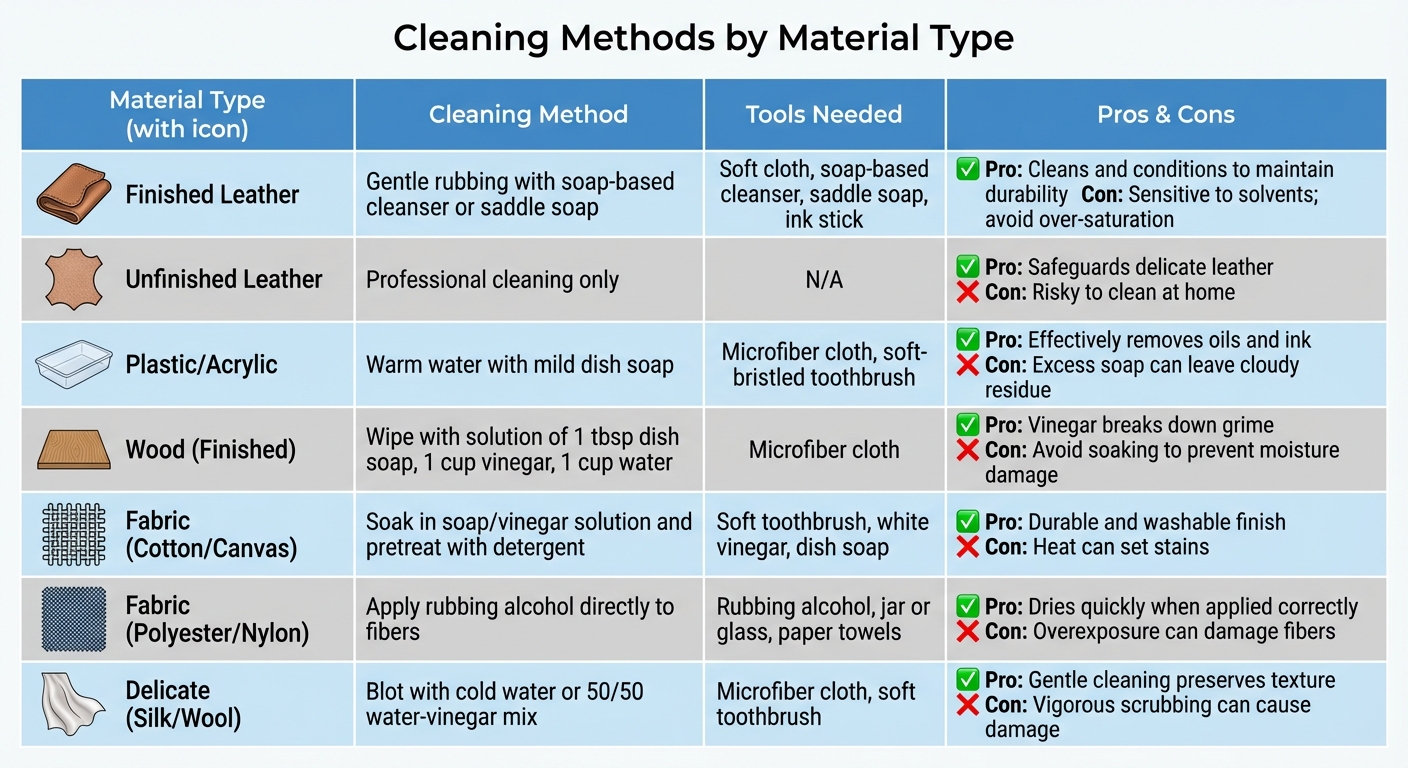
Cleaning Methods for Different Pen Storage Materials
This section provides a handy guide to cleaning various accessory materials, including the best methods, required tools, and the pros and cons of each approach. These tips complement the earlier detailed procedures, offering a quick reference for effective care.
| Material Type | Recommended Cleaning Method | Tools Needed | Advantages / Disadvantages |
|---|---|---|---|
| Finished Leather | Gentle rubbing with a soap-based cleanser or saddle soap | Soft cloth, soap-based cleanser, saddle soap, ink stick | Pro: Cleans and conditions to maintain durability. Con: Sensitive to solvents; avoid over-saturation. |
| Unfinished Leather | Professional cleaning only | N/A | Pro: Safeguards delicate leather. Con: Risky to clean at home. |
| Plastic / Acrylic | Use warm water with a few drops of mild dish soap | Microfiber cloth, soft-bristled toothbrush | Pro: Effectively removes oils and ink. Con: Excess soap can leave a cloudy residue. |
| Wood (Finished) | Wipe with a solution of 1 tablespoon dish soap, 1 cup vinegar, and 1 cup water | Microfiber cloth | Pro: Vinegar breaks down grime. Con: Avoid soaking to prevent moisture damage. |
| Fabric (Cotton/Canvas) | Soak in a soap/vinegar solution and pretreat with detergent | Soft toothbrush, white vinegar, dish soap | Pro: Durable and washable finish. Con: Heat can set stains. |
| Fabric (Polyester/Nylon) | Apply rubbing alcohol directly to the fibers | Rubbing alcohol, jar or glass, paper towels | Pro: Dries quickly when applied correctly. Con: Overexposure can damage fibers. |
| Delicate (Silk/Wool) | Blot with cold water or a 50/50 water-vinegar mix | Microfiber cloth, soft toothbrush | Pro: Gentle cleaning preserves texture. Con: Vigorous scrubbing can cause damage. |
These targeted methods help ensure proper care for each material while minimizing risks. Here are a few additional tips to refine your cleaning routine:
For leather, distinguishing between finished and unfinished types is crucial. A simple water drop test can help: if the water beads on the surface, it’s finished leather, and you can clean it yourself. If it soaks in, it’s best to leave it to professionals. Albert Varkki, Co-founder of Von Baer, advises:
You need a soap-based cleanser for leather as it's softer. Don't use solvent-based cleansers as these are too harsh and may cause damage.
When cleaning wooden items, always apply the solution to a microfiber cloth instead of directly onto the surface to control moisture and avoid damage. For plastic, use only a small amount of soap to prevent residue. And when dealing with fabric, tackle fresh ink stains immediately, as they’re much easier to remove before they dry and set into the fibers.
These practical tips, combined with the earlier care techniques, help extend the lifespan of your accessories while keeping them in top condition.
Removing Stubborn Stains and Ink Residue
Sometimes, basic cleaning just doesn't cut it - especially with dried ink or tough stains. In these cases, an overnight soak can work wonders. Grab a glass or bowl, fill it with room-temperature distilled water, and mix in 1–2 drops of a gentle dish soap like Dawn. Submerge the item completely and let it sit for 8–12 hours. This approach is particularly effective for plastic trays and fabric pouches, helping to lift ink residue without needing harsh chemicals. Important note for leather items: Always test in an inconspicuous spot first to avoid unwanted softening or discoloration.
After soaking, you’ll want to focus on those tricky, hard-to-reach spots. For areas like tight folds in pen rolls or seams in leather cases, a bulb syringe is your best friend. Fill it with distilled water, aim the tip at the crevices, and squeeze gently in short bursts. Repeat 5–6 times until the water runs clear. Make sure to hold the item securely to avoid any accidental slips or damage.
For stubborn ink marks that refuse to budge, try spot-treating with isopropyl alcohol (at least 70% concentration). Dip a cotton swab into the alcohol and dab it gently onto the stain. This method works particularly well on metal or plastic surfaces. If you're dealing with plastic organizers that have a general buildup, a 1:1 vinegar-water mix can break down grime effectively. For metal surfaces, a cloth dampened with lemon juice can clean and sanitize at the same time.
Before tackling ink residue, it’s a good idea to use compressed air to blow away dust and debris from crevices in holders or trays. This prevents dry particles from turning into messy smears when water is introduced. And if shimmer inks are the culprit, adding an extra drop of dish soap to your soaking solution can help break down those stubborn particles even more effectively.
What to Avoid When Cleaning
While these methods are helpful, there are some cleaning missteps you’ll want to steer clear of. Avoid using ammonia, Windex, or DIY cleaning solutions on pen storage accessories. These harsh chemicals can react unpredictably with vintage plastics or cause leather to crack and discolor. Stick to distilled water and mild dish soap - commercial cleaning flushes are unnecessary in most cases and haven’t been tested on these materials.
Also, skip abrasive scrubbers or steel wool, as they can scratch surfaces and create grooves where ink might settle. For leather items, avoid overexposing them to water, as this can lead to warping or permanent damage. Always apply cleaning solutions to a cloth rather than directly onto the accessory, and never soak wooden items - moisture can cause them to swell.
Maintenance and Storage Tips
Keeping your pen storage accessories in good condition doesn’t have to be a hassle. With a simple routine, you can keep them looking great and reduce the need for intensive cleaning sessions. Start by wiping down your accessories weekly with a microfiber cloth to remove dust and maintain their appearance.
Here are some practical tips to help you care for your accessories between deep cleans. These suggestions build on the detailed cleaning methods mentioned earlier, ensuring your pen accessories stay in top shape.
Regular Cleaning Schedule
Along with weekly dusting, make it a habit to check for ink stains or residue. Every three months, grab a can of compressed air to blow out dust from hard-to-reach spots in pen stands and trays. This prevents buildup in areas that a cloth might miss.
Regular cleaning is just one part of the equation. Proper storage also plays a major role in keeping your accessories in pristine condition.
Best Storage Conditions
To protect your items, store them in a space with humidity levels below 60% and out of direct sunlight. This helps prevent mold, fading, and warping. Wooden accessories, in particular, are vulnerable to temperature swings, which can lead to stress fractures and structural damage. For delicate pieces, like those with urushi finishes, solid-lid wooden boxes are a great option. They limit exposure to light and moisture, helping these items last longer.
Be mindful of how you store leather rolls. Avoid stacking heavy objects on top of them, as this can cause permanent creases or damage the stitching. Instead, lay them flat and give them enough space to avoid pressure marks.
Using Fountain Pen Revolution Accessories

Fountain Pen Revolution offers pen stands and cases that are built to last. Their materials are durable, resist stains, and are easy to clean, making them a great choice for both newcomers starting their collection and seasoned collectors managing multiple pens. These accessories are designed with convenience and care in mind, so you can focus on enjoying your writing tools without worrying about maintenance.
Conclusion
Taking regular care of your pen accessories can significantly extend their lifespan. Simple habits like cleaning can prevent ink stains and dust buildup, which might otherwise damage both the accessories and the pens they hold. A straightforward routine - such as wiping them down weekly with a microfiber cloth and giving them a more thorough cleaning every 4–6 weeks - keeps maintenance manageable while preserving their condition.
Different materials require specific care techniques. By following the earlier cleaning tips, you can ensure your accessories stay both functional and visually appealing for years to come.
Storage is just as important as cleaning. To avoid warping or fading, keep your accessories in cool, dry places and out of direct sunlight. Store pens horizontally in environments with low humidity. For metal storage pieces, applying a light lubricant after cleaning can help ward off corrosion.
Steer clear of harsh chemicals, abrasive scrubbers, or soaking non-waterproof materials in water. Remove any jewelry before cleaning to avoid accidental scratches. Let plastic accessories air-dry upside down, and dry metal pieces immediately with a soft cloth to prevent water spots. These steps will help maintain the integrity and appearance of your pen accessories over time.
FAQs
How do I tell if my leather case is finished or unfinished?
To figure out whether your leather case is finished or unfinished, take a close look at its surface and feel its texture. Unfinished leather typically has a natural, matte finish with visible flaws and a slightly rough texture. On the other hand, finished leather feels smooth, looks polished, and often has a glossy shine. Finished leather usually features edges that are beveled and burnished. If the leather seems coated and refined, it’s likely finished; if it looks raw and uncoated, it’s probably unfinished.
What’s the safest way to remove dried ink without damaging the material?
To safely clean dried ink from your pen, stick to gentle methods to avoid any damage. Start by soaking the affected parts in room-temperature water to help dissolve the residue. For tougher ink buildup, use a lint-free cloth or a soft brush to carefully wipe the area. Steer clear of abrasive materials or metal tools, especially when dealing with delicate components like nibs or feeds. Regularly cleaning your pen with water and soft tools ensures its parts stay in good condition over time.
How should I dry and store pen cases so they don’t warp or smell?
To keep pen cases in good condition, make sure they are completely dry after cleaning. This helps prevent warping and unwanted odors caused by trapped moisture. Placing silica gel packets inside can help absorb any lingering humidity and keep the interior dry. For storage, choose a cool and well-ventilated spot, away from direct sunlight, heat sources, or areas with high humidity. These steps will help maintain the case's shape and keep it fresh over time.