

When selecting a fountain pen, the nib coating is a critical factor that affects durability, appearance, and cost. This guide explores popular nib coatings like gold, rhodium, titanium, and ruthenium, explaining their strengths, weaknesses, and ideal uses.
- Gold-Plated: Warm, classic look at a lower cost but wears off over time.
- Rhodium: Scratch-resistant, sleek silver finish, durable for mid-range pens.
- Titanium: Dark matte finish, semi-flexible feel, resistant to corrosion.
- Stainless Steel: Affordable and durable, perfect for beginners.
- Ruthenium & Palladium: Premium options for collectors, offering durability and luxury.
Key takeaway: Coatings enhance aesthetics and protection but don’t affect writing smoothness. Beginners can start with steel or gold-plated nibs, while collectors may prefer rare materials like ruthenium or palladium. Regular cleaning and proper storage are essential to maintain any nib.
| Coating Material | Durability | Appearance | Cost Range |
|---|---|---|---|
| Gold-Plated | Moderate | Warm, classic look | Low to Mid |
| Rhodium | High | Bright silver finish | Mid to High |
| Titanium | Very High | Dark, modern finish | Mid |
| Stainless Steel | Very High | Simple, reliable | Low |
| Ruthenium/Palladium | Very High | Sophisticated, luxurious | Very High |
Choose a nib coating based on your budget, usage, and style preferences. Proper care ensures long-lasting performance and appearance.
Common Nib Coating Materials
The material used to coat a nib significantly impacts its look, durability, and how it feels to write with. Let’s break down some of the most commonly used coatings:
Gold-Plated Coatings
Gold-plated nibs feature a stainless steel base with a thin layer of gold applied, often through electroplating. This technique gives the nib a warm, classic appearance similar to solid gold but at a fraction of the cost.
"Gold-plated nibs offer a budget-friendly alternative to solid gold while maintaining a luxurious appearance." - Vanagas Pen
However, the gold layer isn’t permanent. With regular use, it can wear off over time. For those who want the look of gold without the hefty price tag, gold-plated nibs are a popular choice.
Rhodium Coatings
Rhodium, a rare metal in the platinum family, is frequently plated over gold nibs to create a sleek, bright silver finish. Beyond its aesthetic appeal, rhodium is highly resistant to tarnishing and scratching, making it a durable option.
"Rhodium provides a bright silver finish that resists tarnishing... and adds a layer of protection over softer materials like gold." - Vanagas Pen
This combination of a soft gold base with a tougher rhodium coating is often found in mid-range to high-end pens, offering both elegance and resilience.
Titanium Coatings
Titanium-coated nibs stand out for their dark, matte finish, which contrasts with the shinier appearance of gold or rhodium. They’re also valued for their semi-flexible, "bouncy" quality, which many writers find enhances the writing experience.
"Titanium nibs... are typically semi-flexible and bouncy, even more so than many gold nibs." - Bottle and Plume
Titanium is also resistant to corrosion, making it ideal for use with iron gall inks. Cost-wise, titanium nibs typically sit between stainless steel and solid gold, making them an attractive middle-ground option.
Steel and Chromium Coatings
Stainless steel, often in the 316L grade, is a reliable and durable choice for nibs. Its composition - roughly 18% chromium and 14% nickel - provides excellent resistance to corrosion without requiring additional coatings. Steel nibs are known for their firm, consistent writing feel, making them a favorite for everyday use and a go-to for entry-level pens.
Exotic Materials: Ruthenium and Palladium
At the luxury end of the spectrum, materials like ruthenium and palladium are used for their unique properties. Ruthenium, known for its exceptional hardness, is often applied as a dark coating that resists wear and delivers a sophisticated near-black finish.
Palladium, on the other hand, is prized for its softness and flexibility. Brands like Visconti use palladium in their 23k nibs, which are approximately 95% pure, to create an ultra-smooth writing experience.
"Palladium nibs are known for being very soft and flexible... providing a super-smooth writing experience when tuned well." - Bottle and Plume
Because of their rarity and cost, ruthenium and palladium coatings are typically reserved for high-end, collector-grade pens. These options cater to enthusiasts seeking something truly special in their writing instruments.
Pros and Cons of Each Nib Coating Material
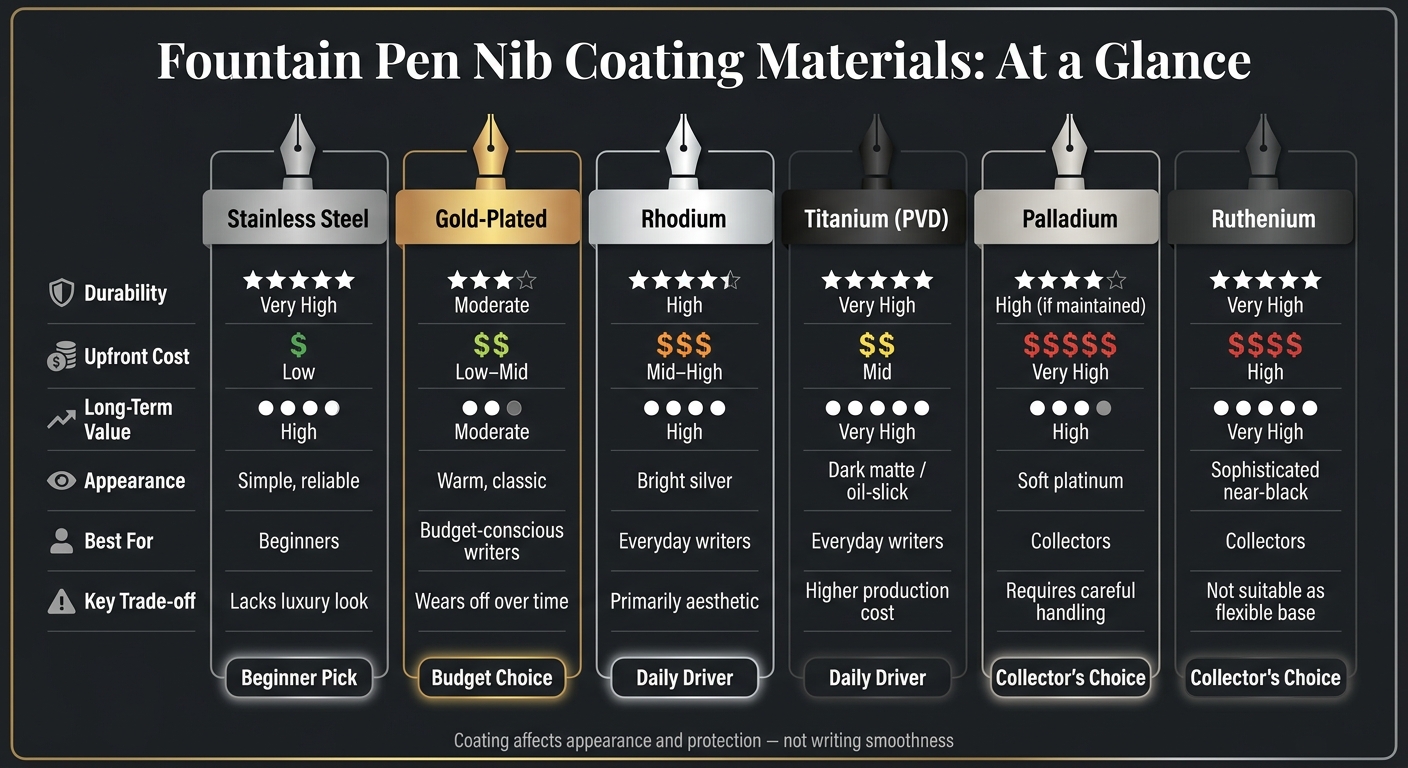
Fountain Pen Nib Coatings Compared: Durability, Cost & Best Use
This section dives into the strengths and weaknesses of different nib coatings, focusing on how they perform, their visual appeal, and their cost-effectiveness. Choosing the best coating often comes down to striking the right balance between durability, aesthetics, and price.
Durability and Wear Resistance
Stainless steel is a standout for its natural durability, resisting corrosion without needing extra coatings. It’s a reliable choice for years of daily use. When it comes to plated options, rhodium ranks as one of the most wear-resistant materials, often compared to platinum and outlasting coatings like titanium, chrome, and gold. Titanium coatings, applied through PVD (Physical Vapor Deposition), create an almost permanent layer. On the other hand, gold-plated nibs may be budget-friendly, but their coating inevitably wears thin over time. Ruthenium, known for its friction resistance, ensures nibs that can last for decades. While durability is crucial, the finish of the coating also plays a big role in defining the pen's overall character.
Appearance and Finish
Rhodium coatings deliver a sleek, silver-white finish that feels modern and polished. Titanium, however, offers more creative possibilities. Through PVD, titanium coatings can achieve a variety of finishes, from deep black to warm gold tones, and even striking multi-colored "oil slick" effects through anodizing. Gold plating, with its warm, timeless look, remains a favorite for those seeking a classic aesthetic. But remember, the coating doesn’t influence the nib’s smoothness. As Bottle and Plume notes, "Smoothness is mostly a function of the nib's tipping and grind/polish, not the base metal."
Beyond durability and finish, the price tag and long-term value of each coating are also key factors to consider.
Cost and Long-Term Value
The table below outlines how different materials stack up in terms of initial cost, overall value, and trade-offs:
| Material | Upfront Cost | Long-Term Value | Key Trade-off |
|---|---|---|---|
| Stainless Steel | Low | High | Lacks a luxurious appearance |
| Gold-Plated | Low–Mid | Moderate | Coating wears off over time |
| Rhodium | Mid–High | High | Primarily enhances aesthetics |
| Titanium (PVD) | Mid | Very High | Higher production costs |
| Palladium | Very High | High (if maintained) | Requires careful handling |
| Ruthenium (tipping) | High | Very High | Unsuitable as a flexible base material |
Gold-plated nibs strike a balance between affordability and a premium look, while rhodium offers a higher-end aesthetic upgrade. As Conid Pen explains, "It is purely an aesthetic and value based choice." For those willing to invest more, titanium, palladium, and ruthenium provide exceptional durability and performance benefits.
How to Choose the Right Nib Coating
Selecting the perfect nib coating depends on your budget, how you plan to use the pen, and the kind of writing experience you’re after. Whether you’re a beginner, a daily writer, or a collector, there’s a coating that suits your needs.
For Beginners: Affordable and Durable Choices
If you’re just starting out, stainless steel or chromium-plated nibs are solid options. They’re budget-friendly, tough, and can handle the firm pressure that beginners often apply. Steel nibs are known for their consistency and firmness, which makes them easier to work with during the learning phase. Want a touch of elegance without breaking the bank? A gold-plated steel nib gives you that classic look at an affordable price.
For Collectors: Prestige and Performance
Collectors often seek out nibs that combine rarity with exceptional performance. Solid gold nibs, available in 14k (58.5% gold), 18k (75% gold), or even 21k, are prized for their natural flexibility, resistance to corrosion, and the way they "break in" over time to create a personalized writing feel. Higher gold content results in softer, more expressive nibs. For instance, Sailor’s 21k gold nibs strike a balance between firmness and the springiness that enthusiasts appreciate.
If you’re after something even rarer, palladium nibs, like Visconti’s 23k "Dreamtouch" nibs (95% pure palladium), offer an incredibly soft and flexible experience, requiring minimal pressure. Ruthenium-tipped nibs are another collector favorite, valued for their impressive durability and long-lasting performance.
For Everyday Writers: Balanced Mid-Range Options
For those who write regularly, nib coatings that combine durability with enhanced comfort are key. Rhodium-plated nibs provide a sleek, silver-white finish that resists tarnishing and scratches, giving your pen a polished, modern look. Titanium coatings, often applied using PVD, offer a darker, matte finish and a unique "bouncy" feel that’s softer compared to rigid steel nibs. This semi-flexibility makes titanium nibs particularly comfortable for long writing sessions. Both rhodium and titanium options sit in a mid-range price bracket, offering a noticeable upgrade from beginner-level choices without venturing into collector territory.
Each nib coating offers something special, tailored to different types of writers. Here's a quick breakdown to help you decide:
| User Type | Best Coating | Why It Works |
|---|---|---|
| Beginner | Stainless Steel / Gold-Plated | Affordable, durable, and beginner-friendly |
| Everyday Writer | Rhodium / Titanium | Scratch-resistant or provides a cushioned feel |
| Collector | Solid Gold / Palladium / Ruthenium | High-end materials with unique flex and lasting value |
sbb-itb-1dd4fe9
How to Care for Coated Nibs
Coated nibs offer great durability and a polished finish, but to keep them in top shape, you’ll need to follow a few simple care routines. These small efforts can go a long way in maintaining both their performance and appearance.
Cleaning is the cornerstone of nib maintenance. Every 2–4 weeks - or whenever you switch ink colors - rinse your pen with lukewarm water. Use a converter or cleaning bulb to flush water through the nib and feed until it runs completely clear. This prevents ink residue from building up and ensures smooth ink flow. As Yanning Li, CEO of Scriveiner London, explains:
"Regular cleaning with lukewarm water prevents ink residue build-up and preserves smooth ink flow."
After cleaning, dry the nib thoroughly using a lint-free microfiber cloth. Leaving moisture on the nib can lead to rust or tarnish, especially on coated alloys. Avoid abrasive materials or household cleaners, as they can scratch or strip the coating. Sticking to proper cleaning practices helps maintain the nib's finish and complements your ink choices.
Choose your ink wisely. Some inks, particularly those with higher iron content or certain additives, can speed up tarnishing on coated nibs. Be especially cautious with vintage steel nibs, as they’re more susceptible to damage from incompatible inks.
Once you've selected the right ink, proper storage plays a big role in keeping your nib in good condition. Store your pens in a dry, dust-free environment, away from direct sunlight. The ideal humidity level is between 45–55%. Position pens horizontally or nib-up to prevent ink from pooling at the tip. If you’re storing a pen for an extended period, empty the converter or cartridge to avoid dried ink crystals clogging the feed and damaging the finish.
It’s also important to understand the difference between staining and tarnishing. Staining is just ink residue that can be cleaned off with water, while tarnishing is a chemical reaction in the metal that might require a gentle jeweler’s polishing cloth to address. Some collectors appreciate tarnish as a natural patina, but if you prefer to keep your nib’s original shine, regular cleaning is the best way to preserve it.
Conclusion: Finding the Right Nib Coating for You
This guide has explored the characteristics and uses of various nib coatings. When choosing, focus on factors like durability, appearance, cost, and how you plan to use the pen. There's no universal "best" coating - it all comes down to what suits your preferences and budget.
For beginners, a coated steel or gold-plated steel nib is a great starting point. These options are budget-friendly, offer a sleek appearance, and perform reliably for everyday writing. Students and office users might appreciate durable chrome or steel-finish nibs, which typically range from $5 to $40. If you're looking for something with a modern, sophisticated vibe - perhaps as a gift or for a personal upgrade - rhodium is a solid mid-range pick. On the other hand, those seeking something distinct and luxurious might gravitate toward ruthenium or palladium coatings. These premium options, however, come with a hefty price tag, often between $300 and $800+, reflecting their exclusivity rather than any major impact on writing performance.
Keep in mind that while coatings can enhance appearance and protect against corrosion, they don't improve how the pen writes. A well-tuned $20–$40 coated steel nib is more than sufficient for most daily writing tasks. Higher-end coatings, while elegant, primarily add a touch of luxury and style rather than a noticeable difference in functionality.
If you're unsure about committing to premium coatings, consider experimenting with affordable options from Fountain Pen Revolution. Their coated steel nibs come in chrome and two-tone finishes and even include specialty grinds like Stub, Architect, and Ultra Flex. Prices start at just $3.20, with complete nib-and-feed combos available for $6.40 to $22.00. This is an easy, low-cost way to explore different finishes and styles - whether you prefer a firmer steel nib, a more flexible feel, or a particular aesthetic - before deciding on a high-end upgrade.
To keep any nib looking its best, remember to clean it regularly, dry it properly, and store it in a safe place. Simple care goes a long way in preserving the finish and ensuring long-lasting performance.
FAQs
Will a nib coating change how my pen writes?
A nib coating, such as gold plating on steel nibs, primarily serves an aesthetic purpose. It doesn’t influence how the pen performs. The way your pen writes is determined by the nib's base material, its flexibility, and the quality of the hard-metal tipping. If you're looking to tailor your writing experience, Fountain Pen Revolution provides a broad range of nibs and budget-friendly fountain pens to match your preferences.
How long do gold-plated nibs last before wearing off?
Gold-plated nibs feature a thin layer of gold applied over a base metal. Over time, this layer can wear away due to regular use and friction. How long the plating lasts depends on factors like its thickness, how much pressure you apply while writing, and how often the nib is used. Once the gold layer wears off, the underlying base metal will show through. Unlike solid gold nibs, which are gold throughout, these rely solely on the outer coating. To extend their lifespan, regular and gentle maintenance is essential.
Which nib coating is safest for iron gall inks?
Gold nibs are a reliable choice for iron gall inks, as gold is chemically inert and resists corrosion. Unplated gold nibs work best, but rhodium-plated gold nibs are also a safe option. Although modern stainless steel nibs are designed to resist corrosion, they can be riskier if their protective coating gets damaged. If you prefer steel nibs, opt for pens with airtight caps to prevent the ink from drying out and turning acidic.