

Maki-e pens are an elegant fusion of Japanese lacquer art and precision engineering. Originating over 1,200 years ago, the Maki-e technique involves sprinkling metal powders like gold or silver onto wet lacquer to create intricate designs. These pens combine artistry with advanced craftsmanship, featuring Urushi lacquer finishes, gold vs steel nibs, and innovative filling systems. Each pen is a labor of patience, taking months or years to complete, making them cherished collectibles. When starting your collection, it is helpful to follow a fountain pen buying checklist to ensure you select the right piece.
Key highlights:
- Techniques: Hira Maki-e (flat designs), Togidashi Maki-e (polished flush finishes), and Taka Maki-e (3D raised elements).
- Materials: Urushi lacquer, gold, silver, and decorative inlays like shells or eggshells.
- Modern Innovations: Kindai Maki-e blends traditional techniques with newer methods like silk screen printing, expanding accessibility.
- Top Brands: Namiki, Sailor, Platinum, and collaborations like Pelikan M1000 Maki-e series.
- Care Tips: Avoid UV light, harsh chemicals, and store pens in protective sleeves to maintain their beauty.
Maki-e pens are more than writing tools - they are evolving works of art that reflect centuries of craftsmanship and culture.
History of Maki-e Techniques
The Roots of Maki-e
Maki-e traces its origins back to the Nara period (710–794 AD), with one of the earliest examples being a makkinrusaku-decorated sword scabbard preserved in the Shōsōin.
The term "Maki-e" itself came into use during the Heian period (794–1185), as artisans honed their craft. By the Kamakura period, they developed finer metal particles, allowing the simpler hira (flat) method to emerge. This minimalist style gained popularity and reached new heights during the Azuchi-Momoyama period, driven by growing demand for lacquerware.
The 15th century saw the rise of professional schools, led by masters like Kōami Dōchō (1410–1478) and Igarashi Shinsai. These pioneers played a key role in standardizing techniques and ensuring superior craftsmanship. During the Edo period, a time of relative peace, artisans introduced even more intricate methods, including the shishiai togidashi technique. This method, which combined raised patterns with polished finishes, became a favorite among Japan's elite.
This long-standing tradition laid the groundwork for Maki-e's adaptation into modern forms, including writing instruments.
Transition to Writing Instruments
In the 20th century, Maki-e techniques found a new canvas: fountain pens. Japanese craftsmen skillfully blended this ancient lacquer art with the precision of modern pen-making. Adapting Maki-e to the pen's compact and functional design required both creativity and deep respect for tradition.
The Namiki Emperor Collection is a standout example of this evolution. These pens feature intricate designs of traditional motifs, such as dragons and phoenixes, on Urushi-lacquered bodies. They are a fusion of artistry and functionality, combining durable lacquer finishes, symbolic Japanese imagery, precision-crafted 14k gold nibs, and the timeless beauty of Maki-e techniques. This transformation elevated decorative art into something both portable and practical.
sbb-itb-1dd4fe9
The PERFECT Japanese Fountain Pen: Platinum Modern Maki-e Fountain Pen Unboxing

Core Maki-e Techniques
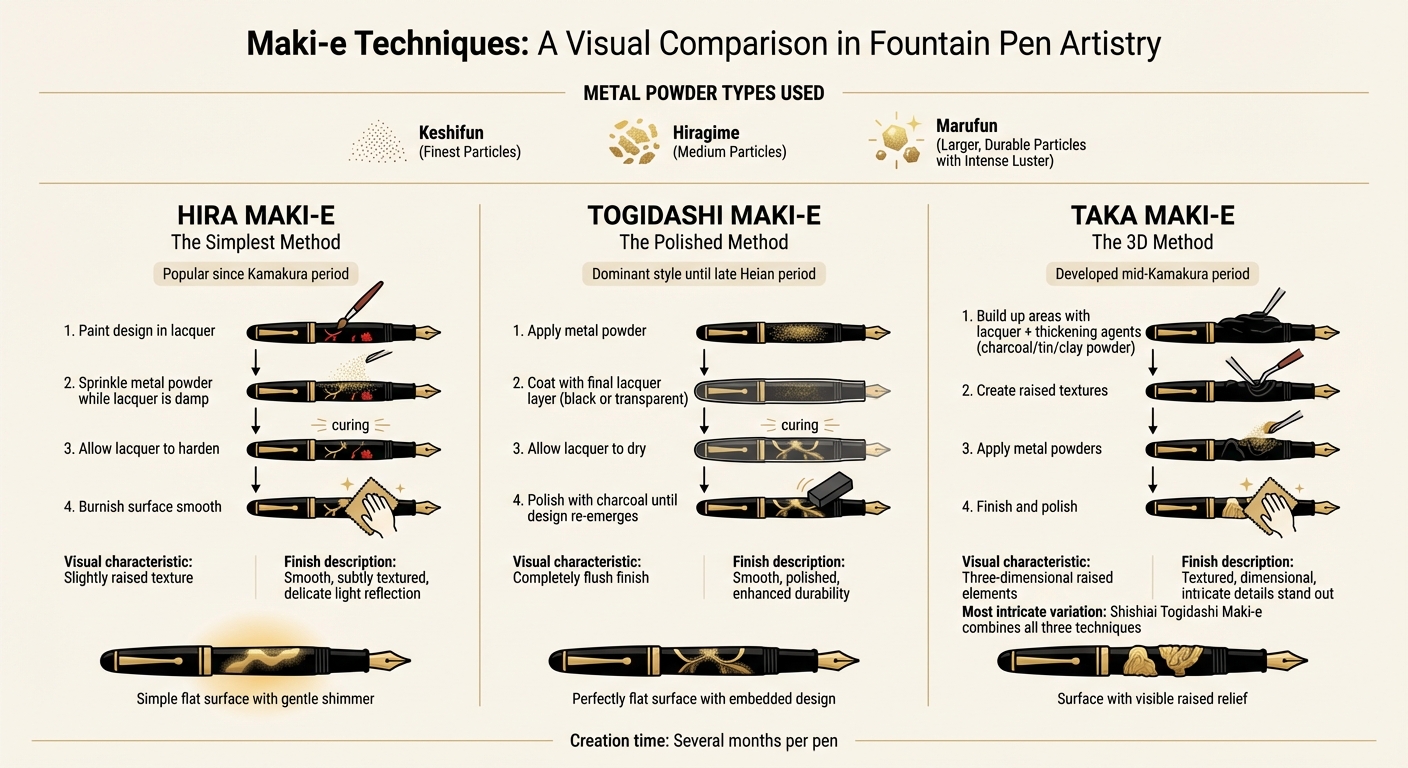
Three Traditional Maki-e Techniques Comparison: Hira, Togidashi, and Taka
Maki-e artistry on fountain pens is built on three main techniques, each offering a unique visual and tactile experience. These methods range from understated elegance to striking three-dimensional effects, showcasing the skill and patience of the artisans behind them. To fully appreciate the craftsmanship, it’s helpful to understand the details of these techniques.
Artists rely on different types of metal powders to achieve various finishes. These powders include keshifun (the finest particles), hiragime (medium-sized particles), and marufun (larger, more durable particles with intense luster). Let’s dive into the specifics of each technique.
Hira Maki-e
Hira Maki-e is the simplest of the three methods. The process begins with the artist painting a design in Urushi lacquer. While the lacquer is still damp, metal powder is carefully sprinkled over it. Once the lacquer hardens, the surface is burnished to create a smooth, slightly raised texture. This technique became popular during the Kamakura period when artisans improved the quality of metal particles. Timing is critical here - if the powder is applied too early or too late, it won’t adhere properly. The result is a finish that feels smooth yet subtly textured, reflecting light in a delicate, understated way.
Togidashi Maki-e
Togidashi Maki-e takes a different approach. After applying the metal powder, the artist coats the design with a final layer of lacquer, often black or transparent, using the nurikomi method. Once the lacquer dries, the surface is polished with charcoal until the design re-emerges, creating a completely smooth and flush finish. This technique was the dominant style until the late Heian period, as earlier metal powders lacked the refinement necessary for Hira Maki-e. The additional lacquer and polishing not only reveal the intricate design but also enhance the artwork’s durability.
Taka Maki-e
Taka Maki-e introduces a three-dimensional element to the design. Before applying the metal powders, the artist builds up certain areas with a mixture of lacquer and thickening agents such as charcoal powder (sumikoage-taka maki-e), tin powder (suzuage-taka maki-e), powdered whetstone, or clay (sabiage-taka maki-e). This creates raised textures, allowing specific details to stand out. Developed during the mid-Kamakura period, this technique is ideal for emphasizing intricate features like the scales of a dragon or the petals of cherry blossoms. The most intricate variation, Shishiai Togidashi Maki-e, combines all three techniques, blending raised elements with smooth, polished backgrounds to evoke scenes like floating clouds or rippling water.
These time-honored techniques are the heart of Maki-e pens’ enduring appeal. The painstaking process of creating a single pen can take several months, which explains why these masterpieces are highly sought after by collectors and command premium prices worldwide.
Modern Developments in Maki-e Pens
While traditional methods remain at the heart of Maki-e craftsmanship, modern techniques have expanded its reach and appeal for today’s collectors.
Kindai Maki-e
The evolution of Maki-e has given rise to Kindai Maki-e, or modern Maki-e, which introduces new methods to enhance the creation process. Instead of solely relying on the traditional application of urushi lacquer, artisans now integrate silk screen or pad printing to lay down the base layer.
Once the base is printed, skilled artisans hand-finish each piece with powders made from gold, silver, or other colors, achieving the signature three-dimensional effect Maki-e is known for. As Pen Realm explains:
"Unlike conventional Maki-e, it is applied with silk screen printing instead of urushi lacquer on the underlayer, which is then sprinkled with colored powders such as gold and silver and hand-finished one by one by Maki-e artisans".
This blend of traditional craftsmanship and modern technology has made Maki-e pens more accessible. What once took months or years to complete can now be produced more efficiently, without compromising the intricate beauty that defines these pens. Additionally, innovations like Platinum’s "Slip & Seal" mechanism - which prevents ink from drying for up to a year - show how modern functionality is being integrated into these artistic creations.
Patterns and Collections
Modern Maki-e collections skillfully merge traditional Japanese motifs with updated production methods. For instance, the Platinum Preppy Wa series (2026) introduces six designs inspired by auspicious symbols: Fuji (Purple), Kuyo (Black), Fukura Suzume (Pink), Shima to Tomoe (Red), Kiku-Karakusa (Green), and Kachimushi (Blue/Black). With a price point of around price point of around $10, these pens demonstrate0, these fountain pens for beginners demonstrate how Kindai Maki-e can bring the elegance of this art form to a broader audience.
At the other end of the spectrum, premium offerings like Pelikan’s M1000 Maki-e editions, such as "Ivy & Komon" and "Goldfish", combine German engineering with authentic Japanese artistry. These limited-edition pens are crafted using traditional Togidashi and Taka Maki-e techniques by Japanese master artisans. The result is a stunning fusion of East and West, appealing to serious collectors who value both heritage and innovation. These collaborations highlight how modern Maki-e continues to honor its roots while embracing contemporary design and global influences.
Materials and Crafting Process
Making a Maki-e pen is a labor of precision and artistry, starting with the use of urushi lacquer - a natural adhesive sourced from the sap of the lacquer tree. Unlike regular paint that dries through evaporation, urushi hardens through a unique chemical reaction. As artist Hariya Masayuki explains:
"Lacquer hardens when the laccase enzyme it contains absorbs moisture from the air and reacts, causing urushiol to solidify".
This reaction requires careful environmental control, with temperatures set between 68–77°F and humidity levels maintained at 70–85%.
To give the pen its signature shimmer, artisans use fine metal powders. Gold and silver are the most popular choices, but other metals like copper, brass, aluminum, platinum, and pewter are also used to create different colors and effects. These powders come in three grades: keshifun (fine), hiragime (medium), and marufun (larger, rounded particles).
Decorative inlays further enhance the design. Techniques like raden incorporate thin layers of abalone or pearl oyster shell for an iridescent effect, while rankaku employs quail eggshells to create pure white accents. This is especially important because white lacquer tends to age into a creamy yellow, whereas eggshell retains its crisp whiteness over time. Once materials are prepared, the crafting process follows a detailed sequence of steps involving application, drying, and polishing.
The creation begins with transferring the design onto the pen body. A coat of lacquer is applied as an adhesive base, and metal powders are sprinkled using a funzutsu - a bamboo tube with fabric at one end. Each layer is left to harden for 24 hours under controlled conditions. Afterward, the surface is carefully sanded with charcoal or waterproof sandpaper and polished with fine compounds applied by hand. This cycle of painting, sprinkling, drying, and polishing is repeated over several months to achieve the final result.
What makes Maki-e pens even more special is their ability to evolve over time. Through a process known as "lacquer settling", the pen's appearance changes as it ages. Designs that initially appear dark may brighten over a year or more as the brown tones in the lacquer fade, allowing the gold to shine more vividly. This natural transformation adds to the pen’s charm, turning each one into a dynamic, ever-changing piece of art.
Collecting and Maintaining Modern Maki-e Pens
Collectors who admire the exquisite craftsmanship of Maki-e pens should also understand the importance of proper care and thoughtful selection when building their collection.
Starting Your Collection
If you're new to collecting, it's a good idea to begin with more accessible pieces. For example, the Namiki Nippon Art series is a popular starting point. These pens feature the Hira (flat) Maki-e technique and showcase iconic Japanese imagery like Mt. Fuji and koi. They offer genuine, hand-applied artistry without the higher price tags of more intricate designs.
When selecting pens, consider the complexity of the techniques used. Hira Maki-e models are typically the most affordable, while Togidashi Maki-e sits in the midrange. For collectors seeking something truly special, Taka Maki-e pens, with their raised, three-dimensional designs, represent the premium tier.
Authenticity is key. Look for pens from reputable brands like Namiki, Sailor, and Platinum, which are known for their traditional hand-applied methods. Other exceptional examples include the Pilot Custom 845 Urushi, which showcases the depth of traditional lacquer work. The artistry of genuine Maki-e pens is unmatched, offering a depth and character that mass-produced alternatives simply can't replicate.
Once you've chosen your pens, proper care is essential to maintain their beauty and functionality.
Maintenance Tips
Maki-e pens require careful handling to protect their intricate finishes and internal mechanisms. While the urushi lacquer used in these pens is naturally resistant to heat and moisture, it's still vulnerable to UV light and harsh chemicals. Avoid cleaning the barrel with alcohol, abrasive materials, or household cleaners, as these can damage the lacquer and intricate gold powder designs.
For routine care, gently wipe the pen body with a soft, dry cloth. To prevent scratches, store each pen in its own sleeve or a lined case, especially if it features raised Taka Maki-e designs. Keep them out of direct sunlight for extended periods to preserve their finish.
Internally, it's important to maintain the nib and piston mechanism. Flush them periodically with clean water to prevent ink buildup, and always use high-quality fountain pen ink to avoid damaging the internal components. As Makoba aptly states:
"With proper care, the Urushi finish will grow deeper and more beautiful with age."
Conclusion
Modern Maki-e pens elegantly combine 1,200 years of Japanese lacquer artistry with the precision of contemporary pen craftsmanship. From the enduring strength of Urushi lacquer to meticulously crafted 18k and 21k gold nibs, every detail is designed to offer both beauty and exceptional functionality.
Whether you're captivated by the symbolic depictions of dragons and cranes, intrigued by innovations like Platinum's cap-sealing technology, or drawn to collaborations such as Pelikan's Maki-e editions, these pens go far beyond simple writing tools. They are personal treasures, blending centuries of tradition with modern ingenuity. Each pen connects you to the master artisans who painstakingly brought their vision to life, making every design element a reflection of this rich heritage.
From the simpler elegance of Hira Maki-e to the intricate layers of Taka Maki-e, modern collections cater to all levels of collectors. Entry-level Hira Maki-e pens offer an introduction to this timeless craftsmanship, while Togidashi and Taka Maki-e pieces showcase increasingly elaborate designs for those seeking to expand their collections. As Makoba beautifully puts it:
"Owning a Maki-e pen is not about owning a pen. It is about inheriting a tradition - and carrying it forward, one written word at a time."
These pens are more than functional; they are living works of art. Designed for everyday use, they develop character over time, becoming even more stunning as the Urushi lacquer ages gracefully. Owning a modern Maki-e pen is an invitation to participate in a legacy that grows with each word you write.
FAQs
How can I tell if a Maki-e pen is truly hand-made?
Hand-made Maki-e pens stand out due to their detailed craftsmanship and the use of traditional Japanese lacquer techniques. Expert artisans employ methods such as Hira Maki-e (flat designs) and Taka Maki-e (raised designs), meticulously building up multiple layers of lacquer and metal powders. The painstaking process, along with the one-of-a-kind designs, makes it easy to recognize an authentic, hand-crafted Maki-e pen.
Which Maki-e technique is best for everyday use?
Togidashi Maki-e stands out as a great choice for everyday use, thanks to its smooth, polished, and flat surface. This design not only enhances its practicality for frequent handling and writing but also preserves its refined and stylish look.
What’s the safest way to store and clean Urushi lacquer?
To keep Urushi lacquer on fountain pens looking its best, store the pen in a dry, soft-lined case, away from moisture, heat, direct sunlight, and sudden temperature changes. When cleaning, use a soft, damp cloth to gently wipe the surface - steer clear of harsh chemicals or abrasive materials that could damage the finish. Before putting the pen away for an extended period, clean it thoroughly to help preserve the lacquer’s appearance and quality over time.