

When choosing a fountain pen nib, the two main factors that shape your writing experience are smoothness and feedback. Here's a quick breakdown:
- Smoothness: The nib glides effortlessly across the paper, reducing resistance and making writing feel fluid. Perfect for long sessions, smooth nibs are beginner-friendly and reduce hand strain.
- Feedback: Offers a tactile sensation, allowing you to feel the paper's texture. Ideal for those who value precision and control, especially in detailed work like calligraphy or sketching.
The choice depends on your writing style and preferences. Smooth nibs are great for speed and comfort, while feedback-rich nibs provide a more connected, controlled experience.
Quick Comparison
| Feature | Smoothness | Feedback |
|---|---|---|
| Feel | Gliding, "glass-like" sensation | Tactile, "tooth" or "drag" sensation |
| Best For | Long writing sessions, beginners | Precision, detailed work |
| Paper Texture | Works well on rougher paper | Best on smoother paper |
| Nib Material | Often gold vs steel nibs for flexibility or firmness |
Understanding these qualities will help you pick the nib that suits your needs. You may also want to consider how different nib sizes affect your writing feel.
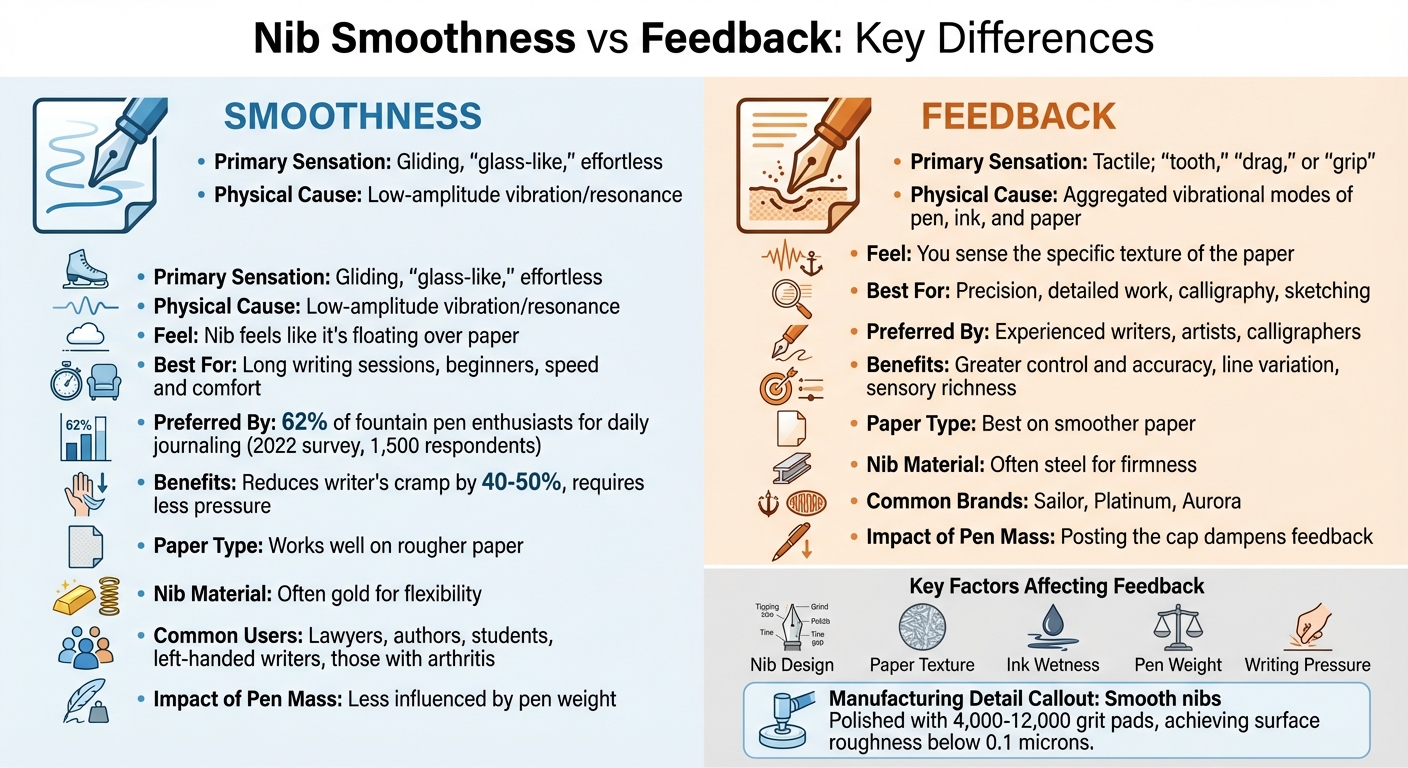
Fountain Pen Nib Smoothness vs Feedback Comparison Chart
What is Nib Smoothness?
Nib smoothness refers to how effortlessly a pen glides across paper, delivering ink evenly without any scratching or snagging.
This quality shines during extended writing sessions. Studies indicate that smooth nibs can cut down writer's cramp by 40–50%. They require less pressure to keep moving, which not only results in cleaner, more consistent lines but also allows for quicker writing without sacrificing clarity.
How Nib Smoothness is Achieved
Creating a smooth nib involves several factors. First, the nib material plays a big role - gold nibs are known for their flexibility and smoothness, but premium steel nibs can also perform exceptionally well. The size of the nib's tip is another consideration. Larger tips, like medium or broad nibs, spread ink over a wider surface, which reduces friction compared to finer tips like extra-fine nibs.
Manufacturing precision is critical. The nib undergoes meticulous grinding and polishing, often involving multi-stage processes. These can include polishing with materials ranging from 4,000-grit pads to 12,000-grit pads, and finishing with jeweler's rouge or diamond paste. This process achieves an ultra-smooth surface, with roughness levels below 0.1 microns, ensuring a flawless glide.
Who Prefers Smooth Nibs?
Smooth nibs appeal to those who prioritize comfort and speed over tactile writing feedback. They are particularly beginner-friendly, as they require less pressure and skill to produce even, consistent strokes. Professionals like lawyers, authors, and students - who often write for extended periods - appreciate the reduced hand strain that smooth nibs provide.
A 2022 survey by The Pen Addict community involving 1,500 fountain pen enthusiasts revealed that 62% preferred smooth nibs for daily journaling. Smooth nibs are also favored by individuals with arthritis or similar conditions, as the low resistance makes writing less painful. Left-handed writers often choose smooth nibs as well, since the reduced drag minimizes the chance of smudging ink.
Next, we’ll explore nib feedback, which offers a different tactile experience for those who seek more connection with the page.
sbb-itb-1dd4fe9
What is Nib Feedback?
Nib feedback refers to the tactile sensation you experience as your pen glides across paper. Writers often describe it with words like "tooth", "drag", "texture", or "grip." While smoothness involves minimal vibrations, feedback creates a more textured connection through multi-dimensional vibrations.
Josh, the writer behind nibbedinthebud, explains this concept using his "resonance theory":
"Feedback is the aggregated effect of the vibrational modes of the writing system (pen, ink, and paper)."
In essence, feedback results from the interplay of the pen, ink, and paper. Interestingly, two nibs can produce feedback of the same intensity but feel entirely different, much like two instruments playing the same note but with unique tonal qualities. Some nibs even emit a "singing" sound from high-frequency vibrations, adding an auditory dimension to the experience. Writers have observed that altering the sound - like wearing headphones - can change their perception of the nib's texture. These intricate interactions set the stage for the factors that shape feedback.
Factors That Influence Feedback
Several elements combine to determine the intensity and character of nib feedback, including fountain pen buying factors like nib design, paper texture, ink wetness, pen weight, and writing pressure.
- Nib Design: The size of the tipping, its grind and polish, the tine gap width, and the material used for the tipping all influence the vibrations you feel.
- Paper Texture: Different paper qualities create varying levels of friction, directly affecting feedback.
- Ink Wetness: Wetter inks tend to lubricate the nib, reducing the intensity of feedback.
- Pen Weight: Heavier pens often absorb more vibrations, resulting in less pronounced feedback compared to lighter ones.
- Writing Pressure: Pressing harder increases the nib's contact with the paper, amplifying the tactile sensation.
Some manufacturers, like Platinum, even design their nibs to extend deeper into the grip section, enhancing the resonance of vibrations through the pen body into your hand.
Who Prefers Feedback in Nibs?
Nib feedback is often prized by those who value control and precision. The tactile connection it provides allows for greater accuracy, making it a favorite for calligraphy, technical drawing, or small, detailed handwriting. Many experienced writers find pronounced feedback essential for maintaining precision. Artists and sketchers also appreciate feedback for its role in controlling line variation and shading. Beyond practical benefits, some simply enjoy the sensory richness - both tactile and auditory - that feedback adds to the writing experience.
Smoothness vs Feedback: Main Differences
Smoothness and feedback represent two distinct experiences in the tactile world of custom and standard fountain pen nibs. As Josh from nibbedinthebud puts it, "Smoothness is an inverted way to describe low‐amplitude feedback." Essentially, smooth nibs produce minimal vibrations, often so subtle that they're almost unnoticeable.
The main distinction lies in how much of the paper's texture you perceive while writing. Smooth nibs create a "glass‐like" sensation, making it feel as though the pen glides effortlessly across the page. On the other hand, nibs rich in feedback offer a more tactile experience, allowing you to feel the paper’s texture through sensations often described as "tooth", "drag", or "grip." Imagine the difference between skating on smooth ice versus walking on a textured surface - you’re either gliding or feeling every detail beneath you. Choosing the right feel often depends on your ideal nib size and writing style.
Smoothness reduces resistance, while feedback enhances the tactile connection to the paper. Interestingly, adjustments like increasing the pen's mass (e.g., by posting the cap) can dampen feedback without altering the nib's smoothness. For some, the "singing" sound caused by high-frequency vibrations can influence the perception of smoothness. Wearing headphones to block this sound can make the nib feel smoother, even if nothing physically changes.
Here’s a quick breakdown of the differences:
Comparison Table: Smoothness vs Feedback
| Category | Smoothness | Feedback |
|---|---|---|
| Primary Sensation | Gliding, "glass‐like", effortless | Tactile; "tooth", "drag", or "grip" |
| Physical Cause | Low‐amplitude vibration/resonance | Aggregated vibrational modes of pen, ink, and paper |
| User Experience | Nib feels like it’s floating over paper | You sense the specific texture of the paper |
| Impact of Pen Mass | Less influenced by pen weight | Posting the cap dampens feedback |
| Common Brands | Linked to high‐polish brands | Often found in Sailor, Platinum, Aurora |
| Writing Effect | Reduced drag and vibration | Greater tactile connection |
How Nib Materials Affect Smoothness and Feedback
The material of a fountain pen nib plays a big role in how it feels to write with. Even though both steel and gold nibs are usually tipped with durable metals like iridium - so the actual point touching the paper is similar - the difference in smoothness and feedback comes down to the flexibility of the metal. Let’s break down how steel and gold nibs compare when it comes to writing feel.
Steel Nibs: Firm and Feedback-Rich
Steel nibs are known for their firmness, which creates a writing experience full of tactile feedback. As EndlessPens puts it:
"Stainless steel nibs are usually stiffer, providing a more consistent and firm writing experience with less variation in line."
This stiffness means steel nibs don’t flex under pressure, resulting in a crisp, controlled line - especially noticeable in finer nib sizes. Writers who prefer a more direct connection with the page often enjoy the feedback steel nibs provide, making them popular for tasks like technical writing or quick note-taking.
Steel nibs are also more budget-friendly, commonly found in entry-level and mid-range pens. Some brands have even created flexible steel nibs to replicate the springy feel of gold, but the classic steel nib remains firm and precise.
Gold Nibs: Soft and Smooth
Gold nibs, typically made from 14k or 18k gold, offer a completely different feel. The higher the gold content, the softer and more flexible the nib becomes. As EndlessPens explains:
"Gold nibs are generally more flexible, which allows for slight line variation and a softer, more cushioned writing experience."
This flexibility lets gold nibs adapt to the pressure of your hand, reducing the amount of feedback and creating a smoother, more cushioned sensation on the page. Gold also has the added benefit of being naturally resistant to corrosion, making it a durable choice for long-term use.
However, this luxurious material comes at a steep price, which is why gold nibs are typically reserved for premium fountain pens. For those who value a softer and smoother writing feel, the investment can be worth it.
How to Choose Between Smoothness and Feedback
Consider Your Writing Style and Purpose
Selecting the right nib comes down to understanding your writing habits and the type of work you do. If you tend to write quickly and use light pressure, a smooth nib can help reduce resistance and keep your writing flow uninterrupted. On the other hand, if you like to vary pressure to create line variations, a nib with more feedback might be the better choice. This tactile sensation allows calligraphers and artists to adjust line width and add expressive details to their work. Smooth nibs are ideal for everyday writing, while nibs with more feedback are better suited for creative tasks requiring precision and control.
Ask yourself a few key questions: Do you value a smooth glide for rapid writing? Do you adjust pressure to achieve artistic effects? Does too much drag cause hand fatigue? Your answers can point you toward the nib that best fits your needs. Don’t forget to factor in your paper choice - rougher paper works well with smooth nibs to avoid excessive drag, while smooth paper enhances the control offered by feedback-rich nibs.
Once you've assessed your writing preferences, the next step is to try out different nibs to find the perfect fit.
Test Different Nibs
Reading about nib characteristics is helpful, but nothing compares to testing them yourself. Hands-on experience lets you determine if a smooth nib feels too slippery or if a feedback nib provides just the right texture. Check out pen shows or visit specialty shops to try out a variety of nibs. Write short samples on different paper types to get a feel for how each nib performs. Many fountain pen enthusiasts suggest spending 15 to 30 minutes with each nib to evaluate comfort and control.
If you're new to fountain pens, Fountain Pen Revolution offers affordable steel nibs priced under $20. These nibs come in various smoothness and feedback profiles, making it easy to experiment without spending too much. Testing a range of nibs will help you find the one that matches your writing style perfectly.
Conclusion
When it comes to how smoothness and feedback shape your writing experience, the difference lies in how the nib interacts with the paper. Smooth nibs offer an effortless glide, ideal for fast and comfortable writing, while feedback nibs provide a tactile, pencil-like sensation, perfect for precise and detailed work. It’s not about one being better than the other - they simply cater to different preferences and needs.
Your decision should reflect your writing habits. If speed and fluidity are your priorities, smooth nibs might be your go-to. On the other hand, if you value control and a more deliberate feel, feedback nibs could be the better fit. Think about your usual writing style, the type of content you create, and the paper you tend to use.
Fountain Pen Revolution makes experimenting with both styles simple and budget-friendly. They offer a wide range of nibs, from Extra Fine for a pronounced feedback feel to Broad nibs for a smoother experience, all compatible with various pen models to suit diverse writing preferences.
Ultimately, the best way to find your ideal nib is to try them out. Somewhere between smoothness and feedback lies the perfect balance for your unique writing style.
FAQs
Can a nib be both smooth and have feedback?
A nib can indeed be both smooth and provide feedback, depending on how it's tuned and maintained. Smoothness describes how effortlessly the nib moves across the paper, while feedback refers to the subtle tactile sensation you feel while writing. When a nib is well-tuned, it can glide easily while still offering just enough resistance to give you control - something many writers appreciate. Regular cleaning, careful adjustments, or polishing can help achieve the right balance between these qualities.
How can I reduce feedback without changing nibs?
To cut down on feedback without swapping out nibs, start with proper nib care. First, check if the nib's tines are aligned correctly - misaligned tines can lead to a scratchy writing experience. Next, clean the nib thoroughly to clear away any dried ink or debris that might be causing issues. For a smoother feel, you can gently polish the nib with micro-mesh or Mylar paper to eliminate minor imperfections. Finally, adjust your writing technique by applying light pressure and holding the pen at the right angle to keep feedback to a minimum.
Will ink or paper make my nib feel smoother or rougher?
Yes, both the ink and paper you use can impact how your nib feels when writing. Coarse or absorbent paper tends to increase feedback, making the nib feel rougher against the surface. On the other hand, smooth paper allows the nib to glide effortlessly. Similarly, wetter inks produce smoother strokes, while drier or thicker inks can introduce more feedback. For a smoother writing experience, opt for high-quality paper and wetter inks.