

Fountain pens are delicate tools that require proper care and storage to maintain their performance and longevity. Without the right setup, issues like ink clogs, leaks, or damage from UV light and dust can arise. Here’s a quick rundown of how to store your pens effectively:
- Temperature & Humidity: Keep pens between 50°F–75°F and maintain 40%–60% humidity to prevent ink issues like leaks or thickening.
- Light Protection: Avoid direct sunlight to prevent fading, cracking, or brittleness of pen materials.
-
Storage Position:
- Daily Use: Horizontal for quick writing.
- Short-Term: Vertical (nib up) to prevent leaks.
- Long-Term: Clean and store empty.
- Storage Solutions: Options include display cases, stackable trays, desk stands, or zippered cases, depending on your collection size (5–40+ pens).
- Accessories: Store ink bottles upright in cool, dark areas and organize with pens for convenience.
Proper storage ensures your pens stay functional and protected, whether you’re a casual user or an avid collector.
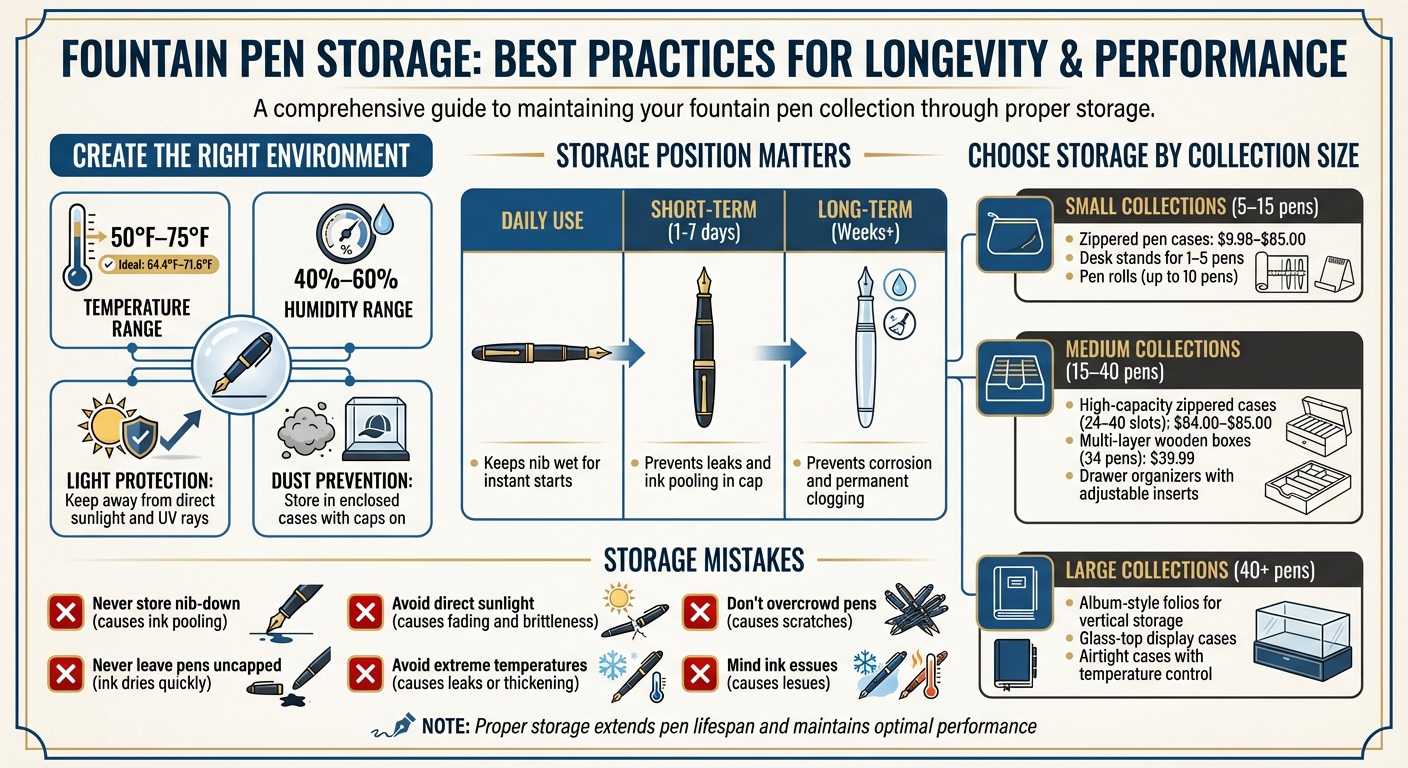
Fountain Pen Storage Guide: Optimal Conditions and Positioning by Use Case
The BEST Way to Store Fountain Pens? | (MUJI Acrylic Drawers)

Creating the Right Storage Environment
The conditions around your desk play a big role in keeping your fountain pens in top shape. Everything from the air quality to how you store them can affect their performance and longevity. By setting up the right environment, you can avoid common issues like leaks, clogs, or damage. Let’s break down the key factors that help protect your pens.
Temperature and Humidity Levels
Temperature and humidity are crucial when it comes to fountain pen care. Aim to keep the temperature between 50°F and 75°F, with the sweet spot being 64.4°F to 71.6°F for smooth ink flow and optimal performance. Extreme temperatures can cause problems: heat makes the ink expand, which can lead to leaks, while cold can thicken or even freeze the ink, potentially damaging the pen’s feed system.
Humidity matters too. Keep it between 40% and 60% to maintain ink consistency. High humidity can thin the ink, causing smudges, while low humidity might thicken it, leading to "hard starts" when you try to write. If you’re not planning to use a pen for more than a month, it’s best to empty the ink reservoir and flush the nib and feed with lukewarm water to avoid clogs over time.
Protection from Light and Dust
Sunlight is a silent enemy of fountain pens. UV rays can fade ink colors and weaken materials like resin, celluloid, and plastic, making them brittle or prone to cracking. Heat from the sun can also lower ink viscosity, increasing the risk of leaks.
"Direct sunlight can cause the materials of your fountain pen, such as the barrel and cap, to fade, crack, or become brittle over time." – Sophie Thompson, Author, Storables
To protect your pens, keep storage areas away from windows. Avoid placing pen stands or cases on windowsills, and if you’re displaying your pens, use opaque storage boxes to shield them from light. Dust is another concern - it can settle on the nib or work its way into the feed system, leading to clogs or even scratching the pen’s finish. Always cap your pens when not in use and store them in enclosed cases to keep dust at bay.
Preventing Overcrowding and Physical Damage
Crowding your pens together can lead to scratches and damage, especially on those with delicate finishes.
"The more valuable the pen, the more space you need between it and others to avoid scratches." – Goldspot Pens
Opt for storage solutions that provide individual slots or compartments for your pens. Look for cases lined with soft materials like velvet, microfiber, or felt to cushion them and prevent abrasions. For pens you use daily, horizontal storage keeps the nib moist and ready to write. For pens you use less frequently, store them vertically with the nib pointing up - this prevents ink from pooling in the cap. Never store a pen nib-down, as this can cause ink to leak into the cap and create a buildup of dried ink that’s tough to clean.
| Storage Duration | Recommended Position | Benefit |
|---|---|---|
| Daily Use | Horizontal | Keeps nib wet for instant starts |
| Short-term (1-7 days) | Vertical (Nib Up) | Prevents leaks and ink pooling in cap |
| Long-term (Weeks+) | Cleaned & Empty | Prevents corrosion and permanent clogging |
Types of Desk Storage Solutions
Finding the right storage for your pens depends on how you use them, the size of your collection, and whether you prefer to display them or keep them neatly tucked away. Here’s a closer look at some popular options to help you decide.
Display Cases and Boxes
If you want to showcase your collection while keeping it protected, glass-top cases and wooden boxes are excellent choices. These typically come with individual compartments lined with soft materials like velvet, microfiber, or felt to guard against scratches. Glass-top boxes, in particular, allow you to admire your pens at a glance, making them ideal for collectors. For pens made of light-sensitive materials, look for cases with UV protection.
Be sure to check the slot sizes, especially if you have larger pens. High-quality boxes may also include airtight seals to protect against dust and humidity. Pricing varies widely, with budget-friendly wooden organizers starting at $10.00 to $40.00. Mid-range leather cases from brands like Girologio and Aston Leather cost between $60.00 and $90.00, while premium options like Galen Leather folios range from $85.00 to $145.00.
For example, the Aston Leather Single Slip Pouch boasts an impressive 4.8/5 rating from over 150 reviews, while the Girologio 24 Pen Case earns a 4.9/5 rating for its combination of capacity and protection.
"The Franklin-Christoph Covered Pen Tray is my overall favorite storage system, with an excellent combination of looks and functionality." – The Gentleman Stationer
If you anticipate growing your collection, modular solutions might be a better fit, as they offer more flexibility.
Stackable Tray Systems
Stackable trays and modular drawer organizers are perfect for expanding collections. Unlike fixed-capacity display cases, these systems let you add more trays or layers as your collection grows. They’re also customizable to fit your workspace and keep pens from rolling around. Prices range from about $10 for basic trays to $40 for larger wooden organizers.
Covered trays strike a balance between display and portability. They provide quick access while offering better dust protection than open stands. However, if you use open trays, keep them out of direct sunlight to avoid fading or brittleness in your pens. For long-term storage, covered trays are the safer choice.
Desk Stands and Pen Rests
If you need your favorite pens within easy reach, desk stands and pen rests are the way to go. These options are designed for your "daily driver" pens - the ones you use most often. They keep pens secure and accessible, preventing them from rolling off your desk and getting damaged.
"I find storing pens horizontally keeps the nibs wet enough to start writing right away, without leaking into the cap." – Brian Goulet, Founder, The Goulet Pen Company
Horizontal storage is great for keeping nibs ready to write, but desk stands don’t offer dust protection, so they’re not ideal for long-term storage. Avoid storing pens nib-down to prevent ink pooling. When choosing a stand, make sure it accommodates the size of your pens, as some are designed specifically for oversized models.
Selecting Storage Based on Collection Size
Choosing the right storage for your fountain pens isn’t just about practicality - it’s about finding a solution that fits your collection size and how you use your pens. A small desk stand might work for a handful of pens, but it won’t cut it for a collection of 30. On the flip side, a 40-slot case might feel excessive if you only have five favorites. Here's how to tailor your storage to your collection.
Small Collections (5–15 Pens)
If your collection is on the smaller side, zippered pen cases are a solid choice. These cases offer individual compartments that protect your pens from scratches and preserve their delicate finishes. Most hold 10–12 pens, keeping everything neat and organized. Prices can range from budget-friendly PU leather cases starting at $9.98 to more premium options like the Galen Leather 10-slot case, priced around $85.00.
For pens you use daily, a desk stand or holder is a convenient option, keeping 1–5 pens within easy reach. If portability is a priority, pen rolls are a great alternative. They can hold up to 10 pens and unroll neatly on your desk. Drawer organizers with felt-lined slots are another option, storing 5–15 pens while maintaining a tidy workspace.
"Having a pen case will keep your pens organized and protected, prevent them from getting scratched or nicked, and help during travel." – Pen Happy
To maintain your pens, always store them away from heat and direct sunlight. This prevents ink evaporation and protects the materials from degrading over time. For those with growing collections, larger storage solutions are worth considering, as we’ll explore next.
Medium Collections (15–40 Pens)
As your collection grows past 15 pens, you’ll need storage that balances capacity and organization. High-capacity zippered cases are a practical solution, offering options for 12, 24, or even 40 pens. For example, the Girologio 24-pen case costs about $84.00, while a 40-slot Galen Leather case is priced similarly at $85.00. These cases provide both portability and protection.
If you prefer display options, multi-layer wooden boxes work well. For instance, a three-layer box that holds about 34 pens can be found for $39.99, making efficient use of vertical space. To keep your workspace functional, consider a rotation system: store your daily-use pens in a desk stand and keep the rest in protective cases or drawers.
Drawer organizers with adjustable inserts are another good option for keeping your collection out of sight. Some collectors even repurpose small engineer's tool chests for compact, high-density storage. It’s also wise to clean and store pens empty if they’ve been unused for more than two weeks to avoid clogging [7, 17].
Large Collections (40+ Pens)
When your collection surpasses 40 pens, efficient use of space becomes critical. High-capacity cases, such as album-style folios or zippered cases, are excellent for storing pens vertically on bookshelves - saving desk space while keeping your collection organized. For instance, the Monteverde 36-pen zippered case offers ample storage for archival or reference purposes.
For pens in regular use, glass-top display cases combine functionality with aesthetic appeal, allowing you to showcase your collection. However, these can take up more surface area. Pens that are light-sensitive or not in daily rotation are best stored in opaque zippered folios. When selecting storage, make sure the slots can accommodate oversized pens like the Montblanc 149 or Pelikan M1000, as some wooden boxes may have drawers that are too tight.
Pay attention to interior linings - materials like velvet, microfiber, or acid-free foam are ideal for protecting your pens from chemical reactions and physical damage. For long-term storage, consider airtight cases or a temperature-controlled environment to guard against humidity and dust. Rotating your pens between storage and active use ensures mechanisms stay lubricated and functional. Additionally, applying a thin layer of silicone grease to piston fillers can help prevent stiffness during extended storage.
sbb-itb-1dd4fe9
Storing Ink and Accessories with Pens
Keeping your pens, ink bottles, converters, cartridges, and maintenance tools all in one place makes life easier and reduces the risk of spills or misplacing items. Below, we’ll explore practical tips for avoiding leaks and setting up an efficient storage system for your pens and inks.
Preventing Spills and Leaks
To avoid messy spills and damage to your desk, always store ink bottles upright. Make sure lids are tightly sealed to prevent air from sneaking in, which can cause ink to evaporate or thicken over time. Before sealing, wipe the bottle threads and rims to ensure a clean, snug fit.
"Make sure the caps are on tight... Use glass bottles as much as possible." – Shawn Buckles, Owner, One Pen Show
Glass bottles are a better choice for long-term storage compared to plastic, as plastic can allow water to evaporate slowly, leaving behind dry pigments. Keep your ink bottles in a cool, dark spot, away from direct sunlight or heat. Temperature changes can cause the air inside to expand, potentially forcing ink out of the bottle. For extra protection, store bottles in their original boxes to block UV light and keep them stable. If desk space is tight, consider using a drawer in a cool, dark area to prevent accidental knock-overs. For inks you use less often, placing bottles in airtight containers or ziplock bags adds an extra layer of defense against leaks.
Combined Pen and Ink Storage
Once you’ve handled spill prevention, you can focus on creating a hybrid storage setup that balances accessibility with protection. Desk drawer organizers with adjustable compartments are great for securely holding pens while keeping ink bottles and maintenance supplies within reach. Some fountain pen travel cases even come with built-in pockets for cartridges or converters, offering a compact, all-in-one solution. If you’re looking for a low-cost option, repurposing a wooden box and adding felt dividers can work just as well.
When organizing your storage, keep the room temperature stable to maintain ink consistency and avoid leaks caused by expansion. Using opaque cases or positioning transparent display boxes away from sunlight can prevent ink discoloration and protect pen materials from degrading. For a polished setup, companies like Fountain Pen Revolution offer pen stands and cases that not only keep your pens handy but also provide a neat spot for your accessories.
"Being organized means having all your pens, bottles of ink, refills, notebooks, and maintenance supplies in one spot." – Goldspot Pens
Maintenance and Organization Tips
Daily Care and Storage Habits
Keeping your fountain pens in top condition starts with a few simple daily habits. Always recap your pen as soon as you're done writing - water-based ink can dry on the nib in just minutes. During the day, store inked pens horizontally on a flat surface to keep the nib moist and ready to write. If you know you won’t use a pen for a few days, store it vertically with the nib pointing up. This prevents ink from pooling in the cap or clogging the feed.
"Storing a fountain pen vertically with the nib pointing down is a sure fire way to end up with a cap full of ink and a gunky nib of half-dried ink." – Sam Di Nardo, Author, Dayspring Pens
For pens in frequent use, flush the nib and feed with lukewarm water every few weeks or whenever you switch ink colors. After each writing session, gently wipe the nib with a soft, lint-free cloth to remove any excess ink and prevent buildup. If you’re planning to store a pen for more than a month, empty the ink reservoir completely and clean it thoroughly until the water runs clear.
Finally, organize your pens in a way that suits your daily routine to keep your workspace tidy and functional.
Organizing by Type or Frequency of Use
Once your pens are cleaned and ready, grouping them by how often you use them can make your life easier. Pens you use daily should be stored horizontally in an accessible desk stand. For pens you use less frequently, consider storing them vertically (nib up) in a drawer or display case. You might also organize them by nib size, ink color, or brand - whatever system works best for your workflow.
Common Storage Problems to Avoid
Be mindful of where you place your pens. Direct sunlight or heat sources can cause temperature fluctuations, which might make the ink expand and leak. Ideally, store your pens in a space where the temperature stays between 64°F and 72°F, though a range of 50°F to 75°F is generally safe.
Never toss pens loosely into a drawer - they could scratch each other. Use dividers or individual slots to keep them protected. And if you’re flying, either empty your pen completely or fill it to the brim to prevent air pockets from expanding due to cabin pressure changes.
Conclusion
Desk storage not only safeguards your fountain pens but also keeps them performing at their best. Taking the time to store your pens properly can significantly extend their lifespan.
"Proper storage of fountain pens is essential to maintain their performance, preserve their quality, and ensure their longevity." – Storables
Whether you own a modest collection of five pens or a treasure trove of 40 or more, the same basic principles apply. Store your frequently used pens horizontally to keep the nib primed for writing, avoid exposing them to direct sunlight or heat, and always cap them securely. For pens that will sit unused for weeks or months, it's crucial to empty and clean them thoroughly before tucking them away. By combining smart storage habits with the environmental and organizational tips shared earlier, you can keep your pens in excellent condition.
The good news? Proper storage doesn’t have to break the bank. Simple cases are available for as little as $9.99, while elegant wooden display boxes range between $39.99 and $84.00.
Create a storage setup that fits your collection and ensures consistent performance. If you're eager to expand your collection or need accessories, Fountain Pen Revolution offers a variety of options for both beginners and seasoned enthusiasts.
FAQs
What’s the best way to avoid ink clogs when storing fountain pens?
To keep your fountain pen in top condition and avoid ink clogs, it’s essential to clean it thoroughly before storing it. Start by flushing the pen with distilled water or a cleaning solution to remove any leftover ink. After cleaning, allow the pen to dry completely, which typically takes about 12–24 hours. A fully dry pen prevents ink residue from hardening and blocking the nib or feed.
If you’re storing the pen for an extended period, make sure to empty the ink reservoir or converter entirely. Choose a storage spot that’s cool and dry, with a stable temperature between 50–75°F and humidity levels around 40–60%. Using a protective case or pen stand can add an extra layer of safety, shielding your pen from environmental factors that might lead to clogs or damage over time.
What are the best ways to store a large fountain pen collection?
To manage a large fountain pen collection effectively, prioritize organization, protection, and convenience. Display cases with padded compartments are a fantastic option - they not only keep your pens safe from scratches and damage but also let you showcase your collection beautifully. These cases come in various capacities, typically accommodating anywhere from 10 to 60 pens, making them suitable for both storage and display purposes.
If you’re short on space, pen boxes or folios offer a more compact solution. These are designed to hold multiple pens securely while taking up minimal desk space, making them perfect for keeping your collection neat and within easy reach for daily use. For long-term care, store your pens in a stable environment with moderate temperature and humidity. If you don’t plan to use certain pens for a while, disassembling them can help prevent issues like ink drying or clogging. Thoughtful storage not only safeguards your collection but also ensures your pens are always ready when inspiration strikes!
How do temperature and humidity impact fountain pen ink performance?
Temperature and humidity play a big role in how fountain pen ink behaves and how long it lasts. The sweet spot for storage is a stable temperature between 50-75°F and humidity levels around 40-60%. If it gets too hot, the ink can dry out or evaporate, which might clog the nib and feed. On the flip side, high humidity can thin the ink, leading to leaks, uneven flow, or even mold growth - definitely not what you want.
To keep your ink flowing smoothly, store your fountain pens in a cool, dry spot, away from direct sunlight and sudden temperature swings. If you're not using a pen for a while, make sure to clean it thoroughly before storing it. A little care goes a long way in preserving both your pen and ink for years of smooth writing.