

When choosing between metal and plastic fountain pens, durability is a key factor. Metal pens, made from materials like brass and stainless steel, excel in longevity, resisting cracks and maintaining structural integrity even after decades of use. Plastic pens, while lighter and often more affordable, are prone to cracking, thread wear, and material fatigue over time. Here's a quick breakdown:
- Metal Pens: Durable, long-lasting, resistant to structural damage, but heavier and prone to surface scratches.
- Plastic Pens: Lightweight, comfortable for extended use, but more susceptible to cracking and visible wear.
Quick Comparison
| Feature | Metal Pens | Plastic Pens |
|---|---|---|
| Drop Resistance | High (may dent/scratch) | Moderate (prone to cracks) |
| Weight | Heavier (0.75–1.30+ oz) | Lighter (0.50–1.00 oz) |
| Lifespan | 20–50+ years | 1–10+ years (varies by quality) |
| Maintenance | Occasional polishing | Easier to restore scratches |
Metal pens are ideal for durability and a polished look, while plastic pens suit those prioritizing comfort and portability. Hybrid models offer a balance of both. Choose based on your needs - durability or ease of use.
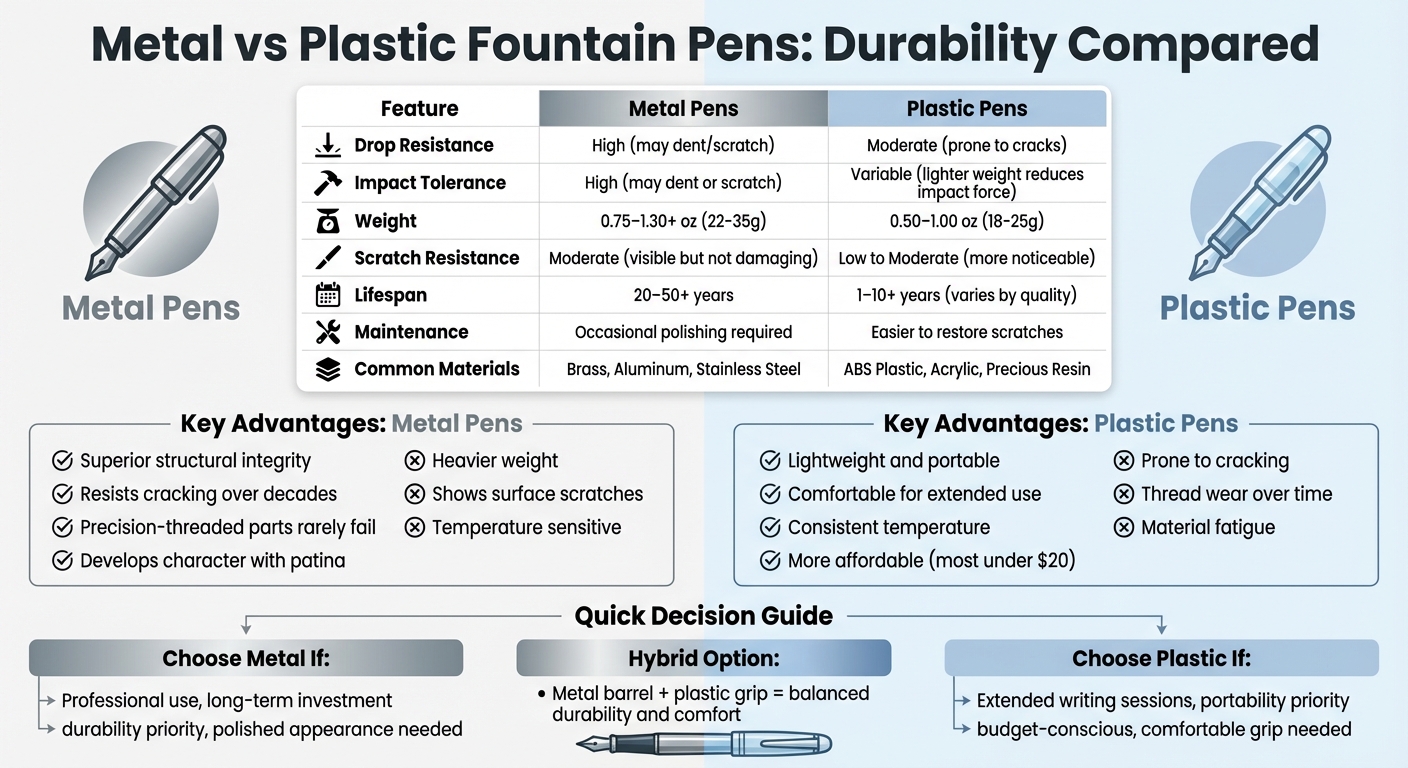
Metal vs Plastic Fountain Pens Durability Comparison Chart
Durability Testing: Metal vs Plastic
Drop Resistance and Impact Tolerance
Metal pens made from materials like brass, aluminum, or stainless steel are built to handle drops and impacts without breaking. While they might pick up dents or scratches, their structural integrity usually remains intact. On the other hand, the durability of plastic pens can vary widely. Cheaper plastics are prone to cracking, but higher-grade plastics such as ABS or Makrolon are designed to withstand significant impacts. One advantage of plastic pens is their lighter weight, which reduces the force of impact and often prevents serious damage to the nib in tip-first drops. As Lawrence Chiou, an author and pen collector, puts it:
"Molded from hard ABS plastic, the Safari can withstand rough treatment - whether thrown in a bag, stepped on, or dropped on concrete."
This durability means that even when the Lamy Safari is dropped nib-down, the damage is usually limited to minor misalignment. Now, let’s look at how these materials handle scratches and surface wear.
Scratch and Surface Damage Resistance
When it comes to hiding scratches, matte finishes tend to perform better than glossy ones. For instance, the textured ABS surface of the charcoal Lamy Safari does a great job of masking scratches that would stand out on a high-gloss resin pen. In contrast, aluminum-bodied pens, like the Lamy Al-Star, are more prone to showing surface scratches, even though they provide excellent structural strength. Meanwhile, brass and stainless steel resist deep scratches more effectively. Brass, in particular, develops a patina over time - a feature many pen enthusiasts find appealing.
"Some scratches actually add to the pen's charm, while a cracked plastic pen, even before the ink is used up, will only end up in the trash."
Beyond surface wear, plastic pens tend to degrade over time - threads wear out, bodies crack, and connection points fail. Metal pens, however, maintain their precision and fit even after decades of use, making them a more reliable choice for long-term durability.
Material Wear Over Time
Corrosion and Material Breakdown
Metal pens age differently based on the materials used in their construction. Metals like stainless steel, chrome, rhodium, palladium, and platinum retain their polished, mirror-like appearance for years without tarnishing. On the other hand, brass develops a distinct patina and verdigris over time - a natural chemical reaction that changes its look. Sterling silver also evolves, acquiring a patina and sometimes minor dents as it ages.
If the finish or coating on steel or brass pens gets damaged, exposure to moisture or acidic inks can lead to rust or oxidation. Gold or silver plating on clips, rings, or barrels often wears down over years of use, exposing the base metal beneath - a process often referred to as "brassing." While these changes alter the pen's appearance, they rarely impact its functionality. Metal pens are also sensitive to temperature, feeling cold to the touch in winter and warming noticeably in direct sunlight. Despite these visible signs of aging, the core performance of metal pens typically remains unaffected. These natural aging characteristics play a role in shaping the maintenance practices outlined later.
Plastic pens, however, tend to show more pronounced signs of wear. Cracking and ink leakage are common indicators of material fatigue. Vintage celluloid and light-colored resins can fade or yellow when exposed to UV light, while transparent demonstrator pens often become permanently stained by highly saturated or iron-gall inks. Some older plastics chemically break down over decades, becoming brittle and prone to shattering after 70 or more years. These issues can significantly impact the long-term usability of plastic pens.
Maintenance and Repair Options
Proper care can help mitigate the effects of aging on pens. For metal pens, occasional polishing is key, tailored to the specific type of metal. Hard metals benefit from regular wiping with a soft, lint-free cloth to remove fingerprints and hand oils. For silver pens, using a dedicated silver polishing cloth or applying liquid silver polish with a soft brush is ideal for cleaning intricate designs. Metal pens with precision-threaded parts rarely fail, and simply replacing the refill can significantly extend their lifespan.
Plastic pens are often easier to restore cosmetically. Surface scratches can be polished out using specialized plastic polishes. However, restoring metal pens with worn plating usually requires professional re-plating, a more complex and expensive process. Cracked plastic bodies often can't be repaired and may need to be discarded, whereas metal pens with surface scratches or patina often develop a unique character without losing functionality. To maintain metal-on-metal threads, a small amount of silicone grease can be applied to prevent wear or stripping over time.
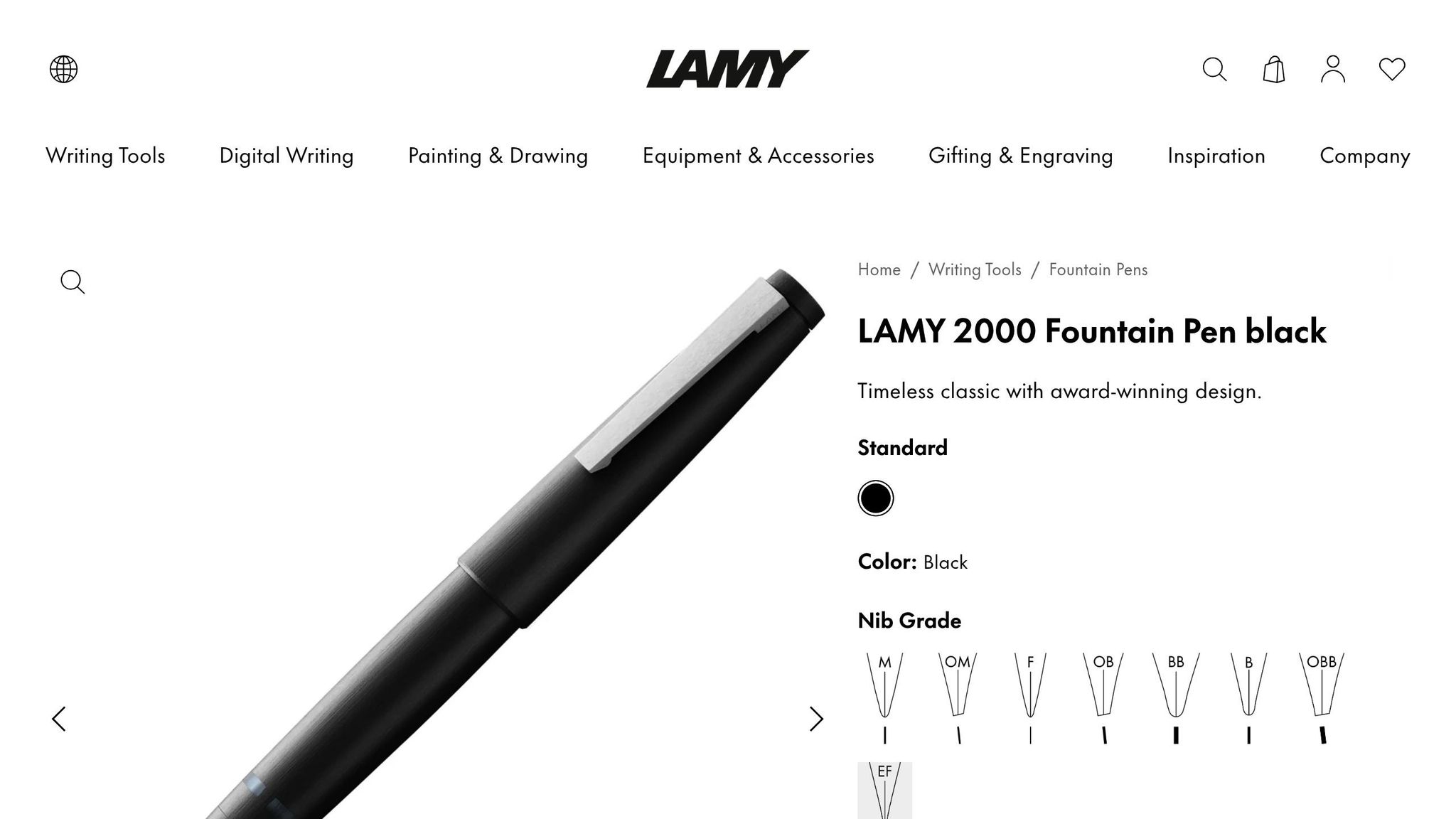
Lamy 2000 Stainless Steel vs. Makrolon - Comparative Overview
Weight, Balance, and Comfort
When choosing a fountain pen, it's not just about durability - weight and balance play a big role in how comfortable it feels during daily use.
Weight Comparison: Metal vs. Plastic
Metal fountain pens tend to be on the heavier side, while plastic pens are much lighter. This difference in weight impacts stability and comfort. For instance, a metal Cross Bailey weighs about 35g, almost double the 18g of a plastic Sailor Professional Gear Slim. Aluminum models, like the Lamy Al-Star, strike a middle ground at around 22g, offering the sturdiness of metal without being overly heavy. For comparison, a higher-end plastic pen like the Pilot 743 weighs 25g.
The added weight of metal pens often leads to smoother writing and less hand fatigue during long sessions. However, if a pen is too heavy, it can strain the hand or feel awkward for users with weaker wrists. On the other hand, plastic pens, being lightweight, are easier to handle for extended periods but may require more effort to maintain control.
"The weight of metal is something plastic cannot replicate. This weight provides a stable and smooth writing experience, effectively reducing hand fatigue even during extended writing sessions." - TTXPENS
Now, let’s look at how a pen’s material affects its grip and balance.
How Material Affects Grip and Balance
The material of a pen not only determines its durability but also influences its center of gravity and overall balance, both of which are crucial for a comfortable writing experience. Metal pens offer natural stability and control, making them perfect for tasks that require precision, such as detailed writing or signing documents. In contrast, plastic pens, often crafted through injection molding, allow for ergonomic designs but require more manual control because of their lighter weight.
Grip security depends on both the material and its finish. Metal pens often feature textured or matte finishes to prevent slipping during long use. Plastic pens, meanwhile, achieve grip through carefully contoured shapes or textured surfaces.
Another consideration is temperature. Metal pens can feel cold in winter or warm under direct sunlight, while plastic pens maintain a consistent temperature, adding to their ease of use. For those with smaller hands or weaker wrists, lightweight materials like high-grade resin or aluminum can provide a good balance of comfort and control during prolonged writing sessions.
sbb-itb-1dd4fe9
Durability Metrics Comparison
Durability Metrics Table
When it comes to longevity, metal pens generally outperform their plastic counterparts.
| Metric | Metal Fountain Pens | Plastic/Resin Fountain Pens |
|---|---|---|
| Drop Resistance | High; resists shattering or cracking | Moderate; more likely to crack on impact |
| Impact Tolerance | High (may dent or scratch) | Variable; lighter weight reduces impact force |
| Scratch Resistance | Moderate (scratches are visible but not damaging) | Low to Moderate (scratches are more noticeable) |
| Weight (Ounces) | 0.75 oz – 1.30+ oz | 0.50 oz – 1.00 oz |
| Estimated Lifespan | 20 – 50+ Years | 1 – 10+ Years (depends on quality) |
| Common Materials | Brass, Aluminum, Stainless Steel | ABS Plastic, Acrylic, Precious Resin |
This comparison highlights how material selection directly impacts durability in practical use.
Metal pens, crafted from materials like brass, aluminum, and stainless steel, are designed for longevity. Their precision-threaded construction reduces the risk of loosening or breakage, a problem more commonly found in plastic models over time.
On the other hand, plastic pens benefit from their lightweight nature, which helps reduce impact damage. For example, pens made from durable ABS plastic can withstand rough handling because the lighter mass absorbs less force during impacts. However, plastic pens are more prone to issues like cracking and thread wear over time, particularly in lower-quality models.
Fountain Pen Revolution: Affordable Durable Options
Affordable Metal and Plastic Pens
Fountain Pen Revolution has made a name for itself by offering fountain pens that strike a balance between durability and affordability. Their lineup includes both metal and plastic models, catering to a variety of preferences and budgets.
For those who prefer plastic pens, options like the Darjeeling ($18), Indus ($20), and Jaipur V1 ($21) provide lightweight designs perfect for long writing sessions. If you're looking for something sturdier, their metal pens, such as the Quickdraw ($32) and Ambassador ($49), are built to handle the bumps and scrapes of daily use.
One standout model is the Himalaya V2 ($44), which combines acrylic or ebonite with metal trims, offering a blend of durability and style. Metal options like the Quickdraw are particularly praised for withstanding the wear and tear of everyday carry, while the plastic and resin models remain comfortable and lightweight for extended use.
"Crafted by passionate pen lovers. Priced for the everyday writer." – Fountain Pen Revolution
Next, let’s explore the customer feedback and service approach that make this brand stand out.
Why Choose Fountain Pen Revolution
With a 4.8/5 Trustpilot rating from over 500 reviews, Fountain Pen Revolution has earned a loyal following. Customers frequently highlight the excellent value and performance of their pens. As a family-owned business, they go the extra mile by addressing negative reviews within 48 hours, demonstrating a strong commitment to customer satisfaction.
Long-time customer Gene Busbey shared his experience, saying:
"I have been buying from Kevin for almost 10 years and will continue to do so for at least 10 more hopefully".
The company also offers perks like free U.S. shipping on orders over $65 and regular promotions, including "Buy One Get One" deals and daily specials. Whether you're a beginner searching for an affordable entry-level fountain pen or an experienced writer exploring unique nib options, Fountain Pen Revolution combines high performance with accessible pricing.
Choosing the Right Material for Your Needs
When to Choose Metal Pens
Metal pens are a great choice for professional environments where durability and a polished appearance matter. Pens made from materials like brass or stainless steel not only feel solid in your hand but also add a touch of sophistication. Plus, their weight and balance can help reduce hand fatigue during extended use. These pens are built to handle the wear and tear of daily life, including accidental drops, making them a reliable option that only requires the occasional ink refill to keep going strong.
When to Choose Plastic Pens
If portability and ease of use are your priorities, plastic pens might be the way to go. Their lightweight design makes them perfect for long writing sessions or when you’re on the move. Another perk? Plastic barrels tend to stay at a comfortable temperature, no matter the environment. And with most models priced under $20, they’re an affordable option for everyday use.
Balancing Durability and Comfort
Choosing between metal and plastic pens comes down to your specific needs and how you plan to use them. If you’re looking for a pen that exudes quality and can stand up to heavy use, a metal pen is your best bet. On the other hand, for extended writing or travel, a plastic pen offers unmatched comfort and convenience. Can’t decide? Hybrid pens, which combine a sturdy metal barrel with a lightweight plastic grip, give you the perfect mix of durability and ease of use.
FAQs
What are the key benefits of choosing a metal fountain pen over a plastic one?
Metal fountain pens stand out for their durability and long-lasting nature. Unlike their plastic counterparts, which are prone to cracking or breaking, metal pens can withstand the rigors of daily use, accidental drops, and other challenges with ease.
Beyond their sturdiness, metal pens offer a refined feel and balanced weight. This makes them a popular choice for those who value a solid and comfortable writing experience. While plastic pens are often lighter and more budget-friendly, metal pens cater to individuals looking for a dependable and enduring writing companion.
How does a fountain pen's weight impact writing comfort?
The weight of a fountain pen significantly affects how comfortable it feels during use. Lighter pens, often made from materials such as plastic or aluminum, are great for extended writing sessions. They’re easier to maneuver and help reduce hand fatigue. Meanwhile, heavier pens, typically crafted from metals like brass or stainless steel, offer a sense of stability. This added weight can enhance precision and lessen the need to grip the pen tightly.
Finding the right balance is key. A pen with uneven weight distribution can become uncomfortable over time. By choosing a pen that matches your preferences in weight and material, you can make writing feel smoother and more enjoyable - whether you prioritize effortless handling or precise control.
Are scratches easier to fix on metal fountain pens compared to plastic ones?
Scratches on metal fountain pens often blend in over time, sometimes even giving the pen a bit of a vintage character. Minor marks on metal can usually be polished out, though deeper scratches might be more stubborn. Plastic pens, however, are a different story - they're more likely to crack or chip, and repairing such damage can be tricky or outright impossible. In general, metal pens hold up better and are more resilient to the bumps and scrapes of daily use.