

Hybrid nibs combine two functionalities in one: they work as standard fountain pen nibs and transform into dip pen nibs when flipped. Crafted from Grade 23 Titanium alloy, these nibs are durable, flexible, and corrosion-resistant. Titanium’s springy nature offers a responsive writing experience, while its moderate hardness makes it easy to customize compared to standard nibs. Though pricier due to precision machining, titanium hybrid nibs deliver a lightweight, long-lasting option for fountain pen enthusiasts.
Key points:
- Material: Grade 23 Titanium (Ti-6Al-4V ELI) ensures flexibility and durability.
- Writing Feel: Springy and responsive; lighter than steel or gold.
- Maintenance: Easy to clean and customize; requires light writing pressure.
- Drawbacks: Higher cost and initial scratchiness, which smooths over time.
Titanium hybrid nibs are a solid choice for those seeking a reliable and engaging writing tool.
Bock Titanium Nib Review
sbb-itb-1dd4fe9
Properties of Titanium in Hybrid Nibs
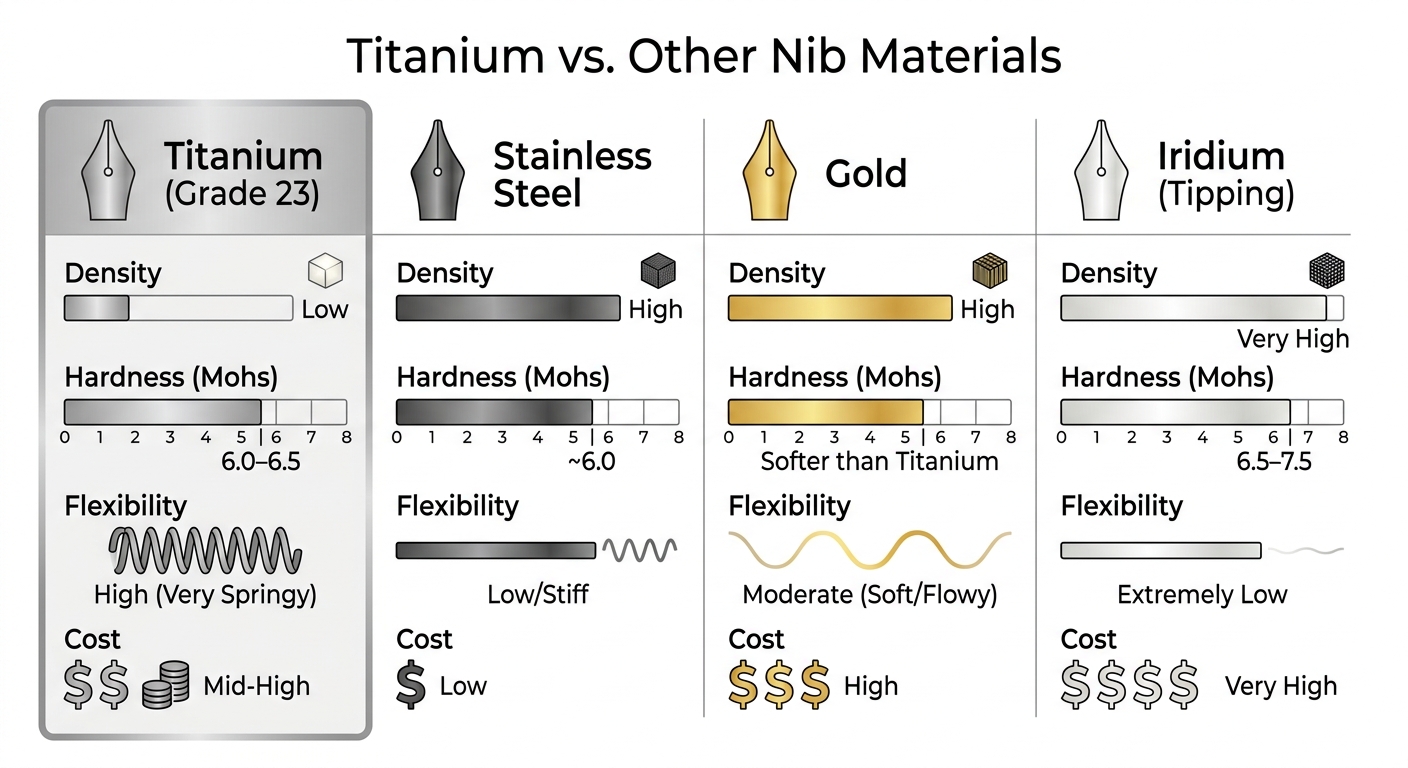
Titanium vs Steel vs Gold vs Iridium Fountain Pen Nib Material Comparison
Grade 23 Titanium (Ti-6Al-4V ELI) stands out due to its extra-low interstitials, which improve its ductility and resistance to fractures. This makes the material less likely to break under stress, offering durability that writers can depend on.
One of titanium's most striking features is its spring-like behavior. Unlike rigid steel or the softer feedback of gold, titanium has a unique ability to flex under pressure and return to its original shape. This elasticity comes from its molecular structure, allowing the nib's tines to bend and recover without permanent damage.
Titanium also boasts excellent corrosion resistance, which is a huge plus for fountain pen enthusiasts. Even when exposed to aggressive inks, it resists pitting and weakening, ensuring that the nib retains both its structural integrity and its springy responsiveness over time.
With a low density and moderate hardness (Mohs 6–6.5), titanium strikes a balance between weight and durability. It's lighter than steel or gold but harder than iridium tipping, creating a nib that feels balanced in the hand. Additionally, elongated nib points not only make the most of the material but also enhance durability.
Titanium vs. Other Nib Materials
When comparing nib materials, titanium's distinct properties become apparent:
| Material | Density | Hardness (Mohs) | Flexibility | Cost |
|---|---|---|---|---|
| Titanium (Grade 23) | Low | 6.0–6.5 | High (Very Springy) | Mid-High |
| Stainless Steel | High | ~6.0 | Low/Stiff | Low |
| Gold | High | Softer than Titanium | Moderate (Soft/Flowy) | High |
| Iridium (Tipping) | Very High | 6.5–7.5 | Extremely Low | Very High |
Titanium's low density makes it a lightweight option, reducing hand fatigue during long writing sessions. Its hardness falls between that of stainless steel and iridium, offering a sweet spot of durability and adaptability. The standout feature, however, is its flexibility - titanium provides a springy, responsive feel that both steel and gold can't match. This combination of traits delivers an exceptional writing experience.
Effects on Writing Performance
Titanium's flexibility plays a key role in enhancing how the nib feels during use. As you apply pressure, the tines flex slightly and then snap back into place, creating a dynamic response that adapts to your writing style while maintaining consistency. This tactile feedback makes writing feel more engaging and personalized.
The material's moderate hardness also contributes to smoother ink flow. Since titanium is softer than iridium, it breaks in more quickly, giving the nib a polished feel sooner. The elongated nib point design increases the surface area in contact with the paper, allowing ink to act as a lubricant. This reduces friction and extends the nib's lifespan.
Titanium's long-term reliability is another reason it's favored for hybrid nibs. Corrosion resistance and structural stability ensure that the nib holds up over time, even with frequent use. Many titanium nibs feature a threaded design, making them easy to disassemble and clean. This thoughtful engineering ensures that titanium nibs retain their signature spring-back properties, even after years of writing. These qualities make titanium a standout choice for those seeking a durable, responsive, and versatile writing tool.
Pros and Cons of Titanium Hybrid Nibs
Titanium's unique characteristics bring both notable benefits and some challenges when used in hybrid nib designs.
Advantages of Titanium Nibs
Titanium nibs are known for their exceptional springiness, offering dynamic feedback with every stroke. This elasticity creates a lively and responsive writing experience. Additionally, Grade 23 Titanium stands out for its high fracture toughness and corrosion resistance, which ensures the nib performs reliably even with exposure to various inks. High-end models are crafted with precision machining, boasting tolerances as tight as 0.05 mm for consistent performance.
Another standout feature is the ease of customization. Titanium, being softer than traditional iridium tipping (Mohs hardness 6–6.5 versus 6.5–7.5+), allows users to regrind, shape, or smooth the nib to match their personal writing preferences - no specialized tools required. Many titanium nibs also feature thread-type fixation, making them simple to disassemble and clean.
Despite these strengths, there are some trade-offs to be aware of.
Disadvantages to Consider
The precision machining required for titanium nibs contributes to higher production costs, which makes them pricier compared to gold or steel nibs. Additionally, titanium’s softer composition demands careful handling. Writing with light pressure is crucial to avoid premature wear. Some users may notice a slightly scratchy feel during initial use, though this can be resolved by regular writing or smoothing the nib with #2000–3000 grit sanding pads for about 30 seconds per side or a micro-mesh smoothing sheet.
Pros and Cons Comparison Table
Here’s a quick overview of the main advantages and disadvantages of titanium hybrid nibs:
| Aspect | Pros | Cons |
|---|---|---|
| Writing Feel | Offers exceptional springiness and tactile feedback. | May feel scratchy at first until broken in or smoothed. |
| Durability | High fracture toughness and corrosion resistance. | Softer material; requires light writing pressure. |
| Maintenance | Easy to regrind and customize for personal use. | Occasional tuning might be needed for peak performance. |
| Construction | Precision-machined with tight tolerances. | Higher production costs compared to stamped alternatives. |
Choosing and Caring for Titanium Hybrid Nibs
How to Select a Titanium Nib
When selecting a titanium nib, start by examining the material grade. The best options often use Grade 23 titanium alloy, also known as Grade 5 ELI (Extra Low Interstitials), which improves both flexibility and resistance to cracking. Next, evaluate the point design. Titanium typically has a Mohs hardness of 6–6.5, slightly softer than the 6.5–7.5 range of iridium-point alloys. Because of this, manufacturers often create elongated point designs to improve durability. You might also find nibs with variable line widths, such as Medium (0.6–0.7 mm) for vertical strokes and Fine (0.4–0.5 mm) for horizontal strokes.
It’s also important to consider the thread-type fixation. This design allows for easier removal and cleaning of the nib. Look for features like an O-ring seal at the grip section to improve ink sealing and compatibility with an ebonite feeder, which supports consistent ink flow. These details can make a big difference in your writing experience and the nib’s longevity.
Maintenance and Tuning Tips
After choosing the right nib, proper care is essential to keep it performing well over time. Titanium nibs usually need a short break-in period to reduce any initial resistance. To prevent excessive wear, use light pressure while writing, as titanium’s natural springiness allows for smoother performance without heavy force.
If your pen uses an ebonite feeder, give it a few days to fully absorb ink for optimal wetting. During this time, storing the pen with the nib pointed upward can help avoid leaks. For pens with removable thread-type nibs, you can simplify the refill process by using a syringe to fill the grip section directly after removing the nib unit. On the other hand, if a friction-fit feeder becomes loose over time, a small, cured layer of superglue applied to its flat areas can help secure it back in place. These small adjustments can go a long way in maintaining your pen's functionality.
Conclusion
Titanium hybrid nibs bring together impressive springiness and customization potential, offering a unique writing experience. With a Mohs hardness of 6.0–6.5, they are easy to fine-tune while maintaining durability. Their thoughtful design ensures a balance of flexibility and precision, making them a standout choice for fountain pen enthusiasts.
These nibs require only a short break-in period. While you might feel slight resistance initially, consistent use helps the nib adapt, resulting in a smooth glide - especially when paired with an ebonite feeder. To get the most out of your nib, apply light pressure while writing to preserve its natural springiness and extend its lifespan.
If you notice minor scratchiness after the break-in period, a quick sanding with a #2000–3000 grit sponge pad can smooth things out, enhancing your overall writing experience.
Titanium hybrid nibs are a fantastic option for their responsiveness and low maintenance. Ready to try one out? Visit Fountain Pen Revolution to explore a range of titanium hybrid nibs that combine quality performance with affordability. Whether you're choosing your first fountain pen or are a seasoned collector, there's something for everyone to elevate your writing.
FAQs
How do I know if a titanium hybrid nib is Grade 23?
A titanium hybrid nib qualifies as Grade 23 if it is crafted from the Ti-6Al-4V ELI alloy. This particular alloy is recognized for its Extra Low Interstitials, meaning it has reduced levels of oxygen and other elements. To ensure it meets Grade 23 standards, always verify the material specifications.
Will a titanium hybrid nib damage paper if I press too hard?
Titanium hybrid nibs are built to last and perform well under normal writing pressure. However, pressing too firmly can damage the paper and lead to faster nib wear. To keep your nib in good condition and ensure smooth writing, use a light touch and avoid unnecessary force.
What’s the safest way to smooth a scratchy titanium nib?
To safely smooth out a scratchy titanium nib, gently use a 12,000-grit micro-mesh sheet to refine its surface. Be cautious while handling the nib to prevent accidental damage. If the scratchiness stems from misaligned tines, you can carefully realign them using a soft tool, such as the edge of a credit card. Additionally, regular cleaning and practicing proper writing techniques can help minimize scratchiness over time.