

Collecting pens becomes more rewarding when you focus on a specific theme. A thematic pen collection is built around a central idea - like a favorite brand, material, color, or era. This approach helps you avoid random purchases and creates a collection that reflects your personality and interests.
Key Steps to Start:
- Choose a Theme: Decide what excites you most - vintage designs, specific materials (e.g., gold, celluloid), or technical features like nib types.
- Research Pens: Learn about pen features like nib materials, filling systems, and barrel sizes to match your theme.
- Set a Budget: Start small with affordable options, like beginner-friendly sets from brands such as Fountain Pen Revolution or explore vintage options at pen shows.
- Organize & Store: Use cases or stands to protect your pens and keep them in good condition. Track your collection with an inventory.
- Maintain Your Pens: Clean regularly to prevent clogs and inspect for damage to ensure longevity.
A thematic collection isn’t about quantity - it’s about choosing pens that resonate with your interests. Start small, refine your focus over time, and enjoy the journey of curating a meaningful collection.
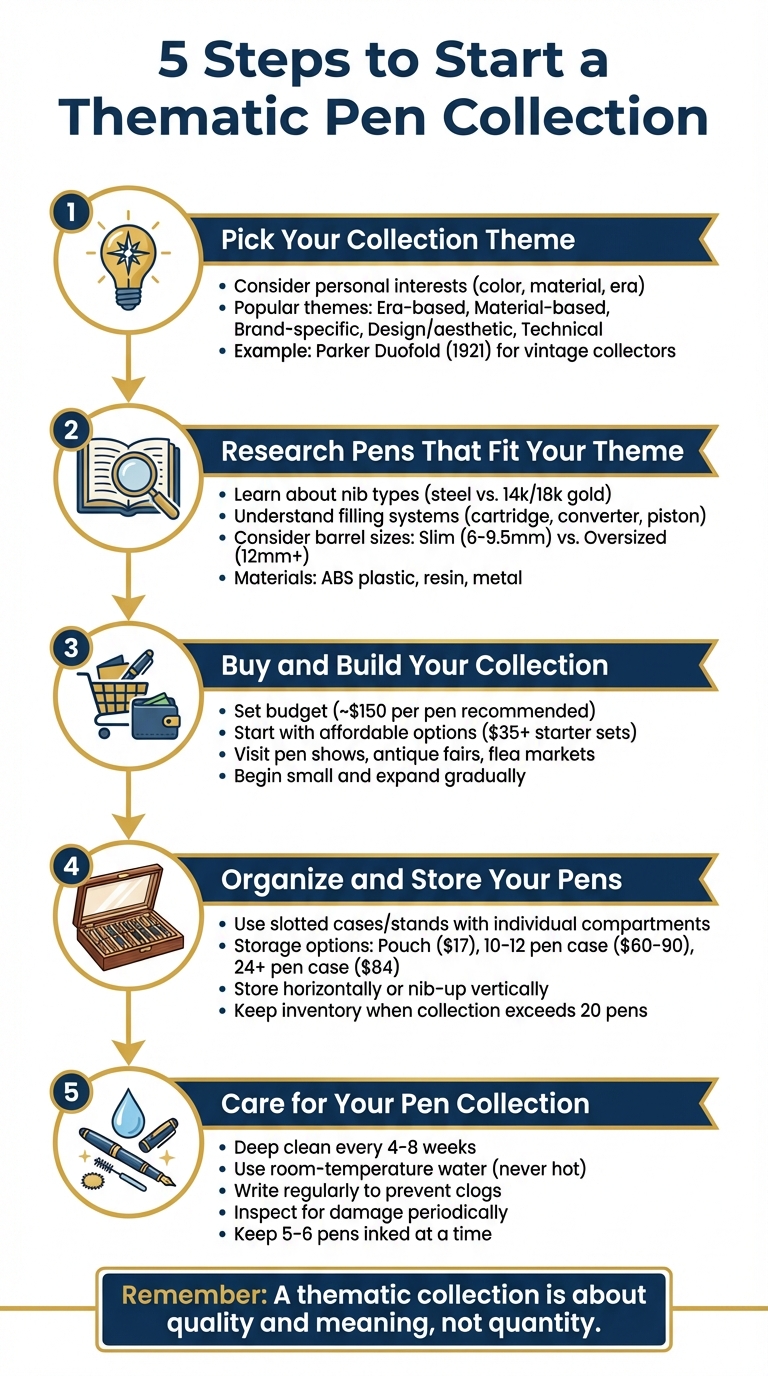
5 Steps to Start a Thematic Pen Collection
Step 1: Pick Your Collection Theme
Consider Your Personal Interests
When it comes to starting a pen collection, your chosen theme should reflect what excites you most about pens. Think about what draws you in - what catches your eye right away? Is it the color, like rich shades of deep blue or violet? Maybe you’re more intrigued by specific shapes or materials. Or perhaps it’s the way a pen feels when you write versus how it looks sitting on display.
Author Lekz Umali offers a helpful tip to guide your decision:
Reflect on what resonates with you.
Take a moment to connect your collection to your personal hobbies or interests. For instance, if you’re a history buff, vintage pens might be a natural fit. Once you have a general idea, dive into some popular themes to help you refine your focus.
Common Pen Collection Themes
Exploring popular themes can help you zero in on what kind of collection you want to build. Here are some ideas to get you started:
- Era-based collections: You can choose between modern pens for beginners, known for reliable performance and quality, or vintage pens, which carry a sense of history. For example, the Parker Duofold, first introduced in 1921, is a classic vintage option.
- Material-based themes: Focus on pens crafted from specific materials, such as exotic hardwoods like Ebony or Zebrawood, premium metals like gold or platinum, or older materials like celluloid and hard rubber.
- Brand-specific collections: Some collectors stick to a single manufacturer. Montblanc, often called the "Rolex" of pens, is a favorite, but brands like Parker, Lamy, Pilot, and Sailor also have dedicated followings.
- Design and aesthetic themes: These collections revolve around visual appeal. You could collect pens based on color schemes, artistic motifs (like nautical or snake designs), or patterns inspired by nature.
- Technical themes: Dive into the mechanics of pens, such as different nib types (gold versus steel), filling systems (piston fillers, eyedroppers, or cartridges), or rare limited editions released in small quantities.
For something truly unique, you might even build a collection around famous figures or historical events. Montegrappa, for instance, has created pens inspired by Ernest Hemingway and NASA’s space exploration. Whatever theme you choose, make sure it’s something that will keep you interested and excited for years to come.
sbb-itb-1dd4fe9
Step 2: Research Pens That Fit Your Theme
Learn About Pen Types and Features
Once you've chosen a theme for your collection, it’s time to dive into what sets different pens apart. A great place to start is the nib, which plays a key role in how the pen feels and performs. As author David Cole explains:
"The nib is the metal tip of the pen that touches the paper and it's arguably the most important component of your writing experience." – David Cole
Stainless steel nibs are durable and budget-friendly, making them perfect for everyday use. On the other hand, 14k or 18k solid gold nibs offer more flexibility and can even adapt to your handwriting style over time. Keep in mind, though, that nib sizes can vary between brands. For example, a "Fine" nib from one manufacturer might write very differently than a "Fine" nib from another.
When researching pens, think about your collection’s theme and how features like filling systems align with it. Cartridges are convenient for on-the-go use, while converters and piston fillers give you the freedom to experiment with a wide range of bottled inks. Material is another important factor - ABS plastic is lightweight and affordable, while resin and metal barrels offer a more premium feel and unique aesthetics.
Don’t overlook barrel size, either. Slim pens, often measuring between 6 and 9.5 mm in diameter, might suit smaller hands, while oversized pens, typically 12 mm or more, provide a luxurious feel but may not be as comfortable for extended writing sessions. Choosing the right size can make a big difference in preventing hand fatigue.
Once you’ve got a handle on the basics, you’ll be ready to explore pens that match your theme and budget.
Browse Affordable Options at Fountain Pen Revolution
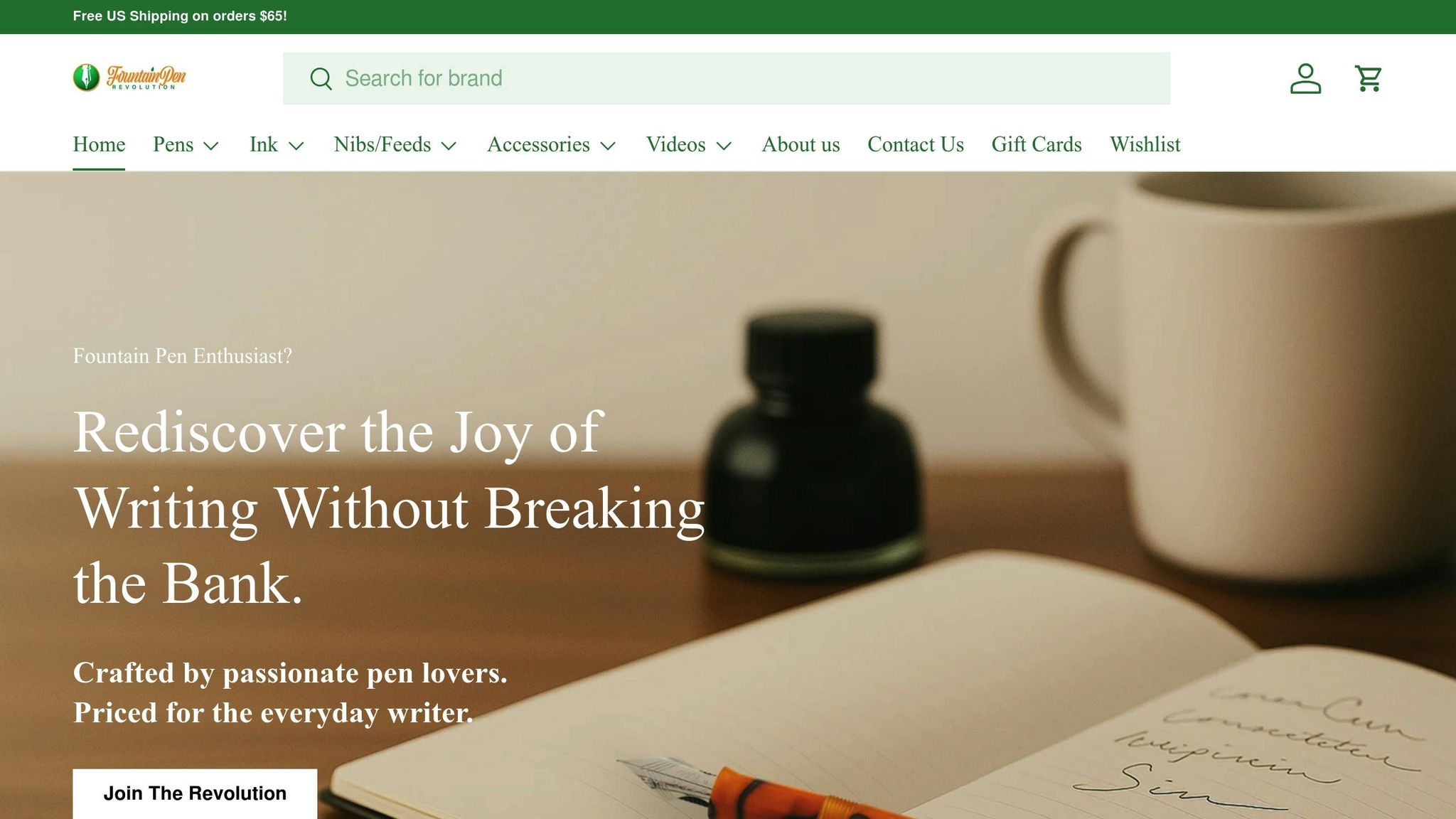
Fountain Pen Revolution offers a range of pens that make it easy to build your collection without overspending. Their Starter Sets, priced from $35, include everything you need - a pen, ink, and accessories - making them a perfect choice for beginners. If you're looking to step up in quality, their Premium Pens start at $44 and feature handmade designs and high-quality materials.
For collectors interested in nib variety, the Gold Nib Collection is worth checking out. It features pens with 14k gold nibs, delivering an elevated writing experience. They also offer Bundles starting at $29, which pair pens with useful accessories, providing excellent value for those expanding their collection. With its focus on affordability and variety, Fountain Pen Revolution makes it easy to experiment with different styles and features while staying within budget.
Step 3: Buy and Build Your Collection
Where to Purchase Thematic Pens
Choosing the right places to buy pens is crucial when you're building a themed collection. A great starting point is Fountain Pen Revolution, which offers affordable options for collectors on a budget. It's an excellent resource for those looking to dive into the hobby without overspending.
For those interested in vintage or rare pens, consider branching out beyond online retailers. Secondary markets like pen shows, antique fairs, and flea markets are treasure troves for unique finds. Regional pen shows - like the ones held in Washington, DC, San Francisco, or even London - are especially worth exploring. They bring together pens from various manufacturers and eras, giving you the chance to see, hold, and compare pieces in person. This hands-on experience can be a game-changer when deciding what fits your collection.
It's important to set a firm budget to avoid overspending. Many collectors cap their spending at around $150 per pen, which helps keep their collections manageable and focused. Once you've secured a few key pieces, take your time expanding your collection gradually.
Begin Small and Expand Over Time
When you're just starting out, it's best to keep things simple. As Brian Anderson, owner of Anderson Pens, wisely says:
You can't have them all.
Instead of trying to acquire every pen that catches your eye, start with just a few that truly fit your theme. Starter sets are a great way to begin - they're low-risk and allow you to test the waters without committing too much upfront.
Over time, you can refine your theme. Many collectors experience what's known as the "Big Pen Sell Off", where they sell pens that no longer align with their collection's focus. This process not only helps you stay organized but also frees up funds to invest in pieces that better match your evolving tastes.
If you're new to the hobby, modern pens are a smart starting point. They're generally more reliable and easier to maintain, making them ideal for beginners. Once you've figured out your preferences and gained more experience, you can branch out into vintage or premium pens that add depth and character to your collection.
Step 4: Organize and Store Your Pens
Use Pen Stands and Cases
Keeping your pens organized and stored properly is essential for maintaining their condition over time. Fountain Pen Revolution offers a range of pen stands and cases that not only protect your collection but also keep it neatly arranged.
For optimal protection, use slotted cases or stands with individual compartments to prevent scratches. If your collection is small, consider a pen pouch (around $17) or a case that holds 10–12 pens (priced between $60 and $90). For larger collections of 24 or more pens, a zippered case (approximately $84) is a solid choice.
How you store your pens matters, too. Brian Goulet offers this advice:
I find storing pens horizontally keeps the nibs wet enough to start writing right away, without leaking into the cap.
If you prefer vertical storage, make sure the nib is pointing upward to avoid ink leakage. Regardless of orientation, always store your pens in a cool, dry, and shaded area to protect both the materials and the ink from damage.
Once your pens are safely stored, consider tracking your collection to make managing it easier as it grows.
Keep a Collection Inventory
When your collection grows beyond 20 pens, keeping track of everything can become tricky. A simple inventory can help you stay organized and avoid buying duplicates. Use a spreadsheet to record key details like the brand, model, nib size, purchase date, theme category, and any condition notes.
Google Sheets or Excel are great tools for maintaining a synced and easily accessible inventory. For a more specialized option, Fountain Pen Companion is an online database trusted by over 800 collectors to track pens, inks, and even usage patterns. Adding a "Currently Inked" column to your inventory can help you rotate pens regularly and ensure they’re cleaned before the ink dries.
An inventory also helps you focus on your collection’s themes by clearly categorizing pens based on your criteria. Beyond organization, it can be a practical tool for documenting purchase prices and dates for insurance purposes. Plus, it can reveal trends in your preferences - like your custom vs. standard nib styles or go-to brands - making your collecting journey even more enjoyable.
I don't like themed pens BUT I do LIKE these... | HOLIDAY THEMED FOUNTAIN PEN (Christmas & Hanukkah)
Step 5: Care for Your Pen Collection
Taking proper care of your pens ensures they remain in excellent working condition and preserves the story behind your collection.
Clean and Ink Pens Regularly
Keeping your pens clean is essential for smooth writing and preventing clogs. Fountain pen ink, being liquid-based, can leave behind residue or dry out, causing blockages in the feed and nib. Thankfully, most cleaning requires just a few simple tools: water, a towel, and a bulb syringe.
A good rule of thumb is to deep clean your pens every 4–8 weeks or whenever you switch ink colors [21, 23]. Use room-temperature or cool water - never hot, as it can warp or damage pen components [22, 23]. For cartridge-converter pens, a bulb syringe works wonders for flushing water through the section. Keep flushing until the water runs clear [22, 24].
Writing regularly also helps maintain your pens. As EndlessPens explains:
Writing a lot is actually one of the best ways to keep your pen in good condition. This keeps the ink flowing and prevents it from drying out and causing clogs.
Using each pen every few days or at least once a week helps prevent ink from drying and blocking the feed.
If you encounter stubborn clogs or dried ink, soaking the nib and section in water overnight can often resolve the issue [21, 23]. For pens filled with iron gall, pigmented, or shimmering inks, clean them more frequently, as these inks are more likely to clog or corrode components [23, 24]. After cleaning, rest the nib on a folded paper towel to draw out any remaining moisture [20, 21]. Avoid harsh chemicals like acetone, rubbing alcohol, or bleach, as they can damage plastics and celluloid parts [20, 23].
Once cleaned, take a moment to inspect your pens to ensure they’re ready for use.
Check for Damage Periodically
Every few months, it’s a good idea to inspect your pens for any signs of wear or damage. Deep cleaning sessions are the perfect opportunity to check for internal residue buildup or other issues. Test each pen by writing a few lines - if you notice skipping or inconsistent ink flow, it could signal clogs or nib misalignment.
Examine the nib for corrosion, check for tine misalignment, and look for cracks in the barrel or cap [23, 28]. Persistent skipping, ink starvation, or "railroading" (where the ink flow splits) are signs that something might be off [23, 21]. Using a magnifying glass can help you spot fine scratches or alignment issues that may not be visible otherwise.
The Hamilton Pen Company offers this advice:
Every few months, check your stored pens for any signs of ink residue, corrosion, or damage. If you notice any issues, clean the pen thoroughly and address the problem promptly.
Some parts may need occasional replacement. Feeds, for example, might need to be swapped out annually to maintain smooth ink flow. Disposable cartridges, if not used, should be replaced every six months. It’s also a good practice to rotate which pens you keep inked to avoid ink settling or drying out in one pen for too long [23, 1].
Conclusion
A thematic pen collection tells a story - your story - through pens thoughtfully chosen to reflect your interests and style. By following the steps outlined in this guide, you can turn a random assortment of pens into a meaningful collection. As Michael W. Harris, librarian and blogger at The Gentleman Stationer, explains:
For things to truly be considered a "collection", I've always subscribed to the view that there needs to be some basic level of curation or organization. Otherwise it just becomes clutter.
The beauty of thematic collecting lies in its flexibility. You don’t need a large collection to get started - even a single pen can set you on this rewarding path. Whether you’re drawn to vintage Parker Duofolds, Japanese blue-violet inks, or pens from a specific brand, a clear theme gives every pen in your collection a sense of purpose and connection.
Collecting is not a race; it’s a journey that evolves over time. Your preferences will shift as you gain experience, and that’s part of the process. Michael W. Harris refers to this as the "Refinement Phase", where organizing pens into sets helps maintain focus and avoids clutter. This periodic reorganization complements the structured approach we’ve discussed.
Practical management is just as important as curation. Keep the number of inked pens manageable - around 5–6 - to ensure regular use, document your acquisitions, store pens in ideal conditions (45–55% humidity), and clean them routinely to keep them in top shape .
Above all, collect pens that bring you happiness. As Yanning Li wisely puts it:
A pen collection is not about ownership, it is about appreciation.
Let your collection be a reflection of what inspires you most.
FAQs
How can I choose the perfect theme for my pen collection?
Choosing a theme for your pen collection is a deeply personal journey. Think about what sparks your interest - perhaps a specific brand, a material like resin or metal, a favorite color scheme, or even a nod to a particular historical period. Let your passions steer your choices.
Also, think about how these pens will fit into your daily writing routine. If you value smooth, effortless writing, pay attention to nib styles. Medium nibs are great for everyday tasks, while extra-fine nibs offer precision for detailed work.
It's important to set a budget that feels comfortable. Whether you’re starting small with budget-friendly options or aiming for higher-end pieces, having a price range in mind keeps your collection manageable. Start with one or two pens that truly reflect your chosen theme, and let your collection grow naturally as your tastes develop.
Pro tip: Fountain Pen Revolution offers a wide selection of affordable fountain pens, nibs, and accessories, making it easier to find pieces that fit your theme without stretching your wallet.
What’s the best way to care for and clean my pens?
To keep your pens performing smoothly and looking great, follow these straightforward care tips:
- Daily care: After each use, gently wipe the nib with a soft cloth to remove any ink residue. Always cap the pen securely and store it upright to prevent leaks.
- Routine cleaning: Once a week, rinse the nib and feed with lukewarm water to clear out any ink buildup. For tougher stains or residue, a pen-flush solution can do the trick.
- Monthly deep clean: Disassemble the pen and soak its parts in distilled water or a cleaning solution for 10–15 minutes. After soaking, rinse everything thoroughly and allow the components to dry completely before putting the pen back together.
- Storing for the long haul: If you won’t be using your pen for a while, ensure it’s thoroughly cleaned and dried. Store it in a soft-lined case, in a stable environment with a temperature range of 50–75°F and humidity levels between 40–60%.
Having the right tools - like a bulb syringe, microfiber cloth, and cleaning solution - can make maintenance a breeze. By sticking to these steps, you’ll enjoy smooth writing, avoid clogs, and keep your pens in top-notch condition for years to come.
Where can I find affordable pens to start a thematic pen collection?
If you're looking to start a fountain pen collection without spending a fortune, Fountain Pen Revolution is a great place to begin. They feature a wide range of affordable pens, including a thoughtfully curated selection priced under $50 - ideal for those just getting started.
Their entry-level pens, typically priced between $20 and $75, offer dependable nibs and durable materials, making them a solid choice for beginners. Plus, if your order totals over $65, you'll enjoy free shipping within the U.S., making it even easier to grow your collection. Whether you're new to fountain pens or a seasoned enthusiast, there's something here to suit your style and budget.