

Luxury pens combine artistry with function, offering a superior writing experience. These pens stand out due to their premium materials, handcrafted construction, and advanced features like gold nibs and high-capacity refill systems. Whether you're drawn to their aesthetic appeal, smooth performance, or ergonomic design, luxury pens are built to last and enhance your writing.
Key Highlights:
- Materials: Brass, sterling silver, gold, ebonite, and celluloid.
- Nib Options: Stainless steel for durability, gold for a smooth feel, and titanium for balance.
- Refill Systems: Cartridges, converters, piston-fill, vacuum-fill, and eyedropper systems.
- Design: Ergonomics, weight distribution, and decorative elements like engravings or exotic materials.
- Maintenance: Regular cleaning and proper storage ensure longevity.
Luxury pens are more than tools - they're personal statements of style and craftsmanship. Whether you're a collector or a daily writer, understanding their features helps you choose the perfect pen for your needs.
Top 10 Fountain Pens 2️⃣0️⃣2️⃣4️⃣ 🎉
Materials and Construction
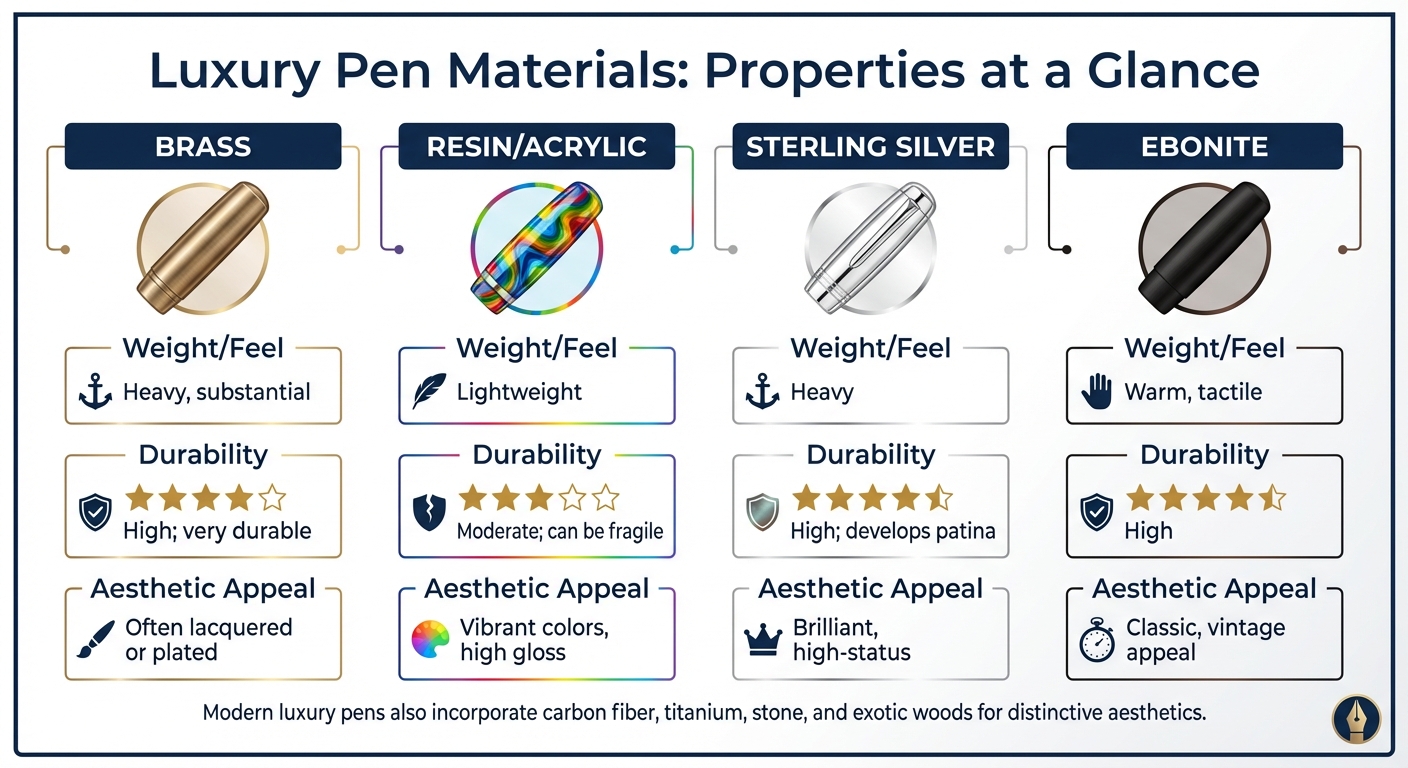
Luxury Pen Materials Comparison: Weight, Durability and Aesthetic Properties
The materials and craftsmanship behind luxury pens play a huge role in their feel, durability, and overall appearance. Unlike the injection-molded plastic used for mass-market pens, these premium instruments are lathe-turned and hand-finished by skilled artisans. This meticulous process gives them a distinct tactile quality that sets them apart. Let’s dive into the materials that make these pens stand out.
Common Materials Used
Brass is a favorite in luxury pen construction. Its weight provides a balanced feel, while its thermal stability ensures comfort during long writing sessions. To protect against wear and fingerprints, brass is often coated with layers of lacquer or plated with precious metals. Its substantial weight adds to the premium experience.
Resins and acrylics are known for their vibrant colors and unique patterns, making each pen visually striking. High-quality acrylics can be polished to a high-gloss finish. However, artisanal resins, while beautiful, are more delicate and require careful handling.
Precious metals like sterling silver and gold bring both elegance and functionality. Sterling silver develops a unique patina over time, adding character, while gold is valued for its resistance to corrosion from fountain pen inks. Gold’s softness also makes it ideal for shaping nibs with precision.
Celluloid and ebonite are classic materials cherished by collectors for their warm, tactile feel and vintage charm. Modern luxury pens also incorporate cutting-edge materials like carbon fiber, titanium, stone, and exotic woods, offering a mix of durability and distinctive aesthetics.
| Material | Weight/Feel | Durability | Aesthetic Appeal |
|---|---|---|---|
| Brass | Heavy, substantial | High; very durable | Often lacquered or plated |
| Resin/Acrylic | Lightweight | Moderate; can be fragile | Vibrant colors, high gloss |
| Sterling Silver | Heavy | High; develops patina | Brilliant, high-status |
| Ebonite | Warm, tactile | High | Classic, vintage appeal |
The choice of materials is just the beginning - precision manufacturing ensures these pens deliver flawless performance.
Manufacturing Quality
The beauty of these premium materials comes to life through expert craftsmanship. Precision manufacturing ensures seamless assembly, with smooth cap threading that feels silky rather than gritty or sharp. Every detail is inspected to meet rigorous quality standards.
Balance and weight distribution are carefully engineered to make the pen feel like a natural extension of your hand. This attention to detail reduces writing fatigue, with the balance point typically located near the center of the pen when capped or posted. Barrel diameters also influence comfort: slim pens range from about 0.24–0.37 inches, standard pens measure 0.39–0.47 inches, and oversized models exceed 0.47 inches.
Cap mechanisms reflect the same level of precision. Screw-on caps create a secure, airtight seal to prevent ink evaporation, while snap or click caps offer quick access for note-taking. Some pens even feature advanced "Slip & Seal" technology to keep ink fresh, even after long periods of disuse.
From material selection to meticulous construction, every element of a luxury pen is designed to deliver an unmatched writing experience.
Nib Types and Writing Performance
The nib is the heart of any fountain pen, directly influencing how ink flows onto the page and shaping the overall writing experience. Brian Goulet, co-founder of The Goulet Pen Company, sums it up perfectly:
"The nib is the crucial element that delivers the ink to the paper and influences what your writing will actually look like on the page".
By understanding the materials, sizes, and styles of nibs, you can find one that complements your handwriting and preferences. Let’s dive into what makes nibs tick, starting with their materials.
Nib Materials
Stainless steel is the go-to choice for dependable, everyday writing. It’s tough, affordable, and ensures consistent, clean lines. Unlike softer materials, steel nibs maintain their shape over time and resist damage, making them great for regular use. They also handle fountain pen inks well without corroding.
Gold nibs, often available in 14k, 18k, or even 21k varieties from brands like Sailor, bring a touch of luxury. Gold’s natural softness gives these nibs a slight "bounce" when writing, adding a smooth, cushioned feel. As Brian Goulet explains:
"The gold nib will write with a bit of bounce to it, acting a little bit like the shock absorber on your car that just helps for a smoother ride".
Over time, gold nibs can adapt to your handwriting, offering a more personalized feel. However, this premium experience comes with a higher price - expect to spend at least $150 for a gold nib.
Titanium offers a modern option that balances strength and flexibility. Lightweight yet durable, titanium nibs provide a springy feedback that combines the firmness of steel with the softness of gold. They also resist ink corrosion, though they’re considered a specialty item and tend to be more expensive.
Regardless of the material, most high-quality nibs include a small ball of durable alloy - often referred to as "Iridium" or "Ruthenium" - at the tip. This feature reduces wear from friction with paper, ensuring long-lasting performance.
Once you’ve chosen a nib material, the next step is to consider how its size and shape can further enhance your writing.
Nib Sizes and Styles
The size of a nib has a big impact on how your writing looks and how the pen feels in your hand. Extra-fine (EF) nibs, measuring around 0.3–0.5mm, create ultra-thin lines that are perfect for precise detail work. Fine (F) nibs offer a slightly thicker stroke, making them ideal for smaller handwriting or note-taking on absorbent paper. However, these smaller nibs can sometimes feel a bit scratchy due to their limited contact with the page.
Medium (M) nibs are a popular all-rounder, providing smooth ink flow without being overly wet. They’re versatile enough for everyday writing and are great for showing off ink characteristics like shading and shimmer.
Broad (B) and double broad (BB) nibs, on the other hand, lay down thick, bold lines with a generous ink flow. As Cult Pens notes:
"A smaller tip touching the paper will never feel as smooth as a big wet nib tip".
These wider nibs glide effortlessly across the page but perform best on high-quality, ink-resistant paper to avoid smudging.
For Japanese brands like Pilot, Sailor, or Platinum, keep in mind that their nib sizes are finer than Western equivalents. If you usually prefer a medium nib in Western pens, you might want to go up a size when choosing a Japanese pen.
| Nib Size | Line Width | Best For |
|---|---|---|
| Extra-Fine (EF) | Very Thin (0.3–0.5mm) | Small handwriting, precise detail |
| Fine (F) | Thin | Everyday notes, detailed work |
| Medium (M) | Moderate | Versatile; average handwriting |
| Broad (B) | Thick | Large handwriting, signatures |
For those looking to push the boundaries of what a pen can do, custom nibs offer exciting possibilities.
Custom Nib Options
Standard nibs are great, but custom nibs can take your writing to the next level. Stub and italic nibs, for instance, have flat-edged tips that create natural line variation - thicker vertical strokes and thinner horizontal strokes. Stub nibs are perfect for everyday use, while italic nibs shine in formal calligraphy.
Architect nibs flip the script, producing thin vertical lines and thick horizontal ones. They’re a favorite for technical drawing or bold block lettering. Similarly, oblique nibs, cut at an angle, are designed for writers who naturally rotate their pens, ensuring smooth ink flow and comfort.
If you’re after dramatic line variation, flex nibs are worth exploring. These nibs allow the tines to spread under pressure, creating bold, expressive strokes reminiscent of vintage calligraphy. As Fountain Pen Love describes:
"A true flex nib is an entirely different writing experience than anything else".
Other unique options include fude nibs, which have a bent tip for brush-like strokes suited to sketching and art, and zoom nibs, which adjust line width based on the pen’s angle.
For the ultimate in customization, professional nibmeisters can grind standard nibs into specialized shapes, fine-tuning tine alignment, ink flow, and smoothness to suit your writing style. These modifications not only enhance the pen’s performance but also add a touch of artistry to your writing experience.
Refill Systems and Ink Capacity
When it comes to luxury pens, the refill mechanism is just as important as the nib and overall construction. It plays a key role in determining how often you’ll need to refill and the range of ink options available. Picking the right system depends on your writing habits and lifestyle.
Cartridge and Converter Systems
Cartridges are compact, disposable plastic ink reservoirs that snap securely into the pen. They’re perfect for travel and convenience. However, many brands use proprietary cartridge designs, which can limit your choice of ink colors. For instance, brands like Waterman and Kaweco use "Standard International" cartridges, while Lamy, Parker, and Cross require cartridges made specifically for their pens.
Converters, on the other hand, allow cartridge-style pens to use bottled ink, giving you access to a much broader palette, including specialty inks with shimmer or sheen. Brian Goulet, founder of The Goulet Pen Company, emphasizes the importance of the feed in this system:
"The feed is the backbone of the fountain pen, crucial for both delivering ink from the reservoir to the nib, but also allowing air to replace that ink in the reservoir in perfect balance".
Converters typically hold less than 1ml of ink and can wear out over time, but replacements are affordable, costing between $6.00 and $11.00. For casual writers or frequent travelers, cartridge and converter systems are easy to use, clean, and maintain. If you need higher ink capacity, though, other refill systems might be a better fit.
Piston-Fill and Eyedropper Systems
Piston-fill mechanisms use a rotating plunger to draw ink directly into the barrel, providing a much larger capacity - often over 2ml. For example, the TWSBI ECO, priced at $36.99, offers excellent ink capacity. If you’re looking for something more premium, the Lamy 2000 combines a gold nib with the convenience of a piston-fill system for $223.20.
Vacuum-fill systems, meanwhile, use vacuum pressure to quickly fill the entire barrel with ink. One standout example is the Pilot Custom 823, which features a vacuum-filling system that seals the ink chamber when the pen is closed. As Brian Goulet explains:
"Vacuum-filling pens... seal the ink chamber when closed, making it more ideal for travel without risk of the ink leaking".
This makes vacuum-fillers a great choice for air travel, as they help prevent leaks caused by changes in air pressure.
Eyedropper systems are the simplest way to achieve high ink capacity. By filling the barrel directly with a syringe or dropper, you can maximize ink volume. The Platinum Preppy, priced at just $7.00, can even be converted into an eyedropper-fill pen. However, eyedropper systems can be prone to leaks caused by heat expansion and require careful handling.
Ink Compatibility
The performance of any refill system depends heavily on using the right kind of ink. Avoid using calligraphy, drawing, or India inks in fountain pens - these inks contain binders like shellac that can clog the feed permanently.
Specialty inks with shimmer or sheen need extra care, as their higher dye concentrations or glitter particles can settle in the feed. To maintain your pen, flush it with lukewarm water once a month or whenever you switch ink colors. For integrated systems like piston-fill or vacuum-fill pens, draw clean water in and out repeatedly until it runs clear.
For best results, use bottled inks and cartridges within 12 to 18 months of purchase. If you enjoy using colored inks, clean your pen more frequently to prevent residue buildup. Proper care ensures your pen writes smoothly and lasts for years.
sbb-itb-1dd4fe9
Design and Appearance
Luxury pens are more than just writing tools - they're a blend of artistry and precision. Their design must strike the perfect balance between visual appeal and practical comfort, ensuring they feel as good in your hand as they look on your desk.
Ergonomics and Balance
How a pen feels during long writing sessions often comes down to its weight and balance. Pens made from heavier materials like brass or sterling silver offer a premium, solid feel, but they can cause hand fatigue if used for extended periods. On the other hand, lighter materials like resin are better suited for prolonged writing sessions, offering comfort without compromising on elegance.
The barrel diameter also plays a big role in comfort. Slim barrels (6–9.5 mm) are ideal for smaller hands or those who prefer a sleek design. Standard barrels (10–12 mm) are the most versatile, providing a comfortable grip for a wide range of users. Oversized barrels (12 mm and above) deliver a bold, luxurious look but might not be practical for extended use.
The grip shape is another key factor. Contoured grips, such as those on the Lamy Safari, guide your fingers into the ideal writing position, making them great for beginners. Cylindrical grips, on the other hand, offer more flexibility for experienced writers who like to adjust their hold. A proper grip should allow you to maintain a relaxed hold and a natural writing angle, typically around 45 degrees, to minimize hand strain.
Even the grip material matters. Rubber or soft-touch finishes provide a secure and comfortable hold, especially during lengthy writing sessions. This attention to ergonomics ensures that luxury pens are not only beautiful but also practical for everyday use.
Decorative Elements
What sets luxury pens apart are the intricate details that elevate their design. Take the finial, for instance - the decorative top of the cap. It's often adorned with brand logos or artistic accents, making it a subtle yet striking feature. Clips, too, are more than just functional; they range from simple bent metal to elaborate, engraved, or jeweled designs, often finished in gold or platinum for a touch of opulence.
The materials used in the pen's body add another layer of sophistication. While standard pens rely on basic plastics, luxury models feature materials like celluloid with mesmerizing patterns, ebonite with its deep black sheen, or sterling silver that develops a unique patina over time. Some contemporary designs even incorporate cutting-edge materials like carbon fiber, titanium, or lava rock, pushing the boundaries of traditional pen-making.
Artisan craftsmanship shines through in every detail. As Montegrappa puts it:
"Behind every luxury pen is a story of meticulous work, patience, and a talent for transforming prestige materials into a beautiful machine."
Even the cap mechanism is thoughtfully designed. Screw-on caps provide a secure seal, preventing ink from drying out - ideal for travel or storage. Snap caps, while less secure, offer the convenience of one-handed use, blending function with style.
Personalization Options
A luxury pen can become even more special with personalization. Engraving transforms a refined writing instrument into a meaningful keepsake. Popular options include initials, important dates, family mottos, or even coordinates of memorable locations. Clips typically allow for up to three characters, while caps provide space for up to 13, making them perfect for longer inscriptions.
Modern digital configurators take customization to the next level, allowing you to choose materials, finishes, and other design elements. This ensures your pen not only meets the highest standards of craftsmanship but also reflects your unique style.
As David Cole notes:
"Personalizing a pen with an engraving adds an extra layer of meaning to what is already a treasured item."
With these options, luxury pens go beyond mere functionality - they become a true extension of the owner’s personality and taste.
Care and Maintenance
Owning a luxury pen is like owning a piece of art - it’s an investment that, with the right care, can last a lifetime. Its superior materials and precise craftsmanship make it a standout, and thoughtful maintenance ensures it continues to perform beautifully. Regular upkeep not only keeps the ink flowing smoothly but also protects the pen’s finish, preserving its elegance and functionality.
Cleaning and Storage
How often you clean your pen depends on the type of ink you use. If you're using specialty inks - like shimmering, pigmented, or iron gall varieties - clean it every 4–8 weeks. For standard inks, aim for at least every three months.
Cleaning is straightforward but requires a gentle touch. Stick to lukewarm water to avoid causing damage. If your tap water is high in minerals, opt for distilled or filtered water to prevent buildup. A bulb syringe can make flushing water through the nib section easier - continue until the water runs clear. For piston-fill pens, flush the mechanism with clean water 3–5 times. Avoid using detergents, soaps, or harsh solvents like acetone, as they can harm the pen's delicate finishes.
If ink has dried, soak the nib unit overnight in a 10:1 water-to-ammonia solution or use a pen flush, then rinse thoroughly. After cleaning, let every part air dry completely - this could take up to 24 hours. To speed things up, place the nib on a soft, lint-free cloth to wick away any remaining moisture.
Proper storage is just as critical as cleaning. Always keep your pen capped and stored upright with the nib pointing upward to prevent ink from settling in the feed. For long-term storage, ensure the pen is completely clean and dry before putting it away. Store it in a cool, dry spot, away from direct sunlight, and consider using a protective case or pouch to prevent scratches. As Montblanc advises:
"Storing your writing instrument in a pen pouch will help protect it from dirt, scratches and wear."
When traveling - especially on flights - make sure your pen is either fully filled or completely empty to handle changes in air pressure. While regular cleaning keeps your pen in top shape, occasional part replacement ensures its longevity.
Replacing Parts
Even with diligent care, some parts of your pen will need replacing over time. Cartridges and converters are easy to swap when they’re empty. For piston-fill mechanisms, apply a thin, even layer of silicone grease to the piston seal every few months to keep it operating smoothly.
Nibs, the heart of any fountain pen, can be replaced if they’re damaged or if you want to experiment with a different size or style. Many luxury pen brands offer replacement nibs, but professional installation is recommended to ensure proper alignment. Montblanc also suggests having your pen professionally cleaned once a year to maintain peak performance.
For the exterior, stick to a soft, dry cloth for cleaning. If you have a sterling silver pen, use a silver polishing cloth for the best results. Avoid exposing your pen to chemicals like perfumes, hand sanitizers, or hairsprays, as these can damage the barrel material.
Fountain Pen Revolution: Affordable Quality Options
Fountain Pen Revolution has mastered the art of combining fine craftsmanship with prices that won’t strain your wallet. This family-owned business has earned the trust of over 54,600 customers worldwide as of early 2026. Their mission? To make fountain pens accessible to everyone - from curious newcomers to seasoned collectors expanding their lineup.
Their entry-level models are perfect for daily writing without compromising durability. Options like the Click Falcon ($9.00), FPR Guru ($11.00), and FPR Darjeeling ($18.00) come equipped with sturdy stainless steel nibs. For those looking to upgrade, mid-tier pens like the FPR Himalaya V2 ($44.00) and FPR Jaipur V2 ($59.00) offer refined materials and construction, delivering a premium feel without the premium price tag. Whether you're just starting or searching for a more advanced option, their collection has something for everyone.
What truly sets Fountain Pen Revolution apart is their focus on specialty flex nibs, a feature usually found in much more expensive pens. Their #5.5 Chrome EF Ultra Flex nib, priced at $17.00, allows for dynamic line variation, expanding from 0.4 mm to 2.0 mm when flexed. These nibs are precision-ground to deliver a softer, more controlled flex experience. What’s more, enthusiasts have discovered that these nibs are compatible with popular pens like the TWSBI Diamond 580 and Jinhao 992, making them a go-to choice for customization projects.
The brand also offers a variety of accessories to enhance your writing experience. From Micro-Mesh Smoothing Sheets ($5.00) to Leather 6-Pen Roll-Up Pouches ($39.00), they’ve got the essentials covered. Their ink collection includes both their own branded options and third-party favorites like Diamine, with prices starting at just $1.75. For those seeking a luxury upgrade, the store features 14k gold nib options and artistic Urushi pens, such as the FPR Himalaya V2 with 14k Gold Nib, priced at $209.00. Plus, they offer free shipping on US orders over $65 and international orders over $149, making their offerings even more enticing.
Conclusion
Choosing a luxury pen is about finding the perfect mix of performance, comfort, and style that matches your personality and needs. At the heart of this decision is the nib. Whether you opt for the flexible responsiveness of gold or the reliable durability of steel, the nib will define how the pen feels and performs in your hand.
Construction and materials are equally important. Pens made from celluloid, precious metals, or ebonite, combined with seamless craftsmanship, can last for decades if cared for properly. Thoughtful design, like well-distributed weight, ensures comfort even during long writing sessions, reducing hand fatigue.
The filling system is another key consideration. Cartridges offer convenience, while piston fillers provide greater ink capacity and variety. Even the cap mechanism can impact your experience - snap caps are quick and easy, while screw-on caps provide a more secure, airtight seal.
Personalization adds a unique touch, turning a practical tool into a reflection of your individuality. Whether you lean toward understated elegance or bold, extravagant designs with exotic materials and intricate engravings, your pen can become a true extension of your personality.
Every detail, from the hand-tuned nib to the pen's balance, contributes to the overall writing experience. As Inkstable puts it:
"A well-balanced pen will feel as if it is an extension of your hand, making writing effortless and enjoyable".
Ultimately, the right pen combines form and function, creating an instrument that is both a joy to use and a personal statement. By aligning the pen's features with your preferences, you’ll understand why fountain pen enthusiasts treasure writing as more than just a task - it's a tactile, satisfying experience worth savoring.
FAQs
What makes a gold nib different from stainless steel or titanium nibs?
Gold nibs stand out for their soft touch, flexibility, and exceptionally smooth writing feel. Over time, they tend to adjust to your unique writing style, often offering natural line variation. Plus, gold's natural resistance to corrosion makes it a durable choice for those seeking a pen that lasts for years.
On the other hand, stainless steel and titanium nibs are known for being stiffer and less flexible, which ensures a steady and consistent writing experience. They’re also more budget-friendly, making them a smart option for everyday use or for anyone just beginning their fountain pen journey.
How do different fountain pen refill systems impact ink capacity and the writing experience?
The type of refill system in a fountain pen plays a big role in both how much ink it holds and how it feels to use. Cartridge pens are the simplest option. They use pre-filled cartridges that snap right into place, making them clean and easy to carry around. However, they hold less ink, so they’re better for short writing sessions or occasional use.
If you’re looking for a bit more flexibility, converters might be your style. These let you draw ink straight from a bottle, giving you access to a wider range of colors and a slightly larger ink capacity compared to cartridges. Many fountain pen enthusiasts enjoy the hands-on process of filling these pens - it’s part of the charm.
For those who want to write longer without stopping to refill, piston-fill pens are a great choice. These pens use a built-in mechanism to pull ink into the barrel, allowing them to hold more ink than both cartridges and converters. They also tend to provide a smoother ink flow, making them a favorite for frequent writers. If maximum ink capacity is your priority, eyedropper pens are the way to go. By filling the entire barrel with ink, they hold the most ink of all. These are perfect for long writing sessions but do require extra care to avoid spills.
Fountain Pen Revolution offers pens with all these refill systems, so whether you value convenience, love experimenting with ink colors, or need a pen that can handle hours of writing, there’s an option that fits your style.
What should I look for in a luxury pen to ensure it’s comfortable to use?
When selecting a luxury pen for comfort, it’s all about finding the right weight and balance. If a pen is too heavy, it can tire your hand quickly. On the flip side, a pen that’s too light might demand more effort to control. The sweet spot? Look for a pen that feels evenly balanced and weighs between 1 to 1.5 ounces - this range tends to work well for most people.
Next, take note of the grip size and barrel diameter. A barrel that matches your hand size can make a big difference in reducing strain. For larger hands, pens with thicker barrels (about 0.7 to 0.8 inches) are a better fit. If your hands are smaller, opt for slimmer barrels around 0.5 inches. Some pens even come with textured grips, which can make holding them easier and more secure.
Lastly, think about the nib material and smoothness. Nibs made from gold or tipped with iridium offer a smooth glide across the page, requiring minimal pressure. This makes them perfect for those longer writing sessions. By considering these elements, you’ll end up with a pen that’s not just stylish but also feels like an extension of your hand.