

Yes - if you want a refillable pen you’ll keep using for years. In most cases, the smart buy comes down to 3 things: how the pen is built, how it feels in your hand, and how you refill it.
Here’s the short answer:
- Recycled plastic/resin pens are often the lowest-cost entry point, but they can crack under enough stress.
- Recycled metal pens tend to take wear better, though they’re usually heavier.
- Recycled wood feels light, but the surface may show wear sooner.
- Refillable systems matter as much as the body material because bottled ink usually costs less over time than cartridges.
- For long writing sessions, weight and balance can matter more than looks. One pen mentioned in the article weighs just 17 g (0.6 oz), which helps reduce hand strain.
- A grip around 0.4 in. (1 cm) and a body width near 0.5 in. (1.3 cm) often fit many hands well.
If I were judging whether one is worth the money, I’d ask:
- Will it last?
- Is it comfortable after 20–60 minutes of writing?
- Does the refill system fit how I write?
- Does the price make sense for a pen I’ll use often?
A recycled fountain pen usually makes the most sense for daily writers, gift buyers, and some collectors. It makes less sense if you write only once in a while or lose pens often.
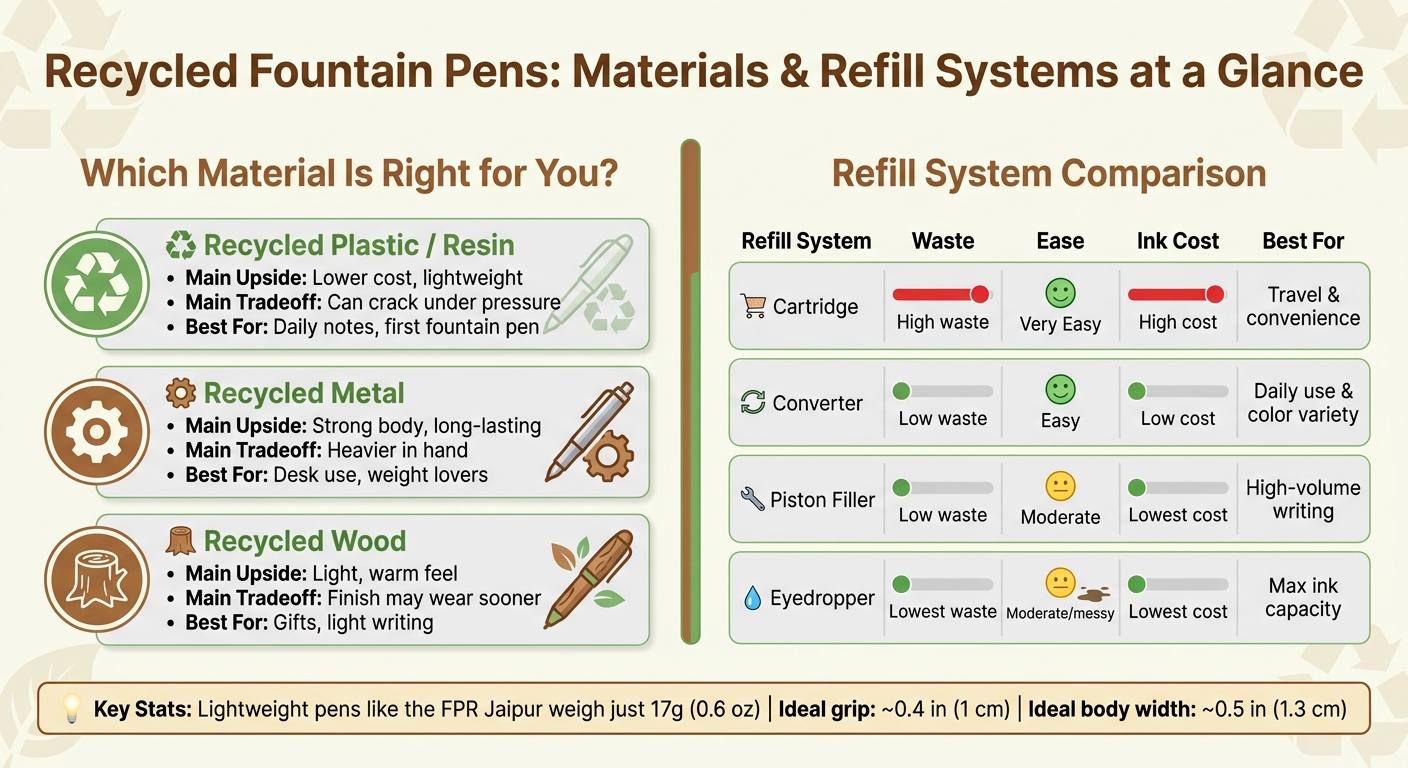
Recycled Fountain Pen Types & Refill Systems Compared
Tom's studio Wren Write-off pen; unboxing and first impression
sbb-itb-1dd4fe9
Quick Comparison
| Type / Feature | Main Upside | Main Tradeoff | Best Fit |
|---|---|---|---|
| Recycled plastic/resin | Lower upfront cost, light weight | Can crack with pressure | Daily notes, first fountain pen |
| Recycled metal | Stronger body, longer wear | Heavier in hand | Desk use, people who like weight |
| Recycled wood | Light, warm feel | Finish may wear sooner | Gift use, light writing |
| Cartridge | Simple to use | More waste, higher ink cost | Travel, low-effort use |
| Converter | Reusable, lower ink cost | Slightly more work | Daily writing |
| Piston / eyedropper | More ink capacity, low cost per fill | Can be messier to refill | Heavy writers, journaling |
Bottom line: I’d buy a recycled fountain pen when the build feels solid, the balance feels right, and the refill method is one I’ll stick with. The material matters, but day-to-day use matters more.
How Durable Are Recycled Fountain Pens, and Do They Offer Good Value?
Durability comes down to two things: the body material and the build quality of the joins, threads, and cap seal. Value is a little more practical. It depends on how well the pen handles daily use and how much it costs to keep filled with ink.
How Recycled Plastic, Metal, Wood, and Resin Compare
Recycled plastic and resin pens are usually lower in price, but they still hold up well enough for everyday writing. That said, plastic bodies can crack if they take enough pressure. One of the most common problems isn't the body at all. It's a small leak where the feed meets the section, and that can often be improved with a small amount of silicone gel.
Recycled metal tends to give you the most toughness, though it also makes the pen heavier. Recycled wood goes the other way. It's lighter in the hand, but the finish may wear out sooner.
And material alone doesn't tell the whole story. A pen can be made from tough parts and still feel off if the balance is awkward or the body feels cheap when you pick it up.
When the Higher Upfront Cost Pays Off
The upfront price can sting a bit, but refillable systems often make more sense over time. They lower long-term ink costs, which matters most if you write a lot. That value gets even better when the pen uses a refillable filling system.
Do Recycled Fountain Pens Feel Good to Write With?
After durability, the next thing most people want to know is simple: does the pen feel good when you actually write with it? That usually comes down to four things - nib, body, weight, and grip.
Weight, Balance, and Grip Comfort in Daily Use
For long writing sessions, lighter pens can be easier on the hand. Pens made from plant-based resin often fit that bill. The Fountain Pen Revolution Jaipur weighs 17 g (0.6 oz), and posting the cap does not throw off its balance. Reviewer Ian Hedley also noted that the low weight does not disturb balance.
Size matters too. A grip section of about 0.4 in. (1 cm) and a body diameter near 0.5 in. (1.3 cm) tend to suit most hands. If you write for a few quick notes, weight may not matter much. If you journal for an hour, it probably will.
Comfort comes first. Finish shapes that first impression.
Finish Quality and Visual Appeal
The final look of the pen depends a lot on how the body is made. Handmade pens turned from solid acrylic or ebonite often have a cleaner finish than molded or ebonite models, because turning usually leaves a cleaner finish than molding.
Solid-color eco-resin pens also tend to look more polished. Clear or demonstrator versions can make the lower-cost material easier to spot.
"The solid colour version looks a little higher quality [than the clear version]." - Ian Hedley, Graphite Artist and Pen Reviewer
Handmade acrylic pens often use swirling or gradient finishes, which gives them a more intentional look. Since each one is made a little differently, no two come out exactly the same.
Once comfort and finish look good, refill options become the next practical thing to check.
Refill Options and Day-to-Day Use
After comfort, the refill system is the next practical choice. In day-to-day use, it often matters the most. It shapes how often you refill, how much your ink costs over time, and how much waste you create.
Cartridges vs. Converters vs. Piston Fillers
Cartridges are the simplest option. You snap one in and start writing.
That ease comes with a tradeoff, though. Each replacement adds more waste, and cartridges usually cost more per use than bottled ink. A converter fountain pen goes in the same spot as a cartridge, but it lets you fill from a bottle instead. That means less waste, lower ink cost, and far more color options.
Piston fillers and eyedroppers take things a step further. They hold more ink inside the pen itself, so you won't need to refill as often. If you write a lot, that can make a big difference.
| Fill System | Waste | Ease of Refilling | Ink Cost | Best For |
|---|---|---|---|---|
| Cartridge | High (single-use plastic) | Very easy | High | Travel and convenience |
| Converter | Low (reusable) | Easy | Low | Daily use and color variety |
| Piston Filler | Low (built-in system) | Moderate | Lowest | High-volume writing |
| Eyedropper | Lowest (no mechanism) | Moderate/messy | Lowest | Maximum ink capacity |
The FPR Triveni supports cartridges, a converter, or eyedropper filling, which gives it more flexibility for different writing habits.
Why Refillable Pens Are Often the Better Eco Choice
Refillability matters just as much as recycled material. A durable, refillable pen used with bottled ink can cut waste by a large margin over its lifetime. The main question is simple: will the pen keep working for years?
That’s why body material alone doesn’t tell the whole story. A recycled-material pen may sound good on paper, but the refill system plays a big part in how well it fits daily use.
Are Recycled Fountain Pens Worth Buying for Gifts, Collections, or Daily Writing?
Recycled fountain pens make sense for some people more than others. Once you know the pen is durable, comfortable in the hand, and easy to refill, the next step is simple: figure out who will get the most from it.
Which Buyers Get the Most Out of Recycled Fountain Pens
For daily use, refillable systems usually offer the best return. Daily writers tend to get the most out of these pens, especially if they write a lot. A refillable pen cuts down on waste and can lower ink costs over time.
Gift buyers can also get a lot from them, especially with resin or acrylic models. Fountain Pen Revolution describes its handmade acrylic pens as small works of art, and that level of craftsmanship can make a pen feel special while still being practical for everyday writing.
Collectors often want materials and finishes that stand out. Handmade acrylic or ebonite pens with visible character can earn a place in a collection, but it still pays to check the basics: nib quality and size, build consistency, and the finish across the whole pen.
On the other hand, occasional writers - or people who misplace pens all the time - may have a harder time justifying the higher upfront cost.
Conclusion: Key Signs a Recycled Fountain Pen Is Worth Buying
A recycled fountain pen is worth buying when it matches the way you write. Look for solid construction, a comfortable balance, and a refill system you'll stick with. If you're buying for a gift or a collection, small details can make a big difference, including metal accents, hand-turned construction, and a secure screw-on cap.
The best recycled fountain pens pair eco-friendly materials with the kind of build quality that makes you want to keep using them.
FAQs
How long should a recycled fountain pen last?
A recycled fountain pen can last more than 10 years, especially when it's made from high-purity recycled plastic.
How long it holds up comes down mostly to two things: the purity of the material and how well the pen is tested. Recycled plastics can lose around 15% to 20% of their strength during processing. That sounds like a drawback, and sometimes it is.
But a well-made pen can still handle daily use if it passes checks for impact, compression, and wear resistance. In plain terms, if the material is clean and the testing is solid, a recycled fountain pen isn't just a feel-good option - it can be built to last.
Which refill system is best for beginners?
For beginners, cartridge and converter systems are usually the best place to start.
Cartridges are simple: they're pre-filled, easy to carry, and not messy. Pop one in, and you're good to go.
Converters give you more room to play with bottled inks and can save money over time. And because many modern pens work with both, you don't have to pick just one. Use cartridges when you're out and about, then switch to a converter at home.
Are recycled fountain pens good for everyday use?
Yes - recycled fountain pens can work well for everyday use if the materials have been tested and hold up over time.
Recycled plastics like PET and HDPE can be just as strong as new plastic. That said, they can lose a bit of strength during processing, so it’s smart to check for signs of cracking, warping, or weak spots. A good pen also needs more than a solid barrel. The nib, feed, and cap all need to work together for smooth ink flow, a secure seal, and a grip that feels comfortable instead of slick in your hand.