

Fountain pens require proper cleaning and storage to prevent damage over time. Here's what you need to know:
- Clean thoroughly: Remove all ink using distilled water or a cleaning solution to avoid clogs, corrosion, or mold. Dry components completely for 12–24 hours before storage.
- Disassemble carefully: Separate nibs, converters, and cartridges to protect delicate parts and prevent scratches or rust.
- Store in a stable environment: Maintain a temperature of 50–75°F and humidity between 40–60%. Avoid direct sunlight, extreme temperatures, and high humidity.
- Use protective cases: Soft-lined cases or individual slots prevent scratches and keep pens organized.
- Ink storage: Seal bottles tightly and keep them in a cool, dark place away from sunlight and heat.
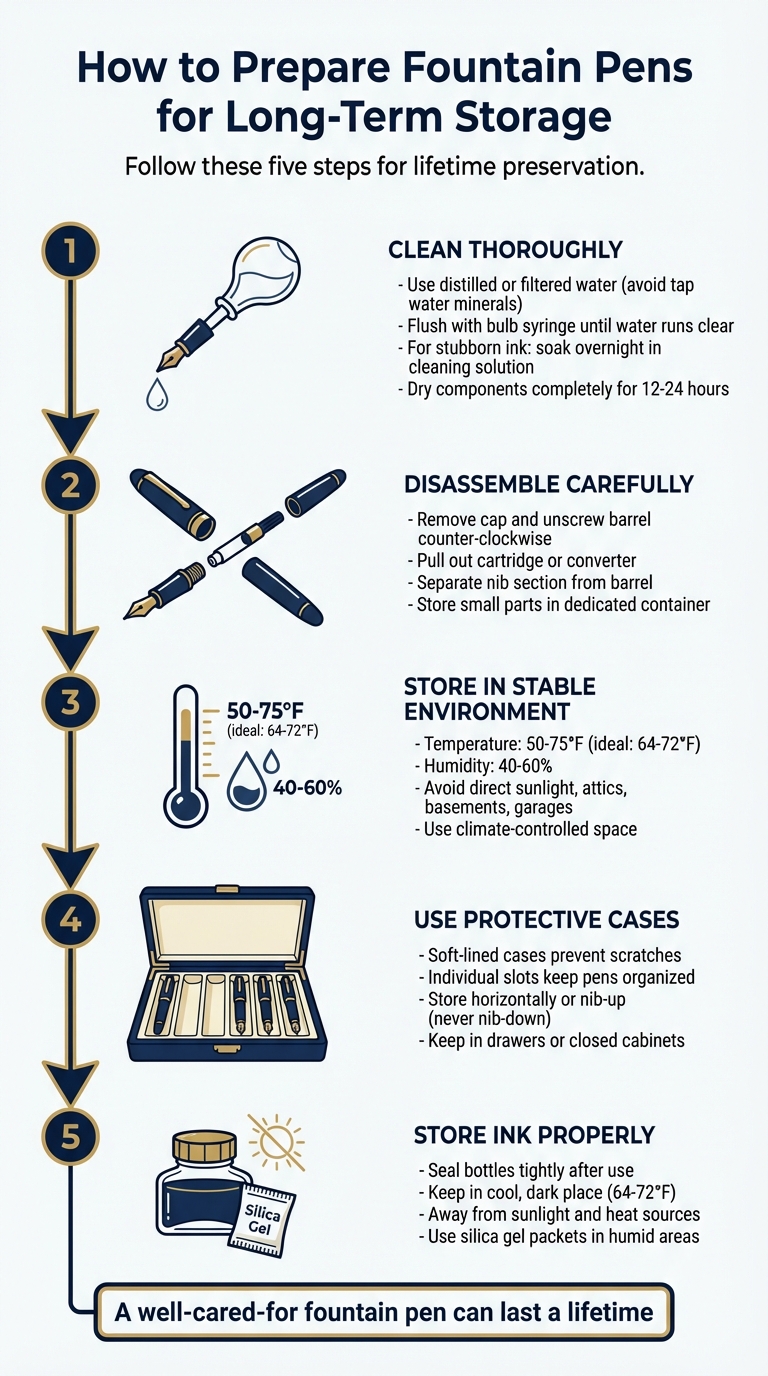
Step-by-Step Guide to Cleaning and Storing Fountain Pens for Long-Term Storage
How to Store Fountain Pens
sbb-itb-1dd4fe9
Cleaning Your Fountain Pen Before Storage
Taking the time to thoroughly clean your fountain pen before storage is a must. Fountain pen ink is water-based, and as the water evaporates, it leaves behind dye particles and additives that can clog the delicate channels in the nib and feed. If left unchecked, this hardened residue can lead to expensive repairs.
But clogs aren’t the only concern. Ink contains acids and organic materials that can corrode metal parts and even encourage mold growth. As Parker Pen warns: “If you leave the ink in the pen, the ink's acids will mix with oxygen and start oxidizing the nib.” For pens with intricate mechanisms, like piston fillers or vintage models with latex sacs, dried ink can damage seals and rubber components beyond repair.
"With regular and proper cleaning, your fountain pens should last for a very long time without any issues. Without regular and proper cleaning, you will likely experience skipping, ink flow issues and possibly even mold." – John, Author, Fountain Pen Love
Investing 15 minutes in cleaning now can save you from future headaches and costly repairs. Once you’re ready to clean, make sure you have the right tools on hand.
What You Need for Cleaning
Cleaning a fountain pen doesn’t require much, but having the right tools makes it easier and more effective. Start with distilled or filtered water. While tap water can work in a pinch, hard water minerals may leave deposits that could block the feed’s tiny air channels. Stick to cool or room-temperature water - hot water can warp parts or damage the pen’s finish.
A bulb syringe is a game-changer for flushing out stubborn ink. It pushes water through the nib section with far more force than manual flushing. If you don’t have one, an ink syringe can work as an alternative. For dried or waterproof inks, use a pen flush or make your own cleaning solution by mixing water with a small amount of ammonia (10:1 ratio). Just avoid ammonia if your pen has aluminum, brass, or copper parts, as it can cause corrosion.
You’ll also need soft, lint-free cloths or paper towels for drying, and cotton swabs to reach tight spaces. If you’re maintaining a piston converter, a small tube of silicone grease can help keep seals in top shape. For collectors dealing with particularly stubborn clogs, an ultrasonic cleaner is an advanced option that vibrates dried ink loose from hard-to-reach areas, though it’s not necessary for routine cleaning.
How to Clean Your Pen
Once you’ve gathered your tools, follow these steps to clean your pen thoroughly. Start by disassembling it. Remove the converter or cartridge, and separate the nib section from the barrel. Dispose of any used cartridges and empty ink from converters.
For cartridge/converter pens, attach a bulb syringe to the back of the nib section and flush it with cool water until the water runs clear. This method is far more efficient than repeatedly filling and expelling water with the converter.
If you’re using the converter itself, fill it with water, shake it gently to loosen any ink residue, and expel the water. Repeat this process until the water comes out clean. For stubborn ink, soak the nib section overnight in distilled water or a cleaning solution. Cleaning expert Bruna Coutinho advises: “In a cartridge-converter pen, the most effective way of flushing the pen is to use a bulb syringe.”
Drying is just as important as cleaning. Shake out any excess water, then place the nib point-down on a paper towel. Gravity will help pull out any remaining moisture from the feed. Let all parts air-dry completely for 12 to 24 hours before reassembling or storing the pen. Skipping this step could result in rust or mold, undoing all your hard work. Take your time - especially if the pen will be stored for an extended period.
Disassembling Fountain Pens for Storage
Taking apart your fountain pen before storing it for an extended period is a must. Leaving it assembled with moisture trapped inside can lead to rust on metal parts and even mold in hard-to-reach areas. Disassembling also helps protect sensitive nibs from pressure damage and prevents scratches caused by parts rubbing together during storage.
The process of disassembly is fairly simple, but it does depend on your pen’s filling system. Understanding how your pen works will help you avoid damage and ensure each part is properly prepared for storage.
Removing Nibs, Converters, and Cartridges
Start with the basics: remove the cap, then unscrew the barrel from the nib section by turning it counter-clockwise. If you’re dealing with a cartridge or converter pen, this is the easiest system to disassemble. Gently pull the cartridge or converter straight out from the nib section. If the cartridge feels stuck, use tweezers to get a better grip.
For piston fillers, the process is a bit different since the ink reservoir is built into the barrel. Instead of removing it, flush the integrated reservoir thoroughly with water until it’s clean and lubricate the piston if needed. Eyedropper pens require you to unscrew the section from the barrel, which serves as the ink reservoir.
If you’re considering removing the nib and feed, proceed with caution. While many pens allow you to gently pull these components apart, some brands like Pelikan use nib units that need to be unscrewed. As Wood Fountain Pens advises: "Don't attempt this if you don't know what you're doing". When in doubt, leave the nib and feed intact as a single unit.
If you’re saving ink in a cartridge, seal the opening with tape and store it upright. This prevents evaporation and minimizes the risk of leaks.
Once you’ve separated all the parts, it’s time to focus on storing each component properly.
Storing Components Separately
Proper storage of individual parts is key to maintaining your pen’s performance. The nib and feed are especially delicate. Place them in a soft-lined case or the pen’s original box to avoid any pressure on the nib’s fine tipping material, as even slight pressure can cause misalignment.
Store cleaned converters in a dust-free pouch, discard empty cartridges, and keep partially used cartridges sealed and upright. For the barrel and cap, wipe them clean with a microfiber cloth to remove any dust or fingerprints before storing.
Keep small parts like screws, washers, or springs in a dedicated container to prevent loss. Losing even the tiniest piece can make reassembly a headache months down the line. Store all components in a stable environment with a temperature range of 64°F–72°F and humidity between 40%–60% to protect the materials from damage.
Choosing the Right Storage Conditions
Proper storage is just as important as preparing your pens before putting them away. A stable environment can prevent issues like warping, cracking, or other internal damage that might develop over time. To protect your pens, avoid exposing them to temperature extremes, high humidity, or direct sunlight.
Keep conditions steady (refer to earlier sections for specifics). Residual moisture can freeze in cold conditions or expand in heat, leading to problems like ink leaks. Direct sunlight can fade colors and even crack plastic barrels. For safe storage, place your pens in drawers, cabinets, or closed cases, away from windows and heat sources. Managing the environment is key to preserving your collection.
Temperature, Humidity, and Light Control
Instead of obsessing over precise measurements, focus on maintaining a stable environment. Avoid storing pens in places like attics, basements, or garages, where temperature and humidity levels can swing wildly. A climate-controlled storage container is a great option, and a basic hygrometer (available for under $15) can help you monitor conditions. Keeping your pens away from direct sunlight and heat sources will further ensure their longevity. Once you've stabilized the environment, use proper cases or stands for additional protection.
Using Cases and Stands for Protection
Protective storage is essential to shield your pens from environmental and physical damage. Soft-lined cases made from leather or similar materials can prevent scratches, while single-pen pouches or multi-pen cases with individual slots keep pens from bumping into each other. Fountain Pen Revolution offers bundles starting at $29 that include pens and protective cases. For larger collections, consider zippered cases designed to hold 10 to 24 pens (priced between $60 and $85) or wooden boxes with soft linings. These options help keep your pens organized, dust-free, and shielded from light. Avoid tossing pens loose in drawers, where they might roll around and scratch. If you prefer displaying your pens, use stands in a climate-controlled room, and opt for closed cases over open stands for long-term storage.
Nib-Up vs. Horizontal Storage
For pens that are thoroughly cleaned and dried, both horizontal and vertical (nib-up) storage methods work well. The position becomes more critical if the pen still contains ink - though storing pens with ink for extended periods is generally not recommended.
For short-term storage (up to two weeks), horizontal placement keeps the nib moist, making the pen ready for immediate use. Brian Goulet, founder of The Goulet Pen Company, notes:
"I find storing pens horizontally keeps the nibs wet enough to start writing right away, without leaking into the cap".
When storing pens for up to a month, nib-up storage is better. This orientation allows gravity to pull ink away from the feed, reducing the risk of leaks. However, never store a fountain pen nib-down, as this can cause ink pooling and lead to clogs. If you encounter flow issues after storage, there are several quick fixes for pens not writing to help revive them.
| Storage Position | Best For | Why It Works |
|---|---|---|
| Horizontal | Daily use or long-term storage when dry | Keeps nib moist without applying excess pressure |
| Nib-Up | Short-term storage with ink (up to 1 month) | Gravity prevents ink from pooling in the feed |
| Nib-Down | Not recommended | Causes ink pooling and clogs |
Key storage recommendations for temperature, humidity, and light. Direct quote from Brian Goulet, Founder, The Goulet Pen Company.
Storing Inks and Accessories
Preserving your fountain pen collection goes beyond just caring for the pens themselves. Proper storage of ink bottles and spare components is equally important to maintain their quality and usability. A well-organized system not only prevents issues like evaporation and contamination but also ensures everything is easy to access when needed.
How to Store Ink Bottles
To keep your ink in top condition, always seal the bottle tightly right after use. Exposure to air can lead to evaporation and even contamination over time. According to Sam Di Nardo, a writer at Dayspring Pens:
"Seal it in its original bottle, tightly. Then store it in a cool, dark place like a drawer or cabinet."
The ideal storage temperature for ink is between 64°F and 72°F. Avoid extremes - freezing temperatures can crack the glass bottles, while excessive heat speeds up evaporation. It's also important to keep ink bottles away from direct sunlight or areas near windows. Even UV-absorbent glass may fail to block infrared radiation, which can degrade the ink over time.
Humidity matters too. Aim for a humidity level between 40% and 60%. If you live in a humid area, placing silica gel packets in your storage space can help absorb moisture, protecting both your ink and any metal components in your collection.
Organizing Small Components
Spare nibs, converters, and cartridges often get overlooked, but they deserve proper care and storage as well. Use labeled containers with soft linings to prevent scratches and damage. Wooden boxes with individual compartments are a great way to keep these small parts in order. Avoid wrapping components in unlined paper, which can cause scratches, and steer clear of velvet-lined cases that might damage delicate finishes.
Before storing any component, make sure it's thoroughly cleaned and completely dry. Residual ink can cause corrosion or clogging if left unchecked. When traveling with spare parts, opt for padded cases with straps or specialized compartments to keep everything secure and prevent movement.
These practices are essential for maintaining the longevity of your fountain pen collection and ensuring every part is ready to use when you need it. Proper storage is as much about protecting your tools as it is about keeping your creative process seamless.
Conclusion
Taking the right steps to prepare your fountain pens for long-term storage not only protects them but also ensures they’ll perform beautifully when you’re ready to use them again. As Loclen wisely states:
"A well-cared-for fountain pen can last a lifetime."
Here’s a quick recap of the process: Start by emptying your pen and flushing it thoroughly with room-temperature water until it runs clear. Allow all components to air-dry completely for 12–24 hours to avoid any risk of clogging.
Store your pens in a cool, dry environment - ideally between 50°F and 75°F with humidity levels of 40%–60%. Use a protective case and keep them out of direct sunlight to prevent issues like cracking, fading, or corrosion.
For ink bottles, make sure they’re sealed tightly and kept in a dark, temperature-controlled spot. Spare parts should be organized and stored separately to avoid accidental damage. By combining proper cleaning, careful disassembly, and thoughtful storage, you’ll set your pens up for a long and reliable life.
With these steps, your fountain pens will be ready to write whenever you need them - whether that’s in a few weeks or even years down the line.
FAQs
How can I prevent mold from forming in my stored fountain pens?
To keep your fountain pens mold-free during storage, it's essential to clean them thoroughly and remove all traces of ink beforehand. Once cleaned, store the pens in a dry, airtight container along with a desiccant, such as silica gel, to help manage humidity levels. A dry environment is crucial for preventing mold and ensuring your pens stay in great condition over time.
How do I store partially used fountain pen ink cartridges?
To keep partially used ink cartridges from drying out, it’s important to seal the tip and store them properly. Start by carefully removing the cartridge to avoid any messy spills. Seal the open end with tape or, for a more secure and longer-lasting option, a small dab of hot glue. Place the cartridge upright (with the tip facing up) inside a plastic bag or case, and store it in a cool, dry spot - away from direct sunlight, heat, or humidity. Room temperature, ideally between 68–72°F, is perfect for preserving the ink. If you’re managing multiple cartridges, consider labeling them by color to keep things organized. When you’re ready to use one again, simply remove the seal, give the cartridge a gentle shake, and test it on paper to ensure the ink flows smoothly.
Why is it important to store fountain pens in the right temperature and humidity conditions?
Properly managing temperature and humidity is key to keeping your fountain pens in top shape. Too much heat or moisture can lead to dried-out ink, swelling, leaks, or even corrosion and nib damage. By storing your pens in a cool, dry spot, you can help them stay in great condition for years.
For long-term storage, it’s especially important to keep your pens out of direct sunlight and away from humid areas like bathrooms or basements. Taking this small precaution can go a long way in maintaining their functionality and appearance.