

Fountain pen ink reacts significantly to temperature changes, impacting its flow, consistency, and overall performance.
- Heat makes ink thinner, increasing flow but causing leaks, smudging, and evaporation-related clogs.
- Cold thickens ink, slowing flow, causing hard starts, and risking cartridge cracks due to freezing.
- Ideal storage: Maintain pens and ink between 64°F to 72°F to avoid issues.
- Choose inks wisely: Freeze-resistant inks for cold climates (e.g., Noodler's Polar) and dry inks for hot conditions (e.g., Pelikan 4001).
Understanding how temperature affects ink ensures smooth writing and protects your fountain pen from damage in extreme weather.
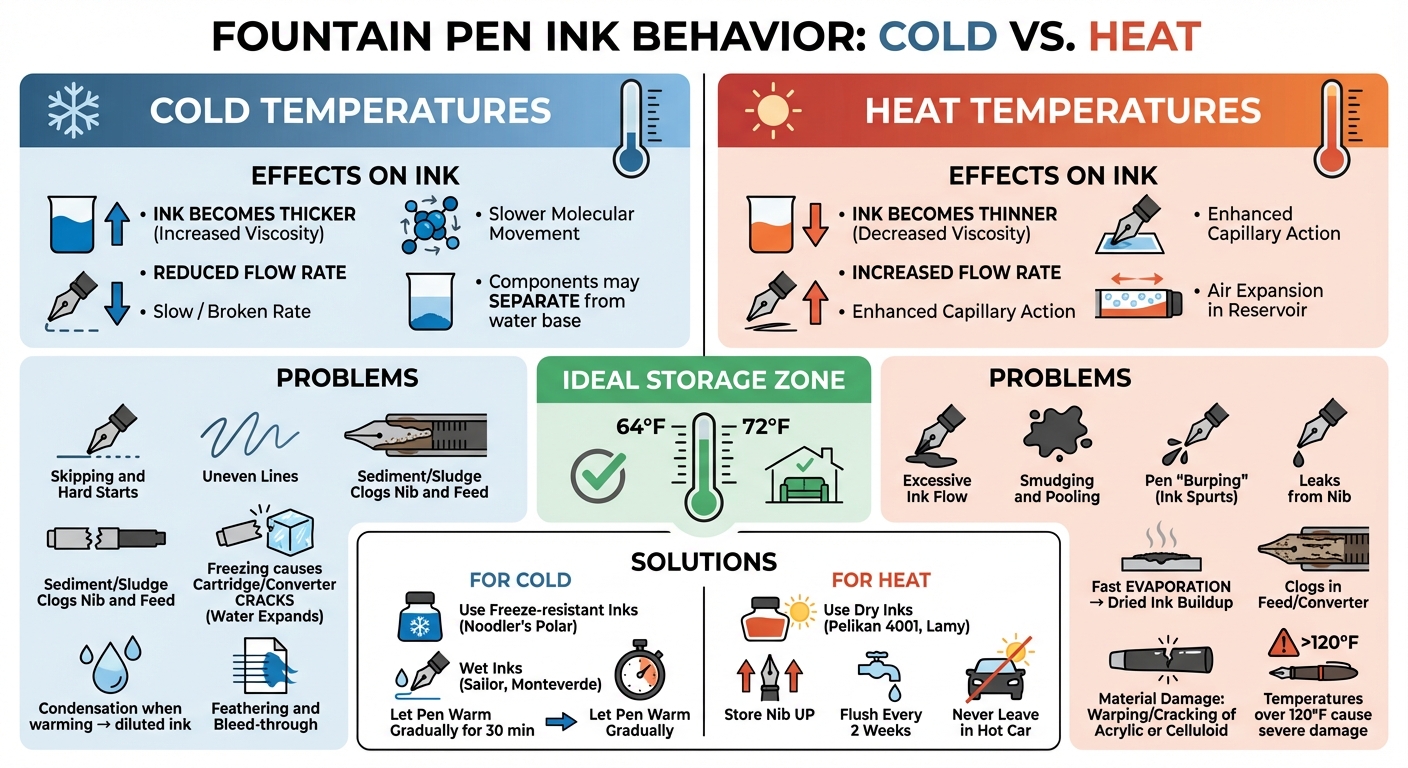
How Temperature Affects Fountain Pen Ink: Heat vs Cold Comparison
How to care for your fountain pens in the summer heat 🔥
Fountain Pen Ink in Cold Temperatures
When the temperature drops, your fountain pen ink doesn’t behave the way you’re used to. Cold weather thickens the ink, making it sluggish and harder to work with.
Thicker Ink and Reduced Flow
Cold weather increases the viscosity of fountain pen ink, which essentially means the ink becomes thicker. This slows down molecular movement and capillary action, leading to problems like skipping, hard starts, and uneven lines.
Here’s why that happens: fountain pens rely on capillary action to pull ink from the reservoir to the paper. When the ink thickens due to the cold, it develops more internal friction, weakening this essential process. As a result, the ink struggles to flow smoothly through the pen’s feed and nib.
In extreme cold, things can get even worse. The components of the ink - like dyes, lubricants, and other additives - may start separating from the water base. According to Pen Heaven:
Low temperatures can also cause separation of some fountain pen inks; creating blockages from solid particles getting into your nib and feed.
This separation can create sediment or "sludge", which clogs the delicate pathways inside your pen, completely halting ink flow.
Additionally, freezing temperatures can damage your pen itself. If water in the ink freezes, it expands, potentially cracking cartridges and converters.
But the trouble doesn’t stop there. Bringing a cold pen into a warm environment introduces a whole new set of challenges.
Condensation and Water Damage
Once your pen has been exposed to cold, warming it up too quickly can lead to condensation. When the cold pen meets warm indoor air, moisture forms inside the cap and feed. This extra water dilutes your ink, making it less effective.
What does that look like on paper? Diluted ink causes unexpected feathering and bleed-through. The watery ink spreads beyond its intended lines, creating fuzzy edges and soaking through to the other side of the page. This happens because the condensed water disrupts the ink’s carefully balanced formula, making it act like it’s been diluted with plain water.
To prevent these issues, let your pen warm up gradually before using it. If your pen has been sitting in a freezing car or arrived in a winter delivery, give it at least 30 minutes to adjust to room temperature before uncapping it. This small step can save you from a lot of frustration.
Fountain Pen Ink in Hot Temperatures
Heat can thin fountain pen ink, leading to increased flow. While this might initially seem like an advantage, the reduced viscosity can create issues that affect your writing experience and may even shorten your pen's lifespan.
Thinner Ink and Increased Flow
When the temperature rises, ink becomes less viscous, making it noticeably thinner. Danny Watts, author of Chronicles of a Fountain Pen, explains:
"Ink viscosity increases at lower temperatures, which can restrict ink flow and density. While at high temperatures, ink viscosity decreases."
This thinning, combined with enhanced capillary action in high heat, causes your pen to release more ink than usual. As a result, you might notice smudging or ink pooling on the page before it dries. Additionally, the heat causes the air inside your pen's reservoir to expand, which can force ink out through the feed and nib in sudden spurts - a phenomenon often called "burping." Pens with piston-fillers or eyedropper systems, which hold more air, are particularly prone to this issue.
To minimize leaks in hot conditions, store your pen vertically with the nib facing upward. As noted by Wood Fountain Pens:
"If the air expands due to heat, the pressure will not cause any ink to spill out of the nib and will just provide an easier path for the hot air to follow out of the pen."
This uncontrolled flow can also accelerate evaporation, leading to further challenges.
Evaporation and Clogging Problems
High temperatures speed up water evaporation in the ink, leaving behind concentrated dye or pigment particles. These can accumulate in the feed, converter, or cartridge, leading to clogs. EndlessPens highlights this issue:
"Heat can cause ink to evaporate more quickly, leading to dried ink buildup in the feed and converter/cartridge. This can clog the pen and make writing difficult or impossible."
Pens with lower ink levels or broader nibs are especially susceptible to evaporation-related clogs. To avoid these problems, regular maintenance is key. Flush your pen with lukewarm water every two weeks during hot weather, keep it capped when not in use, and ensure the ink reservoir is adequately filled to maintain smoother ink flow.
Heat Damage to Pen Materials
It's not just the ink that suffers in high temperatures - your pen itself can be at risk. Prolonged heat exposure can warp or crack materials like acrylic or celluloid, affecting both the pen's appearance and functionality. EndlessPens warns:
"High temperatures can cause materials like acrylic or celluloid to crack or warp, compromising the pen's aesthetics and functionality."
Vintage pens are particularly vulnerable, as heat can speed up the deterioration of latex ink sacs commonly used in older models. While modern pens with cartridges or converters tend to be more durable, no pen is entirely safe from extreme heat. For example, leaving your pen in a parked car, where interior temperatures can exceed 120°F, is a recipe for damage.
If your pen has been exposed to high heat, let it cool gradually at room temperature. Avoid rapid cooling, like placing it in the refrigerator, as this can further stress the materials and cause additional damage.
Ink Properties That Affect Temperature Response
The way fountain pen ink behaves under different temperatures is influenced by its unique properties. Understanding these characteristics can help you choose the right ink for your environment and avoid frustrating writing problems.
Viscosity and Flow Rate
Viscosity, or how much a liquid resists flowing, plays a big role in how ink performs. When the temperature rises, viscosity decreases because the molecules in the liquid move more freely. Tim Reece, a TSG Team Member at All Printing Resources, explains:
"When a fluid is heated, its molecules begin to move. The energy of this movement is enough to overcome the force that bind these molecules together allowing the ink to become more fluid and decreasing it's viscosity."
Temperature also impacts surface tension, which works alongside viscosity to control how ink flows. Reece notes, "As the temperature of an ink increases, its surface tension decreases". This means warmer conditions can make ink more prone to leaking or running, especially in hot weather.
The ideal temperature range for stable ink viscosity is 59–86°F (15–30°C). Below 50°F (10°C), ink flow slows, and drying times increase, while above 95°F (35°C), the viscosity drops so much that you might see splattering or excessive ink delivery. For colder conditions, "wet" inks like Sailor or Monteverde are better choices because they flow more freely and counteract thickening. In hotter climates, "dry" inks such as Pelikan 4001 or Lamy can reduce the risk of feathering and ensure more controlled flow.
Drying Time and Water Resistance
Temperature changes also affect how quickly ink dries and its resistance to water. On average, fountain pen ink takes about 31.5 seconds to dry. However, in hot weather, the solvent in the ink evaporates faster, which can cause it to dry quickly on paper but also dry out inside the pen, leading to clogs. In colder temperatures, evaporation slows, leading to longer drying times and a higher chance of smudging.
Water resistance becomes critical when temperature shifts lead to condensation. Pigment-based and iron gall inks are more water-resistant than dye-based inks, making them a better choice in humid or fluctuating conditions. However, these inks require regular cleaning - about every two to four weeks - to prevent clogging, a problem worsened by heat speeding up evaporation inside the pen's feed.
For hot climates, "dry" inks that flow conservatively and dry quickly can reduce smearing. In colder environments, lubricated or freeze-resistant inks like Noodler's Polar line are a good option, as they maintain flow even in subfreezing temperatures. To preserve your ink's quality, store it upright in a cool, dark place, ideally between 60–70°F.
These factors highlight the importance of choosing inks tailored to your specific climate - a topic we’ll explore further in the next section.
sbb-itb-1dd4fe9
Managing Fountain Pens in Extreme Temperatures
Storage and Transportation Methods
Temperature fluctuations can wreak havoc on fountain pens, especially when it comes to ink behavior. To keep your pens in good condition, store them in a cool, dry place where temperatures stay between 50°F and 75°F (10°C to 24°C) and away from direct sunlight.
Extreme heat can cause ink to expand, leading to leaks or warped materials, while freezing temperatures might cause water-based ink to expand and crack the barrel, cartridge, or converter. To avoid these issues, consider using padded or leather cases for transportation. These cases provide insulation and an added layer of protection against temperature changes.
When transporting your pens, always position them with the nib facing upward. This helps release any expanding air without forcing ink out, reducing the risk of leaks. If you're flying, either fill your pen completely or empty the ink reservoir entirely to prevent air expansion from causing leaks. For pens you won’t use for an extended period (over a month), it’s best to empty the ink, flush the nib and feed with lukewarm water, and let all parts dry thoroughly before storing them.
Looking for protective cases or accessories? Check out Fountain Pen Revolution (https://fprevolutionusa.com) for quality options.
Temperature Adjustment Periods
Before using your fountain pen after exposure to extreme temperatures, give it time to gradually reach room temperature. Sudden temperature changes can damage delicate materials by causing cracks or warping. Once the pen has stabilized, inspect it for any signs of leaks or clogs. If you notice residue from evaporated ink, flush the pen with cool water to clean it out.
If you’re dealing with frozen bottled ink, let it thaw completely and shake it gently to recombine any separated components before refilling your pen.
Selecting Ink for Your Climate
Wet vs. Dry Ink Formulas
When it comes to choosing ink for your fountain pen, the climate you live in plays a crucial role. Wet inks are formulated with added surfactants and lubricants to ensure smooth and consistent flow, especially in dry or hot climates. In such conditions, low humidity can cause ink to evaporate quickly at the nib, leading to hard starts or clogs. Brands like Monteverde, Pilot Iroshizuku, and Noodler's Eel are known for their wet inks, which excel in maintaining flow and preventing these issues. Understanding how these formulas work can help you avoid problems like leaks and clogs.
On the other hand, dry inks are designed with higher water content and fewer surfactants. This makes them absorb into paper more slowly, which is particularly beneficial in humid climates. By sinking into the paper quickly, dry inks help minimize feathering and smudging. Popular examples include Pelikan 4001, Platinum Classic, and Lamy inks.
"If you are having trouble with a pen feeling too dry, sometimes you can fix it by using a wet ink." - Kelli McCown, Mountain of Ink
For those living in colder regions, freezing temperatures present a unique challenge. Standard water-based inks can freeze, expand, and damage cartridges or converters. To combat this, specialty freeze-resistant inks like the Noodler's Polar series are formulated with lower freezing points. These inks not only prevent damage but also perform impressively, with Noodler's Polar Purple drying in as little as 2 seconds - far quicker than the average fountain pen ink dry time of 31.5 seconds.
Adjusting Ink by Season
Seasonal changes can also impact how your ink behaves, making it useful to adjust your choice throughout the year. During summer, dry formulas such as Pelikan 4001 or Platinum Classic help counteract high humidity by reducing feathering and smudging. In winter, wet inks like Monteverde or Pilot Iroshizuku can keep your pen flowing smoothly, even in colder and drier conditions.
If freezing winters are common where you live, it’s smart to keep a freeze-resistant ink like the Noodler's Polar series handy for outdoor use. These inks are specifically designed to withstand extreme cold, ensuring your pen stays functional no matter how harsh the weather gets. By adapting your ink choices to the season, you can ensure a reliable writing experience year-round.
Conclusion
Temperature plays a major role in how fountain pen ink behaves. In freezing conditions, water-based ink can thicken or even separate, while extreme heat causes it to thin and evaporate faster. Keeping your ink at a stable, moderate temperature helps maintain its flow and consistency over time.
Knowing how temperature impacts ink allows you to make smarter choices between wetter and drier inks, depending on the climate you’re in. Pairing these choices with proper storage and handling methods is key to keeping your pens in top shape.
"Temperature can have a marked effect on pens, particularly those with water-based ink. Fountain pens and rollerballs are notorious for their effects at high temperatures and require extra care when in use."
– Wood Fountain Pens
To protect your pens, store them vertically with the nib facing upward when traveling or dealing with changing temperatures. Also, avoid exposing them to direct sunlight or leaving them in hot cars. These simple habits can go a long way in preserving your pen’s performance.
Whether you're enduring blistering heat or icy cold, the right combination of ink and pen ensures smooth and reliable writing all year. For affordable fountain pens, high-quality inks, and accessories built to handle various climates, check out Fountain Pen Revolution at fprevolutionusa.com. They offer options tailored to meet your needs, no matter the weather.
FAQs
How can I keep my fountain pen ink from clogging in extreme temperatures?
To keep your fountain pen working smoothly in extreme temperatures, proper storage and maintenance are key. Store your pen in a cool, dry spot, away from direct sunlight or heat sources. Avoid exposing it to freezing conditions, as extreme cold can cause issues. Always ensure the pen is tightly capped and either stored horizontally or with the nib pointing upward. This helps prevent ink from drying out or leaking. If you’re traveling or dealing with cold weather, it’s a good idea to empty the ink reservoir beforehand to avoid problems caused by freezing and expansion.
Regular cleaning is just as important. Rinse the nib and feed at least once a month to clear out any dried ink residue. Also, stick to high-quality inks specifically made for fountain pens to ensure a consistent flow, regardless of the weather. By following these simple tips, you can enjoy a smooth writing experience year-round.
What type of fountain pen ink works best in hot or cold weather?
In hot weather (around 80–95°F), fountain pen ink can become thinner, which might lead to faster evaporation, leaks, or a watery appearance on paper. To avoid these problems, consider using inks with slightly higher viscosity or those that include humectants to help maintain their consistency. Pigment-based inks or thicker dye inks work well in warm climates since they are less likely to thin out or dry too quickly. Another tip: opt for cartridge or converter pens. These hold smaller amounts of ink, which helps minimize pressure buildup caused by heat.
In cold weather (below 32°F), the opposite happens - ink thickens, making it flow more sluggishly. For colder conditions, low-viscosity, fast-flowing dye inks are a better choice because they stay fluid even in freezing temperatures. Many quick-dry or smooth-flow inks also perform reliably in the cold. Once again, cartridge or converter pens are a smart pick, as their smaller ink reservoirs make it easier to maintain proper flow when temperatures drop.
To ensure smooth writing all year long, choose inks that match the season and pair them with cartridge or converter pens. Fountain Pen Revolution offers a range of inks designed to perform consistently, no matter the weather.
How do temperature changes impact fountain pen care?
Temperature changes can have a big impact on how you care for your fountain pen. In colder weather, ink can thicken or even freeze, which might cause cartridges to crack or the feed to shift - leading to leaks or uneven writing. To avoid these issues, empty your pen or insert a fresh cartridge before exposing it to freezing conditions. Also, make sure to store your pen in a cool, dry spot, away from drafts.
When it’s hot, ink tends to thin out, increasing the chances of leaks or blotches as it seeps from the feed or cartridge. Heat can also dry ink on the nib faster, so always cap your pen when it’s not in use and store it upright to minimize mess. If your pen has been exposed to heat, flushing it quickly can remove any residue that might block the feed.
For optimal performance, aim to keep your pens in a stable environment between 68–72°F. Store them horizontally or with the nib facing up, and make cleaning a regular habit. These simple practices will keep your ink flowing smoothly and extend the life of your pen.