

Finding the perfect bottled ink can transform your writing experience. This guide reviews eight popular ink brands in the U.S., focusing on flow, paper performance, color options, and maintenance. Whether you’re journaling, note-taking, or experimenting with colors, these brands have something to offer. Here's a quick overview:
- Waterman: Reliable with smooth flow and eight classic colors. Easy to clean and safe for vintage pens.
- Lamy: Offers standard and premium Crystal inks. Vibrant colors with smooth lubrication, but some inks need specific papers to avoid feathering.
- Sheaffer: Affordable and vintage-pen friendly. Known for consistent flow and bold colors like Blue and Turquoise.
- Diamine: A massive range of over 100 colors, including unique sheening and shading options. Works well on quality paper.
- Pelikan: Dry-flow inks in the 4001 series and smoother Edelstein line. Great for precision and vibrant colors.
- Noodler’s: Extensive variety with specialty inks like waterproof and fraud-resistant options. Some, like Noodler’s X-Feather Black, require extra care.
- Herbin: Historic brand offering smooth-flowing inks and shimmering anniversary editions. Easy to clean but some shimmer inks need more upkeep.
- Monteverde: Themed collections with creative shades. Some specialty inks struggle with feathering and bleed-through.
Key takeaway: For variety, Diamine is unmatched. Waterman and Pelikan stand out for ease of maintenance. Writers seeking vibrant or specialty inks may enjoy Noodler’s or Herbin. Choose based on your writing style and paper preferences.
Top 10 Fountain Pen Inks of 2️⃣0️⃣2️⃣4️⃣ 🎉
sbb-itb-1dd4fe9
1. Waterman Inks
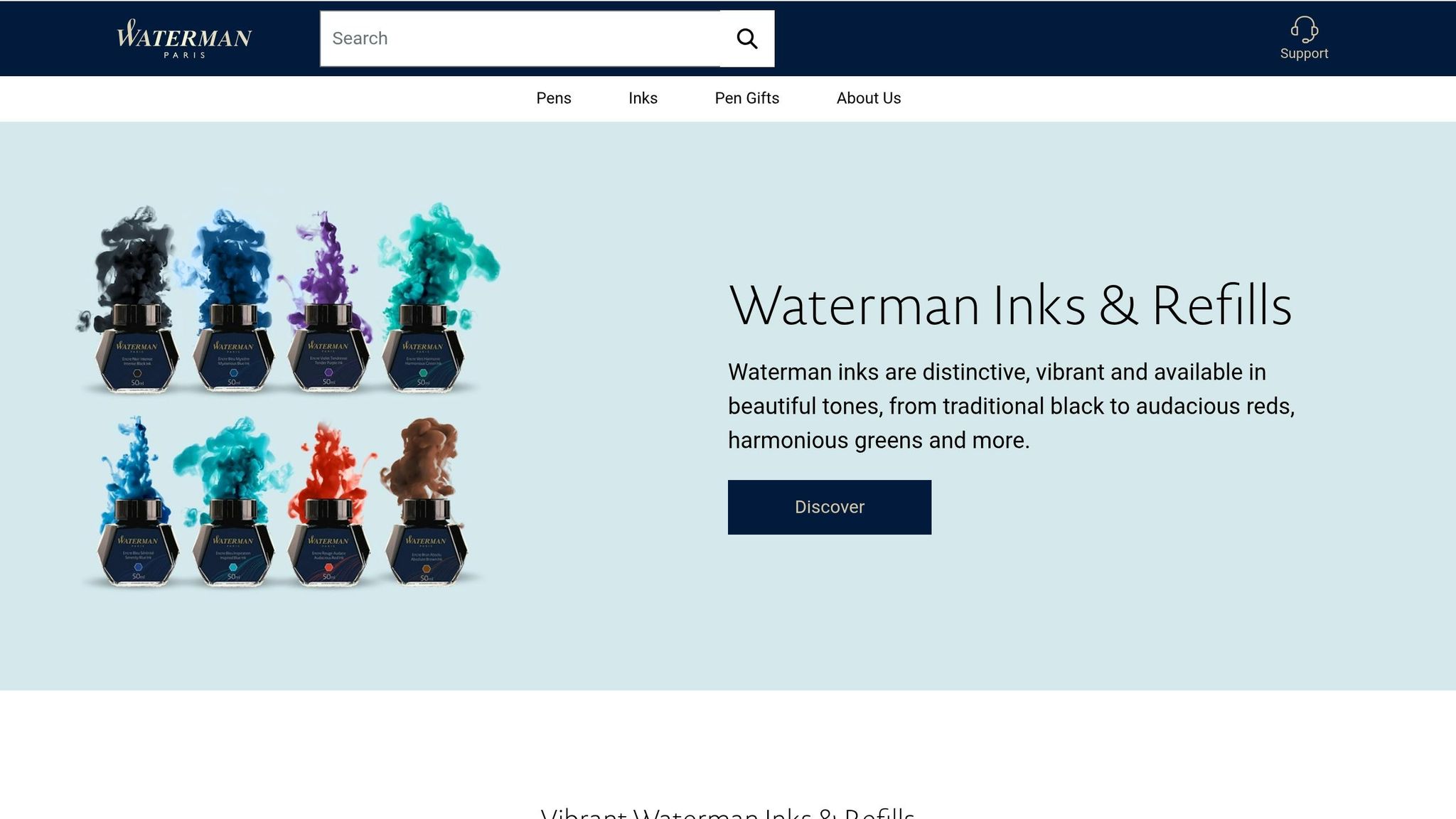
Since 1883, Waterman has been a reliable name in fountain pen ink, offering 50ml bottles for about $11.30. Its reputation for dependable performance makes it a solid choice for daily writing.
Flow and Lubrication
Waterman inks deliver a medium-wet flow, making them a great match for a variety of nib sizes - fine, medium, or broad. This flow ensures smooth writing without frequent hard starts or skipping. While it might not feel as fluid as some other inks, it’s more than capable for journaling or everyday use. Its balanced flow works well on most paper types, ensuring consistent results.
Paper Behavior
When used with popular paper brands like Rhodia, Tomoe River, Leuchtturm1917, and Midori MD, Waterman inks perform admirably, showing no signs of feathering or bleed-through. However, if you use larger nibs on Kokuyo Campus paper, you might notice minor bleed-through. Similarly, standard 20 lb copy paper can sometimes show feathering. To get the best results, pair this ink with high-quality paper. The variety of colors available only adds to its practicality for daily tasks.
Color Range
Waterman offers a palette of eight core colors: Serenity Blue, Inspired Blue, Mysterious Blue, Audacious Red, Tender Purple, Harmonious Green, Absolute Brown, and Intense Black. Six of these colors have the potential to show sheen on the right paper, with Tender Purple and Inspired Blue standing out the most. Among them, Serenity Blue is a favorite for journaling - smooth, versatile, and unobtrusive.
"These classic colors remain popular for a reason." - Ana, The Well-Appointed Desk
Maintenance Profile
One of Waterman’s standout features is its pen-friendly nature. These inks are especially well-suited for vintage pens or pens with intricate filling systems that are tricky to clean. Their high water solubility means they flush out easily, often requiring just a few minutes of rinsing. For instance, Serenity Blue scored a 10/10 for paper performance and an 8.5/10 for ease of cleaning, reflecting its low-maintenance appeal.
"Waterman inks are considered the ultimate in 'safe' inks, which is to say that these are inks that are your safest bet for your vintage pens or pens that are difficult to take apart and clean." - Wonder Pens
2. Lamy Inks
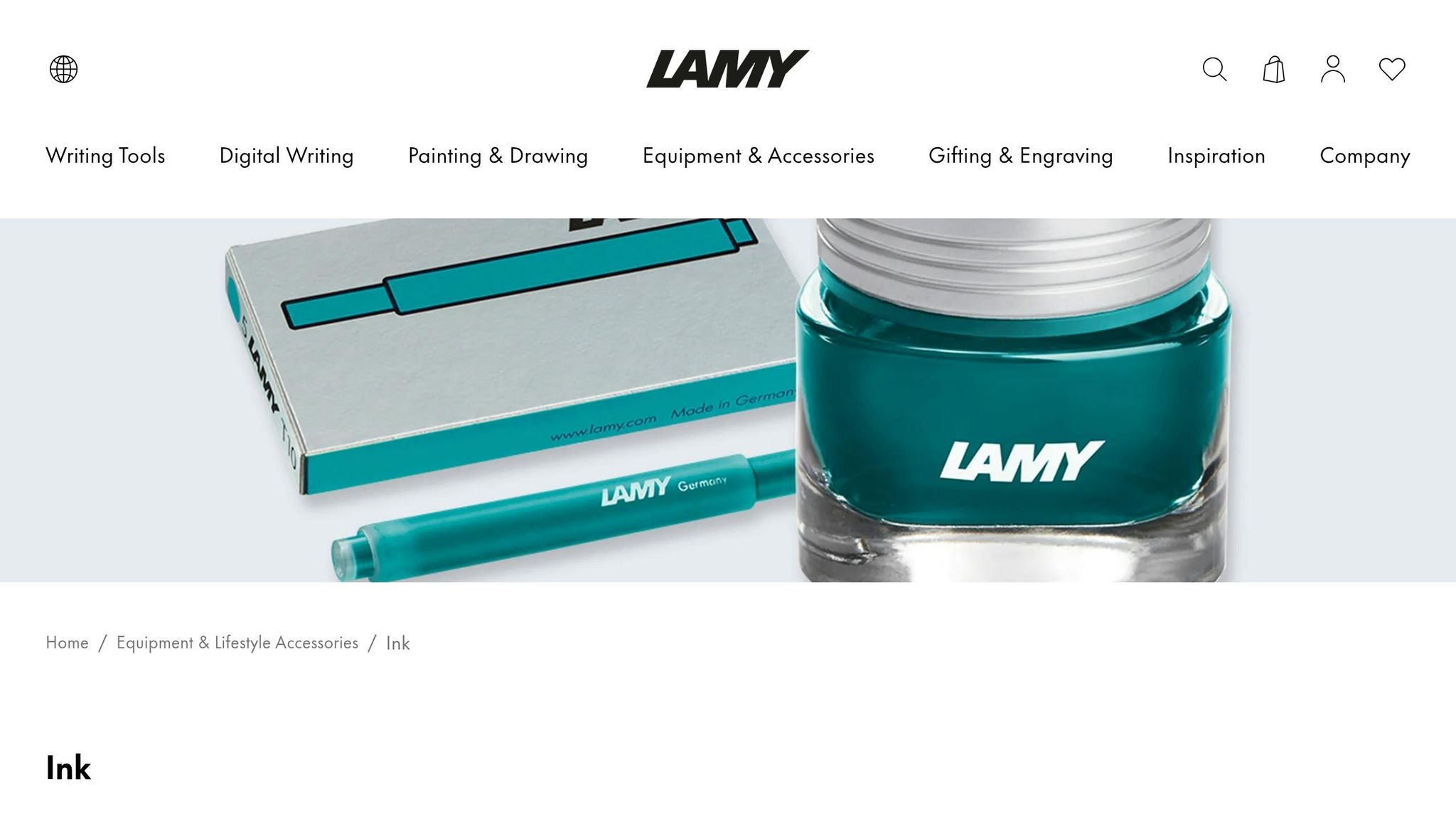
Lamy inks hail from Germany and are divided into three categories: Standard (T51/T52 bottles), the premium Crystal series, and annual Limited Edition releases. They strike a balance between performance and variety, making them a favorite among dedicated writers. Standard inks like Blue, Black, and Turquoise are priced around $8 for 50ml, while the Crystal series costs about $16 for 30ml, reflecting a higher price per milliliter for a more refined writing experience.
Flow and Lubrication
Lamy's Standard inks are known for their consistent flow, making them ideal for everyday use. The Crystal series, however, stands out with its exceptional lubrication, giving an almost oily smoothness to your writing.
"Lamy's Crystal inks are incredibly vibrant. Each provides a smooth and velvet-like writing experience, even in finer nibs." - Shawn Buckles, Owner, One Pen Show
This extra lubrication makes Crystal inks particularly effective at minimizing scratchiness when used with finer nibs. However, pairing them with already-wet nibs can lead to excessive flow, longer drying times, and occasional smudging. Their fluid consistency also makes them perform differently depending on the paper you use.
Paper Behavior
Crystal inks shine on high-quality, fountain pen-friendly paper like Rhodia or Tomoe River. On standard copy paper, though, you might notice feathering and bleed-through. Choosing the right paper for the ink’s flow level can greatly improve your writing experience, especially for daily journaling.
Color Range
The Standard line offers the essentials: Blue, Blue-Black, Black, Red, Green, and Turquoise. The Crystal series expands the palette with 10 expressive shades, including Agate (a green-grey with a subtle sheen), Rhodonite (a pink-red with shimmer), and Obsidian (a deep black with cool teal undertones). Limited editions, such as the coveted Petrol, are highly sought after and disappear quickly once sold out.
"Lamy Crystal Agate is a green grey with a bit of sheen. It's really quite lovely and is my current favorite grey." - Ana, Founder/Editor, The Well-Appointed Desk
These vivid hues pair well with Lamy's reputation for low-maintenance usability.
Maintenance Profile
Lamy inks are generally easy to maintain and safe for most fountain pens. If you experience skipping or dry flow, ensure the cartridge or converter is properly seated and try gently tapping the nib. For more stubborn clogs, flushing the pen with lukewarm water or a diluted ammonia solution (1:10 ratio) can help.
3. Sheaffer Inks
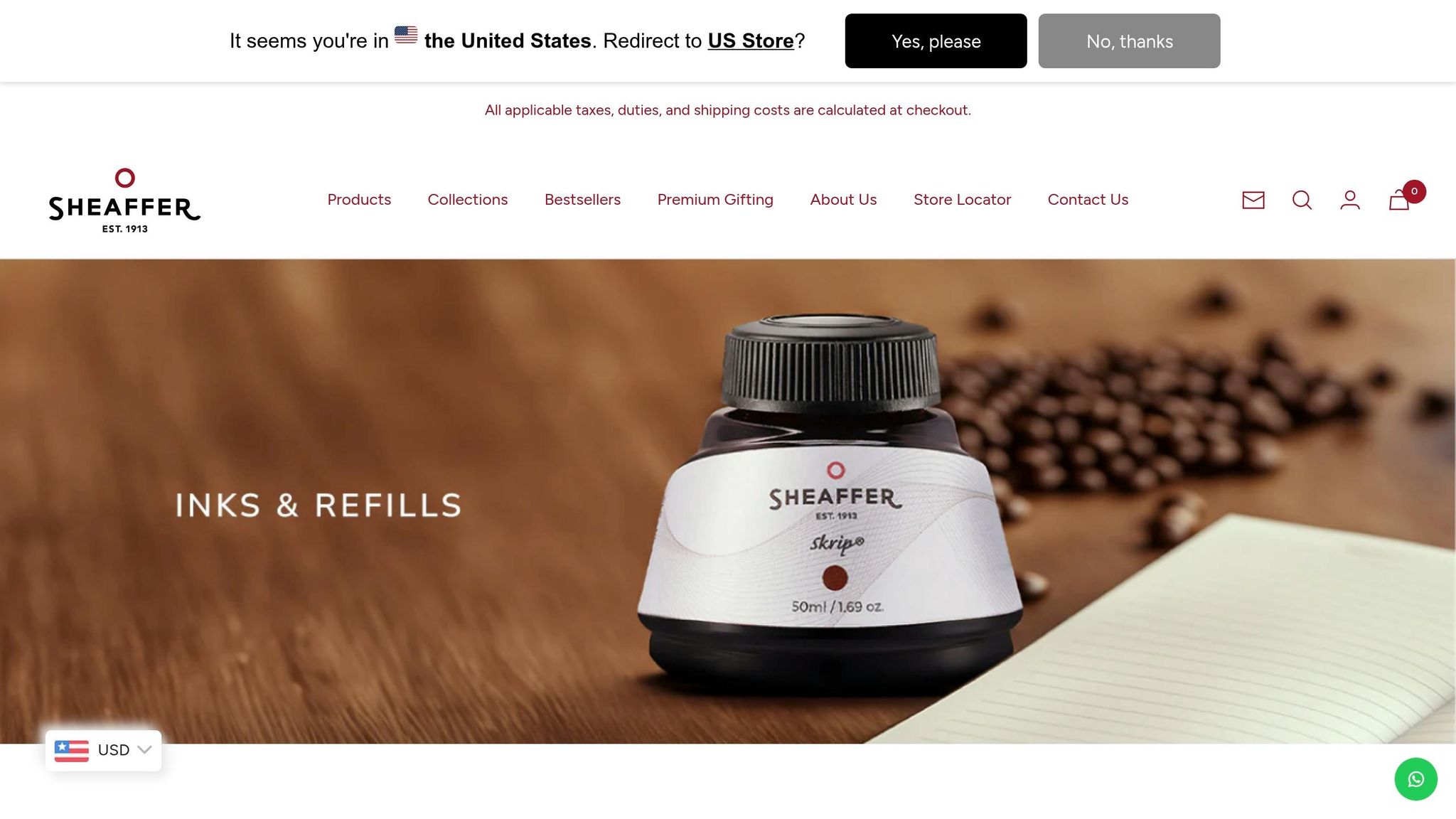
Sheaffer has been crafting inks since 1922, offering both affordability and quality. Their classic 50ml bottles are priced at around $10–$12, while the premium 30ml "jam jar" bottles sell for $13–$15. What makes Sheaffer stand out is its reputation as a "vintage safe" ink - gentle enough for older fountain pens with delicate filling mechanisms. This is a feature not all inks can guarantee.
Flow and Lubrication
Sheaffer inks are known for their smooth, consistent flow, particularly with medium to broad nibs. The current formulations provide a richer and smoother writing experience compared to older versions. These inks are reliable and practical, making them ideal for everyday use without the challenges that often come with highly saturated boutique inks. Their dependable flow contributes to consistent performance across different types of paper.
Paper Behavior
Thanks to their smooth flow, Sheaffer inks shine on premium papers like Rhodia and Tomoe River, which are favorites for journaling. On these high-quality sheets, you can expect no feathering, no bleed-through, and a drying time of around 30 seconds. When used on standard 20 lb copy paper, there may be slight feathering with broader nibs, but it remains manageable. This versatility makes Sheaffer inks a great choice for writers who frequently switch between paper types.
Color Range
Sheaffer’s Skrip line features eight staple colors: Black, Blue, Blue-Black, Red, Green, Turquoise, Purple, and Brown. These colors offer excellent value, with some shades rivaling much pricier inks. For instance, Sheaffer Blue is celebrated for its bold red sheen and is often compared to Pilot Iroshizuku Kon-Peki, which comes at a significantly higher price.
"Sheaffer Blue has some rockin' red sheen... looks like there's no reason to drop twice as much money on the same color anymore, huh?" - Ana, Founder, The Well-Appointed Desk
Other standouts include Turquoise, which boasts a subtle pinkish sheen, Brown, known for its beautiful shading, and Blue-Black, which leans toward a dark greenish-teal rather than the usual indigo. The premium line introduces more playful names like Retro Sunset (orange) and Bling (a medium gray with bronze shimmer). These options cater to writers seeking a touch of creativity in their everyday notes.
Maintenance Profile
Sheaffer inks are water-soluble, making them easy to clean out of pens - a big plus if you frequently rotate pens or use vintage models. Ana from The Well-Appointed Desk highlights this benefit:
"The great thing about a classic ink like Sheaffer is that it is safe for your vintage pens. So, having a bottle of Sheaffer ink around is wise just for the vintage pens you have - or might one day have."
One note of caution: Sheaffer Green, which leans more teal than true green, can fade toward turquoise if exposed to light over time.
4. Diamine Inks
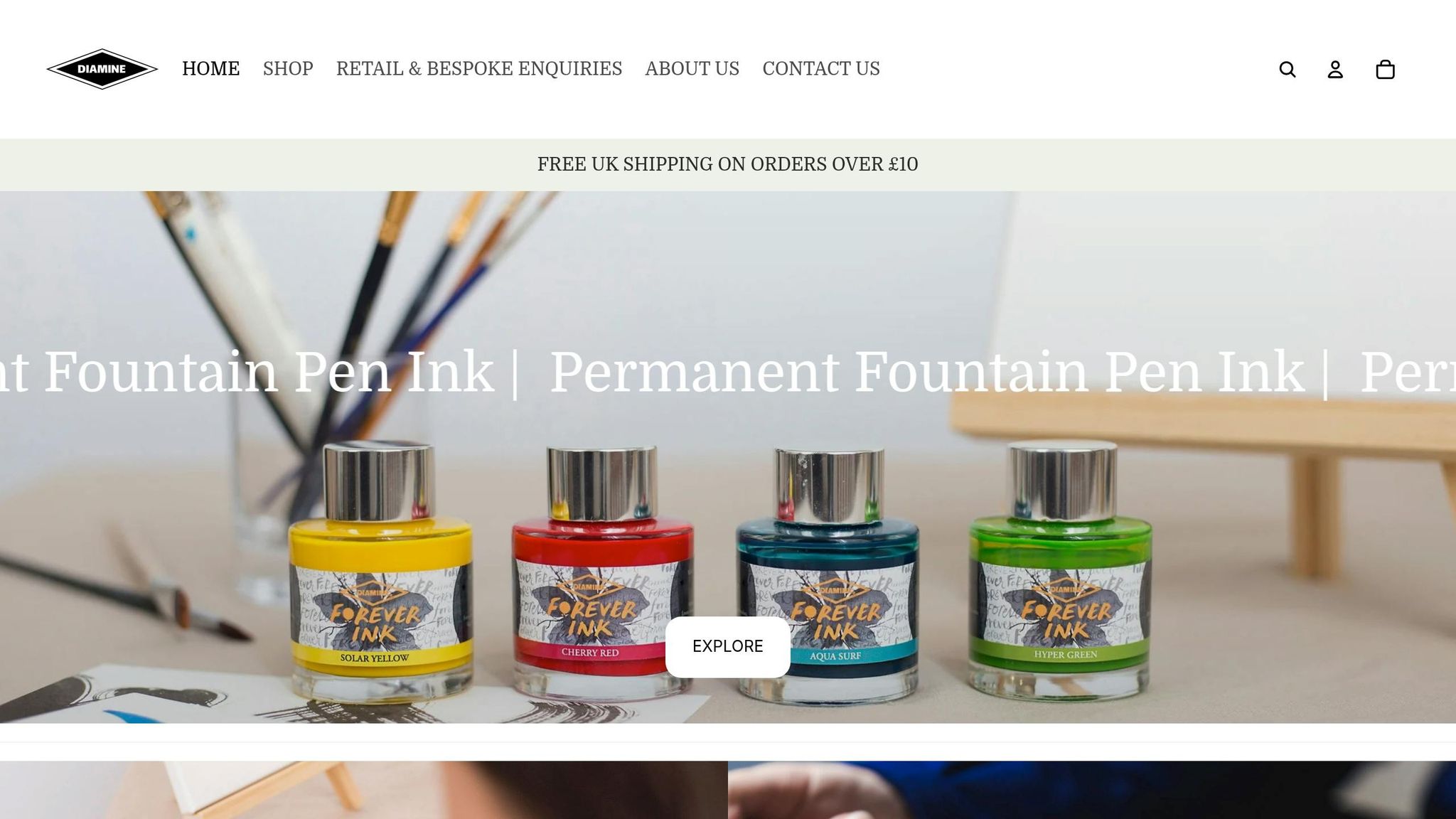
Diamine has been crafting fountain pen inks since 1864. That rich history shines through in the quality and consistency that fountain pen enthusiasts have come to trust. One of Diamine's standout features is its huge range of colors, offering something for every writer while maintaining reliable performance. Plus, its balance of affordability and quality makes it a go-to option for a variety of writing styles and needs.
Flow and Lubrication
Diamine inks are well-known for their smooth flow and excellent lubrication. This ensures a seamless writing experience, whether you're using an extra-fine nib or a broad stub. Marisa, a reviewer from The Unwritten Word, shared her experience:
"I spent about a week writing with them sporadically, and never had any issues with hard-starting or clogging."
Paper Behavior
To get the best results, Diamine inks pair beautifully with fountain pen–friendly paper that’s at least 80gsm. On smooth, low-absorbency paper, these inks deliver crisp lines with minimal feathering. However, like most inks, performance can vary on lower-quality paper, where feathering and bleed-through may occur.
Color Range
When it comes to variety, Diamine is hard to beat. The brand offers an expansive palette that goes far beyond standard blues and blacks. They’ve got sheening inks like Jack Frost, which reveals a pink sheen over blue, shimmering inks like Blue Pearl with metallic particles, and high-shading options such as Autumn Oak, which creates striking tonal shifts in a single stroke. Diamine also keeps things exciting with themed collections, including their annual Inkvent Calendars, which feature 25 exclusive holiday shades.
Maintenance Profile
Diamine inks are water-based and acid-free, making them safe for most fountain pens, including vintage models and those with converters or piston fillers. Most colors clean out easily with water, but if you’re using highly saturated or shimmering inks, some staining in converters might occur over time. These inks may need a bit more upkeep - like gentle shaking before use to evenly distribute metallic particles.
5. Pelikan Inks
Pelikan has been crafting inks in Germany since 1838. The brand offers two main lines: the 4001 series, known for its affordability and classic appeal, and the Edelstein collection, a premium range inspired by the beauty of gemstones. Each line caters to different preferences, ensuring there's something for every type of writer.
Pelikan's inks are designed to meet a variety of writing needs, striking a balance between the dry feel of traditional inks and the smooth flow of premium options.
Flow and Lubrication
The 4001 series stands out for its dry formulation, which pairs perfectly with Pelikan’s wetter-writing pens. This dryness helps with line control, making it a reliable choice for those who value precision. On the other hand, the Edelstein series is smoother and more lubricated, offering a luxurious, gliding experience. These inks also provide richer saturation, ideal for anyone looking to enhance the vibrancy of their writing.
Paper Behavior
When it comes to paper performance, the 4001 inks excel on standard copy paper by reducing bleed-through and feathering. Meanwhile, the Edelstein inks truly shine on high-quality fountain pen paper, where their shading and vibrant colors can be appreciated. For example, Pelikan 4001 Brilliant Black dries in about 40 seconds when used on fountain pen–friendly paper.
Color Range
The 4001 series includes 11 colors, with two specifically formulated as highlighter inks for fountain pens. The Edelstein collection offers 14 standard shades, featuring striking options like Aventurine, Topaz, Moonstone, and Olivine. Additionally, the collection introduces a rotating "Ink of the Year", with Golden Lapis being the 2024 selection. Popular choices such as Edelstein Onyx and 4001 Blue Black are celebrated for their classic appeal and reliable performance.
Maintenance Profile
Pelikan inks are known for their stable and reliable formulations, making them safe for both vintage and modern pens. Most colors clean up easily with water. However, for shimmering variants in the Edelstein line, it’s best to use a steel-nibbed pen to simplify the cleaning of metallic particles.
6. Noodler's Inks
Noodler's is a well-known American brand that creates inks tailored for specific purposes, ranging from fraud-resistant formulations to lubricating options. As Goldspot Pens describes:
"Noodler's has one of the most expansive selections of inks, ranging from fraud proof (Bulletproof) to highlighter ink and ink that helps lubricate your fountain pen (Eel collection)."
Let’s dive into how these features impact performance on different types of paper.
Flow and Lubrication
Noodler's inks generally offer smooth flow, making them great for everyday writing. The Eel collection goes a step further by providing lubrication for piston mechanisms, which can help keep your fountain pen running smoothly. However, because the inks are handmade, you might notice slight variations in flow, saturation, or lubrication between bottles. To minimize inconsistencies and avoid muted or grayish results, it’s a good idea to shake the bottle thoroughly before use.
Paper Behavior
When it comes to paper, Noodler's inks shine on low-cost, absorbent options, where they resist feathering and bleed-through. On the other hand, using them on premium paper like Tomoe River can present challenges. For example, Noodler's Black may take up to 50 seconds to dry on such surfaces and can sometimes appear more gray than true black. If you’re a left-handed writer, fast-drying options like Brevity Black can help reduce smudging.
Color Range
Noodler's offers an impressive range of over 100 colors, providing endless creative possibilities. Some standout options include:
- Blue Ghost: An invisible ink that glows under UV light.
- Apache Sunset: A dynamic ink that shifts from yellow to orange and red, offering stunning shading.
- Baystate Blue: Famous for its striking vibrancy, though it’s known to stain pens.
- Polar Series: Designed to remain fluid even in freezing temperatures.
- Lexington Gray: A reliable waterproof gray, popular for both writing and sketching.
This diverse palette makes Noodler's a favorite for users looking to experiment with color and style.
Maintenance Profile
While Noodler's inks offer unique benefits, some require extra care. The "Bulletproof" and "Eternal" lines are highly resistant to water, UV light, and bleach, but they can lead to buildup with prolonged use. Specialty inks, like Bad Green Gator, are known to thicken inside pens if left unattended. To avoid issues, regular cleaning and flushing are essential, especially when using these more demanding formulas. Proper maintenance ensures your pens stay in good condition while enjoying the distinct qualities of Noodler's inks.
7. Herbin Inks

Herbin inks bring a rich history and dependable performance to the table. Established in 1670, J. Herbin holds the title of the oldest name in writing inks. This legacy shines through in the consistent quality of their products.
Flow and Lubrication
The La Perle des Encres collection is known for its smooth and steady ink flow, a hallmark of Herbin's craftsmanship. The Jacques Herbin Essentials line also stands out for its reliable performance. As Kelli McCown, Founder of Mountain of Ink, notes:
"I love how well these inks flow. The Essentials inks are my favorites from J Herbin."
However, not all inks in the Essentials line behave the same. For instance, Vert Amazone tends to write drier compared to other shades. These subtle differences can influence how the ink interacts with various types of paper.
Paper Behavior
Herbin inks truly shine on fountain pen–friendly papers like Rhodia, Tomoe River, and Clairefontaine. On these surfaces, you’ll notice minimal feathering or bleed-through. But when used on standard copy paper, feathering and significant bleed-through can occur, regardless of nib size. Drying times vary: standard colors generally need over 15 seconds, while inks from the Essentials line can take up to 50 seconds on high-quality paper. On premium papers, you might see some ghosting, so using a barrier sheet could be helpful.
Color Range
Herbin offers a wide variety of options, organized into several distinct lines. The La Perle des Encres collection includes 32 colors, available in classic 30 mL "D" bottles priced at about $9.00 each. The Jacques Herbin Essentials line features 10 core colors in elegant 50 mL glass bottles, priced around $32.00. These collections include shades ranging from the deep blue-black Bleu de Minuit to the rich, saturated Noir Abyssal.
For those seeking something extra, Herbin also offers the 1670 and 1798 Anniversary shimmer inks, a scented ink range, and miniature sets (approximately $67.20 for five 15 mL bottles). Jaclyn Myers of The Well-Appointed Desk praises the sheen on Bleu de Minuit, saying:
"The sheen is right at the level that produces a 'halo effect' around each letter in print writing... this type of sheen is some of my favorite in actual practical day-to-day writing."
Maintenance Profile
Herbin inks are dye-based and pH-neutral, making them safe for use in all fountain pens, including vintage models. Both the standard and Essentials lines are easy to clean with water. However, the 1670 and 1798 shimmer inks contain metallic particles, which can settle and accumulate in pens. This means they require more frequent cleaning to keep your pen in top shape.
8. Monteverde Inks
Monteverde inks, produced in Austria, are known for their themed collections like Gemstones, Noir, Jungle, Sweet Life, Emotion, Document, and the Color Changing series. These collections are a major appeal for enthusiasts, and the thoughtfully designed packaging - such as magnetic closure boxes - makes them ideal for collectors and gift-givers.
Flow and Lubrication
Monteverde markets its inks as free-flowing and water-based, designed to provide smooth, skip-free writing. However, user experiences vary. While some colors deliver consistent performance, others, particularly from the Jungle collection, have faced criticism for being thin and unpredictable. As one reviewer from The Well-Appointed Desk noted:
"This ink is very watery and inconsistent, much like a watercolor brush... The feathering is quite noticeable. I've not had this happen with any other fountain pen or ink."
This inconsistency can lead to noticeable differences in how the inks behave on paper.
Paper Behavior
Monteverde's specialty collections, such as Jungle and Color Changing, often struggle with feathering and bleed-through - even on papers that are typically fountain pen-friendly, like Tomoe River and Rhodia. Kelli, the founder of Mountain of Ink, shared her blunt opinion of the Color Changing line:
"Overall, I hate these inks. They bleed and feather a ton, even on Tomoe River paper."
Certain Jungle shades, such as Giraffe and Gorilla, are particularly prone to feathering. To minimize these issues, using a finer nib size and applying less pressure can help reduce the ink flow and limit spreading.
Color Range
Monteverde's color options stand out for their creativity, even if some come with performance compromises. The Jungle collection includes shades like Lion, a blend of orange, yellow, and brown that maintains good legibility despite its lighter tone, and Crocodile, a forest green with a subtle black sheen along the edges. The Noir line offers distinctive shades like Rose Noir, described as "a yummy, plummy purple that leans more red".
The Color Changing series takes experimentation further with nine saturated colors that shift dramatically when paired with a clear solution - changing hues from Green to Pink or Dark Blue to Pink, for example. This effect mimics a bleach pen but without the harshness. Individual bottles from this line cost about $13.00, while the full set of nine inks is priced around $124.00.
Maintenance Profile
Monteverde inks are water-based dyes, making them safe for most fountain pens and easy to clean with lukewarm water during ink changes. However, the Color Changing inks have a wide range of drying times - anywhere from 5 to 60 seconds, depending on the paper and nib. Additionally, their compatibility with standard international cartridges makes them usable with a variety of pen brands beyond Monteverde's own lineup.
Pros and Cons by Brand
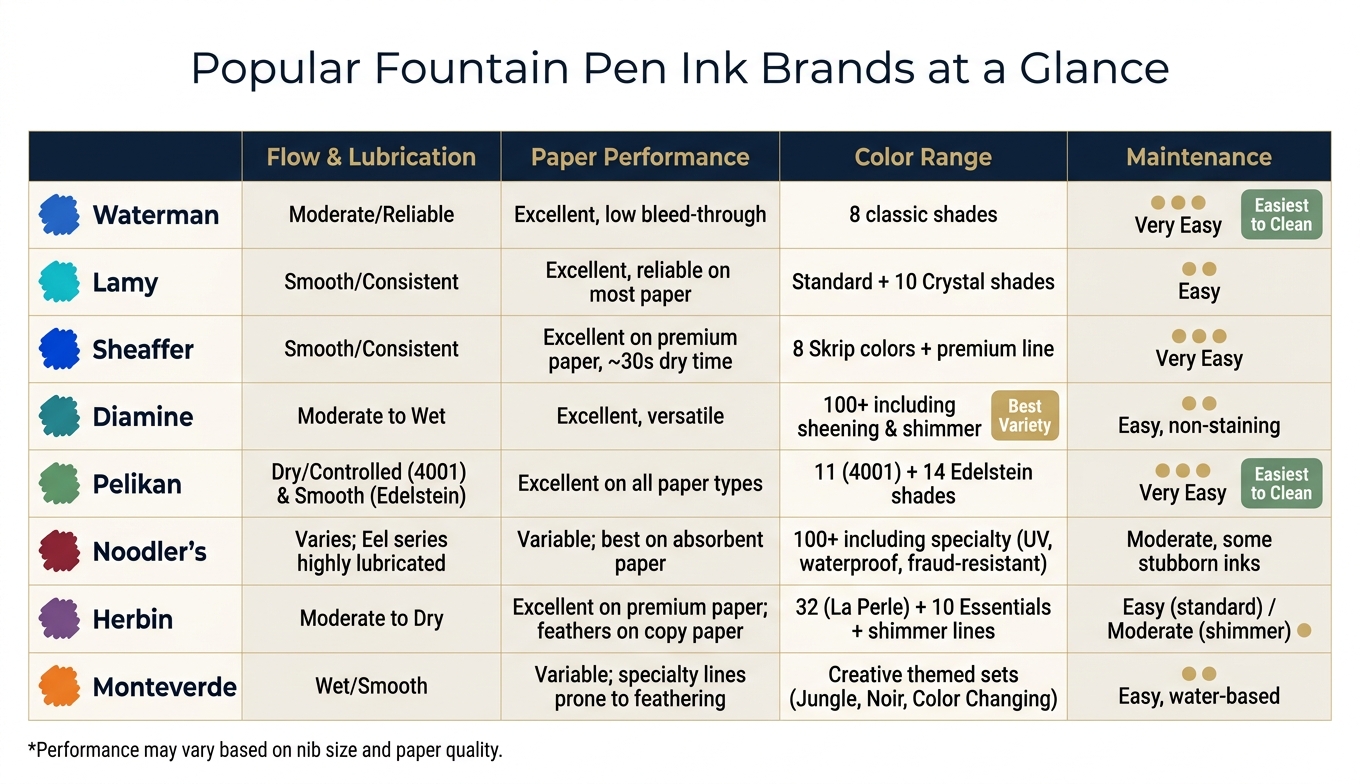
Popular Fountain Pen Ink Brands Compared: Flow, Color & Maintenance
Each ink brand in this article brings something different to the table. Some focus on dependable performance across everyday paper, others offer a dazzling array of colors, and a few excel in being easy to clean. The table below provides a quick overview of each brand's strengths and potential drawbacks.
| Brand | Flow & Lubrication | Paper Behavior | Color Range | Maintenance Profile |
|---|---|---|---|---|
| Waterman | Moderate; reliable | Excellent; low bleed-through | Standard (8 colors) | Very easy; low residue |
| Lamy | Smooth; consistent | Excellent; reliable on most paper | Limited/standard | Easy; standard cleaning |
| Diamine | Moderate to wet | Excellent; versatile across paper types | Exceptional - 100+ colors | Easy; non-staining |
| Pelikan | Dry; controlled | Excellent on all paper types | Standard | Very easy; protective formula |
| Noodler's | Eel series high; varies | Variable; some feathering on lower-quality paper | Extensive | Moderate; some inks can be stubborn |
| Herbin | Moderate to dry (standard line) | Excellent; shades well | Moderate; distinctive tones | Easy (standard) / Moderate (1670 shimmer line) |
| Monteverde | Wet; smooth | Variable; specialty lines prone to feathering | Excellent; creative themed sets | Easy; water-based formula |
These highlights summarize the detailed reviews above, giving you a clear sense of what each brand offers.
Key Takeaways
- Diamine is a top pick for variety, boasting over 100 colors at an accessible price point. Perfect for those who love experimenting with shades.
- If you’re using standard copy paper, Pelikan's dry, controlled flow is a reliable choice.
- The Noodler's Eel series is specially formulated for extra lubrication, ensuring smooth flow, though some inks may require more maintenance.
- Herbin's ink lines cater to different needs: the standard line is ideal for everyday writing, while the 1670 Anniversary line adds shimmer and flair, albeit with slightly higher upkeep.
- For those who frequently swap inks, Waterman and Pelikan stand out as some of the easiest to clean, reducing the risk of staining. Monteverde inks are also generally low-maintenance thanks to their water-based formula.
Each brand has its own personality, so finding the right ink often comes down to your specific writing style and needs.
Conclusion
The review above showcases how various ink brands meet different writing preferences and priorities. Selecting the right ink ultimately depends on your personal writing style. For those just starting out, Diamine stands out with its broad spectrum of colors and budget-friendly pricing. As EndlessPens notes:
"Those on the lookout for a wide range of colors at a decent price point will not be disappointed with Diamine."
If you're into journaling, the Herbin 1670 Anniversary line offers a touch of flair with its shimmering qualities. Meanwhile, Monteverde provides imaginative options that make expressive writing even more enjoyable. For vibrant, saturated colors, Noodler's delivers - but be prepared for a bit more maintenance. Using a pen cleaning kit can help keep your pens in top condition.
FAQs
Which ink is best for cheap copy paper?
Waterman Serenity Blue stands out as an excellent option for use on inexpensive copy paper. It’s budget-friendly, easy to clean, and delivers solid performance with minimal feathering on most paper types. Its dependable nature makes it a go-to choice for daily writing tasks.
What ink is safest for vintage fountain pens?
The best ink choices for vintage fountain pens are water-based, low-pigment, and pH-neutral. Trusted options among fountain pen enthusiasts include Waterman Blue, Pelikan 4001 Blue, Parker Quink, Sheaffer Skrip, and Diamine. These inks are known for being gentle and safe to use with older pens, helping to preserve their functionality and longevity.
How do I avoid clogs with shimmer or waterproof inks?
To keep your fountain pen in top condition, especially when using shimmer or waterproof inks, it's essential to clean it regularly. These types of ink can leave behind residue that may lead to clogs. Stick to inks made specifically for fountain pens, and steer clear of India ink or iron gall formulas, as they can damage your pen over time. Make it a habit to flush your pen with water or a cleaning solution to clear out any buildup. This simple maintenance step helps maintain smooth ink flow and keeps your pen working beautifully.