

Fountain pen nibs can be tailored to suit your writing style by modifying their shape. These custom nib shapes, created by specialists called nibmeisters, change how a pen writes and feels. Popular options include stub, cursive italic, oblique, architect, and modified round nibs. Each shape delivers unique line variations, from thick and thin strokes to smoother or sharper writing experiences.
Here’s what you need to know:
- Stub nibs: Easy to use, with subtle line variation - great for daily writing.
- Cursive italic nibs: Sharper edges for pronounced line contrast - ideal for decorative writing.
- Oblique nibs: Angled tips for diagonal grips - requires practice.
- Architect nibs: Thick horizontal strokes and thin vertical ones - best for block-style writing.
- Modified round nibs: Focus on smoothness and ink flow rather than line variation.
When choosing a nib, consider your handwriting style, the purpose (daily use vs. decorative writing), and your grip angle. Testing factory-made nibs or visiting pen shows can help you decide before committing to a custom grind. Costs start at about $25 for basic tuning and increase for intricate modifications.
Proper care, like regular cleaning and using quality paper, ensures your custom nib performs well over time. If you’re looking to elevate your writing experience, custom nibs offer a personalized touch.
10+ Custom Nib Grinds You Should Try · Monoline, Waverly, Journaler, Imperial, Sankakusen & More!
sbb-itb-1dd4fe9
Common Custom Nib Shapes Explained
Custom nib shapes elevate your writing experience by tailoring line variation to suit your personal style.
Stub Nibs
Stub nibs have a flat, square tip that’s cut straight across, unlike the rounded tip of a standard nib. This design creates a natural line variation: thicker vertical strokes and thinner horizontal ones. The result? A subtle calligraphic touch to your handwriting - without requiring advanced techniques.
"A stub tip is cut straight across the top and is the easiest to use of the three [stub, italic, oblique], since it has somewhat rounded edges and corners." - Nibs-USA
The rounded edges make stub nibs forgiving of slight angle changes, but the level of line variation depends heavily on the nib's width. Broader nibs, like Broad or Double-Broad, create more dramatic contrasts compared to narrower Medium nibs. Stub nibs are a favorite for signatures, journaling, and adding flair to everyday notes.
Cursive Italic Nibs
Cursive italic nibs sit between stub and formal italic nibs in design. Their edges are sharper than a stub but not as rigid as a formal italic, offering more pronounced line variation while maintaining smooth writing.
| Feature | Stub Nib | Cursive Italic Nib |
|---|---|---|
| Edge Shape | Rounded and polished | Sharper than stub, softer than italic |
| Line Contrast | Moderate, subtle variation | High, with crisp differences |
| Ease of Use | Forgiving of grip angle | Sensitive to pen rotation |
| Best Use Case | Daily writing, journaling | Decorative, calligraphy-inspired writing |
Cursive italic nibs are more sensitive to grip and angle. If the nib rotates too much, the edges might catch on the paper. This makes them ideal for writers who are comfortable adjusting their grip for decorative effects.
Oblique Nibs
Oblique nibs are ground at an angle, rather than straight across. This angled design suits writers who naturally hold their pens at a diagonal slant. While they can deliver smooth ink flow and consistent results, they often require practice to find the right grip and angle for optimal performance.
Architect Nibs
Architect nibs flip the line variation of a stub nib. Instead of thick vertical strokes and thin horizontal ones, they produce broad horizontal strokes and fine vertical lines. This makes them perfect for block printing, all-caps handwriting, or styles inspired by architectural lettering. Like other custom grinds, the contrast depends on the nib's original width - broader nibs create more dramatic effects.
Modified Round Nibs
A modified round nib keeps the familiar shape of a standard round tip but undergoes fine-tuning to improve ink flow and smoothness. Rather than reshaping the nib for line variation, specialists adjust the tipping material to resolve issues like scratchiness, hard starts, or uneven ink delivery. This option is great for those who prefer the feel of a traditional round nib but want better performance on the page.
Each of these nib styles offers unique characteristics that cater to different writing preferences. By understanding their features, you can find the perfect nib to match your handwriting and enhance your writing experience.
How to Choose the Right Nib Shape
Custom Fountain Pen Nib Shapes: Side-by-Side Comparison Guide
Selecting the perfect nib shape comes down to understanding your handwriting style, what you’ll use it for, and how it feels on paper.
Assessing Your Handwriting Style
Start by analyzing your natural grip angle and the size of your handwriting. If you tend to hold your pen at a lower angle or rotate it while writing, stub nibs are a great option thanks to their forgiving design. Broader nibs, like Broad or Double-Broad, can create bold contrast in your writing, while finer grinds offer more tactile feedback but require a steady hand and consistent angles. These considerations help you find a nib that complements your writing flow. Once you’ve got this down, think about how your writing purpose impacts your choice.
Writing for Daily Use vs. Decorative Purposes
For everyday tasks like note-taking, journaling, or signing documents, smoothness is key. Stub nibs are a popular choice for daily use because they balance ease and comfort.
On the other hand, if you’re into decorative writing, calligraphy, or showcasing unique ink properties like shading and sheen (such as sheening pink inks), broader nibs like the architect or naginata-togi are ideal. These shapes work best when you slow down and focus on forming each letter, rather than writing quickly.
Smoothness, Feedback, and Ink Flow
The physical feel of the nib - its smoothness, feedback, and ink flow - can make or break your writing experience.
"The sharper and narrower the point, the less smooth it will feel on paper."
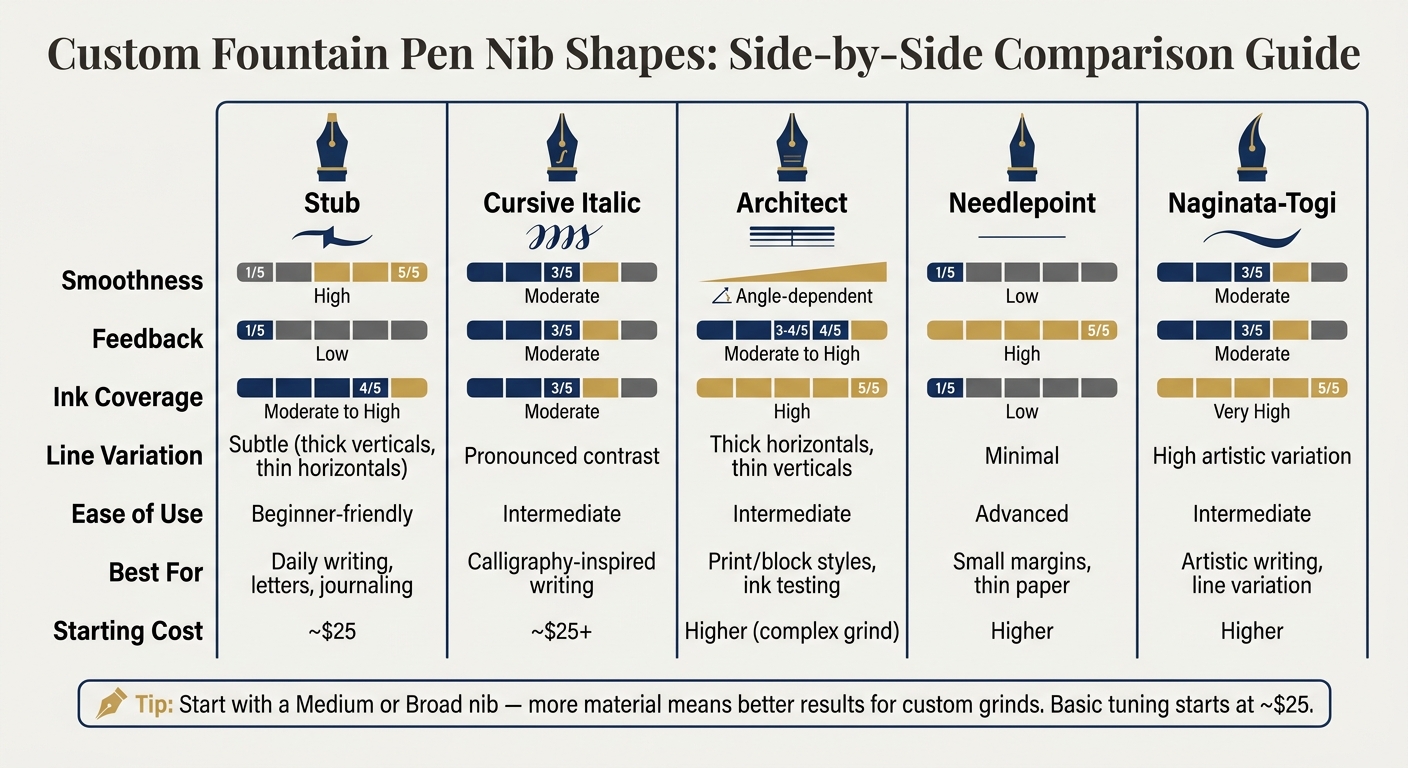
Here’s a quick comparison of popular custom nib shapes and their characteristics:
| Nib Shape | Smoothness | Feedback | Ink Coverage | Best For |
|---|---|---|---|---|
| Stub | High | Low | Moderate to High | Daily writing, letters |
| Cursive Italic | Moderate | Moderate | Moderate | Journaling, calligraphy |
| Architect | Angle-dependent | Moderate to High | High | Print styles, ink testing |
| Needlepoint | Low | High | Low | Small margins, thin paper |
| Naginata-Togi | Moderate | Moderate | Very High | Artistic writing, line variation |
One more thing to keep in mind: a nibmeister can adjust your nib’s ink flow - making it wetter or drier - without altering its shape. So, if you love how a nib feels but find it too dry or too wet, you can request this separate tweak to get it just right.
Tips for Ordering a Custom Nib
Working with a Nib Specialist
When working with a nib specialist, focus on describing the writing experience you’re aiming for rather than diving into technical jargon. As nibmeister Jaclyn Myers explains:
"The primary purpose of a nib grind is to impact the look of your handwriting on the page."
Instead of saying, "I want a cursive italic", explain what you're looking for - whether it's sharper line contrast, a smoother glide, or a wetter ink flow. The specialist will then recommend the grind that matches your preferences.
Details like the type of paper you use (smooth versus textured), your preference for wetter or drier ink flow, and whether you rotate the pen while writing are also important. For those who rotate their pens, the nib angle might need adjustment, or an oblique grind could be suggested. If you’re considering angle-sensitive grinds like the Architect, submitting photos of your writing grip can help the specialist make precise adjustments.
It’s generally best to start with a Medium nib or broader. Finer nibs are more sensitive to positioning and can feel scratchy after modification, making them less ideal for custom grinds. These considerations ensure your nib performs as expected and help you understand how costs might vary.
Testing Nib Shapes Before You Buy
After discussing your preferences with a nib specialist, it’s smart to test nib shapes before committing to a custom grind. Factory-made nibs, such as stock stubs or italics, are a great way to experience line variation without the expense of a custom job.
Pen shows are an excellent opportunity for hands-on testing. Many nibmeisters allow you to try various grinds on the spot, giving you immediate feedback. This way, you can confidently decide what works - or doesn’t - before making a purchase.
What Custom Nib Grinds Cost
Once you’ve figured out your ideal nib and tested your options, it’s time to think about cost. Basic nib tuning typically starts at around $25. This small investment can dramatically transform how a pen feels in your hand.
"Tuning or smoothing a nib might honestly be the best $25 you can spend transforming a pen from a 'just-ok' or problematic pen into one of your favorite writers." - Jaclyn Myers
More intricate grinds, such as Architect or Naginata-Togi styles, cost more, with prices varying by specialist and the complexity of the work. Reducing nib width, like grinding a Broad nib down to a Fine, is especially labor-intensive and often priced higher than standard shape changes. For budget-friendly pens, starting with a basic tune or a stub grind is a great way to enhance your experience before exploring more advanced modifications.
How to Care for Custom Nibs
Cleaning and Maintenance
Custom nibs tend to release more ink than standard ones, so it’s essential to flush them with room-temperature water every few weeks or whenever you switch inks. If you notice sluggish ink flow, give the nib a thorough cleaning before assuming there’s an issue with the grind. Using fountain-pen–friendly paper, like Rhodia or Clairefontaine, can also help maintain the nib's performance. These papers prevent problems like feathering or ink clogging along the nib’s edges, which can occur with more absorbent paper options.
If cleaning doesn’t solve the issue, it’s time to troubleshoot some common nib problems.
Spotting and Fixing Common Nib Problems
When a custom nib starts to feel scratchy or skips while writing, try these steps before reaching out to a nib specialist:
- Deep cleaning: Remove any dried ink or residue that might be causing the problem.
- Switch inks: Some inks have thicker or drier consistencies that can interfere with smooth ink flow.
- Test on better paper: Rough or heavily coated paper can make even a perfectly tuned nib feel scratchy.
It’s worth noting that scratchiness isn’t always a sign of a problem. Certain grinds, like cursive italic nibs, are designed to be sharper and more sensitive to writing angle. If your grip rotates slightly, the nib might catch or feel rough because it’s not aligned with the ideal writing surface. If none of these steps resolve the issue, consult a nib specialist for professional adjustments.
Long-Term Nib Performance
Over time, even the sharpest custom nibs will experience subtle changes in performance. Regular use naturally rounds the edges of the nib, which can soften the line variation that initially made the nib stand out. For grinds that depend on a precise angle - like Architect or Naginata-togi grinds - consistent performance hinges on maintaining the right "sweet spot" in your writing angle. If your grip changes, the nib may feel less effective. Practicing your grip and technique on a less valuable pen, like the LAMY Vista Fountain Pen, can help you adapt without risking your custom nib.
Taking care of your nib through regular cleaning, troubleshooting, and attention to technique ensures it continues to deliver the line variation and smoothness that make it special, all while complementing your unique writing style.
Conclusion: Finding the Right Nib for Your Writing
Choosing the perfect custom nib shape boils down to one key question: what kind of visual impact do you want your handwriting to make? As writer Jaclyn Myers explains:
"The primary purpose of a nib grind is to impact the look of your handwriting on the page."
Your decision should align with your writing needs and the style you want to achieve. For routine tasks where consistency is key, a stock nib is usually sufficient. But if you’re looking to add flair to your handwriting - creating bold contrasts between thick and thin strokes - a custom grind is worth considering. Medium or Broad nibs are great starting points, as they provide more material for a nib specialist to work with and deliver the most noticeable variation in line width.
The type of grind you choose also depends on how much control you’re ready to develop. A Stub nib is an excellent beginner-friendly option, while a Cursive Italic requires more precision in maintaining the right pen angle. For those with specific grip styles, an Architect or Oblique grind can be tailored to match your unique writing technique. Each option offers a balance between ease of use and the visual effect it creates.
Still unsure? Attending a pen show and trying out different nib grinds in person can provide clarity. This hands-on experience complements earlier advice about assessing your handwriting style. If your current pen feels lackluster, consider professional nib tuning. For as little as $25, a specialist can improve your pen’s performance without requiring a full regrind.
FAQs
Which custom nib shape fits my grip angle?
An oblique nib works well for those who hold their pen at a rotated angle. Thanks to its angled cut, it maintains smooth contact with the paper and can add subtle line variation for writers who naturally tilt their grip.
Should I start with a Medium or Broad nib?
When deciding between a Medium or Broad nib, it all comes down to your writing style and preferences. A Medium nib strikes a good balance, offering a moderate line width and smooth ink flow, making it suitable for everyday writing tasks. It's versatile and user-friendly, which is why it's often the go-to choice for most people.
On the other hand, a Broad nib produces thicker, more expressive lines. This makes it a favorite for those who enjoy bold writing or dabble in calligraphy. However, it does require a steadier hand and more control, which might not suit everyone, especially beginners.
If you're just starting out, a Medium nib is typically recommended. It’s easier to handle and provides a comfortable, well-rounded writing experience.
Can a nibmeister fix scratchiness without a regrind?
Yes, a nibmeister can fix scratchiness without needing to regrind the nib. They might realign the tines if they're misaligned, clean the nib thoroughly, use micro-mesh to smooth out minor rough spots, or adjust the overall alignment of the nib. That said, if the damage is more severe, professional repair could be necessary.