

Pass the Pen is a group writing activity where participants take turns adding to a shared story. This method thrives on unpredictability, encouraging teamwork and creativity as each writer builds on the previous contribution. From crafting mysteries to exploring sci-fi worlds, this approach offers endless possibilities for storytelling.
Key Takeaways:
- Genre-Based Writing: Use genres like mystery or sci-fi to guide the story while allowing for twists.
- Character Development: Collaborate on characters through Q&A sessions, backstory scenes, or dilemma challenges.
- Prompt-Driven Ideas: Start with prompts like objects, themes, or personas to spark creativity.
- Setting Exploration: Combine writing and drawing to describe and expand on settings collaboratively.
These techniques are perfect for writers of all levels, offering a fun way to combine ideas and create something unique. Whether using a simple pen or a fountain pen for a tactile experience, the focus is on the joy of shared storytelling.
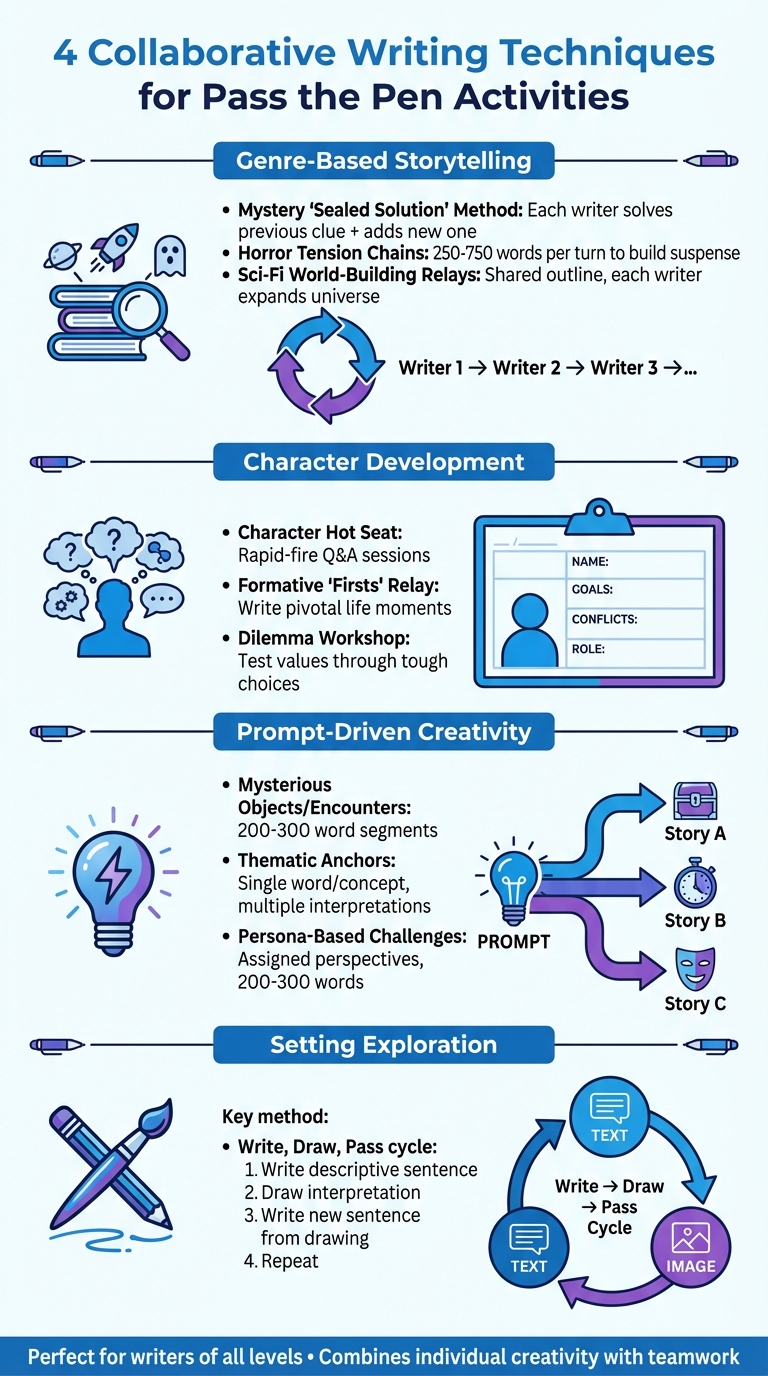
4 Collaborative Writing Techniques for Group Storytelling
Round Robin Story: A Simple Group Writing Activity for ESL/EFL | TEFL Writing Classes
sbb-itb-1dd4fe9
1. Genre-Based Storytelling
Genre-based storytelling combines structure with creativity, giving collaborators a shared framework to craft narratives that feel unified, even with varied contributors. By choosing a specific genre, the group gains a set of conventions - like the intricate clues of a mystery or the immersive world-building of science fiction - that guide the story while leaving space for unexpected twists. This approach not only keeps the narrative cohesive but also fosters collaboration by aligning everyone under the same creative umbrella.
Take the Mystery "Sealed Solution" Method as an example. Inspired by the Detection Club's The Floating Admiral, this technique requires each writer to tackle a previous clue while introducing a new one. In this 14-author collaboration, literary icons like Agatha Christie and G.K. Chesterton each contributed a chapter, with every author submitting a sealed solution to the mystery. This ensured the story remained solvable and logical, even as the narrative evolved through different hands. To try this method, have each writer build on existing clues while adding fresh intrigue, keeping the mystery engaging and coherent.
For fans of horror, Horror Tension Chains are a thrilling way to collaborate. Writers take turns heightening suspense, layer by layer, to build a gripping narrative. A great example is Cragne Manor, a project where over 80 authors created interconnected "rooms" within a shared Lovecraftian horror world. While large-scale collaborations like this can struggle with tonal consistency, smaller groups can use this method effectively. By keeping contributions concise - between 250 and 750 words - writers can maintain a tight, suspenseful rhythm.
In the realm of science fiction, the Sci-Fi World-Building Relays approach shines. This method involves crafting a shared outline for an interstellar narrative, with each writer expanding the universe through their chapter. A historical example is Cosmos, a serialized space opera created by 18 authors, including Edmond Hamilton and Jack Williamson, between 1933 and 1935. With careful coordination, the team delivered a cohesive, multi-chapter adventure. This "Pass the Pen" style allows groups to dream up vast, interconnected worlds while ensuring the story remains consistent from start to finish.
2. Character Development
When multiple writers collaborate on a single character, keeping traits and motivations consistent is a must. But this process can also uncover unexpected layers that a solo writer might not stumble upon. The key lies in using techniques that bring out the character’s personality and history in dynamic ways.
One approach is the Character Hot Seat, where one team member "becomes" the character, answering rapid-fire questions from others. These questions can come from tools like the Proust Questionnaire or "37 Questions to Ask Your Character." This interactive Q&A session helps writers step into the character’s shoes, exploring their voice and backstory in a way that feels alive - something a static character sheet just can’t provide.
Another tool is the Formative "Firsts" Relay, where writers take turns drafting short scenes from pivotal moments in the character’s life. Think of their first encounter with an enemy, their first experience with grief, or a moment when they realized their ambitions. These snapshots stitch together a vivid backstory, giving insight into how the character might act in the present. As author Ruthanne Reid points out:
"Characters are revealed through what they do, so put them in these tough situations and see how they respond."
The Dilemma Workshop takes things further by testing the character’s core values. Here, one writer sets up the character’s ultimate goal, while the next introduces a challenge or sacrifice that forces a difficult decision. This method lays bare the character’s priorities and drives the story forward. As Joe Bunting puts it:
"Bad characters let life happen to them. It is their inability to make choices that makes them boring."
To ensure everyone stays on the same page, create a shared character sketch. This should include key details like the character’s name, a one-sentence summary, their goals, conflicts, and role in the story. It’s a simple guide that keeps things consistent while leaving room for creative exploration.
3. Prompt-Driven Creativity
Prompts act as the spark that kicks off the collaborative writing process, complementing structured genre and character techniques. Without a strong starting point, group writing efforts can lose momentum. A well-thought-out prompt not only brings writers together but also inspires unexpected twists and turns, creating a shared narrative journey. Let’s explore a few approaches that demonstrate how prompts can fuel creativity.
Mysterious Objects or Encounters are particularly effective in chain writing. For instance, prompts like "A Mysterious Letter" or "Music In The Dark" - inspired by a Global Writers Project - encouraged participants to write 200–300 word segments to advance the story. As the organizers described it:
"It's spontaneous. It's imaginative. And it's a celebration of the power of shared creativity".
Thematic Anchors give groups a single word or concept to interpret in entirely different ways. Take the example of Switch-Lit’s April 2026 prompts centered around the theme "Waffle." One story involved two partners in crime using aimless chatter ("waffling") to distract while a theft occurred. Another followed a chance meeting at a Waffle House diner during a hurricane's approach, stemming from an earlier grocery store encounter. The same theme inspired everything from philosophical musings to petty crime, proving how one idea can blossom into a variety of narratives.
Persona-Based Challenges take things a step further by assigning specific perspectives to writers. For example, participants might be tasked with writing from the viewpoint of a "perfectionist" or a "hopeless romantic." Limiting contributions to 200–300 words ensures that stories remain diverse yet cohesive.
These techniques show how prompts can drive collaboration while unlocking creativity in ways that might not emerge otherwise.
4. Setting Exploration
This activity takes the idea of prompt-based creativity to a new level by turning written descriptions into a cycle of visuals and text. It’s a collaborative way to breathe life into settings, blending art and writing to create an evolving and dynamic exploration.
Write, Draw, Pass
Here’s how it works: one person writes a descriptive sentence about a location. The next person interprets that sentence through a drawing. Then, a third person writes a new sentence inspired solely by the drawing. This process continues, with each contributor adding their unique perspective. Martina Bex, founder of The Comprehensible Classroom, calls this "a great game to play... to review a text or class discussion".
The beauty of this method lies in its focus on interpreting the essence of a setting rather than copying every detail. The drawing highlights the most striking aspects of the description, and the next sentence often introduces surprising elements - like a faint shadow or specks of dust floating in the light - that enrich the atmosphere.
This back-and-forth sharpens the ability to describe settings with precision, showing which sensory details truly convey the mood. If a sentence lacks clarity, the artist may struggle to visualize it. Similarly, if the drawing is unclear, the next writer may find it hard to build a coherent scene.
For in-person groups, you can use folded paper or numbered forms so each participant only sees the most recent contribution - whether a sentence or a drawing. This method, often called "burying the evidence", ensures the setting evolves organically, free from the influence of earlier stages.
This exercise is especially helpful when you’re stuck describing a complex scene. Breaking it into visual and textual components makes it easier to identify the key details, while also adding a collaborative and creative twist to the process.
Conclusion
Collaborative writing brings people together in ways that few other activities can. It’s not just about creating stories or poems - it’s about blending unique voices into something greater than the sum of its parts. Unlike card games or standard icebreakers, this process results in a shared creation that reflects the individuality of every participant. When the final piece is read aloud, the group experiences the magic of their combined efforts coming to life.
What makes this so special is how different perspectives shape the story. One person might add a mysterious twist, while another injects humor or an unexpected detail. This interplay of ideas fosters a deeper appreciation for the diverse ways people think and express themselves. Activities like writing portraits of others in the group take this connection even further, reminding everyone that their contributions are not just noticed but valued - leaving an emotional impact that lasts well beyond the session.
Simple strategies can make these sessions even more effective. Encourage everyone to sign the final piece as a celebration of shared ownership. Use a 20-minute timer to keep the momentum going and focus on ideas rather than perfect grammar. Most importantly, create a supportive environment by offering positive feedback first - highlighting what works before suggesting changes.
The tools you use can also elevate the experience. Writing with affordable fountain pens from Fountain Pen Revolution turns the process into something more intentional and enjoyable. With starter sets starting at just $35, these pens offer smooth ink flow and a comfortable grip, making it easy to equip your group without overspending. Whether you're passing a single sheet around or working individually, these tools add a touch of elegance to the creative process.
These methods are flexible and can be tailored to suit any group size or energy level. Feel free to tweak the rules, switch between poetry and prose, or invent your own variations. The goal isn’t to create something flawless - it’s to enjoy the journey together. Experiment with different genres, characters, and settings, and most importantly, keep the pen moving!
FAQs
How do we keep a shared story consistent?
To keep a shared story flowing smoothly, it's crucial to establish clear rules or guidelines upfront that all contributors agree on. A shared document can be a helpful tool, allowing everyone to review earlier contributions and stay aligned. Before adding your part, take a moment to read the existing story to ensure your tone, style, and details fit seamlessly. Open communication and sticking to the agreed-upon guidelines are key to creating a unified and engaging collaborative narrative.
What’s the best group size for Pass the Pen?
A small group works best for Pass the Pen - ideally, around 3 to 6 participants. This size strikes a perfect balance, giving everyone enough time to add their ideas while keeping the story flowing smoothly and interesting for all.
How do you do Pass the Pen online?
To participate in "Pass the Pen" activities online, you can use collaborative writing tools or join structured storytelling challenges. Platforms such as Folding Story and Exquisite Corpse allow users to contribute to stories either in real-time or at their own pace.
Another option is joining initiatives like Pass the Story, where writers take turns adding sections to a shared narrative. These tools and projects make it simple to collaborate virtually, sparking creativity and teamwork no matter where participants are located.