

Flexible fountain pen nibs have evolved significantly, blending historical techniques with modern materials like stainless steel, titanium, and specialized alloys. These nibs offer dynamic line variation, making expressive writing more accessible than ever. Here's a quick breakdown of the key types:
- Steel Nibs: Affordable and flexible but prone to corrosion and wear compared to gold alternatives.
- Modern Stainless Steel Nibs: Improved durability and ease of use, with moderate flexibility for beginners.
- Titanium Pro-Flex Nibs: Superior responsiveness and corrosion resistance, ideal for professionals but higher in cost.
Each type balances flexibility, durability, and cost differently, catering to diverse writing styles and preferences. Whether you're a beginner or a professional, there's a flexible nib option suited for your needs.
Best Affordable Flex Nib Fountain Pens
sbb-itb-1dd4fe9
1. Traditional Steel Nibs
Traditional steel nibs, widely used in calligraphic dip pens, played a significant role in shaping early standards for flexibility before modern materials took center stage. While 14k gold alloys were the go-to for fountain pens, steel stood out in dip pen applications due to its flexibility and affordability. These qualities made it a favorite among calligraphers working with intricate scripts like Copperplate and Spencerian. Understanding these early traits helps highlight how modern innovations have balanced flexibility, durability, and cost.
Flexibility
Steel dip nibs were known for their ability to create striking line variations, ranging from delicate hairlines to bold, dramatic strokes. The Esterbrook 9128, for instance, showcased exceptional flexibility that many consider unmatched even today. However, these nibs required a skilled touch and lacked the quick spring-back characteristic of high-quality gold nibs , such as a 14k gold flex nib, making them a challenge for less experienced users.
Durability
While steel nibs could handle over-flexing better than gold, they had a significant weakness: corrosion. Acidic inks would wear them down over time, drastically reducing their lifespan. This susceptibility to corrosion made them less practical for everyday use compared to gold nibs, influencing the evolution of nib materials in later designs.
Ink Flow
Steel dip nibs offered dynamic control over ink flow. Applying pressure would separate the tines for broad strokes, while releasing pressure allowed for fine, precise lines. However, this system came with a caveat - greater friction made handling more demanding. This pressure-sensitive design was ideal for calligraphy requiring precise line variation and laid the groundwork for modern flexible nib engineering.
Cost
Steel nibs were far more affordable and easier to manufacture than gold, making them accessible to a broader audience. Despite their tendency to corrode and require frequent replacement, their low cost helped popularize flexible calligraphy. This emphasis on affordability continues to shape how flexible nibs are produced today.
2. Modern Stainless Steel Flexible Nibs
Modern stainless steel nibs have tackled traditional challenges with a focus on precision engineering to improve performance. These nibs are designed to enhance durability and make fine line control more accessible. Unlike the rigid "nail" nibs, these flexible options use chrome-plated alloys and thinner metal sections to create noticeable line variation. A great example of this is the Fountain Pen Revolution Ultra Flex.
Flexibility
Modern nibs are evaluated across four key factors: softness, snapback, smoothness, and ink flow, each rated on a 10-point scale. They offer up to 0.2 mm of line variation, with a 0.3 mm safety margin to prevent damage. Unlike traditional nibs, which required significant expertise to use effectively, these newer designs strike a balance between control and artistic expression. However, while they deliver impressive line variation, they don't quite match the rapid spring-back properties of high-end 14k gold nibs.
Durability
Using chrome-plated alloys has significantly improved corrosion resistance and reduced the risk of deformation caused by over-flexing. This advancement addresses some of the common durability issues seen in traditional nibs.
Ink Flow
Modern flexible nibs rely on precision-engineered feeds to ensure consistent ink flow during flex strokes. Many of these nibs use Nikko ebonite feeds, which outperform standard thermoplastic feeds by offering superior capillary action. For instance, the Fountain Pen Revolution Ultra Flex nibs are paired with feeds and housings developed by experts like Flexible Nib Factory to maintain steady ink delivery, even under pressure. When combined with high-quality paper like Maruman Mnemosyne N181, these systems ensure the ink flow is sufficient to support dramatic line variation. These advancements in feed and ink delivery systems represent a significant improvement in the functionality of flex nibs.
Cost
One of the standout features of modern stainless steel flexible nibs is their affordability. These nibs make flexible writing accessible to a broader audience, giving fountain pen enthusiasts - especially beginners - a chance to explore calligraphic effects without a hefty financial investment. Combined with their improved corrosion resistance and user-friendly performance, these nibs have made flex writing an option for nearly everyone.
3. Titanium Pro-Flex Nibs
Titanium Pro-Flex nibs take flexible nib technology to the next level. By combining soft, springy alloys with a titanium coating, these nibs resist corrosion while delivering an impressive balance of flexibility and durability. They outperform modern stainless steel nibs, offering a flex range that spans from a fine hairline to a bold 2 mm swell.
Flexibility
These nibs are designed for unmatched responsiveness, far surpassing the limited flex of standard stainless steel options. Perfect for professional use, they allow for dramatic variations in line width, creating everything from delicate hairlines to broad, expressive strokes. Their sensitivity makes them best suited for high-quality, fine-grain papers like Bristol.
This level of flexibility doesn't just enhance performance - it also complements their impressive durability.
Durability
The titanium coating plays a key role in protecting the nib from ink and moisture, significantly extending its lifespan. In fact, titanium-coated nibs can last up to six times longer than their uncoated counterparts. Among 43 reviews, the Pro-Flex variant has earned a 77% five-star rating, with users frequently commending its durability and consistent performance.
Ink Flow
Titanium Pro-Flex nibs are designed to maintain smooth ink delivery, even during extreme flexing. This is achieved through an integrated leaf spring and ink sump, which work together to ensure consistent flow. Pairing these nibs with ebonite feeds - known for their natural ability to attract and hold ink - takes the writing experience to another level, creating a smoother and more fluid feel. However, due to the high-flow design, it's recommended to remove the cartridge or converter before traveling to avoid leakage .
Cost
Though titanium nibs are more expensive than stainless steel options, their performance makes them a worthwhile investment. Prices typically range from $45.00 to $66.00. For those seeking even smoother ink flow, an ebonite feed upgrade is available for an additional $19.00 . While this may represent a higher upfront cost, many calligraphers find the enhanced lifespan and professional-level performance well worth it. One variant even achieved an 81% five-star rating from 101 reviews, with users praising its ability to produce razor-sharp hairlines and striking stroke width variations.
Advantages and Disadvantages
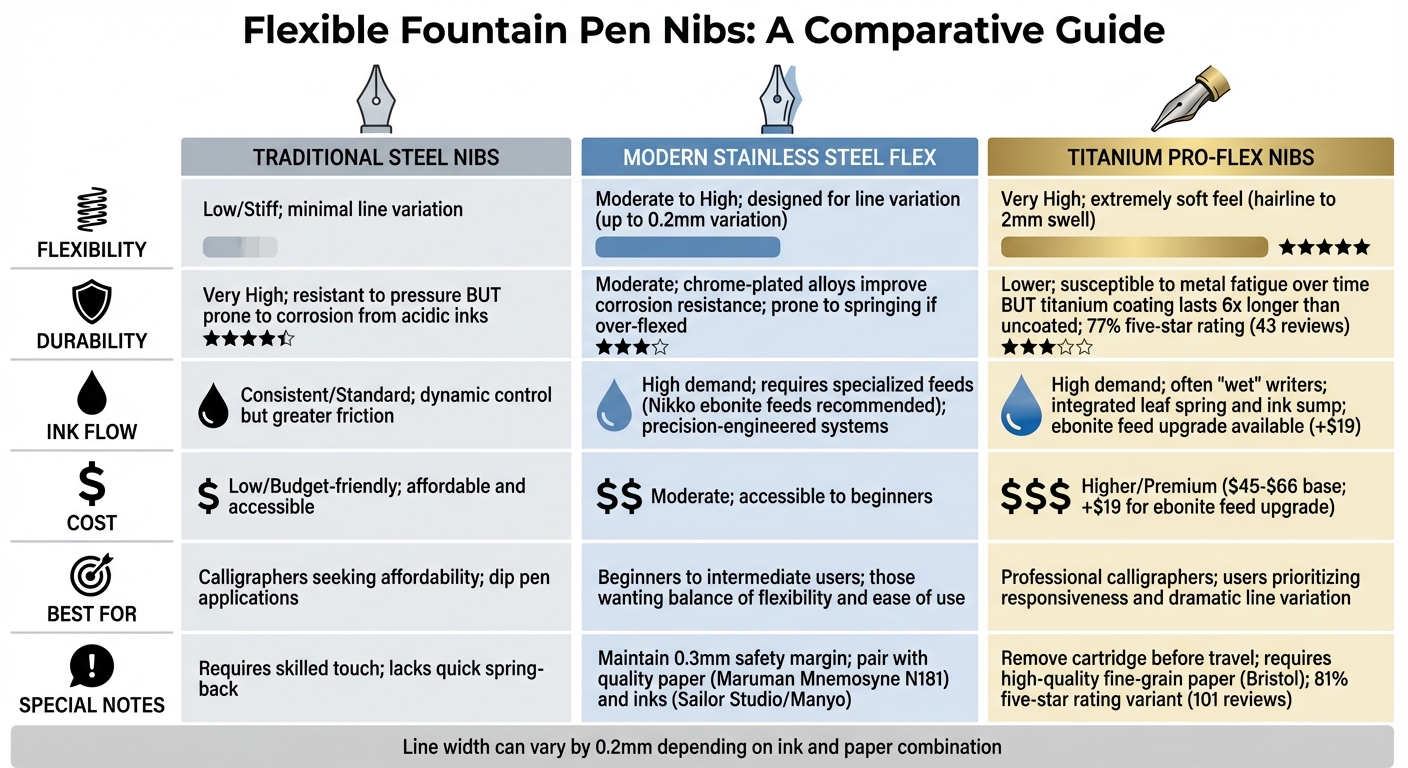
Comparison of Fountain Pen Nib Types: Traditional Steel vs Modern Stainless Steel vs Titanium Pro-Flex
Each type of nib comes with its own set of strengths and compromises. Traditional steel nibs emphasize durability and affordability, modern stainless steel nibs aim for a balance between flexibility and precision, and Titanium Pro-Flex nibs focus on responsiveness but come at a higher cost. Here’s a closer look at how they compare.
Modern stainless steel nibs offer moderate to high flexibility, making them suitable for creating variable line widths. However, they can be sensitive to over-flexing, which may result in permanent damage. Additionally, ink performance can vary depending on the type of paper and ink used.
Titanium Pro-Flex nibs stand out for their exceptional sensitivity, providing a soft writing experience and a wetter ink flow. That said, they require careful handling to avoid issues like metal fatigue over time.
When choosing a nib, consider factors such as snapback, smoothness, and ink flow. Keep in mind that a high score in one area doesn’t automatically make a nib the right choice - it all depends on your writing preferences and style. The table below provides a quick comparison of key attributes to help guide your decision.
| Attribute | Traditional Steel Nibs | Modern Stainless Steel Flex | Titanium Pro-Flex Nibs |
|---|---|---|---|
| Flexibility | Low/Stiff; minimal line variation | Moderate to High; designed for line variation | Very High; extremely soft feel |
| Durability | Very High; resistant to pressure | Moderate; prone to springing if over-flexed | Lower; susceptible to metal fatigue over time |
| Ink Flow | Consistent/Standard | High demand; requires specialized feeds | High demand; often "wet" writers |
| Cost | Low/Budget-friendly | Moderate | Higher/Premium |
Conclusion
Nib design has come a long way, blending traditional craftsmanship with modern advancements to cater to both artistic and practical needs. Today's stainless steel and titanium nibs bring improved durability and resistance to corrosion, making them adaptable to a range of writing styles.
When choosing a nib, consider your writing preferences. If you enjoy the dramatic shifts between thick and thin lines and don't mind a bit of delicacy, vintage nibs might be your go-to. On the other hand, modern stainless steel flex nibs offer a sturdy option that handles modern inks and occasional over-flexing with ease. For those who prioritize responsiveness and a wetter ink flow, titanium nibs are worth exploring, though they require careful handling to avoid wear over time.
Your choice of ink and paper also plays a crucial role in performance. Line width can shift by as much as 0.2 mm depending on the combination you use. For consistent results, pair your flexible nib with high-quality paper like Maruman Mnemosyne N181 and reliable inks such as Sailor Studio or Manyo. Budget is another factor - while modern steel flex nibs are a cost-effective starting point, premium titanium or 14k gold flex nibs deliver specialized performance at a higher price. To protect your nib, maintain a 0.3 mm margin when writing.
Ultimately, the ideal flexible nib is the one that matches your writing style, budget, and the features you value most. The evolution of nib technology has made expressive and personalized writing more accessible than ever.
FAQs
How do I avoid over-flexing a nib?
To avoid damaging a nib by over-flexing, apply light, controlled pressure when writing. Over-flexing occurs when too much force causes the tines to spread excessively, which can harm the nib. Focus on using a gentle touch, especially when creating broader lines or decorative flourishes. Over time, you'll develop a sense of how the nib responds, helping you preserve its condition and performance.
Which inks work best with flex nibs?
The ideal inks for modern flex nibs are those that offer a smooth flow and have a drying time suited to the line variations these nibs create. While no specific brands are highlighted, it's important to select inks that are designed to perform consistently with flex nibs. Focus on achieving a balance between flow and control to make the most of your writing experience.
Do I need an ebonite feed for reliable flex?
Ebonite feeds are a solid choice for dependable flex writing. They provide a smooth ink flow and can be heat-set, allowing for adjustments to suit your writing preferences. This makes them ideal for flex pen performance. In contrast, plastic feeds tend to be less adaptable and might struggle to meet the demands of flex writing.