

Matte fountain pen finishes wear out fast when you mix friction, grit, and the wrong cleaner. If I want to keep that soft, non-shiny look, I treat the body and the nib as two separate cleaning jobs: I lightly wipe the outside, and I flush the nib and feed with cool to lukewarm water.
Here’s the whole article in plain terms:
- I set up a soft, low-risk cleaning area before I start.
- I use very light pressure on the matte body.
- I keep alcohol, acetone, solvents, abrasives, and polish away from the finish.
- I flush the nib and feed until the water runs clear.
- I blot ink marks, not rub them.
- I store the pen capped and in a soft-lined case, away from keys, coins, and rough surfaces.
- I check for moisture, trapped ink, fibers, rough threads, and shiny spots before reuse.
A few numbers matter too: for long-term storage, I keep the pen around 64–72°F and 40–60% relative humidity. And if dried ink won’t clear with water, some makers suggest soaking the nib section for 1–2 hours before flushing again.
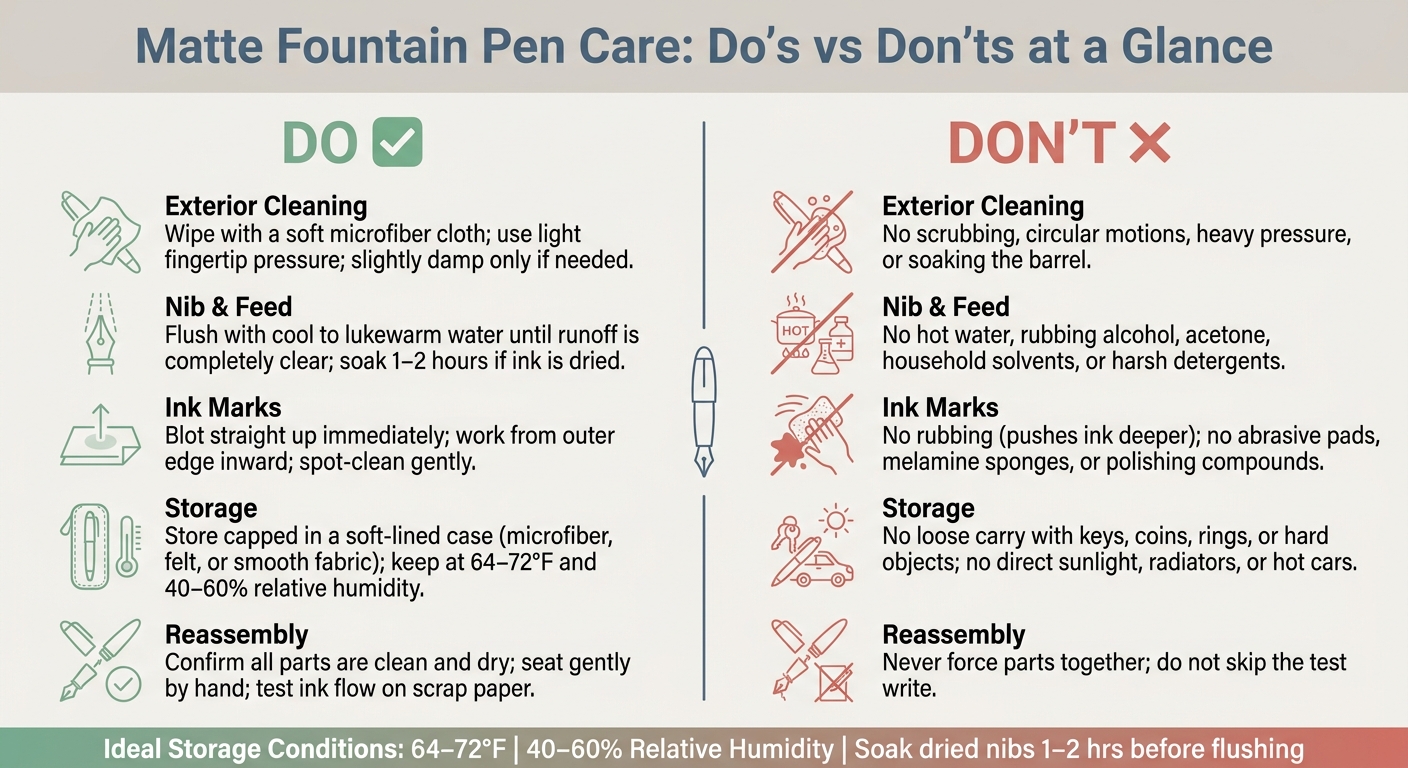
Matte Fountain Pen Care: Do's vs Don'ts at a Glance
How to Clean and Maintain A Fountain Pen - Cartridge, Converter, Piston and Vacuum Fillers
sbb-itb-1dd4fe9
Quick Comparison
| Area | What I do | What I avoid |
|---|---|---|
| Exterior | Wipe with a soft microfiber cloth, slightly damp only if needed | Scrubbing, heavy pressure, soaking |
| Nib and feed | Flush with cool to lukewarm water or a fountain pen cleaning kit until clear | Hot water, harsh cleaners |
| Ink marks | Blot and lift, then spot-clean gently | Rubbing ink deeper into texture |
| Storage | Use a soft-lined sleeve or case | Loose carry with hard objects |
| Reassembly | Make sure parts are dry and fit by hand | Forcing parts together |
Bottom line: I keep matte pens looking right by using less pressure, less moisture, and fewer products.
Set up a finish-safe cleaning area
Before you start, get your supplies in place. That simple step helps you avoid rushed moves that can mark or dull the finish.
Lay a few sheets of tissue or absorbent paper flat on your work surface. They’ll catch ink drips and make small parts easier to spot. Then place a soft, clean microfiber cloth nearby, along with a small glass or cup holding a little cool to lukewarm water, a bulb syringe or the pen's converter, and some absorbent paper for blotting.
If you’re dealing with stubborn residue, keep a tiny amount of mild, unscented dish soap on hand. But use it only if the maker says it’s okay. Stick with cool to lukewarm water the whole time. Hot water can damage feeds, seals, adhesives, or finishes.
Use only low-risk tools and cleaners
For the pen body, use a slightly damp microfiber cloth and very light pressure. Wipe gently - don’t scrub. It also helps to clear the area of anything harsh before you begin. That means no rubbing alcohol, hand sanitizer, acetone, household solvents, abrasive pads, melamine "eraser" sponges, rough towels, or polishing compounds unless the pen's manufacturer clearly says they’re safe.
Why so strict? Because alcohol and solvents can damage plastics, adhesives, and coatings. Abrasives and polishes can smooth out a matte surface and leave shiny spots. Once that happens, there’s no easy way to undo it.
If you’re unsure about a cleaner, test it on a hidden spot first. Check for gloss change, color transfer, or any shift in texture.
| Tool or cleaner | Safe for matte body? | Notes |
|---|---|---|
| Soft microfiber cloth, minimal moisture | ✅ Yes | Use light pressure; wipe, don't scrub |
| Cool to lukewarm water | ✅ Yes | Avoid hot water |
| Mild unscented dish soap (diluted) | ⚠️ Exceptions only | Use only for stubborn residue if the maker allows it; rinse thoroughly |
| Rubbing alcohol or hand sanitizer | ❌ No | Can damage plastics, coatings, and adhesives |
| Abrasive pads, rough towels, or polish | ❌ No | Can permanently alter matte texture |
| Household solvents or acetone | ❌ No | Risk of finish or seal damage |
With the workspace ready, clean the body first, then flush the nib and feed.
Clean the pen body, nib, and feed without harming the finish
Before you wipe the outside, remove the cartridge or converter. If you leave the ink source installed, it can leak onto the barrel while you clean. Set the cartridge or converter upright on an absorbent paper towel, then clean the exterior first and move on to the nib and feed after that.
Wipe the matte exterior with light pressure
Fold the microfiber cloth so you’re always working with a clean area. Wipe the barrel, cap, section, and trim in straight passes, not circles. Use light fingertip pressure, and rotate the pen instead of pressing down harder. If ink or residue transfers to the cloth, switch to a clean fold right away instead of rubbing it back over the surface.
If any spot starts to look shinier or smoother than the rest, stop at once. That means the finish is burnishing. Let that area dry, and dry the pen right away, especially around threads, grooves, and textured panels.
Flush the nib and feed with lukewarm water
Once the exterior is dry, flush the nib and feed. Hold the section nib-down and run lukewarm water through the converter or a bulb syringe. Then blot the nib gently with absorbent paper. Repeat the fill-and-expel cycle until the water runs completely clear. Keep flushing the feed channels until the water runs clear too.
If plain water doesn’t remove dried or heavily saturated ink, a fountain pen cleaning solution, LAMY advises soaking the nib section in water for 1–2 hours before you try flushing again. If the maker allows it, add one drop of mild dish soap to a cup of water and use it on ink-contact parts only - never on the matte exterior. Rinse again with plain water until it runs clear. When you’re done, blot the nib gently with absorbent, lint-free paper and let every part air-dry fully before reassembly.
Prevent surface rub and store the pen safely
After cleaning, the next step is simple: keep the finish from rubbing against things while you use and store the pen.
Reduce friction during everyday use
Handle the pen with clean, dry hands. Oil and moisture from your skin can make the barrel slick, and that often leads to a tighter grip and more rubbing on the finish.
When you put the pen down, pick it up instead of dragging it across the desk. Even tiny grit on a hard surface can scratch like an abrasive.
A few other habits help a lot:
- Keep keys, coins, rings, watchbands, binder rings, and other hard items away from the barrel.
- Store the pen on its own instead of tossing it in with other stationery.
- Avoid posting the cap unless the pen was made for that. Repeatedly pressing the cap onto the end of the barrel can leave a shiny band in that spot.
Before you cap the pen, take a quick look at the barrel threads, cap threads, and the inside of the cap. Dust or dried ink trapped there can work like sandpaper each time you open and close it. If something feels rough or catches, clean it before you keep going.
Choose soft-contact storage for daily and long-term care
If you use the pen every day, store it capped, dry on the outside, and inside a soft-lined case or sleeve. Horizontal storage or nib-up storage is usually fine if the pen’s design and filling system allow it. Good lining choices include smooth fabric, microfiber, or felt. Skip abrasive foam, unfinished wood, and tight elastic loops. It also helps to check the lining now and then for dust, sand, or dried ink before putting the pen back.
For long-term storage, flush the pen first and let it dry all the way. Then store it empty in a clean, soft-lined case, either horizontally or nib up. Keep the pen at 64–72°F and 40–60% relative humidity. Keep it away from direct sunlight, radiators, hot cars, and places with fast temperature swings. A closed drawer or cabinet is a good spot.
Soft-lined storage helps prevent most wear. Bare desks and contact with hard objects pose the highest risk.
If ink is still on the texture, remove it before putting the pen back into use.
Handle ink marks on textured surfaces and check before reuse
Blot and lift ink without abrading the texture
If ink gets on the barrel, blot straight up. Don’t rub. Press a clean, dry microfiber cloth or lint-free tissue onto the mark, then lift it away.
Rubbing pushes ink deeper into the texture. It can also leave a polished-looking patch on a matte finish, which is the last thing you want.
Once you’ve removed the extra ink, blot first, then spot-clean with a lightly damp microfiber cloth. Work from the outer edge inward so the mark doesn’t spread.
For shallow grooves, use the folded corner of the cloth or a slightly damp cotton swab with very light pressure. Rotate to a clean part of the cloth often, or rinse it as needed. A saturated section won’t help much - it just smears the ink somewhere else. For surface stains, stick with a soft damp microfiber cloth and skip solvents or chemical cleaners.
If water doesn’t clear the stain after a few passes, stop there and check with the manufacturer before trying anything stronger. If they approve a cleaner, test a tiny amount on a hidden area, such as the underside of the barrel. Let it dry all the way, then look for any color change, gloss, tackiness, or loss of texture. Avoid abrasives, solvents, and soaking unless the manufacturer says they’re okay.
Check all parts before putting the pen back in use
After the stain is gone, give the pen a quick check before you put it back together. Use bright, indirect light and make sure the barrel and cap are fully dry.
Then inspect the cap lip, the inside of the cap, and the barrel threads for any leftover ink or moisture. Ink caught in the threads can end up on your fingers or clothes. Moisture left inside the cap can lead to more staining or leakage.
After exterior cleaning, check the nib and body before putting the pen back into service. Look at the nib and feed for loose fibers or alignment issues. If you spot a fiber, lift it off without pushing it into the nib slit.
When you reassemble the pen, do it gently by hand. Never force a part that resists. After that, test the ink flow on a scrap piece of paper. If the fountain pen is not writing smoothly, the threads bind, or the finish starts to look glossy, stop and contact the manufacturer.
Final checklist summary
Use this checklist before storage or reuse. It’s a fast way to make sure nothing got missed.
| Step | What to do | What to avoid |
|---|---|---|
| Materials | Soft, clean, lint-free microfiber or cotton cloth | Paper towels, rough tissues, abrasive sponges |
| Exterior moisture | Dry cloth first; slightly damp only if needed | Saturating the barrel, pooling water near seams |
| Nib and feed | Flush with clean, lukewarm water until runoff is clear | Hot water, detergents, alcohol, acetone |
| Ink marks | Blot immediately, lift residue, work inward | Rubbing, scrubbing, solvents on textured areas |
| Storage | Capped, in a soft-lined case or sleeve, away from hard objects | Contact with coins, keys, or rough surfaces |
| Reassembly | Confirm every part is clean, dry, and seated correctly | Forcing parts or skipping a test write |
Friction, abrasives, and the wrong cleaner can burnish a matte surface and leave shiny patches. So go easy on pressure and don’t polish the finish.
If reassembly leads to uneven flow, rough threads, a shiny patch, or moisture inside the cap, clean and dry the pen again before use.
FAQs
How often should I clean a matte fountain pen?
Clean the internal parts every 4 to 8 weeks.
During warmer months, clean them every 2 weeks to help prevent clogs caused by evaporation. If you use the pen often, flush it every 3 to 4 weeks to help stop residue from building up.
It also helps to do a full cleaning before you switch ink colors or store the pen for a long time. After each use, wipe the nib and grip with a soft cloth.
Can I use dish soap on any matte pen?
No. Don’t assume dish soap is safe for every matte pen.
On some matte finishes, mild dish soap with lukewarm water is fine for a short clean if you’re dealing with general barrel grime. Just keep it brief and dry the pen right away.
But matte-sensitive materials are a different story. With ebonite or hard rubber, soap and longer contact with water can speed up oxidation or harm the finish. In those cases, a dry cloth is the safer pick.
What should I do if the finish turns shiny?
A shiny matte finish usually comes from skin oils, dust, or light surface wear. Start with the safe fix: gently wipe the pen with a soft, dry cloth to clear off any residue sitting on the surface.
If the shine is still there, you may need to lightly sand the area with a fine-grit abrasive until the finish looks evenly matte again. That said, only do this if you're confident with the process. Improper sanding can damage the finish or any imprints on the pen.