

The color of ink you choose reveals aspects of your personality, mood, and intentions. Each hue carries unique psychological and emotional connotations:
- Black: Authority, professionalism, and structure. Ideal for formal documents and serious communication.
- Blue: Trust, intelligence, and calmness. Enhances memory retention and is great for personal or professional notes.
- Red: Passion, energy, and urgency. Often used for corrections but can feel intense.
- Green: Creativity and harmony. Perfect for feedback or reflective writing.
- Purple: Individuality and sophistication. A rare choice linked to wisdom and originality.
- Others: Brown conveys reliability, orange sparks enthusiasm, pink reflects compassion, and yellow brings optimism.
Your ink choice impacts how others perceive your writing and influences your mindset. Whether you're aiming for professionalism, warmth, or boldness, the right ink color can amplify your message and align with your intent.
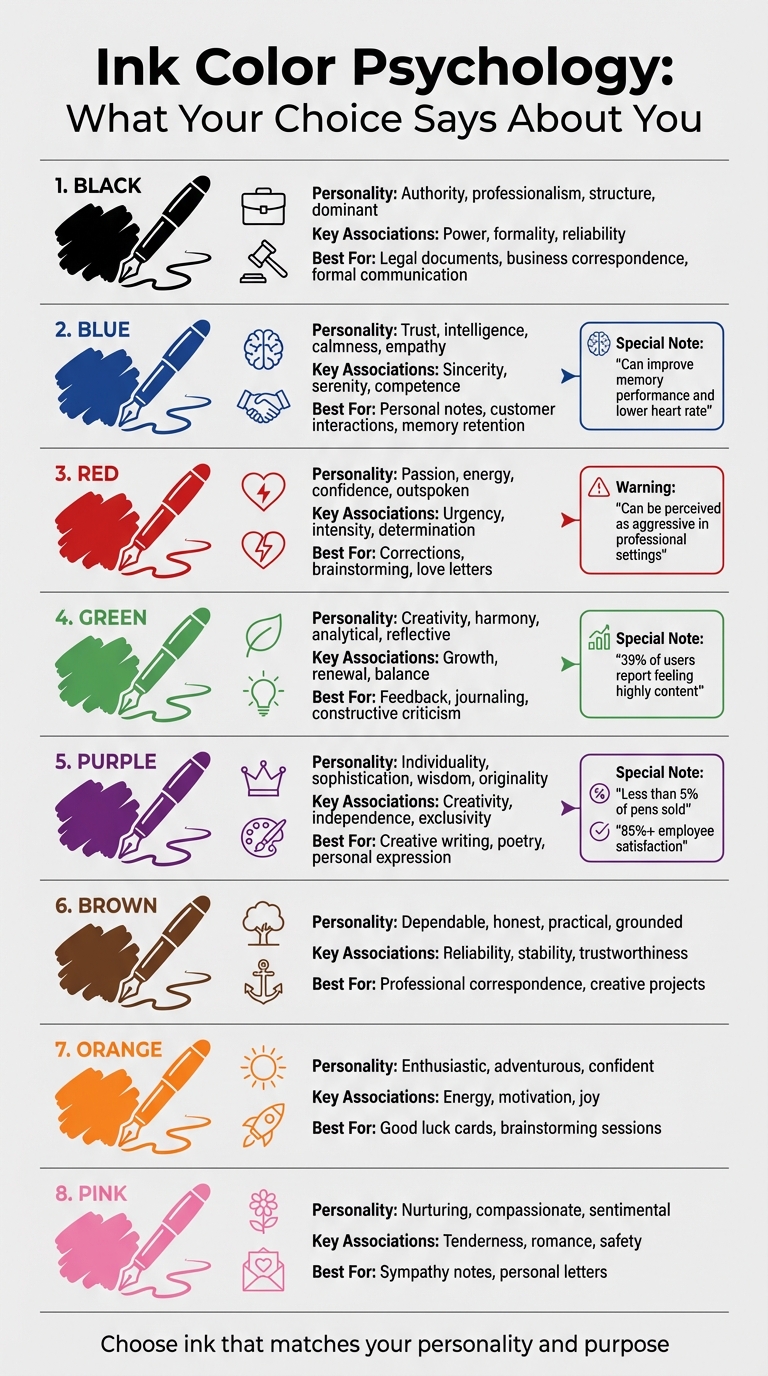
Ink Color Psychology Guide: What Each Color Reveals About Your Personality
Your Brain on COLOR 🎨 | 7 Incredible Psychology Facts
Black Ink: Authority and Professionalism
Choosing black ink sends a clear message of professionalism and authority. As Lucy Williams, Lead Editor at The Pen Company, explains:
When you wield black ink, you project authority, power, and a formality that few other ink colors can muster.
Black ink remains the top choice worldwide for a reason. It’s the standard for business documents, legal contracts, and executive correspondence because it commands respect and conveys seriousness. Its high contrast against white paper not only reduces eye strain but also enhances the credibility of your writing. Many official forms and legal documents require black ink because it reproduces reliably on scanners, photocopiers, and through OCR technology, ensuring smooth digitization. This practical and symbolic choice sets a professional tone for your documents and reflects a focused approach to tackling challenges.
Black ink also reflects a personality that values structure and discipline. Paul Erano, author of Paul's Fountain Pen Journal, notes:
Black-ink users think with their heads, have a more dominant personality, and like to be in charge of their lives.
While it may seem conservative, black ink represents reliability and timelessness. Historically, it has been regarded as the "color of record", used in everything from ancient scrolls to modern legal contracts.
For formal documents, complaints, or serious correspondence, black ink underscores a sense of importance. It’s a favorite among executives and legal professionals who want their words to carry weight. Plus, writing with black ink can even provide a psychological edge, helping you feel more decisive and confident as you work. Its commanding presence lays the groundwork for exploring the distinct impressions created by other ink colors.
Blue Ink: Trust and Intelligence
Blue ink strikes a unique balance between professionalism and warmth. Steve Palmer, Professor Emeritus at the University of California, Berkeley, highlights its universal appeal:
Cross-culturally, the most highly favored color is very saturated blue.
This widespread preference for blue evokes a sense of calm and reliability, making it a natural choice for both personal expression and practical applications.
Unlike the formal tone of black ink, blue ink conveys a sense of sincerity and competence. According to The Pen Company:
Blue ink embodies sincerity, serenity, and compassion. It's the colour of choice when you wish to convey heartfelt thoughts.
This makes blue ink particularly suited for personal correspondence and customer interactions, where a touch of authenticity and warmth can make all the difference.
Interestingly, research shows that blue ink has physiological and cognitive benefits. It has been found to lower heart rates and improve information retention. In fact, studies suggest that using blue ink can enhance memory performance. One psychological study even revealed that graders using blue pens tended to assign scores approximately 4 points higher on a 100-point scale compared to those using red pens.
Blue ink users are often seen as thoughtful, logical, and empathetic. The association with "blue-sky thinking" further emphasizes its connection to creative problem-solving and a focus on positive outcomes.
Moreover, blue ink holds a practical advantage in legal and financial settings. Its distinct color makes it easier to differentiate original documents from copies, adding an extra layer of authenticity.
Red Ink: Passion and Energy
Red ink grabs attention. This bold color is synonymous with intense emotions, from passionate love to fiery anger, making it a powerful symbol of energy and drive. It’s also a reflection of confidence, outspokenness, and a determined personality. Its striking presence has long been tied to both historical traditions and psychological effects.
One of red ink's most notable uses is in corrections, where it serves to sharpen focus. Studies suggest that red ink activates a "prevention focus", heightening awareness and attention to detail during tasks like proofreading or memorization. A study in the European Journal of Social Psychology revealed that evaluators using red pens identified more errors and assigned lower grades compared to those using blue pens. Researchers Abraham Rutchick, Michael Slepian, and Bennett Ferris explained:
Because the color red is implicitly associated with avoidance and failure, and red pens specifically have long been associated with errors, we propose that exposure to a red pen activates the concepts of errors, poor performance, and evaluative severity.
Red ink doesn’t just influence perception - it can also impact physiology. Exposure to red can raise blood pressure and increase heart rate, creating a sense of urgency and excitement. This makes it a great choice for brainstorming sessions, bursts of creativity, or even penning passionate love letters where you want your words to leave a lasting impression.
However, red ink’s intensity comes with its downsides. In professional and educational settings, it can sometimes be seen as aggressive or overly critical. This perception has led many educators to opt for green ink, which is thought to create a more supportive and encouraging tone. Additionally, cultural beliefs add another layer of complexity. In Chinese, Korean, and Japanese traditions, writing someone’s name in red ink is considered a bad omen, as red was historically used to mark the names of the deceased.
Beyond its practical uses, red ink holds deep spiritual significance. The tradition of red-letter Bibles and centuries-old Islamic calligraphy employ red to highlight sacred texts, symbolizing divine truth and power. As a senior writing coach at Rolling Authors put it:
Red ink amplifies the emotion of language. It holds the fire of creation and the danger of destruction. It's a writer's paradox.
The many meanings and associations of red ink make it a fascinating choice, setting the stage for a deeper dive into the nuances of color.
Green Ink: Creativity and Harmony
Sitting at the heart of the color spectrum, green ink represents balance, calm, growth, and renewal. It’s a favorite among creative thinkers - those who are curious, reflective, and imaginative.
Green offers a soothing stimulation without the boldness of red or the seriousness of black, making it perfect for introspective activities like journaling or brainstorming. In fact, 39% of respondents in a survey noted feeling highly content when using green.
People who gravitate toward green ink are often described as having "agile minds" - analytical, inventive, and always looking for fresh ideas. Lucy Williams, Lead Editor at The Pen Company, explains:
Its non-threatening air fosters an environment of constructive feedback, allowing your assessments to be viewed as supportive rather than critical.
This quality has made green ink increasingly popular among teachers, who prefer it for grading as it feels more encouraging than harsh. Green ink also carries a fascinating dual symbolism. In the UK, the term "Green Ink Brigade" once referred to eccentric letter writers, while the heads of MI6 have famously used green ink to signify intelligence and intrigue. It’s a color for those who value originality and harmony.
For enthusiasts, darker shades like Montblanc Irish Green provide a polished, professional look, while premium options like Bungubox Norwegian Wood Emerald (priced around $40 for 30ml) offer rich, nature-inspired tones. Green ink embodies balance, a fresh outlook, and an invitation to creative contemplation.
Check out Fountain Pen Revolution for fountain pens and ink supplies that match your thoughtful and creative spirit.
sbb-itb-1dd4fe9
Purple Ink: Individuality and Sophistication
Purple ink stands out as a bold expression of independence. Surprisingly, fewer than 5% of pens sold feature this eye-catching color. It's a favorite among writers who prefer to break away from the norm. As Blesket Canada aptly puts it, "Purple ink lovers march to the beat of their drum." This rarity not only sets purple ink apart visually but also highlights its connection to creativity and nonconformity, tapping into its rich historical and artistic roots.
Purple combines the calming stability of blue with the fiery energy of red, creating a balance that reflects both elegance and passion. Historically, purple dye was so costly - extracted painstakingly from sea snails - that it became a symbol of royalty and privilege. Writing in purple today ties you to that legacy of power, wisdom, and exclusivity.
On a practical level, purple ink can ignite your imagination. SarahBeth Carter from Pen Chalet explains:
Purple is a creativity generator, and pulling a purple fountain pen from your collection can spark new ideas.
The calming undertones of blue in purple may even help lower blood pressure and heart rate, creating an ideal mental state for brainstorming. Lucy Williams, Lead Editor at The Pen Company, encourages writers to embrace purple for its inspirational qualities:
Let purple be your muse when you embark on creative endeavors and playful exploration.
Purple ink isn’t just for personal expression - it can also shine in the workplace. Interestingly, over 85% of employees who use purple ink report that their bosses are fully satisfied with their performance. This suggests that embracing unconventional choices like purple ink might foster creativity and intuition, traits often linked to success in professional settings. Its ties to wisdom and artistic flair also make it a natural fit for journaling, poetry, and heartfelt correspondence.
Ultimately, purple ink speaks to a personality that values originality and sophistication. If you find yourself reaching for purple, it’s likely because you see writing as a creative outlet and a reflection of your unique identity. Explore Fountain Pen Revolution to find affordable fountain pens that help you express your artistic and distinctive side.
Other Colors: What Brown, Orange, Pink, and Yellow Say About You
When it comes to expressing personality through ink, brown, orange, pink, and yellow offer a less conventional yet equally telling palette. These colors, while not as traditional, reveal fascinating aspects of personal style and character.
Brown ink is often linked to reliability and sincerity. Those who gravitate toward brown are typically grounded and practical. Lucy Williams, Lead Editor at The Pen Company, notes:
Brown ink, with its undertones of dependability and trustworthiness, finds a natural place in the correspondence between employers and employees.
Orange ink radiates energy and adventure. If orange is your go-to, you likely exude confidence and enjoy taking risks. It’s a color that sparks enthusiasm, making it perfect for situations requiring motivation. As Lucy Williams explains:
Orange can act as a catalyst in workplaces, schools, or therapy sessions, enabling candid conversations and encouraging individuals to voice their thoughts freely.
Pink ink reflects a nurturing and compassionate spirit. Writers who prefer pink often have a sentimental and gentle nature, making it a heartfelt choice for personal messages and emotional connections.
Yellow ink is all about optimism and vibrancy. While its brightness can make it harder to read in long texts, yellow is perfect for injecting energy into tasks. Pen Chalet suggests:
If you've got a project you're feeling lackluster about, it may benefit you to pick up a yellow fountain pen to spur you to a new level.
Here’s a quick breakdown of these colors and their best uses:
| Color | Traits | Key Associations | Best Use Case |
|---|---|---|---|
| Brown | Dependable, honest, rugged, artistic | Stability, simplicity, nature | Professional correspondence, creative projects |
| Orange | Enthusiastic, adventurous, confident | Energy, joy, motivation | Good luck cards, brainstorming sessions |
| Pink | Nurturing, sentimental, compassionate | Tenderness, safety, romance | Sympathy notes, personal letters |
| Yellow | Optimistic, energetic, analytical | Happiness, alertness, warmth | Highlighting, study notes, energizing tasks |
Each of these colors offers a unique way to showcase your personality. Whether you're aiming to build trust with brown, inspire with orange, express tenderness with pink, or energize with yellow, there's an ink that matches your mood. Explore affordable fountain pens and inks tailored to your style at Fountain Pen Revolution.
How to Choose the Right Ink Color for Your Fountain Pen
When selecting the perfect ink for your fountain pen, think about both your purpose and personality. Start by considering the reason behind your writing. Black ink is the go-to choice for legal documents, business communications, and forms requiring scanning or OCR compatibility because it conveys professionalism and authority.
Blue ink serves a dual purpose - it enhances signatures and helps distinguish originals from copies. It’s also great for everyday note-taking, as research suggests it can improve memory retention and recall.
Your emotional intent can also influence your ink choice. For example, if you’re giving feedback or editing, green ink feels more constructive and supportive compared to red ink, which can sometimes come across as harsh. For creative tasks or motivational notes, orange ink adds energy and encourages open communication. When journaling or reflecting, purple and turquoise inks inspire individuality, wisdom, and mindfulness.
Your personality plays a role too. Think about how you want to be perceived - professional, approachable, or creative - and let that guide your choice of ink color. Experimentation is key to finding a hue that feels like "you."
If you’re looking to explore a variety of colors without overspending, Fountain Pen Revolution offers affordable options. Classic shades like black and blue-black start at just $0.80, while vibrant colors like red, green, and sheening inks are available for $1.00. Shimmer inks start at $1.40, giving you plenty of choices to experiment with. Plus, orders over $65 ship free within the U.S., making it easy to build a diverse ink collection.
Practicality is just as important as style. If you’re using standard copy paper, opt for "dry" inks to avoid bleeding or feathering. For dark paper or cardstock, lighter inks like white provide better contrast. Don’t forget to flush your pen thoroughly when switching colors to prevent unwanted mixing. Choosing the right ink isn’t just about appearance - it’s about making your writing feel personal and purposeful.
Conclusion
Your choice of ink color goes beyond practicality - it’s a reflection of your personality and how you express yourself. As Blesket Canada notes:
The ink color you favor isn't just a matter of preference - it reflects your personality, mood, and thought process.
Whether you gravitate toward the authority of black, the creativity of blue, the passion of red, or the individuality of purple, each color speaks volumes about your communication style.
Understanding the psychology behind ink colors can help you write with purpose. Warm tones like red, orange, and yellow draw attention and energize your message, while cooler shades such as blue, green, and violet create a sense of calm and encourage thoughtful reflection. By aligning your ink choice with the intent of your writing - be it a formal report, a creative journal entry, or constructive feedback - you can ensure your message conveys the exact tone you’re aiming for. This thoughtful approach not only sharpens your message but also enriches your writing experience.
Fountain pens add another layer of versatility. With an array of ink colors to choose from, you’re not limited to the standard black or blue of ballpoint pens. You can change colors to suit the season, your mood, or the nature of your project, keeping your writing fresh and personal. In a world dominated by digital communication, this customization offers a creative and distinctive way to express yourself.
Don’t hesitate to experiment with different colors to find what resonates with your style and purpose. The right ink choice ensures that every word you write captures your unique voice.
For more ideas on pairing your personality with the perfect ink, check out Fountain Pen Revolution and explore their collection of pens and inks designed to help you make your mark.
FAQs
Does the color of ink impact memory and focus?
The color of ink can quietly influence how we focus and remember things by stirring up emotions and guiding our attention. For example, warm shades like red and yellow often spark alertness, while cooler hues such as blue and green tend to have a calming, soothing effect. These emotional triggers can subtly shape how we process and retain information.
What’s fascinating is how personal taste factors into this. If you’re drawn to a specific color, it might actually help you focus better and recall information more easily, thanks to the emotional connection it creates. For those who enjoy using fountain pens, trying out ink colors that resonate with your preferences - like a tranquil blue or an invigorating teal - not only makes writing more enjoyable but could also give your memory a little boost. Brands like Fountain Pen Revolution offer a variety of affordable ink shades to help you find the one that fits your style and needs perfectly.
Why is black ink commonly used for legal documents?
Black ink is the go-to choice for legal documents due to its clear readability and ability to reproduce well in photocopies and scans. Many organizations and legal systems mandate black ink to uphold formal standards and ensure consistency in official records. Its durability and sharpness make it a trusted option for preserving important paperwork.
What does using red ink say about your personality and mindset?
Using red ink carries a distinct psychological effect, as the color red is strongly tied to power, urgency, and heightened focus. Writing in red might make you feel more confident and assertive, while readers often interpret red text as something that demands attention or conveys importance. This is why it’s commonly used to highlight critical points or assert authority.
Red ink also impacts how information is processed. It encourages a more analytical and detail-focused mindset, which explains its frequent use in corrections or feedback. However, this heightened focus can sometimes evoke stronger emotional responses, such as increased scrutiny or even a sense of anxiety, depending on the situation.
In essence, red ink exudes energy and urgency, making it an effective tool when you want to grab attention or sharpen the focus on your message.