

Fountain pens offer a smooth writing experience, but beginners often run into common issues that can be avoided with the right habits. Here’s a quick rundown of what to watch out for:
- Paper matters: Low-quality paper causes ink feathering and bleed-through. Use fountain pen-friendly brands like Rhodia or Clairefontaine.
- No pressure needed: Pressing too hard can damage the nib. Let the pen glide naturally.
- Use the right ink: Avoid India or calligraphy ink - they clog or damage pens. Stick to water-based fountain pen inks.
- Clean regularly: Flush your pen every 4–8 weeks to prevent clogs and maintain smooth ink flow.
- Store properly: Horizontal or nib-up storage prevents leaks and keeps the ink ready for use.
- Handle gently: Dropping the pen on its nib can cause expensive damage. Always cap and store safely.
- Use frequently: Regular use prevents ink from drying out and keeps the pen in top shape.
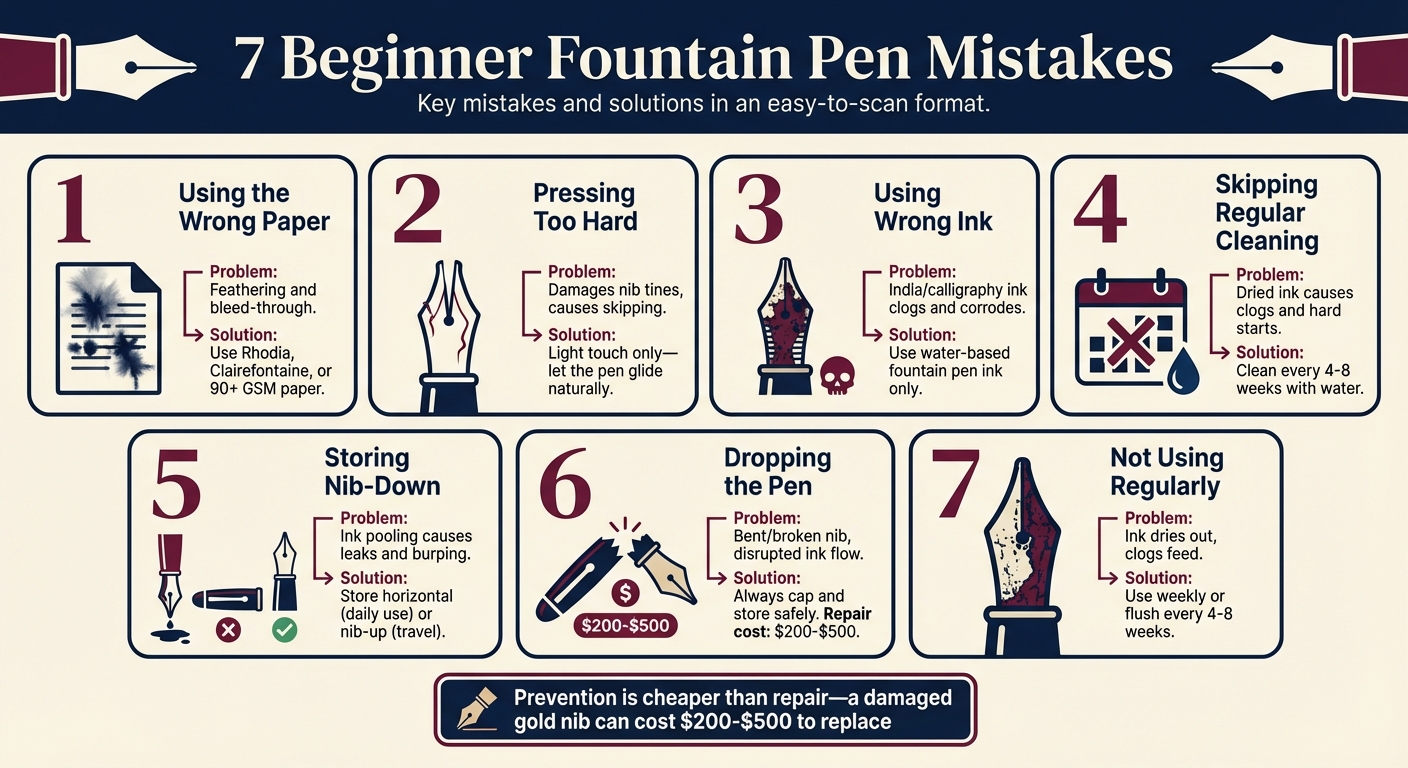
7 Common Fountain Pen Mistakes Beginners Should Avoid
Most unforgivable fountain pen mistakes
1. Using the Wrong Paper
The type of paper you use can make or break your fountain pen experience. Fountain pens rely on water-based ink that flows freely, but low-quality paper often absorbs the ink too quickly. This leads to issues like feathering - those fuzzy, uneven edges - and bleed-through, where the ink seeps through to the other side of the page.
"Feathering occurs when paper has fibers that are highly absorbent, which means they more readily pull ink from your pen via capillary action." - Fountain Pen Love
To avoid these frustrations, it’s best to choose paper designed specifically for fountain pens. Trusted brands like Rhodia, Clairefontaine, Midori MD, and Tomoe River are great options. Their papers often feature a smooth finish and special coatings that keep the ink sitting neatly on the surface rather than soaking in. Pay attention to the paper’s weight too - 90 GSM is a good benchmark. It strikes a nice balance, preventing bleeding without making drying times excessively long.
If you can’t part with standard paper, consider using an Extra Fine (EF) or Fine (F) nib. These nibs lay down less ink, which helps reduce feathering and bleed-through. Another trick is to test the paper before committing to it. Scribble a few loops and a solid patch, wait a moment, and then check for blurry edges or ink seepage on the back.
Lastly, be mindful of your hands. Skin oils can transfer onto the paper, creating spots where the ink behaves unpredictably. To avoid this, try placing a spare sheet under your writing hand as a barrier.
2. Pressing Too Hard on the Nib
If you're used to ballpoint pens, you might instinctively press down hard while writing. But with fountain pens, a gentle touch is all you need to achieve smooth ink flow.
"Fountain pens operate through capillary action instead of pressure. You only need to lightly touch your nib to the page to get a lovely line of ink." - Brian Goulet, Founder, The Goulet Pen Company
Applying too much pressure can cause the nib's tines to spread apart, disrupting ink flow and leading to skips on the page. Worse, pressing too hard can "spring" the nib, permanently bending the tines beyond their flexibility. Once damaged, repairs can be costly.
So, how do you find the right amount of pressure? Start by lightly dragging the nib across the back of your hand - it should feel like a soft tickle, not a scratch. On paper, a steady, consistent line indicates you're using the correct pressure. These small adjustments can help you avoid unnecessary wear and keep your pen in peak condition.
Also, pay attention to your grip. Hold the pen gently between your thumb and index finger, and let its natural weight guide the nib. If your hand feels tired, it's a sign you're pressing too hard. Let the pen glide effortlessly across the page, making writing smoother and more enjoyable while preserving your pen's longevity.
3. Using the Wrong Ink
Using the wrong type of ink can wreak havoc on your fountain pen. Inks like India ink or calligraphy ink are not made for fountain pens and can cause severe issues. For instance, India ink contains shellac, a resin that hardens inside the pen's feed system, leading to major clogs. Similarly, calligraphy and dip pen inks are packed with heavy pigments and binders that can block the pen's internal channels.
"Most calligraphy inks are shellac-based which must be cleaned by denatured alcohol (which may damage your pen). Furthermore, these inks contain ingredients that will clog or even damage your pens by corroding some of the internal mechanisms." - Brian Goulet, Founder, The Goulet Pen Company
Another issue arises with inks that have improper pH levels. If an ink is too acidic or alkaline, it can corrode the pen's metal components. Cleaning a pen with alcohol or acetone to remove these inks can also damage plastic parts. Unfortunately, once a pen is exposed to unsuitable ink, it may never write as smoothly again.
To keep your fountain pen in top condition, stick to inks specifically designed for it. Reputable brands like Pilot, Montblanc, Sailor, and Waterman offer fountain pen inks that are water-based and flow smoothly through the feed system. For convenience, cartridges are a mess-free option. If you’re feeling adventurous and want to explore different colors, ink samples are a great way to test compatibility without committing to a full bottle.
Stay away from inks labeled as "India ink", "calligraphy ink", "drawing ink", or "dip pen ink." These are formulated for other tools and can cause clogs or damage. Always check the label and opt for water-based, pH-neutral inks to ensure your pen continues to deliver a smooth and reliable writing experience for years to come.
4. Skipping Regular Cleaning
Neglecting to clean your fountain pen regularly can seriously impact its performance. These pens rely on capillary action to pull ink through tiny channels in the feed. Over time, skipping cleanings allows dust, paper fibers, and dried ink to build up, which disrupts ink flow. This can lead to issues like skipping, uneven writing, and difficulty getting the ink to start flowing when you put the nib to paper.
"Cleaning a fountain pen is essentially rebooting it, you'll flush out any dried ink or blockages that may have developed over time, and you'll get that ink flowing again as it was originally intended!" - Brian Goulet, Founder, The Goulet Pen Company
Make it a habit to clean your pen every 4 to 8 weeks, even if it seems to be working fine. If you're switching ink colors or brands, always flush the pen thoroughly beforehand. Different ink formulas can sometimes react with each other, creating sludge or even harming the pen's internal components.
Stick to room-temperature water for cleaning, and if you're worried about mineral deposits, use distilled water instead. For stubborn clogs, try mixing a single drop of mild dish soap with a glass of water to help dissolve dried ink.
Before using a new pen for the first time, clean it to remove any leftover manufacturing oils. If you're planning to store your pen for an extended period, make sure to clean it thoroughly to avoid ink hardening inside the feed. And if you notice skipping or scratchiness while writing, clean the pen right away to address the issue.
sbb-itb-1dd4fe9
5. Storing the Pen Nib-Down
Keeping your fountain pen stored with the nib pointing downward can cause some messy problems. Gravity pulls the ink into the feed and nib, leading to pooling. Over time, this can saturate the feed, potentially causing ink to leak into the cap. When you uncap the pen, you might experience excessive ink flow or even "burping" - a sudden release of ink.
Changes in temperature or air pressure can make things even worse. For example, air inside the ink reservoir can expand due to body heat or altitude changes during air travel. If the nib is facing down, this expanding air can push ink straight out through the nib. This often results in noticeable leakage when you start writing again.
"Storing the pen nib-up prevents ink from pooling in the nib and feed, which can cause clogs and hard starts. Avoid storing the pen nib-down, as this can lead to ink leakage and excessive ink flow." - Inkstable
To avoid these issues, proper storage is key. For everyday use, horizontal storage works best - it keeps the nib moist and ready for writing without the risk of leaks. For travel or long-term storage, store the pen nib-up. This ensures the ink stays safely in the reservoir. If you need to store the pen nib-down temporarily to fix a dry nib, do so cautiously and keep an eye on it to prevent leaks.
| Storage Orientation | Impact on Ink Flow | Best Use Case |
|---|---|---|
| Nib-Up | Ink moves back into the reservoir, reducing the chance of leaks. | Ideal for long-term storage or travel, especially with pens that have a "wet" feed. |
| Horizontal | Keeps ink in the feed, ensuring it's ready for immediate use. | Best for pens used daily or frequently. |
| Nib-Down | Keeps ink in contact with the nib, increasing the likelihood of leaks. | Use only as a short-term fix for dry pens, with careful monitoring. |
6. Dropping the Pen on the Nib
A fountain pen nib is delicate. A single hard drop can bend, splay, or even break it, throwing off the ink flow entirely. When the nib is damaged, the capillary action that pulls ink from the reservoir to the paper can be disrupted, leaving the pen unable to write properly.
Heavier pens are especially vulnerable because the force of impact is greater. Even if the nib looks fine at first glance, the feed - the channel that delivers ink - might crack or shift out of place. If your pen starts feeling scratchy or the ink flow seems irregular after a fall, it’s wise to stop using it immediately. Handling your pen carefully can save you from these headaches.
"If it falls right on the tip of the nib, it may break or it may deform and then it's time to have the nib replaced." - Sven Raphael Schneider, Founder, Gentleman's Gazette
Repairing a damaged nib can be expensive. Steel nibs are generally more affordable to replace, but gold nibs can cost anywhere from $200 to $500. To make matters worse, some luxury pens use proprietary nibs that aren’t sold separately, meaning a single mishap could render an expensive pen almost unusable. While professional repairs by a nibmeister are an option, these services often come with a hefty price tag.
The best way to avoid this trouble? Prevention. Always cap your pen when it’s not in use to protect the nib. Store it safely in a leather pouch, pen sleeve, or hard case to prevent accidental falls or rolling off your desk. Avoid carrying your pen loose in a pocket with items like keys or a phone, and think twice before lending it to someone unfamiliar with fountain pen care. A little caution goes a long way in preserving your pen.
7. Not Using Your Fountain Pen Regularly
Fountain pens thrive on regular use. If left untouched for too long, their water-based ink can dry out, leaving behind residue that clogs the nib and feed.
To keep your pen in great shape, aim to use it at least once a week. If that's not possible, make it a habit to flush the pen every 4–8 weeks to avoid issues like buildup or "hard starting." Hard starting happens when dried ink forms a crust on the nib tip, making it difficult for the pen to write immediately.
For those with multiple pens, consider rotating through them to ensure none sit idle for too long. If you know a pen won't be used for an extended period, it's best to empty the ink reservoir. Regular use not only prevents problems but also ensures your pen delivers a smooth and enjoyable writing experience every time.
Conclusion
Mastering a fountain pen isn’t just about owning one - it’s about developing good habits that turn potential frustration into a smooth, enjoyable writing experience. From selecting the right paper to maintaining a cleaning routine, small adjustments can make a big difference. As Sven Raphael Schneider, Founder of Gentleman's Gazette, puts it:
"A fountain pen enhances your handwriting and the look of it in a way that no rollerball and ballpoint can compete with."
Taking proper care of your pen not only improves your writing but also protects your investment. Considering that replacing a damaged gold nib can cost anywhere from $200 to $500, it’s clear that a little effort goes a long way.
Start with the basics: use paper that’s fountain pen-friendly to avoid feathering and bleeding. Let the pen’s natural weight guide your strokes instead of pressing too hard. Make cleaning a regular routine to keep the ink flowing smoothly. When not in use, store your pen horizontally or with the nib facing up, and always cap it to prevent the ink from drying out. Writing with your pen regularly also helps maintain its performance.
For beginners looking to build these habits, Fountain Pen Revolution offers starter sets that include everything needed to get started. These curated kits make it simple to practice the essentials and develop confidence with your pen.
FAQs
What kind of paper works best with fountain pens to avoid feathering and bleed-through?
The ideal paper for fountain pens combines a smooth, low-porosity surface with enough weight to keep ink from seeping through. When shopping, look for terms like coated, hot-pressed, or cotton-rag, and aim for paper with a weight of at least 90 gsm. These features help prevent issues like feathering and bleed-through, keeping your handwriting sharp and neat.
Some popular choices include Tomoe River paper, celebrated for its ultra-thin yet fountain pen-friendly surface, and Rhodia or Clairefontaine pads, which feature slightly thicker, coated sheets that resist ink spreading. Additionally, heavyweight cotton or artist papers are excellent options, thanks to their dense fibers and smooth texture. These papers are perfect for beginners and seasoned writers alike, offering a hassle-free and enjoyable writing experience.
How often should I clean my fountain pen to keep it working smoothly?
To keep your fountain pen in top shape, make it a habit to rinse the nib and feed with lukewarm water once a week. If you want to give it a more thorough cleaning, soak the pen every 4 to 8 weeks. This is especially important if you use vintage pens, thicker inks, or shimmering/glittery inks. Routine cleaning not only prevents clogs but also keeps your pen writing smoothly.
What happens if you use the wrong ink in a fountain pen?
Using the wrong type of ink, like India ink or some calligraphy inks, can wreak havoc on your fountain pen. These inks are often too thick or contain particles that can clog the pen's feed. Worse, they can dry out and harden inside the pen or even corrode its internal parts. The result? Poor ink flow, potential damage to your pen, and an all-around frustrating experience when you try to write.
To keep your pen in great shape, stick to fountain pen-safe inks. These are specially designed to flow smoothly and work perfectly with fountain pens.