

Heat can warp a fountain pen, push ink out, dry the feed, and wear out seals. In plain terms: if a pen sits in a hot room, direct sun, or a parked car, you can end up with leaks, hard starts, cracks, or parts that no longer fit right.
Here’s the short version:
- Above about 75–80°F (24–27°C), risk starts to climb, especially in direct sun.
- Parked cars are the biggest danger. One study found cars in direct sun averaged 116°F (47°C) within 1 hour.
- Resin and plastic parts can soften or warp.
- Acrylic can crack or craze, often near threads or trim.
- Ebonite can discolor, shifting from black to brown or olive-green.
- Heat expands air inside the pen, which can cause burping and leaks.
- Ink also loses water in heat, which can lead to thicker ink, clogs, skips, and hard starts.
- Seals, O-rings, sacs, and converters can harden or shrink, which makes drying and leaking more likely.
If I want to keep a fountain pen safe in summer, I stick to a few simple habits:
- Store it in a cool spot, around 65–77°F (18–25°C)
- Keep it out of windows, dashboards, glove boxes, and hot desks
- Store inked pens nib-up in warm weather
- Let a hot pen cool before opening or cleaning and maintaining it
- Use cool or lukewarm water, not hot water
- Never leave an inked pen in a parked car
A good way to think about it: if a place feels too hot for electronics, it’s too hot for a fountain pen too.
| Material/Part | Main heat issue | What you may notice |
|---|---|---|
| Resin | Softening, slight warping | Loose threads, poor cap fit, shiny stress spots |
| Acrylic | Cracks, crazing | Fine lines near cap lip, threads, or trim |
| Ebonite | Oxidation, color change | Brown or greenish discoloration |
| Metal trim | Expansion, loose fit | Wobbly clip, shifted ring, dull plating |
| Feeds and ink | Drying, flow trouble | Hard starts, skips, blobs, railroading |
| Seals/converters | Hardening, shrinkage | Faster dry-out, seepage, leaks |
So the main point is simple: most heat damage comes from storage mistakes, not from normal writing use. Keep the pen cool, shaded, and checked after heat exposure, and you can avoid most of the trouble this article covers.
How to care for your fountain pens in the summer heat 🔥
Proper maintenance is essential during the summer months; using a fountain pen cleaning kit can help prevent clogs caused by heat-induced evaporation.
sbb-itb-1dd4fe9
How Heat Affects Common Fountain Pen Materials
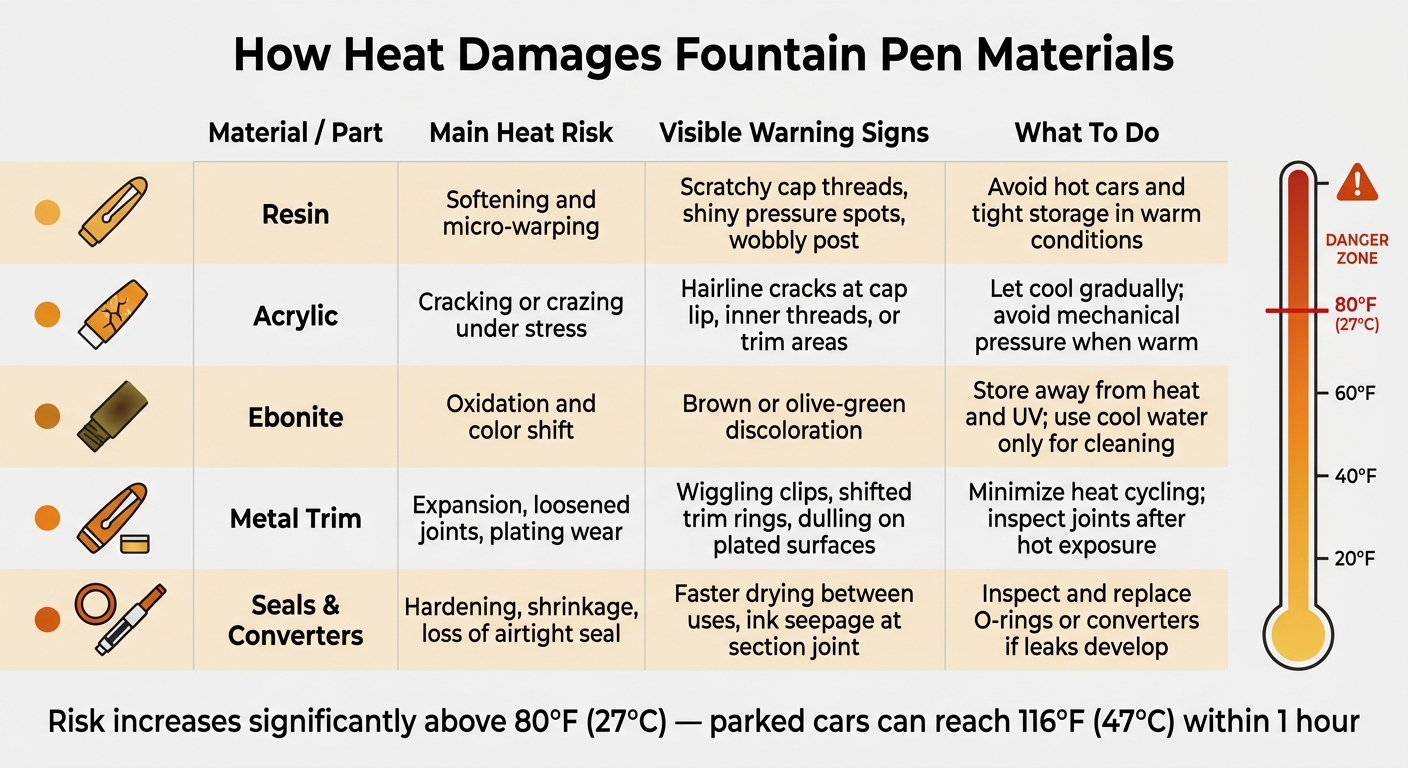
How Heat Damages Fountain Pen Materials: A Visual Guide
Different materials react to heat in different ways. The kind of damage you get depends on the material itself, how long the pen stays hot, and whether the parts are under pressure. That’s what turns a hot day into leaks, dry starts, warped pieces, or a pen that just feels off.
Resin, Acrylic, and Ebonite Bodies
Resin and other plastics can soften in heat. If that happens again and again, threads may loosen, friction-fit joints may weaken, and the surface can pick up shiny pressure marks or slight warping.
Acrylic usually holds its shape better than many softer plastics, but long heat exposure can still soften it and, if the material is under stress, lead to cracking or crazing. Since acrylic is rigid, the damage often shows up as fine hairline cracks instead of obvious sagging. You’ll often spot them around the cap lip, inner threads, or trim areas.
Ebonite has its own weak spot: long exposure to heat and UV light. Over time, the color can shift from black to brown or olive-green. This is especially common in vintage pens made from black chased hard rubber (BCHR).
Metal Trim, Feeds, Seals, and Inner Caps
Metal clips, bands, and trim rings expand when they get hot. Since metal and resin or acrylic expand at different rates, repeated heating and cooling can loosen pressure-fit parts or weaken glued joints. A clip that starts to wiggle or a trim ring that looks slightly out of place is often the first hint. Heat and UV exposure can also dull thin plating.
Feeds are usually affected through the ink more than through the feed material itself. In warm conditions, ink loses water through evaporation, which can lead to slow starts or uneven flow. If the heat is high enough, or lasts long enough, a feed can soften and warp. That can throw off its alignment with the nib and change how the pen writes.
O-rings, sacs, and converters can also change under heat. They may harden or shrink, which breaks the seal and leads to drying or leaks.
Material Heat-Risk Comparison
| Material | Main Heat Risk | Visible Warning Signs | What to Do |
|---|---|---|---|
| Resin | Softening and micro-warping | Scratchy cap threads, shiny pressure spots, wobbly post | Avoid hot cars and tight storage in warm conditions |
| Acrylic | Cracking or crazing under stress | Hairline cracks at the cap lip, inner threads, or trim areas | Let cool gradually; avoid mechanical pressure when warm |
| Ebonite | Oxidation and color shift | Brown or olive-green discoloration | Store away from heat and UV; use cool water only for cleaning |
| Metal trim | Expansion, loosened joints, plating wear | Wiggling clips, shifted trim rings, dulling on plated surfaces | Minimize heat cycling; inspect joints after hot exposure |
| Seals & converters | Hardening, shrinkage, loss of airtight seal | Faster drying between uses, ink seepage at the section joint | Inspect and replace O-rings or converters if leaks develop |
When heat affects the body, seals, or feed, you may need to troubleshoot your ink flow to restore smooth writing.
How Heat Changes Ink Flow and Writing Performance
Once heat gets into the pen body and seals, ink flow is usually the first thing to go off.
Expansion, Burping, and Leaks
When a fountain pen warms up, the air trapped inside the reservoir expands. That extra pressure pushes on the ink column, and sometimes the pen spits ink through the feed and onto the nib. On paper, that can show up as a suddenly thick line, a random blob, or a smeared first stroke.
Pens with more trapped air tend to burp more often. Eyedropper-filled pens are especially prone to leaking in hot conditions, while cartridge and converter pens usually have smaller air pockets. High-capacity pens can also react more sharply to fast temperature swings when there’s enough air space left inside the reservoir.
After a jump in temperature, uncapping the pen can release that built-up pressure all at once. If the seals are weak or the parts have softened from heat, the pen has a harder time holding that pressure back. That’s why material condition and ink stability are tied together.
After moving from AC into the heat, keep the pen nib-up for a few minutes before you uncap it. If the converter is full, pull back a small amount of ink so there’s a tiny air gap.
And heat doesn’t just push ink out. It can dry it out too.
Drying, Ink Concentration, and Clogged Feeds
Heat can cause trouble in two ways: fast through pressure, or slowly through drying. If the cap seal is weak, moisture escapes from the nib and feed. As that happens, the ink gets thicker and more concentrated. The pen may start writing differently long before anything looks wrong from the outside.
The first signs are often easy to spot:
- Hard starts after the pen has been sitting
- Faint or broken first strokes
- A pen that used to feel smooth now feeling a bit draggy
If things get worse, a thin crust can form around the nib slit or breather hole. That narrows the channel and interrupts capillary flow. The result can be railroading - two thin lines with a blank center - or ink that cuts out mid-word and only comes back after a few extra strokes.
Lines may also start to look darker and wetter as the ink thickens. In a wet-writing pen, that might seem fine at first, but it often leads to more feathering and show-through. In a drier pen, thicker ink usually makes skips and hard starts worse. A pen-and-ink pairing that felt perfect in spring can turn fussy by mid-summer.
You can often get the flow back without taking the pen apart. Wipe the nib and feed with a soft, lint-free cloth. Then dip only the nib and feed in clean, room-temperature water and scribble on scrap paper until the flow settles down. Skip hot water - it adds more heat stress to parts that are already under strain.
Simple Storage Habits for Hot Rooms, Cars, and Travel
Once heat starts messing with ink flow and material stability, storage becomes your easiest line of defense.
Safer Storage at Home and in the Office
Store pens in a cool, shaded spot. A target range of 65–77°F (18–25°C) works well for most fountain pens because resin, acrylic, and ebonite stay stable in that range, and ink evaporates more slowly.
The biggest trouble spots are usually the obvious ones people ignore: windowsills and desks near heat sources. A room may sit at a comfortable 72°F, but a surface in direct sun can climb much higher.
A closed drawer or cabinet is usually a better pick than an open desktop sitting in bright light. If you like keeping pens within reach, set them in a shaded corner away from windows and heat sources. And for inked pens you aren't using, nib-up storage is the safer move in hot weather.
That same rule matters even more in vehicles, where heat builds fast.
Why Parked Cars Are the Highest-Risk Place
A parked car is one of the riskiest places to leave a fountain pen. On a 70°F day, a closed car can exceed 100°F in about 30 minutes and reach 113°F within an hour. On an 85°F sunny day, temperatures inside a parked car can climb to 100–115°F within minutes.
The glove box, dashboard, and center console tend to be the worst spots because they hold the most heat. It doesn't take a long stop, either. A quick errand can be enough.
Inked pens shouldn't be left in a parked car, even if it feels like you'll only be gone for a minute. If you have no other option, an empty, cleaned pen is much safer. With no liquid ink inside, there's nothing to get pushed out, and the risk of baked-in clogs or staining drops fast.
For travel beyond the car, a case and a lower fill level help with the same problems.
Travel Habits That Cut Heat Stress
When you're commuting or traveling, a dedicated pen case gives your pen a buffer against radiant heat and slows temperature swings. Store the case in an interior compartment instead of an outer pocket sitting in direct sun. A fitted pen case makes that habit easier to stick with.
For eyedropper and other large-capacity pens, leave extra air space before warm-weather travel. More space inside the barrel gives ink a little room to shift as temperatures change.
If you're flying, pack pens in a sealed case inside your carry-on. Cabin pressure changes during ascent and descent can affect ink flow, so a secure case adds one more layer of protection.
Conclusion: How to Stop Heat Damage Before It Starts
Heat damage to fountain pens is mostly avoidable. The risks are real - warped bodies, weakened seals, clogged feeds, and ink leaks - but in most cases, they come from a few everyday mistakes, not hard-to-fix pen problems.
Most of the time, prevention is simple. Heat damage usually starts with poor storage or pressure shifts, so the best way to avoid it is to stick to a basic routine. Keep the pen in the shade, store it in a case, and give it a quick check after it's been in the heat.
The worst place for a fountain pen is a parked car. If you're leaving the car, take the pen with you. That one habit can save you a lot of trouble. After that, the next move is simple: let the pen cool down and check it over.
If a pen has already been exposed to heat, start by letting it return to room temperature. Then flush it with cool or lukewarm water or a fountain pen cleaning solution and inspect the body, feed, seals, and threads.
Fountain pens don't need complicated maintenance. They just need steady, basic care. If you want affordable pens and cases that fit into that routine, Fountain Pen Revolution has options for both beginners and experienced writers.
FAQs
How can I tell if heat has already damaged my fountain pen?
Let the pen cool on its own until it reaches room temperature. Then give it a close look for any clear damage, like warping, cracks, surface distortion, or soft spots. It’s also worth checking whether the cap still fits the way it should.
Next, test the pen in use. If the piston or converter feels stiff or starts resisting, the seals may have taken a hit. Persistent leaking, ink burping, or frequent clogging can also signal heat damage or dried ink buildup.
Are some fountain pens safer in summer than others?
Yes. Fountain pen materials don’t all handle heat the same way, so some pens are more likely to get damaged than others.
Acrylic usually holds up better in heat than resin. By contrast, many epoxy resins start to soften at around 120°F.
Ebonite can help shield ink from body heat, which is one reason some pen users like it. But it still has its weak spots. Light, heat, and humidity can cause it to oxidize or change color over time.
And when summer heat gets harsh, any fountain pen can run into trouble. That can mean:
- Leaking
- Evaporation
- Clogging
- Warping
- Cracking
What should I do right after my pen gets too hot?
Let the pen cool on its own until it reaches room temperature. Skip any fast-cooling tricks, like putting it in the refrigerator. A sudden shift in temperature can lead to cracks or other damage.
After it has cooled, inspect it for warping, cracks, or leaks. If the pen was inked, flush the nib with lukewarm water to clear any heat-related clogs. If the piston or converter feels stiff, add a small amount of silicone grease.