

Glow-in-the-dark ink stores light, then releases it as a fading glow - but its particles can clog a fountain pen. I’d use it only with the ink maker’s explicit fountain-pen approval, start with an easy-to-clean pen, and flush it after each session.
Here’s what I’d check before filling:
- The ink type: Phosphorescent ink glows after the light goes out. Fluorescent or UV-reactive ink isn’t the same thing.
- The glow: Test a sample on your paper, charge it as directed, and check it immediately, then after 5, 15, and 30 minutes.
- The writing: Daylight color, paper, nib width, and ink thickness all affect the result. More ink may mean more glow - but slower drying.
- The cleanup: Follow the maker’s mixing and cleaning instructions. <u>Never add glow powder to fountain-pen ink or let glow ink dry inside your pen.</u>
I’d treat glow ink as an option for accents and art, not a promise of bright, all-night writing.
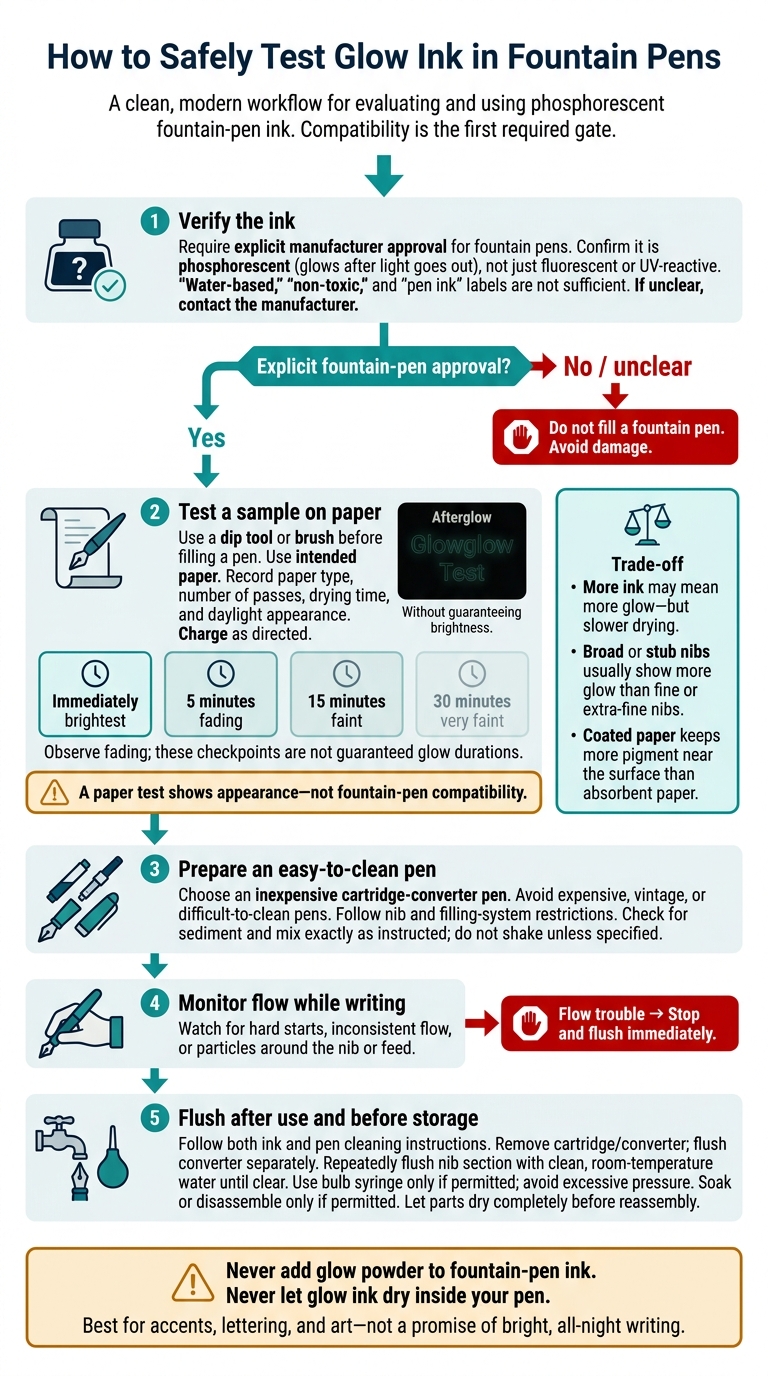
How to Safely Test Glow Ink in Fountain Pens
Charging, Brightness, and Daylight Visibility
How to Charge and Test Your Writing
Glow inks can change color under different light sources. Their afterglow depends on how fully the phosphorescent particles are charged.
Some formulations shift from deep teal in fluorescent light to royal blue in sunlight.
Fill a converter halfway and write a paragraph on your preferred paper. Leave the pen uncapped for 10 minutes to check for hard starts or ink flow problems.
Then expose the writing to light. The particles absorb energy and release it slowly as a glow. Check the glow right away, then again after a few minutes to see how fast it fades.
Why Glow Brightness Varies
Glow strength depends on the amount of ink laid down, nib width, and how much pigment stays near the paper’s surface. Broad or stub nibs usually show more glow than fine or extra-fine nibs. Paper matters, too: coated papers keep more pigment at the surface than absorbent papers.
How Writing Looks in Daylight
The daylight look is separate from the glow. These inks may change color, show sheen, or leave a darker line than you expect. If you like how the writing looks in daylight, check how easy the ink is to use and clean out of your pen.
sbb-itb-1dd4fe9
Fountain Pen Compatibility and Cleaning
Glow ink’s appearance is only part of the picture. You also need to know whether it’s safe to use in your pen.
Check Ink Labels, Settling, and Flow
Use glow ink only if the manufacturer explicitly approves it for fountain pens. Labels such as “Water-based,” “non-toxic,” and “pen ink” aren’t enough. Calligraphy, craft, and dip-pen inks may contain solids or binders that clog a fountain pen’s feed. If the intended pen types aren’t clear, contact the manufacturer before filling. One successful test doesn’t prove the ink is compatible with your pen.
Particle size and concentration affect flow. Larger particles or higher concentrations can restrict the feed’s channels. Check for sediment and follow the manufacturer’s mixing instructions exactly - don’t shake unless instructed. These details help determine whether the ink will flow properly or pose a clog risk. Never add glow powder to ordinary fountain-pen ink.
Choose an Easy-to-Clean Pen and Flush After Use
Start with an inexpensive cartridge-converter pens that’s easy to flush. Avoid expensive, vintage, or difficult-to-clean pens for your first test, and remove only the parts the manufacturer permits. This makes the test easier to assess and the pen easier to clean.
Stop at the first sign of trouble. If flow becomes inconsistent or particles collect around the nib or feed, empty and flush the pen immediately. Flush again after the writing session and before storage. Don’t let glow ink dry inside the pen.
Follow the cleaning instructions from both the ink and pen manufacturers. For a cartridge-converter pen, remove the cartridge or converter and flush the converter separately. Repeatedly flush the nib section with clean, room-temperature water until the water runs clear. For stubborn clogs, a specialized fountain pen cleaning solution can help remove dried particles.
A bulb syringe may help if the pen maker permits it, but avoid excessive pressure. Soak or disassemble the pen only if the manufacturer allows it. Then let the parts dry as directed before reassembly.
Buying and Testing Glow Ink
Once you’ve confirmed compatibility, check the ink’s glow and how much cleanup it needs before filling a pen.
Artistic Uses and Practical Limits
Buy glow ink for accents, lettering, and art - not everyday writing. Its daylight color may look faint. Applying more ink can strengthen the glow, but it also takes longer to dry and adds cleanup work.
What to Check Before Buying
The product description should explicitly state that the ink is intended for fountain pens. Also confirm that it’s phosphorescent, not just fluorescent or UV-reactive.
Check the charging instructions, expected glow duration, sediment warnings, cleaning guidance, and restrictions on nibs or filling systems. Glow-duration claims reflect specific test conditions. Brightness depends on the light source, charging time, ink thickness, and how dark the viewing space is.
If you can get a sample, try it on your intended paper with a dip tool or brush before filling a pen. Record the paper, number of passes, drying time, and appearance in daylight. Charge it as directed, darken the room, and check the afterglow immediately, then after 5, 15, and 30 minutes. This test shows how the ink looks - not whether it’s compatible with a fountain pen.
Choose a Pen and Ink for Testing
Start with an inexpensive cartridge-converter pen that’s easy to clean. Choose one with a simple feed that you can flush without much trouble. Broad nibs usually show more glow, while fine nibs dry faster and make cleaner lines. Follow the ink maker’s nib restrictions.
Conclusion: What to Expect From Glow Ink
Expect a brief afterglow, not a constant light source. In daylight, the line may look ordinary or faint. Pen compatibility and easy cleanup matter more than peak brightness.
Before filling a pen, check that the ink is safe for fountain pens and test it on your paper under the conditions you’ll use to charge it. Consider how much cleaning it will take, too. Use an easy-to-clean pen, follow the ink maker’s flushing instructions, and favor easy cleanup over brightness claims.
FAQs
Can I recharge glow-in-the-dark writing repeatedly?
Yes. Glow-in-the-dark inks contain phosphorescent particles that recharge when exposed to ultraviolet light from sunlight, fluorescent lamps, or UV black lights. You can renew the glow by exposing your writing to these sources again.
For the strongest glow, use a UV-A light with a wavelength of approximately 365 nm.
Will glow ink stain my pen?
Yes, glow-in-the-dark inks can stain your pen, especially demonstrator models. Highly saturated inks are more likely to leave stains. Ink left over from earlier fills can also change your glow ink’s color or brightness.
Clean your pen thoroughly before switching colors to reduce these risks. Don’t let ink dry inside the pen - it can cause clogs and residue buildup.
Does glow ink lose brightness as it ages?
Yes. Glow (fluorescent/neon) inks can lose brightness as they age in storage. Ink stored in a sealed container has a shelf life of at least two years.
For day-to-day brightness, residue matters more. Dark ink left in the pen can dull the glow under UV/blacklight. Clean the pen thoroughly before refilling, and keep the ink sealed during storage.