

Historical fountain pens offer two main appeals: financial potential and personal enjoyment. Whether you're interested in rare collectibles or just love the feel of writing with a vintage pen, there's something for everyone. Here's the quick breakdown:
- Investment Side: Focus on rare brands like Montblanc, Pelikan, or Parker. Look for pens with gold vs steel nibs, original packaging, and limited-edition designs. Prices range from $100 to over $5,000 for high-end pieces. Condition and rarity are critical for value.
- Hobby Side: Enjoy the tactile pleasure of writing with vintage pens or restoring them. Starter pens under $50 cost Starter pens cost $15–$755–$75, while mid-century classics like the Parker 51 can cost $100–$300. The fountain pen community is welcoming and great for learning.
Key Takeaway: If you're after financial returns, go for rare, pristine pens. If you're in it for the joy of writing and history, start with affordable options and explore from there.
1. Investment Perspective
Financial Value
When it comes to investing in historical fountain pens, the key factors are brand heritage, rarity, and condition. Pens from well-known manufacturers like Montblanc, Parker, Pelikan, Waterman, and Sheaffer tend to hold their value far better than generic or unbranded options. For example, a mint-condition Parker Duofold can sell for around $300, while one in poor condition might only bring in $25 - a staggering 92% difference in value.
Gold nibs are another major value driver. A 14K or 18K gold nib has a raw material value of about $15, but restorers might pay twice that for high-quality vintage nibs. Specialty nibs, such as flex, stub, or music nibs, often command even higher premiums. Collectors also favor traditional filling systems like piston-fill or lever-fill over modern cartridge converters because these older mechanisms are seen as more authentic and desirable.
Provenance can take a pen's value to another level. Pens linked to historical figures or major events can sell for over $5,000. Limited production runs and discontinued models naturally increase in value as they become rarer. On the other hand, most modern pens lose value quickly after purchase unless they are limited editions made with rare materials like urushi lacquer or maki-e artwork. Having the original box and papers can also significantly enhance a pen’s investment potential.
Keeping the pen in excellent condition is crucial to maintaining its value.
Maintenance and Care
Condition is everything when it comes to fountain pen investments. Pens in pristine condition, complete with original packaging and documentation, fetch the highest prices. Even minor issues like hairline cracks or ink corrosion can reduce a pen’s value by as much as 75%. Before buying, it’s a good idea to inspect the pen closely using a jeweler’s loupe and to check actual sale prices on platforms like eBay by filtering for "Sold Items" to avoid inflated asking prices. Using a fountain pen buying checklist can help ensure you don't overlook critical details during your search.
Restored pens with fully functional piston or lever-fill mechanisms are far more attractive to collectors than those with broken or damaged systems. This blend of heritage and careful maintenance is why collectors emphasize proper care as an essential part of their strategy. Many investors find the sweet spot in pens priced between $100–$200, where features like gold nibs and historical charm offer solid value without too much risk.
sbb-itb-1dd4fe9
2. Hobby Perspective
Emotional Satisfaction
Collecting vintage fountain pens is about more than just their market value - it's about the joy and connection they bring. For many enthusiasts, these pens are treasured as heirlooms and celebrated as works of art, showcasing timeless design and craftsmanship. There's something uniquely satisfying about holding a pen with a flex nib or restoring the delicate mechanism of a lever-fill pen. These experiences transport collectors to an era when manufacturing was an art form. Calligraphers, in particular, appreciate specialty nibs like flex, stub, or music nibs for their distinctive writing qualities. Owning iconic models such as the Parker 51 or Sheaffer Balance offers a direct link to the rich legacy of analog writing.
"With interest in analog writing tools on the rise, now is a great time to assess, preserve, or collect vintage fountain pens with an eye toward their lasting beauty and functional craftsmanship".
Accessibility
One of the best parts of this hobby is how approachable it is for newcomers. You can start small - entry-level vintage pens, including old school models, often range from $15 to $75. If you're ready to dive deeper, mid-century classics like the Parker 51 or Esterbrook J typically cost between $100 and $300. These pens are easy to find through online marketplaces, collector forums, estate auctions, and private sales.
The fountain pen community is another big draw. It's a welcoming space where beginners can connect with seasoned collectors and restorers who offer appraisals, technical advice, and encouragement. With younger collectors showing increasing interest, the hobby is more vibrant than ever. For those just starting out, brands like Fountain Pen Revolution provide affordable modern options that help you learn the basics before delving into vintage models. And while these pens are easy to access, keeping them in good condition is key to enjoying their charm.
Maintenance and Care
Preserving and maintaining vintage pens is a big part of the hobby's appeal. Restored pens with functional piston-fill or lever-fill mechanisms not only provide an authentic writing experience but also let collectors appreciate the craftsmanship of a bygone era. Proper care enhances both the look and feel of these pens, allowing their character to truly shine. Starting with well-maintained mid-century models can offer a perfect mix of historical significance and everyday usability.
Are Fountain Pens a Good Investment?
Pros and Cons
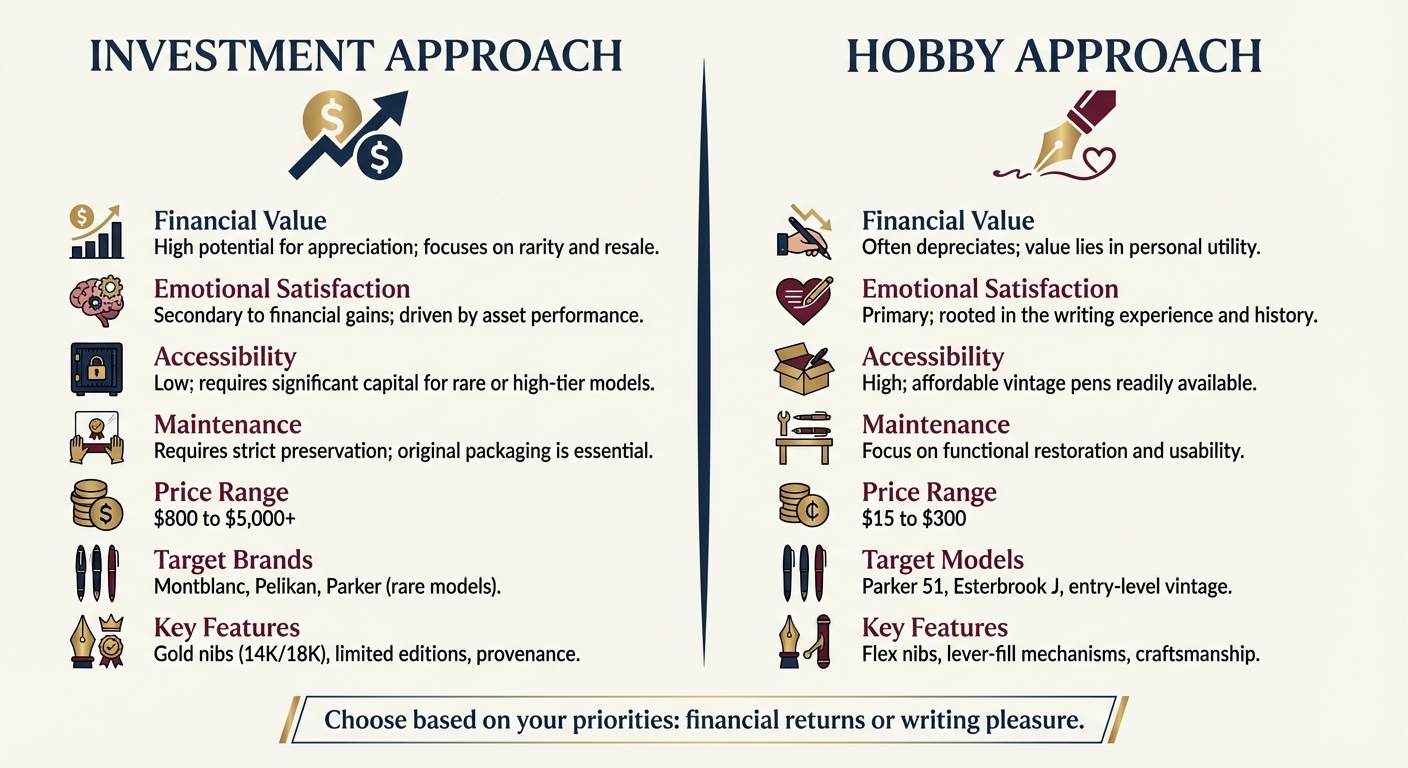
Investment vs Hobby Approach to Fountain Pen Collecting Comparison
Let’s break down the trade-offs between collecting pens as an investment versus as a hobby. Your choice largely depends on whether you're in it for financial returns or personal enjoyment, as each path has its own set of benefits and challenges.
Investment collectors focus on financial appreciation, targeting rare models, limited editions, or prestigious brands like Montblanc and Pelikan. High-end historical pens can fetch over $5,000, and limited editions crafted from materials like gold - or even platinum - often increase in value over time. However, this approach requires significant upfront capital and comes with risks. The collectibles market can be unpredictable, and most modern pens, unless they’re exclusive limited editions, tend to lose value after purchase. Preservation is key: any defects or missing packaging can drastically lower resale value.
On the other hand, hobby collectors focus on the joy of writing and the connection to history. The real payoff here is the emotional satisfaction of using a beautifully restored lever-fill pen or experiencing the unique feel of a finely tuned flex nib. However, this approach demands regular maintenance and restoration to keep pens functional.
Here’s a quick comparison of the two approaches:
| Feature | Investment Approach | Hobby Approach |
|---|---|---|
| Financial Value | High potential for appreciation; focuses on rarity and resale | Often depreciates; value lies in personal utility |
| Emotional Satisfaction | Secondary to financial gains; driven by asset performance | Primary; rooted in the writing experience and history |
| Accessibility | Low; requires significant capital for rare or high-tier models | High; affordable vintage pens readily available |
| Maintenance | Requires strict preservation; original packaging is essential | Focus on functional restoration and usability |
Ultimately, whether you’re chasing financial returns or seeking the perfect writing experience, both paths have their own rewards. It’s all about aligning your priorities with your passion.
Conclusion
Historical fountain pens offer a fascinating blend of financial opportunity and personal enjoyment. But should you approach them as an investment or a hobby? That choice depends entirely on your goals and resources.
If you're looking at investment-grade pens, focus on rare, limited-edition pieces from prestigious brands like Montblanc or Pelikan. These pens, especially when in mint condition with original packaging, can fetch anywhere between $800 and $5,000 - or even more. However, investing here requires significant capital and comes with the uncertainty of market fluctuations.
"Fountain pens can indeed gain value over time, although this isn't guaranteed and depends on several factors".
On the other hand, hobby collecting brings joy through the tactile experience and the connection to history. Here, the emphasis shifts from monetary value to the pleasure of writing. If the feel of a flex nib or the craftsmanship of a restored lever-fill system excites you, the emotional reward will likely outweigh any financial concerns.
If you're unsure where to start, experimenting with affordable options is a smart move. For instance, Fountain Pen Revolution offers starter sets starting at $35 and premium pens from $44. These options let you explore different nibs and filling systems without a big financial commitment. You’ll also get a feel for whether you prefer gold or steel nibs and if vintage pen maintenance suits you.
Whether you're chasing an appreciating asset or seeking daily creative inspiration, your fountain pen journey begins with understanding what matters most to you. With the fountain pen market in 2026 remaining stable and attracting younger collectors, there’s plenty of time to figure out which path feels right for you.
FAQs
How can I tell if a vintage pen is truly rare?
To spot a rare vintage pen, focus on a few key factors: its historical importance, how many were produced, the reputation of the brand, its current condition, and whether it has documented provenance. These details are essential in assessing both its rarity and appeal to collectors.
Should I buy restored pens or original unrestored ones?
Choosing between restored and unrestored vintage fountain pens comes down to what you’re looking for. Restored pens have been repaired and are ready to use, making them ideal for anyone who wants a functional writing tool. Unrestored pens, however, remain in their original condition, which can be more appealing to collectors who prioritize authenticity and see potential in their long-term value. If you need a pen for regular use, restored is the way to go. But if preserving originality is your priority, unrestored might be the better choice.
What should I check before paying collector prices?
Before shelling out collector-level prices, take a close look at the pen’s condition, its rarity, and the brand’s reputation. Don’t forget to check if it comes with the original packaging and documentation - these can greatly influence its value. Paying attention to these details ensures you’re making a smart purchase and getting the most out of your investment or addition to your collection.