

14k vs 18k gold fountain pen nibs: What's the difference?
Here's the key:
- 14k gold nibs (58.5% gold) are firmer, more durable, and better for heavy-handed writers or daily use.
- 18k gold nibs (75% gold) are softer, more responsive, and ideal for light-handed writers who prefer smooth, expressive strokes.
Both nibs are tipped with hard metals (not gold) for durability, so the writing surface feels similar. The choice depends on your writing style: firm control vs. softer luxury.
Quick Comparison
| Attribute | 14k Gold Nibs | 18k Gold Nibs |
|---|---|---|
| Gold Content | 58.5% | 75% |
| Hardness | Higher (more durable) | Lower (softer) |
| Writing Feel | Firm, controlled | Smooth, responsive |
| Flexibility | Better for modifications | Limited, softer flex |
| Price | More affordable | 20–30% higher cost |
Want durability and precision? Go 14k. Prefer softness and a luxurious feel? Choose 18k. Both can last a lifetime with care.
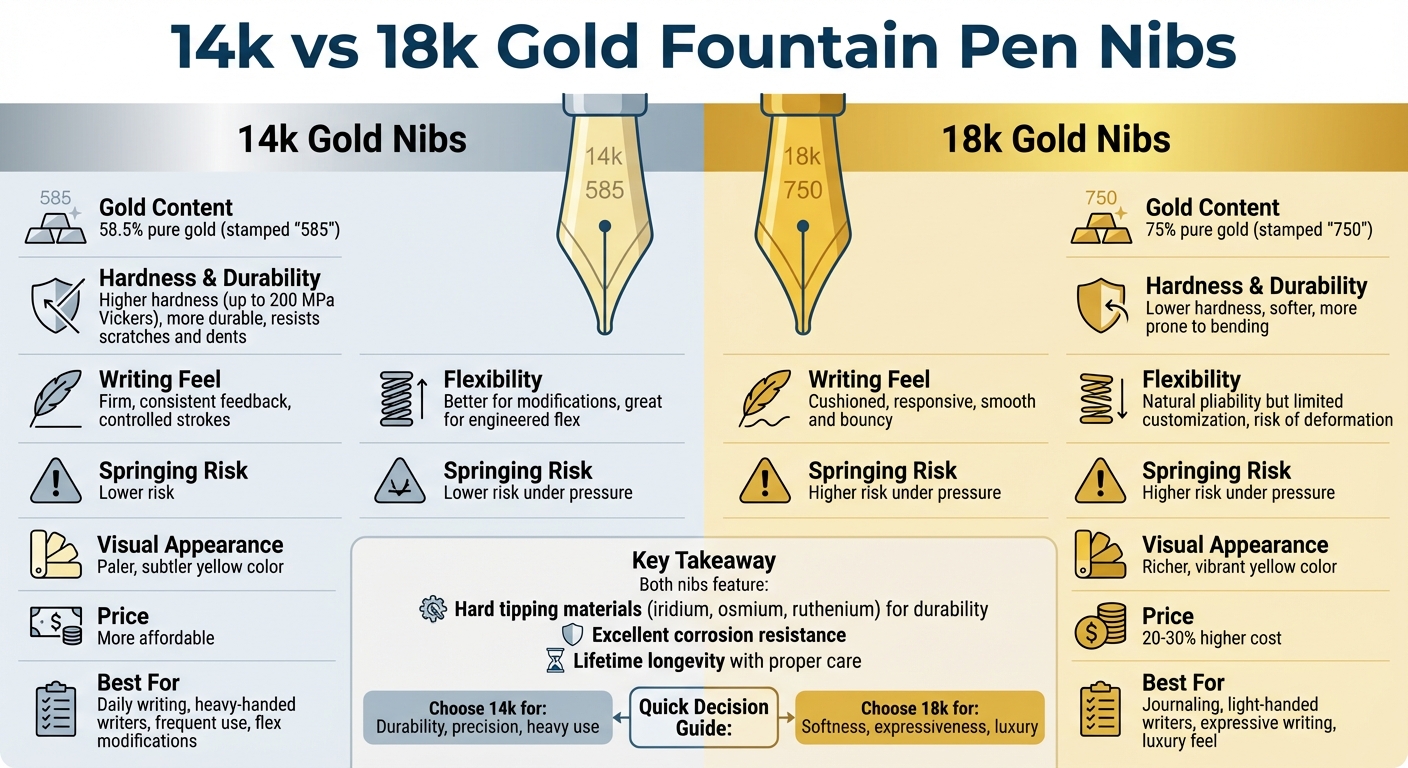
14k vs 18k Gold Fountain Pen Nibs Comparison Chart
Gold Alloys in Fountain Pen Nibs: The Basics
What Karat Means
The karat system measures gold purity on a scale of 0 to 24. For example, a nib marked 14k or 585 contains 58.5% pure gold (14 parts gold mixed with 10 parts other metals). An 18k nib (750) has 75% gold. Pure 24k gold, while beautiful, is far too soft for practical use in fountain pen nibs - it bends and deforms under pressure.
As Joshua Danley from The Pelikan's Perch puts it: "14 karat gold [is] oft being regarded as the sweet spot between form and function. Pure 24 karat gold is incredibly soft and deforms easily, lacking any true durability".
To make gold suitable for nibs, other metals like copper, silver, zinc, and nickel are added to the mix. These strengthen the alloy significantly. While pure gold has a Vickers hardness of around 30 MPa, a well-crafted 14k alloy can reach up to 200 MPa. Nickel plays a key role, allowing the alloy to harden during manufacturing, which boosts both elasticity and tensile strength.
Even with these improvements, pure gold alloys alone aren’t durable enough for writing. That’s where hard tipping materials come in.
Hard Tipping Materials on Gold Nibs
Gold alloys, even when hardened, can’t endure the constant friction of writing on paper. To solve this, manufacturers attach a hard-metal bead to the very tip of the nib - the part that touches the paper. While this bead is often called "iridium", modern tipping materials typically use metals like osmium, ruthenium, tungsten, or others from the platinum group . These materials are incredibly tough - at least 10 times harder than the gold alloy beneath them.
This hard tipping treatment ensures durability and consistent performance. Whether the nib is 14k or 18k, the writing surface remains the same because both are equipped with the same hard-metal tipping .
14k Gold Nibs: Properties and Best Uses
How 14k Nibs Write
Crafted from 58.3% pure gold mixed with durable alloy metals like copper, silver, and zinc, 14k nibs deliver a writing experience that balances firmness with a touch of flexibility. These nibs provide consistent, controlled strokes with just enough "give" to feel responsive, without compromising precision.
This blend of firmness and slight bounce makes 14k nibs a top choice for writers who value steady, reliable feedback. Their design ensures smooth performance and dependable durability, even with regular use.
Durability and Care
Thanks to the added alloy content, 14k gold nibs are impressively durable. With a Vickers hardness of up to 200 MPa and tensile strength around 467 MPa, they resist scratches, dents, and deformation. They’re also highly resistant to corrosion from fountain pen inks.
These qualities make them ideal for frequent use without concerns about wear or springing. As Yanning Li, CEO of Scriveiner London, notes:
"Lower karat gold nibs (such as 14K) strike a balance between durability and flexibility, making them well-suited for everyday writing".
Maintaining a 14k nib is straightforward. Flushing the nib and feed with lukewarm water every few weeks helps prevent ink buildup. The alloy's natural resistance to corrosion means it’s forgiving even if cleaning isn’t done as often. This resilience ensures that 14k nibs remain reliable over time, even with extended use.
When to Choose 14k Gold Nibs
With their dependable performance and durability, 14k gold nibs are ideal for everyday writing. They’re particularly well-suited for heavy-handed writers or anyone who needs a pen that can handle frequent use. As Nibs.com highlights:
"14k nibs are often the most prized, as they are both more resilient than softer 18k and 21k nibs, as well as being better suited to some customizations".
If you’re exploring gold nibs but want a budget-friendly option, 14k models are an excellent choice. For example, Fountain Pen Revolution’s Gold Nib Collection offers affordable 14k nibs that provide the smooth writing feel and corrosion resistance of gold without the higher price tag of 18k versions. With proper care, these nibs can last a lifetime, making them a smart investment for both beginners and seasoned fountain pen enthusiasts.
18k Gold Nibs: Properties and Best Uses
How 18k Nibs Write
Crafted with 75% pure gold, 18k nibs offer a cushioned, responsive writing experience. They adapt beautifully to subtle changes in pressure, creating smooth, flowing strokes without forcing the tines apart. This responsiveness allows for expressive line variation, giving each stroke a luxurious, effortless feel. The nib adjusts naturally to your writing angle and pressure, making it ideal for those who enjoy a pen that feels like an extension of their hand. Writers who value a balanced flex and gentle feedback often gravitate toward the unique qualities of 18k gold nibs. That said, this heightened sensitivity does come with some durability concerns, as outlined below.
Durability and Limitations
The softness of 18k gold, while key to its flexibility, also introduces certain trade-offs. Its high purity makes it resistant to corrosion, but the same malleability makes it vulnerable to damage under heavy pressure. As Joshua from The Pelikan's Perch explains:
"Because it is a softer metal, however, you cannot perform the modifications necessary to achieve significant flex without losing structural integrity thereby resulting in a much higher likelihood of the nib failing after a time".
This softness means 18k nibs are more prone to "springing", where the tines bend permanently away from the feed. As a result, they require a lighter touch to maintain their shape and functionality. Writers who press down hard or use excessive force may find the more robust 14k gold nibs to be a better fit. In essence, 18k gold nibs thrive under careful, light-handed use but are less suited for heavy-handed writing styles.
When to Choose 18k Gold Nibs
If you prioritize comfort, line variation, and an expressive writing experience, 18k nibs are an excellent choice for long writing sessions and gentle strokes. Their cushioned response can help reduce hand fatigue, making them perfect for writers who value smooth, natural line variation. These nibs shine in situations where expressive, elegant writing is the goal, but they are not built for tasks requiring heavy downward pressure.
Yanning Li, CEO of Scriveiner London, highlights their appeal:
"Higher karat content increases softness and flexibility, allowing for line variation and expressive writing".
To get the most out of an 18k nib, a "soft hand" is essential. Letting the nib glide across the paper, rather than pressing down, ensures a smooth and enjoyable experience. When used with care, 18k gold nibs deliver unmatched comfort and expressiveness, making them a favorite for those who value artistry over rugged durability.
Episode 610 Comparison of 14k and 18k Gold Nibs
sbb-itb-1dd4fe9
14k vs 18k Gold Nibs: Side-by-Side Comparison
Let’s break down the practical differences between 14k and 18k gold nibs. While both are popular choices, their unique properties can make one better suited to your writing needs than the other.
Main Differences Between 14k and 18k Nibs
The primary difference lies in the gold content and how it affects durability and performance. A 14k gold nib contains 58.3% to 58.5% pure gold (stamped "585"), while an 18k nib has 75% pure gold (stamped "750"). This higher gold content in 18k nibs makes them softer and more luxurious in feel, but also more delicate.
Durability and hardness are where 14k gold shines. With nearly 42% alloying metals compared to 25% in 18k, 14k nibs are tougher, resisting scratches and dents more effectively. In contrast, the softer 18k nib offers a smoother, more cushioned writing experience but is more prone to bending or "springing" under too much pressure.
When it comes to flexibility, the story is nuanced. While the softness of 18k gold gives it a more natural pliability, 14k nibs are often preferred for engineered flex. As Nibs.com puts it:
"14k nibs are often the most prized, as they are both more resilient than softer 18k and 21k nibs, as well as being better suited to some customizations, such as the modification for added flex."
In other words, 14k nibs hold their shape better and are less likely to deform when pressure is applied.
Cost and appearance also play a role. Due to its higher gold content, 18k nibs are usually 20–30% more expensive than 14k options. Visually, 18k gold has a richer, more vibrant yellow tone, while 14k gold offers a subtler, paler yellow. Both alloys are resistant to acidic inks, though 18k may have a slight edge in tarnish resistance.
Here’s a quick comparison to sum it all up:
Comparison Table
| Attribute | 14k Gold Nibs | 18k Gold Nibs |
|---|---|---|
| Gold Content | 58.3%–58.5% | 75% |
| Hallmark Stamp | "585" | "750" |
| Hardness | Higher; more durable | Lower; softer |
| Writing Feel | Firm, consistent feedback | Cushioned, responsive |
| Flexibility | Great for modifications | Limited; risk of deformation |
| Springing Risk | Lower | Higher under pressure |
| Color | Paler yellow | Richer, vibrant yellow |
| Price Premium | More affordable | 20–30% higher cost |
| Best Use Case | Daily writing, heavy use, flex work | Journaling, light touch, luxury feel |
Other Factors That Affect Nib Performance
Gold content and hardness are just part of the equation. Other elements, like nib geometry and heat treatment during manufacturing, play a big role in how a nib performs. For example, a thicker 18k nib can feel sturdier than a thinner 14k nib, even though 18k gold is inherently softer.
Additionally, the tipping material - which forms the actual writing point - is consistent across nibs. Proper alignment and geometry of the tip are key to achieving smooth, reliable performance, regardless of the gold purity.
How to Choose Between 14k and 18k Gold Nibs
What to Consider When Choosing
When deciding between 14k and 18k gold nibs, it’s all about matching the nib to your writing habits and preferences.
If you press hard while writing, a 14k nib might be your best bet. It’s firmer and more resistant to bending, making it ideal for those who apply more pressure while writing. On the other hand, if you prefer a softer, springier feel, the 18k nib offers a more cushioned and bouncy experience.
Your budget will also play a role. Since 18k nibs contain more gold, they typically cost 20–30% more than their 14k counterparts. Additionally, if you're interested in customizing your nib for flexibility, the 14k option tends to handle adjustments better due to its durability.
Testing Gold Nibs on a Budget
You don’t need to break the bank to experience the feel of a gold nib. Brands like Fountain Pen Revolution offer affordable 14k gold nib pens, making it easier to explore this option without committing to a high-end model right away.
If you have access to a physical pen shop, take the opportunity to test different nib sizes and gold purities. Many seasoned fountain pen users note that, with proper tuning, the differences between 14k and 18k nibs can feel subtle. Hands-on testing is often the best way to figure out which nib complements your writing style. This approach also highlights the proven longevity and performance of gold nibs.
Why Gold Nibs Last
Gold nibs - whether 14k or 18k - are built to last for decades, sometimes even over a century. Their durability isn’t just about the gold itself. The tipping material, typically made of iridium, ruthenium, or osmium, protects the softer gold from wear and ensures the nib’s longevity.
Gold’s natural resistance to corrosion from acidic inks also plays a big part in its lasting performance. As Nibs.com explains:
"A solid gold nib can last a lifetime (and more)".
Conclusion
Deciding between a 14k and an 18k gold nib comes down to your writing habits and personal preferences.
If you prefer firm, durable control for everyday writing or tend to use a heavier hand, a 14k nib might be a better fit. On the other hand, if you enjoy a softer, more expressive feel - perfect for journaling or lighter pressure - an 18k nib could elevate your writing experience.
Both nibs are highly resistant to corrosion, even from acidic inks, and can last for generations when paired with quality tipping materials. While 18k nibs are generally more expensive due to their higher gold content, both options offer excellent longevity and performance.
The best way to decide? Try them out for yourself. Testing both types can reveal which one aligns with your writing style and feels just right in your hand.
FAQs
What are the advantages and disadvantages of 14k gold nibs in fountain pens?
A 14k gold nib (about 58.5% gold) provides a smooth and responsive writing experience. Its flexibility allows for slight variations in line thickness, making it a favorite for those who enjoy expressive or artistic writing styles. Gold’s natural resistance to corrosion helps the nib remain shiny and long-lasting, while the addition of metals like nickel and copper strengthens the alloy, making it sturdier than nibs made from higher-karat gold. Many writers value this balance of softness and durability, as it pairs well with different inks and paper types.
That said, 14k gold nibs come with a higher price tag compared to steel nibs, often starting at around $100 and increasing significantly for premium options. While they’re tougher than 18k gold nibs, they’re still more susceptible to bending or denting under heavy pressure than steel. Regular or forceful use may also lead to slight wear over time, meaning occasional maintenance is needed to keep them in top shape. For beginners or those watching their budget, the cost might be a drawback.
What’s the difference in writing experience between 14k and 18k gold nibs?
When it comes to gold nibs, the choice between 14k and 18k often depends on your writing style and preferences.
A 14k gold nib, with about 58% gold content, is known for its firmness and durability. This makes it resistant to wear and tear, and it’s a favorite for those who want a nib that can handle customizations or added flexibility. Many writers appreciate its controlled and consistent performance over time.
On the other hand, an 18k gold nib contains around 75% gold, making it softer and more flexible. This allows for a smoother glide and more noticeable line variation when pressure is applied, making it perfect for expressive or calligraphic writing. However, this softness means it can wear down or deform more quickly with heavy use.
If you’re looking for a reliable, sturdy nib, 14k is a solid option. But if you crave a softer, more responsive writing experience, an 18k nib might be worth the extra care it requires.
Why are 18k gold fountain pen nibs more expensive, and are they worth it?
When it comes to gold nibs, the difference between 18k and 14k lies in both composition and performance. An 18k gold nib contains about 75% pure gold, compared to the roughly 58% found in a 14k nib. This higher gold content gives 18k nibs a softer, more flexible quality, which many writers love for their luxurious feel and responsiveness.
On the other hand, 14k nibs tend to be more durable and resistant to wear, making them a practical choice for everyday writing. They deliver a smooth experience at a lower price, offering excellent value for most fountain pen enthusiasts. Deciding whether to invest in an 18k nib comes down to your personal preference - do you prioritize the premium flexibility of an 18k nib, or the reliability and affordability of a 14k one?