

Yes - but most fountain pen nibs do not wear out fast. In plain terms, a modern tipped nib often lasts 10 to 30+ years, and some can keep writing for 75 to 100 years with normal use.
Here’s the short answer:
- Slow wear is uncommon in normal writing
- Damage is more common than wear
- Heavy pressure, rough paper, and drops cause most nib problems
- Scratchiness usually means misalignment, not a worn-out nib
- A smoother feel over time often means break-in, not nib loss
If I had to sum it up in one line, it would be this: your nib is more likely to get bent than worn down.
A few facts stand out:
- Modern nib tips use hard alloys made to resist wear
- The tip material matters more than whether the nib body is steel or gold
- Round tipped nibs usually last longer than untipped italic or stub nibs
- A steady writing angle helps, while nib rotation can lead to uneven contact
- Ink is usually a minor factor unless dried residue builds up
| Factor | What it usually does | Risk level |
|---|---|---|
| Light daily writing | Polishes the tip over time | Low |
| Heavy pressure | Can spring or bend tines | High |
| Rough paper | Adds friction and speeds tip wear | Medium |
| Nib rotation | Can cause uneven contact | Medium |
| Dropping the pen | Can damage the nib at once | High |
| Poor cleaning | Can cause scratchy feel from residue | Low to medium |
Bottom line: if your fountain pen writes well and only feels a bit smoother with use, that is usually normal. But if the line changes all at once, or the pen starts skipping, scratching, or writing too wet, I’d suspect damage or tine misalignment long before I’d blame wear.
That’s the frame I’d use for the rest of the article: slow wear vs. sudden damage, and what you can do to help a nib last for decades.
Will My Fountain Pen Nibs Wear Out?
sbb-itb-1dd4fe9
How nib construction affects wear
Nib wear mostly comes down to the tipping, not the nib body. The body is usually steel or gold, but the hard tip is the part that does the writing. The writing point is made from a hard tipping material fused to the end of the nib, and that material plays the biggest role in how well a nib holds up after years of use.
Even though people still say "iridium-tipped," modern nibs usually use proprietary hard alloys made to resist wear. That detail matters. The tipping protects the writing point. The body metal, by contrast, mostly changes how the nib feels in the hand.
Tipped nibs last longer than untipped nibs
Round tipped nibs tend to wear slowly because they spread friction across the page. Untipped italic and stub nibs wear faster. Their writing edges depend on the base metal itself, so those edges can round off sooner and lose the crisp line variation that makes those nibs appealing in the first place.
Why affordable modern nibs are still durable
Steel versus gold matters less than many people think. Tipping quality is the bigger factor. A properly tipped steel nib can last for years of daily writing. In some cases, a well-tipped steel nib can outlast a poorly used gold nib.
What protects the writing point is the quality of the tipping alloy and how well it was applied, not the material used for the nib body.
That said, even a durable nib can fail early if too much pressure bends or springs the tines.
Normal wear vs. damage
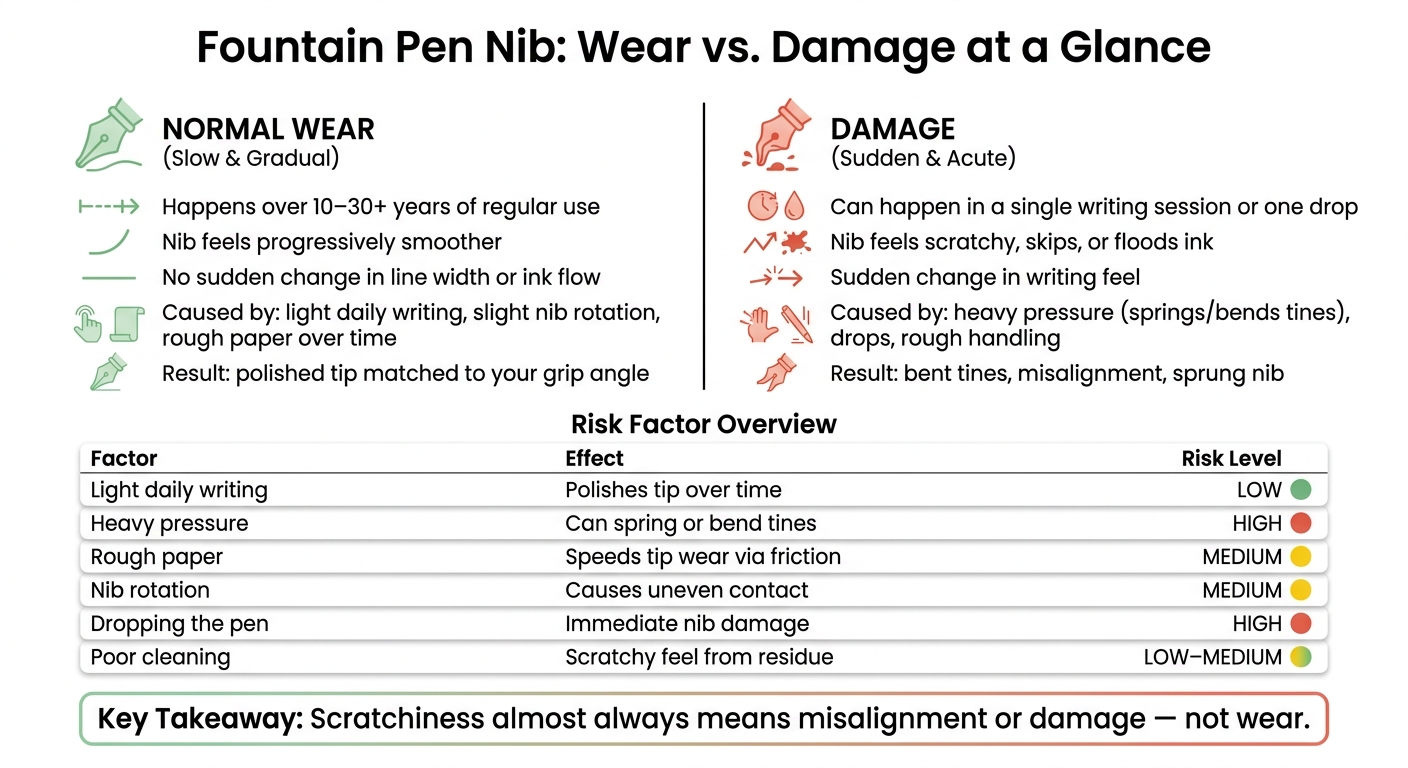
Fountain Pen Nib Wear vs. Damage: Key Factors & Risk Levels
Now that the tipping is the part that touches the page, the main question is simple: are you seeing slow wear, or sudden damage? In practice, most nibs people call "worn out" aren't worn out at all. They're bent, sprung, or just out of alignment.
Normal wear happens slowly at your usual writing angle
Normal wear is subtle. It builds up over years of regular writing as the tipping material gets lightly polished at the exact point where it meets the paper. That spot is shaped by how you hold the pen, the angle you use, and the small way you rotate it as you write.
What usually happens? The nib feels smoother, not worse. The tipping gradually polishes itself to match your grip and writing angle. And this type of wear almost never changes line width or ink flow in any meaningful way.
Too much pressure can spring or bend the nib
Fountain pens are made for a light touch. Pressing harder doesn't help. It just puts stress on the nib.
If someone writes with too much force, or tries to force line variation from a rigid nib, the tines can spread and stay that way. That's called a sprung nib. You may also see bent shoulders or notice the pen go from smooth to scratchy, with overly wet strokes. And here's the big clue: these changes can show up after just one heavy writing session. That's damage, not wear.
Drops and rough handling cause sudden problems
Impact can throw a nib off fast. A nib-first drop, a hit against a hard surface, or a pen rolling around in a bag with keys or coins can bend the tip, lift one tine higher than the other, or twist the slit off-center.
When that happens, the change in writing feel is immediate. The nib may catch on the paper in one direction, skip, or flood ink. Those are signs of misalignment or damage, not normal wear. Proper fountain pen maintenance can help you identify these issues early.
A little care goes a long way:
- Keep the cap on when the pen isn't in use
- Store it in a protective pen case
That alone prevents most of these problems.
After pressure and impact, paper, angle, and ink become the next factors that affect nib life.
How paper, writing angle, and ink affect nib life
Beyond pressure and drops, paper, writing angle, and ink all play a part in slow nib wear.
Rough paper wears tipping faster than smooth fountain pen paper
Copy paper and cheap notebooks tend to be rougher. That extra texture creates more friction, which wears tipping down faster, especially on fine nibs that see daily use. Over time, the nib may feel less smooth on upstrokes or start pulling paper fibers into the slit.
Smooth fountain pen paper cuts down that friction. Cheap copy paper is fine for a quick note. The bigger issue is spending hours each day writing on rough stock, because that's what slowly takes a toll on fine nibs.
Writing angle and rotation shape the contact point
Paper matters, but angle matters just as much. Every fountain pen has a sweet spot where the tipping meets the page cleanly. If you write at a steady angle, wear stays focused in one area. For most pens, that's about 40–55° to the page.
The bigger problem is rotation. If your grip twists the nib sideways while you write, the tipping hits the paper at more than one point instead of one steady zone. That can lead to uneven wear. The pen may feel smooth in one position, then scratchy with even a slight turn. Keep the nib centered and try not to rotate it in your fingers.
Ink and cleaning play a smaller role
Ink usually matters less. Standard fountain pen inks are made to flow without wearing down the tipping, so paper and angle have more effect, though ink can still change how the pen feels. Very saturated inks, for example, can leave more residue inside the nib and feed. If that residue dries and hardens, the pen can start to feel scratchy even when the tipping is still in good shape.
Regular rinsing helps stop residue buildup. If cleaning brings back the smooth feel, the tipping is usually fine.
Signs of real nib wear and how to make a nib last longer
Signs of true wear vs. signs of misalignment
Once you know what causes nib wear, the next step is figuring out whether you're looking at normal wear or plain old damage.
True wear changes slowly; damage changes suddenly.
That difference matters. Gradual wear tends to make the line a bit broader, and it stays consistent from one writing session to the next. Damage or misalignment is a different story. It usually shows up right away with scratching, skipping, uneven ink flow, or weak flow.
In most cases, scratchiness points to misalignment, not wear.
Simple habits that help a nib last for decades
If the nib is still structurally sound, prevention matters more than repair.
Light pressure is the single most important habit. Fountain pens are meant to let ink flow with very little force. If you press the way you would with a ballpoint, you can bend or spring the tines long before normal wear would ever become a problem.
A few simple habits help a lot:
- Rinse the pen when changing inks or after long storage
- Cap the pen whenever you set it down
- Store it in a case or on a stand to protect it from knocks
- Avoid abrasive smoothing tools, which can remove tipping and shorten nib life
If wear or damage does become serious, a replacement nib is often the most practical and affordable fix.
Conclusion: Most fountain pen nibs do not wear out quickly
With light pressure and basic care, most nibs last for decades. Pressure, rough paper, and accidental drops cause far more nib trouble than age alone. When a nib does wear out, the fix is usually a replacement nib, not a whole new pen.
FAQs
How long should a fountain pen nib last?
With the right care, a fountain pen nib can last anywhere from a few years to a lifetime.
Tipped nibs tend to last the longest. In many cases, they can keep writing well for 75 to 100 years. Untipped nibs wear out much sooner and usually last about 2 years.
A lot comes down to how you treat the pen day to day. Regular cleaning helps. So does using inks that work well with the nib and feed. And when you write, a light touch matters more than most people think.
If the nib still feels scratchy or has ink flow problems after cleaning, Fountain Pen Revolution sells affordable replacement nibs.
Can a scratchy nib be fixed?
Yes, a lot of scratchy nibs can be fixed at home. In many cases, the problem isn’t damage at all. It’s old ink, rough paper, or the way the pen is being used.
Start with the simple fix first: flush the pen and test it on smooth paper. That alone can solve the issue.
If the nib still feels scratchy, take a close look at the tines with a 10x loupe. If they’re slightly out of line, you can adjust them very gently. Only after that should you think about light smoothing.
Stop right away if you notice cracks, bent tines, or missing tipping material.
Does rough paper wear out nibs faster?
Rough paper can make a nib feel scratchy and make the pen write badly, but that usually doesn't mean the nib is being worn down for good. Good paper lets the nib glide across the page. Cheap or abrasive paper, on the other hand, can make small flaws feel worse and can let fibers or other debris collect in the nib or feed.
If your pen starts to feel scratchy, test it on fountain pen-friendly paper first. If the scratchiness goes away, the paper is probably the issue, not the nib.