

Fountain pen ink can last for decades if stored properly. Unopened bottles often remain usable for 10 to 60 years, with some vintage inks from the 1930s still functional today. However, once opened, ink is more prone to contamination, evaporation, and degradation. Proper storage - away from UV light, extreme temperatures, and contaminants - is key to preserving its quality.
Key Takeaways:
- Unopened ink: Lasts 10–60 years or more if stored correctly.
- Opened ink: Typically lasts 2–5 years but can exceed a decade with proper care.
- Signs of spoilage: Slime, mold, musty odors, or color changes.
- Tips for longevity: Store in a cool, dark place, avoid contamination, and use clean tools when refilling pens.
Modern fountain pen inks may have shorter lifespans due to reduced preservatives, especially boutique or experimental brands. Regular cleaning of pens and careful handling of ink bottles can help you enjoy your ink for years.
Do's and Don'ts of Storing Fountain Pen Ink - The Write Stuff ep. 33
sbb-itb-1dd4fe9
Does Fountain Pen Ink Expire?
Fountain pen ink doesn’t have a strict expiration date. Unlike perishable items like food or medicine, ink doesn’t suddenly stop working after a set period. In fact, some enthusiasts have successfully used bottles of Waterman and Parker Quink ink that are 50 to 60 years old without any issues. The key to keeping your ink usable lies in proper care and storage.
While the chemical stability of ink allows it to last for decades, contamination can be a problem. Dirty nibs or mishandling can introduce bacteria or other impurities, leading to slime, unpleasant odors, or visible mold. These issues don’t stem from the ink itself but rather from external contamination.
Changes in regulations also play a role. Since 2008, the EU has restricted certain biocides, making modern ink formulations more susceptible to contamination compared to older ones. This is especially true for boutique or experimental inks with limited preservatives, which may only last 2 to 5 years. Similarly, iron gall inks tend to degrade more quickly than dye-based inks.
For pigmented inks, sediment naturally collects at the bottom of the bottle over time. This doesn’t mean the ink has gone bad - a quick shake usually restores it. However, warning signs of spoilage include a musty odor, stringy slime when stirred, or visible mold floating on the surface.
Some brands, like Montblanc, offer a five-year "best before" guarantee as a quality standard. However, brands such as Diamine, Waterman, and Parker don’t include expiration dates. With proper storage, their inks can remain usable for decades.
What Is the Shelf Life of Bottled Fountain Pen Ink?
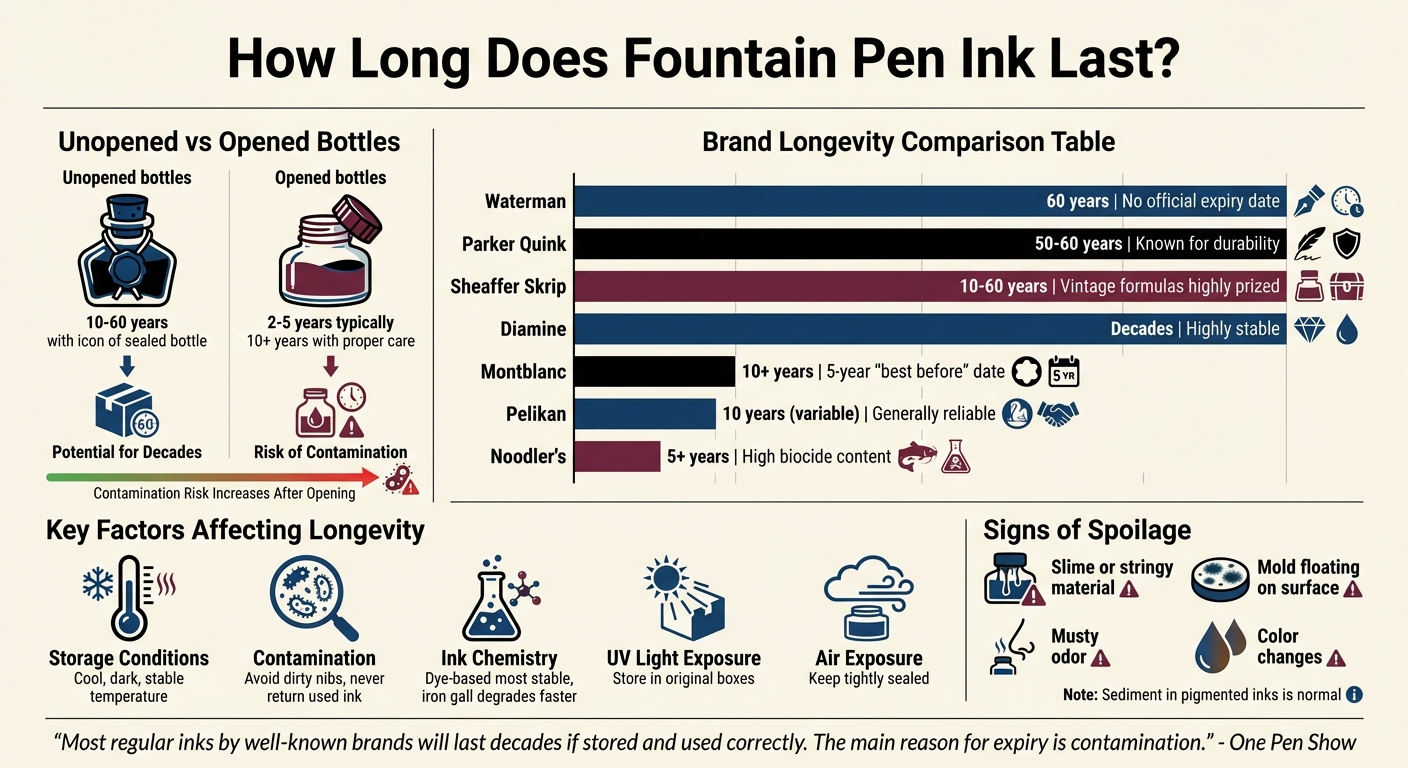
Fountain Pen Ink Shelf Life by Brand and Storage Condition
Fountain pen ink stored in unopened bottles can last for decades. In fact, some vintage bottles from the 1930s are still usable today. Collectors often use "New Old Stock" inks that are 50 or 60 years old without any issues.
However, once a bottle is opened, things change. Opened bottles are more vulnerable to contamination from dirty nibs, airborne bacteria, mold spores, and even evaporation if the cap isn’t tightly sealed. While manufacturers typically suggest a shelf life of 2 to 5 years for modern inks, many fountain pen enthusiasts have found that opened bottles from reputable brands can last over a decade if stored properly.
The key difference between unopened and opened bottles lies in their exposure. Unopened bottles are sealed and sterile, while opened ones require careful handling to avoid contamination or air exposure. Let’s dive deeper into the factors that influence ink longevity and how different brands measure up.
Factors That Affect Bottled Ink Longevity
The lifespan of bottled ink depends on several factors, from how you store it to its chemical composition. Here’s a closer look:
- Storage conditions: Temperature and light exposure play a huge role. Extreme heat or cold can destabilize the ink’s formula, and direct sunlight can fade its color. To keep ink in good condition, store bottles in a climate-controlled space, preferably in their original boxes to block UV light.
- Contamination: Dirty nibs dipped into bottles introduce bacteria and mold. To avoid this, never pour used ink from a pen back into the original bottle. Instead, use a separate vial for sampling. Before using older ink, check for contamination by stirring it with a clean toothpick. If stringy material sticks to the toothpick, the ink has gone bad.
- Ink chemistry: Dye-based inks are generally more stable over time, though they can fade if exposed to sunlight. Pigment-rich inks tend to settle but can be revived with a good shake. This settling doesn’t mean the ink has spoiled. On the other hand, iron gall inks - known for their acidity - don’t age as well as dye-based options.
Modern regulations have also impacted ink longevity. Since 2008, EU restrictions on biocides (preservatives that prevent bacterial growth) have led to shorter shelf lives for some newer inks. Boutique or experimental inks with fewer preservatives may only last 2 to 5 years.
Shelf Life Comparison Across Brands
Collectors and pen enthusiasts have noted varying lifespans across ink brands, often influenced by factors like formulation and storage practices. Here’s a breakdown of how different brands stack up:
| Brand | Reported Longevity (Anecdotal) | Official Expiry/Stance |
|---|---|---|
| Waterman | 60 years | No official date provided |
| Parker Quink | 50-60 years | Known for durability |
| Diamine | Decades | Highly stable |
| Montblanc | 10+ years | 5-year "best before" date |
| Sheaffer Skrip | 10-60 years | Vintage formulas highly prized |
| Noodler's | 5+ years | High biocide content reported |
| Pelikan | Variable (some reports of 10 years) | Generally reliable |
Montblanc is one of the few brands to include a specific "best before" date, which is set at five years as a quality benchmark. However, this doesn’t mean the ink becomes unusable after that time - it’s simply a conservative guideline. On the other hand, brands like Waterman, Parker, and Diamine omit expiration dates because their inks often remain functional for decades with proper care.
"Most regular inks by well-known brands will last decades if stored and used correctly. The main reason for expiry is contamination." - One Pen Show
How Long Do Fountain Pen Ink Cartridges Last?
Unopened fountain pen ink cartridges can last for several years before drying out completely. Unlike bottled ink, these cartridges are encased in plastic, which is slightly porous. Over time, this allows some water content to evaporate slowly. However, thanks to their factory sealing, cartridges are well-protected from bacterial contamination, which is the primary cause of ink spoilage.
Once in use, how quickly a cartridge runs out depends on your writing habits. For instance, nib size plays a big role. A fine nib can typically produce around 45 pages of writing, while medium and broad nibs manage about 18 and 14 pages, respectively.
Other factors, like using specialty nibs (broad, stub, italic, or calligraphic), high-absorbency paper, or wet-flowing ink, can make the ink deplete even faster.
Tips to Extend the Life of Fountain Pen Ink
Proper Storage Techniques
Keeping your fountain pen ink in good condition starts with how you store it. Contamination and temperature control are crucial. Place ink bottles in a cool, dark spot with a stable temperature - like a drawer - to protect them from UV light, which can fade colors and change the ink's composition over time. Glass bottles are ideal for storage because they’re non-porous, unlike plastic containers, which can allow water to evaporate over time, leaving behind dried pigments. Always ensure the bottle is tightly sealed when not in use, and wipe the rim before closing to maintain an airtight seal. For ink cartridges, which are often made of porous plastic, storing them in an airtight ziplock bag can slow down evaporation. Additionally, practice careful filling methods to avoid contamination.
Avoiding Contamination
Contamination is one of the main reasons ink goes bad. Shawn Buckles, a fountain pen enthusiast and author, emphasizes this point:
"Most inks that go bad do so because of contamination. The easiest way to contaminate your ink is by putting in your dirty pen when filling straight from the bottle."
To reduce this risk, always flush your pen's feed with water using a bulb syringe or converter before refilling. Instead of dipping your pen directly into the ink bottle, use a sanitized syringe to transfer a small amount of ink into a clean container. Also, never pour unused ink from your pen back into the original bottle - this can introduce bacteria or paper fibers. Regular cleaning and careful handling go a long way in preserving your ink.
Using Ink Regularly
Regular use not only keeps your ink fresh but also helps maintain its pigment-to-water ratio, minimizing evaporation and preventing particles from settling permanently. As Shawn Buckles, author of OnePenShow, explains:
"Any ink you use a lot won't last you more than a couple of years anyway. Most ink can be stored on top of your desk and stay good for 2-3 years without problems."
To make your ink last longer, rotate through your collection, using older bottles before newer ones. For shimmer inks or highly saturated ones, give the bottle a gentle tilt before filling to redistribute settled particles. Regular use and proper care will help you enjoy your ink for years to come.
How Long Does a Bottle of Ink Last During Use?
The lifespan of a 50ml ink bottle varies based on factors like nib size, how often you write, and the type of paper you use. For instance, with a fine nib, you can get around 3,200 A4 pages from one bottle. A medium nib, however, yields about 1,250 pages, and a broad nib produces roughly 1,000 pages. Let’s break down how nib size plays a major role in ink consumption.
Nib size is the biggest factor in determining how quickly you go through ink. EndlessPens explains, "Finer nibs will create thinner lines and therefore use less fountain pen ink. Broad, stub, italic, or calligraphy nibs will use more ink to create a wider line variation”. To put it into perspective, 1ml of ink can write about 64 pages with a fine nib, but only 25 pages with a medium nib and 20 pages with a broad nib. This means using a fine nib can stretch your ink bottle 1.6 times longer compared to a medium nib. Beyond nib size, the type of paper you write on also impacts ink efficiency.
Highly absorbent papers, like Midori, soak up more ink with each stroke. On the other hand, fountain-pen-friendly papers, such as Clairefontaine, are designed to conserve ink. Writing on low-quality, porous paper will deplete your ink supply much faster.
Your pen’s filling system also influences how often you’ll need to refill. For example, a standard short cartridge (0.7ml) lets you refill about 71 times from a 50ml bottle, while an eyedropper pen (2.5ml capacity) will only allow for 20 refills. If you’re someone who writes just a few pages daily with a medium nib, a single bottle of ink could last you several years.
To get the most out of your ink, consider using an extra-fine or fine nib along with non-absorbent paper. This pairing not only extends your ink’s lifespan but also ensures your writing stays crisp and clean on the page.
Conclusion
The longevity of fountain pen ink largely depends on how it’s stored and handled.
When stored correctly, fountain pen ink rarely goes bad. High-quality inks from reputable brands can last anywhere from 10 to 60 years if kept in the right conditions and free from contamination. To maximize shelf life, store your ink in a cool, dark place in an airtight container. Avoid contamination by cleaning your pens thoroughly before refilling them directly from the bottle, and never pour unused ink back into the original container. If you notice any signs of spoilage, it’s best to discard the ink immediately. As fountain pen collector John wisely shares:
"With proper care, a bottle of best fountain pen ink... should be safe to use until the very last drop".
Regular use also plays a key role in maintaining ink consistency. Using a fountain pen cleaning solution to flush your pens every few weeks helps prevent ink from drying out and clogging the feed, ensuring both your pens and ink remain in great condition.
For dependable options, Fountain Pen Revolution provides inks tailored for enthusiasts seeking reliable performance. Ultimately, proper storage, avoiding contamination, and consistent use are the keys to preserving fountain pen ink for years to come. By following these practices, you can enjoy your ink down to the very last drop.
FAQs
Is it safe to use old ink?
It's usually safe to use old fountain pen ink if it doesn't show any signs of contamination. Stay away from ink that has developed slime, mold, an unpleasant odor, or visible color changes. With proper storage, most fountain pen inks can remain usable for decades without any problems.
Can spoiled ink damage my pen?
Spoiled ink can harm your pen by leading to clogs, corrosion, or even mold growth. To avoid these issues, store your ink properly and clean your pen regularly - especially if the ink appears contaminated or hasn't been used in a while.
How should I store ink for maximum life?
To keep your fountain pen ink in great condition for as long as possible, store it in airtight glass bottles in a cool, dark, and dry spot - a drawer works perfectly. Always make sure the bottles are upright and the caps are tightly sealed to avoid leaks or contamination. Aim for a stable environment with a temperature of 60–70°F and humidity levels between 40–60%. Avoid exposing the ink to heat, sunlight, or moisture. It's also a good idea to check the ink regularly for any signs of spoilage and use clean tools when handling it to keep it free from contaminants.