

A scratchy fountain pen nib can ruin your writing experience, but most issues are easy to fix at home. Common causes include misaligned tines, ink residue, or using unsuitable paper. Here's how to troubleshoot and resolve the problem:
- Clean the nib: Flush it with water or a cleaning solution to remove dried ink or debris.
- Inspect with a loupe: Use a 10× magnifier to check for uneven tines or imperfections.
- Adjust your writing technique: Write with minimal pressure at a 45-degree angle.
- Realign tines: Gently adjust misaligned nib tines for smoother strokes.
- Smooth the nib: Use a 12,000-grit micro-mesh sheet for minor imperfections.
- Clear debris with a brass shim: Remove obstructions between the tines.
If these steps don’t help or the nib is damaged, consult a professional nibmeister. Regular maintenance and proper technique can restore the smooth glide of your fountain pen.
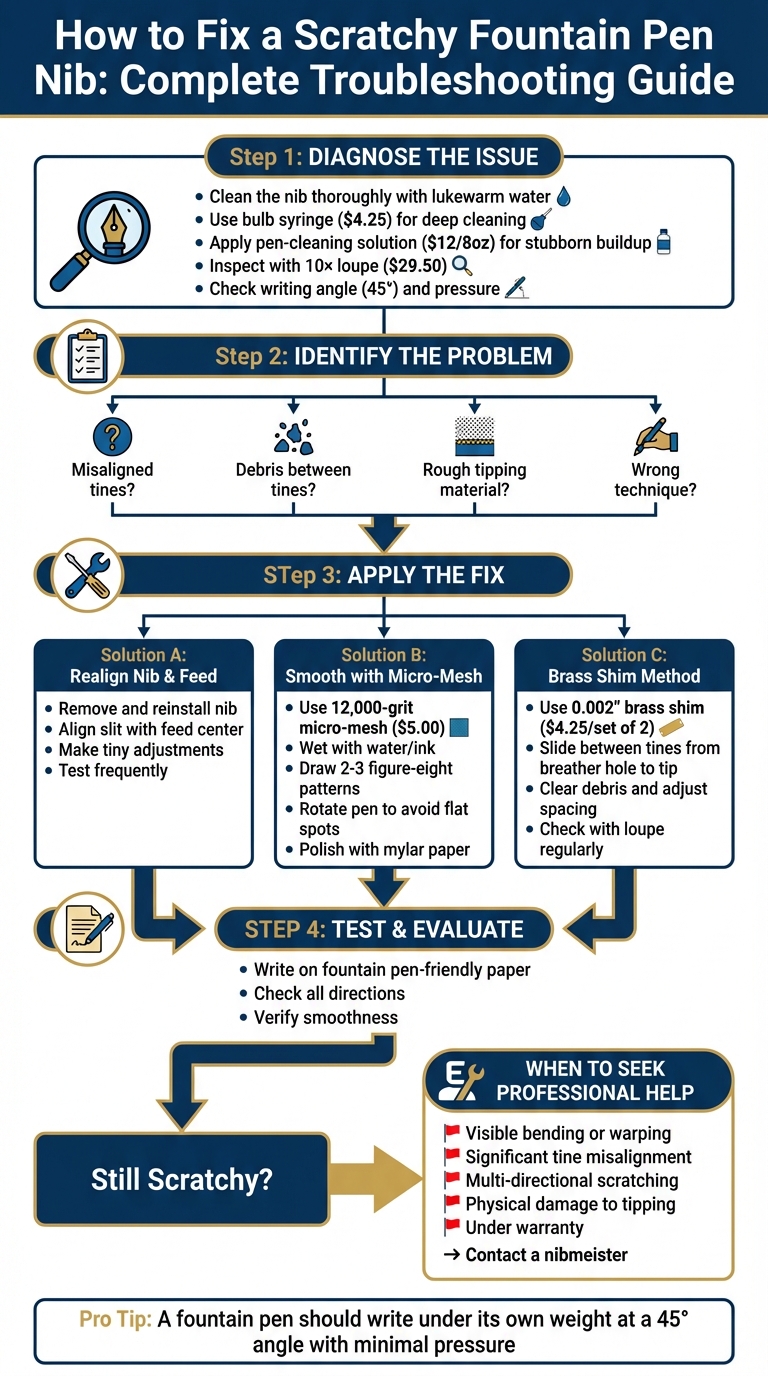
Step-by-Step Guide to Diagnosing and Fixing a Scratchy Fountain Pen Nib
How to smooth a scratchy fountain pen nib
sbb-itb-1dd4fe9
Scratchiness vs. Normal Feedback
It's important to tell the difference between normal tactile feedback and problematic scratchiness; not every rough sensation means your nib is faulty.
What is Scratchiness?
Scratchiness signals an issue. It happens when the nib catches or snags on the paper, often in a specific direction, like when one tine of the nib is slightly higher than the other. For example, if your pen feels rough only on left-to-right strokes or downstrokes, there's a good chance a misaligned tine is dragging against the paper fibers.
This can lead to tearing paper, feathering ink, or pulling up fibers. Hanna Struk, a writer for Scriveiner, puts it well:
A new nib should generally feel smooth from the start. Very slight feedback can occur depending on the nib design and paper used, but noticeable scratchiness usually indicates misalignment, paper texture, or ink flow issues rather than a break-in period.
What is Feedback?
Feedback, on the other hand, is completely normal. It's the tactile sensation - often compared to writing with a pencil - that lets you feel the texture of the paper. Many writers actually enjoy this because it enhances control and creates a sense of connection with the writing surface. Unlike scratchiness, feedback is consistent across all directions and doesn’t catch or snag.
If switching to smoother, fountain-pen-friendly paper eliminates the rough sensation, then what you were feeling was natural feedback from textured paper - not a nib problem.
Recognizing these differences helps you identify and address nib-related issues with confidence.
Diagnosing the Problem
Before diving into repairs, it’s crucial to figure out what’s causing the scratchiness. Sometimes, dried ink or debris can mimic issues with the nib itself. Follow these steps to identify the root of the problem.
Clean the Pen Completely
Ink residue in the feed can lead to "dry flow", which makes the nib feel rough even if the tines are aligned correctly. Start by rinsing the nib and feed under lukewarm water until the water runs clear. For a deeper clean, use a bulb syringe (about $4.25) to push water through the section. If stubborn buildup remains, try flushing the pen with a pen-cleaning solution (around $12 for an 8 oz bottle). Once cleaned, let the pen dry completely before refilling it. Testing with a different ink or a fresh cartridge can help you rule out ink-specific issues as the culprit.
Examine the Nib with a Loupe
After cleaning, grab a 10× loupe (approximately $29.50) to take a closer look at the nib. Check that both tines are level - if one is higher, it will drag and cause scratching. Brian K. from The Goulet Pen Company explains:
When properly viewing a nib through a loupe... you will look across the writing surface to see the tine alignment.
Inspect the nib from multiple angles - side, top, bottom, and the writing angle. Look for uneven tines, debris in the slit, or any irregularities in the tipping material that might interfere with smooth writing.
Check Your Writing Angle and Pressure
Sometimes, scratchiness is more about technique than the pen itself. Fountain pens are designed to write with minimal pressure, relying on their own weight. As Scriveiner points out:
A fountain pen should write under its own weight. Allowing the nib to glide across the page with minimal pressure often improves smoothness immediately.
Make sure the nib slit stays facing upward so both tines make even contact with the paper. Aim for about a 45-degree angle between the nib and the writing surface for the best ink flow and performance. If you’re used to ballpoint pens, you might be pressing too hard, which can create the sensation of scratchiness even in a well-functioning fountain pen.
Fixing Common Nib Problems
Based on your diagnosis, you can try one of the following fixes. Work carefully and check your progress often to avoid making things worse.
Realign the Nib and Feed
If you’ve determined that the tines are misaligned, start by removing and reinstalling the nib and feed, ensuring the nib slit aligns perfectly with the center of the feed. If one tine still sits higher than the other, gently lower the high tine or raise the low one. Make tiny adjustments at a time and test frequently. This approach works well for fixing scratchiness that occurs when writing in a specific direction.
Smooth the Nib with Abrasive Materials
If the nib’s tipping material has tiny imperfections, smoothing may be necessary. A 12,000-grit micro-mesh sheet is a great tool for this. For example, Fountain Pen Revolution offers one for $5.00, which is ideal for this task. Wet the micro-mesh with water (or use ink as lubrication) and apply light pressure as you draw 2–3 figure-eight patterns. According to Fountain Pen Revolution:
"It is a good idea to rotate the pen just a bit while making the figure eight pattern to avoid grinding a flat spot onto the round ball tipping of the nib."
After every few strokes, test the nib on regular paper. If the scratchiness is worse in one direction, focus a little extra attention on that angle. Once the nib feels smoother, you can use mylar paper for a final polish to achieve a glassy finish. Keep in mind that smoothing your nib yourself will likely void the manufacturer’s warranty. If imperfections or debris persist, try the brass shim method for additional refinement.
Use the Brass Shim Method
Scratchiness can sometimes be caused by dried ink, paper fibers, or debris stuck between the nib tines. A brass shim - a thin sheet of brass about 0.002 inches thick - can help clear these obstructions and improve ink flow. Brass shims are often sold in sets of two for around $4.25. To use one, gently slide it between the tines, starting at the breather hole and moving toward the tip. This can also help if the tines are too close together. Use a loupe to check your progress regularly and ensure you’re not forcing the tines too far apart. If the shim doesn’t solve the problem, or if the tines need more precise adjustment, it might be time to consult a professional.
When to Get Professional Help
Some nib problems are best left to the experts. Trying to fix certain issues yourself can permanently damage the nib's tipping material, making repairs more expensive. As Hanna Struk explains, "If the nib requires significant smoothing, professional adjustment is usually recommended."
Here’s how to tell when it’s time to call in a professional.
Signs You Need Professional Repair
Physical damage - like bending or warping - needs immediate attention from a professional. If the nib looks structurally damaged when viewed from the side or top, stop using it right away. Fixing such problems requires specialized tools to reshape the metal without causing further harm. Similarly, tines that are significantly misaligned and easily noticeable to the naked eye should be adjusted by a skilled nibmeister who can make precise corrections.
Another red flag is multi-directional scratching. If your pen drags or catches in all directions, rather than just one angle, it could indicate a poor factory grind or damaged tipping material. If you’ve already tried cleaning, switching inks, adjusting your writing angle, or using a brass shim and the issue persists, avoid further DIY attempts. Continuing to tinker could make things worse.
If these problems continue after basic cleaning and adjustments, professional help is your best option. For new pens or those still under warranty, reach out to the retailer first. Attempting repairs yourself could void the warranty or limit your chances of getting a replacement. Many U.S. fountain pen retailers provide recommendations for trusted nibmeisters who can handle these issues.
When looking for a professional, search for a "nibmeister" - a term used for specialists trained to fix complex nib problems. Before sending your pen for repair, take a close-up photo of the nib using a 10× loupe. This documentation can help the nibmeister quickly identify the issue and provide the right solution.
Conclusion
Fixing a scratchy fountain pen nib is typically a manageable process. Most of the time, the issue stems from everyday factors like ink residue, misaligned tines, or incompatible paper rather than irreversible damage. Start with the basics: give your pen a thorough cleaning and inspect the nib under a loupe to identify potential alignment issues.
Once you've pinpointed the problem, try gentle fixes such as realigning the tines or using a brass shim to remove debris. If the scratchiness persists, you can use micro-mesh or mylar paper to smooth out minor imperfections on the nib. Just take it slow and test frequently. As Hanna Struk wisely points out, "A fountain pen should write under its own weight. Allowing the nib to glide across the page with minimal pressure often improves smoothness immediately."
It's also important to distinguish between natural feedback and true scratchiness. This understanding helps you decide whether your pen needs actual repair or if you're simply adjusting to its unique writing feel. However, know your limits with DIY repairs. If the nib is visibly bent, the tines are severely misaligned, or your efforts aren't yielding results, it's best to consult a professional nibmeister. This is especially true for high-value or sentimental pens, where the risk of causing further damage outweighs any potential DIY success.
FAQs
How do I tell feedback from real scratchiness?
To figure out if you're dealing with genuine scratchiness or just feedback, pay attention to a few key signs: uneven ink flow, a rough nib sensation, or the nib catching on the paper. If the scratchiness happens only in certain directions or on smoother paper, it could mean the tines are misaligned or the nib's surface is rough. A magnifier can help you spot misaligned tines or tiny burrs. If the writing feels rough on smooth paper, it's probably an issue with the nib rather than the paper itself.
What’s the safest first fix for a scratchy nib?
The easiest and safest way to address a scratchy nib is by checking the alignment of the nib tines. Misaligned tines are a common culprit for scratchiness. To fix this, use a soft tool like the edge of a credit card to gently realign them. A magnifier can help you get a closer look to ensure everything is in place. Be careful not to use too much pressure, as that could cause damage. Once adjusted, test the nib on paper to see if it writes smoothly before moving on to other methods.
How can I smooth a nib without ruining it?
To smooth a nib without causing damage, take your time and proceed with care. Start by checking the alignment of the tines. You can gently adjust them using a soft tool, such as the edge of a credit card. Next, inspect the nib under a magnifier with 10× to 20× magnification to ensure everything looks correct. For the actual smoothing process, use fine abrasives like micro-mesh or Mylar paper. Apply light pressure while working, and test the nib frequently to avoid over-polishing or wearing down the tipping material.