

When deciding between ebonite and acrylic for fountain pens, durability and maintenance are key factors. Here's a quick breakdown:
- Ebonite: A vulcanized natural rubber known for its warm, textured feel and ability to last over a century. However, it requires careful upkeep to prevent oxidation and discoloration. Exposure to light, heat, and moisture can dull its finish, though proper storage and occasional polishing can help maintain its appearance.
- Acrylic: A synthetic resin offering vibrant colors and low-maintenance durability. It resists oxidation and retains its look for decades but is more prone to cracking if dropped. Simple cleaning keeps it looking fresh, and minor scratches can be polished out.
The choice depends on your priorities. For a long-lasting, tactile writing experience, ebonite is a great option if you're willing to invest time in care. Acrylic suits those seeking a durable, colorful, and easy-to-maintain material.
Quick Comparison
| Factor | Ebonite | Acrylic |
|---|---|---|
| Longevity | Over 100 years with care | 20–30 years with minimal care |
| Feel | Warm, textured, non-slip | Cool, smooth, and hard |
| Maintenance | High: avoid light/moisture | Low: simple cleaning |
| Durability | Vulnerable to UV and impacts | Resistant to UV, cracks with impact |
| Appearance Aging | Oxidizes, may discolor | Retains color and clarity |
Your decision comes down to whether you prefer the heritage and feel of ebonite or the vibrant, low-maintenance appeal of acrylic.
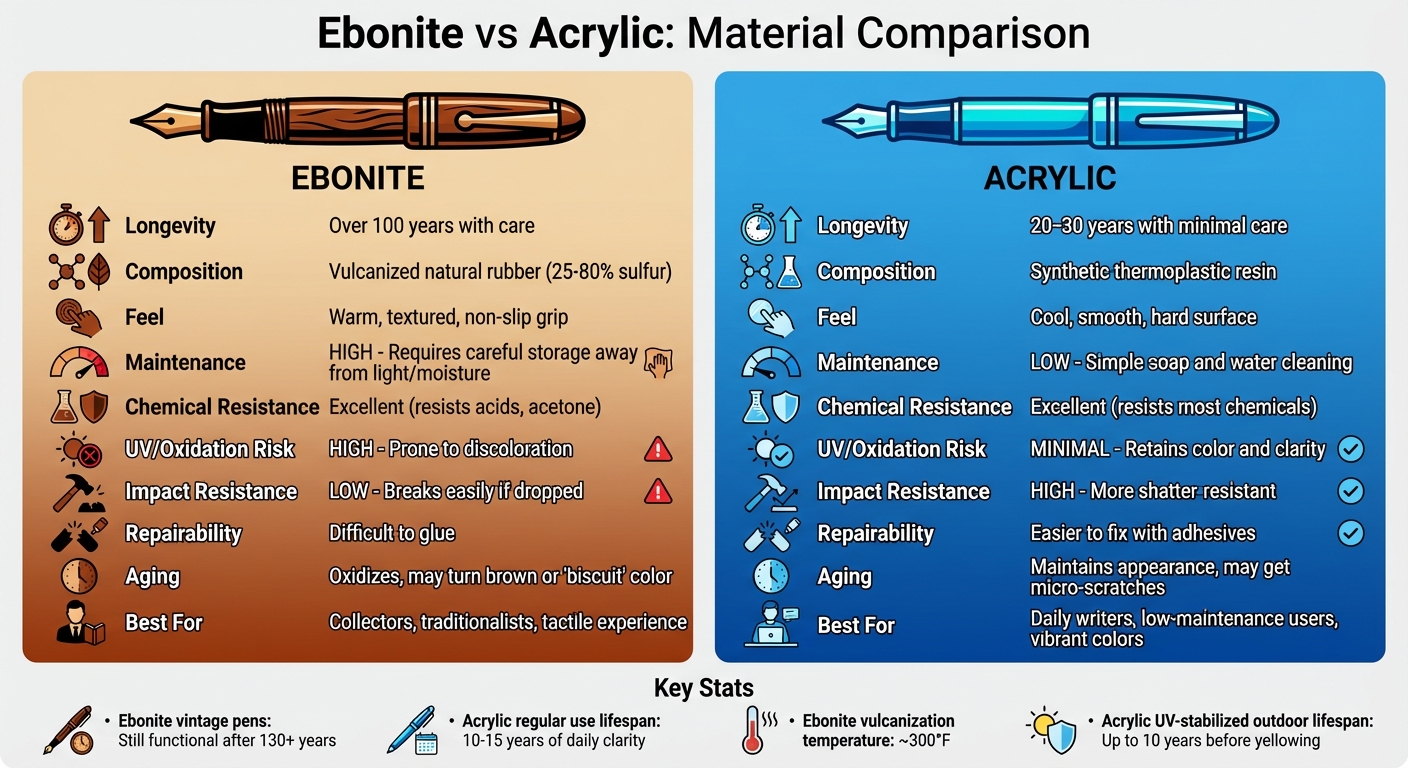
Ebonite vs Acrylic Fountain Pen Material Comparison Chart
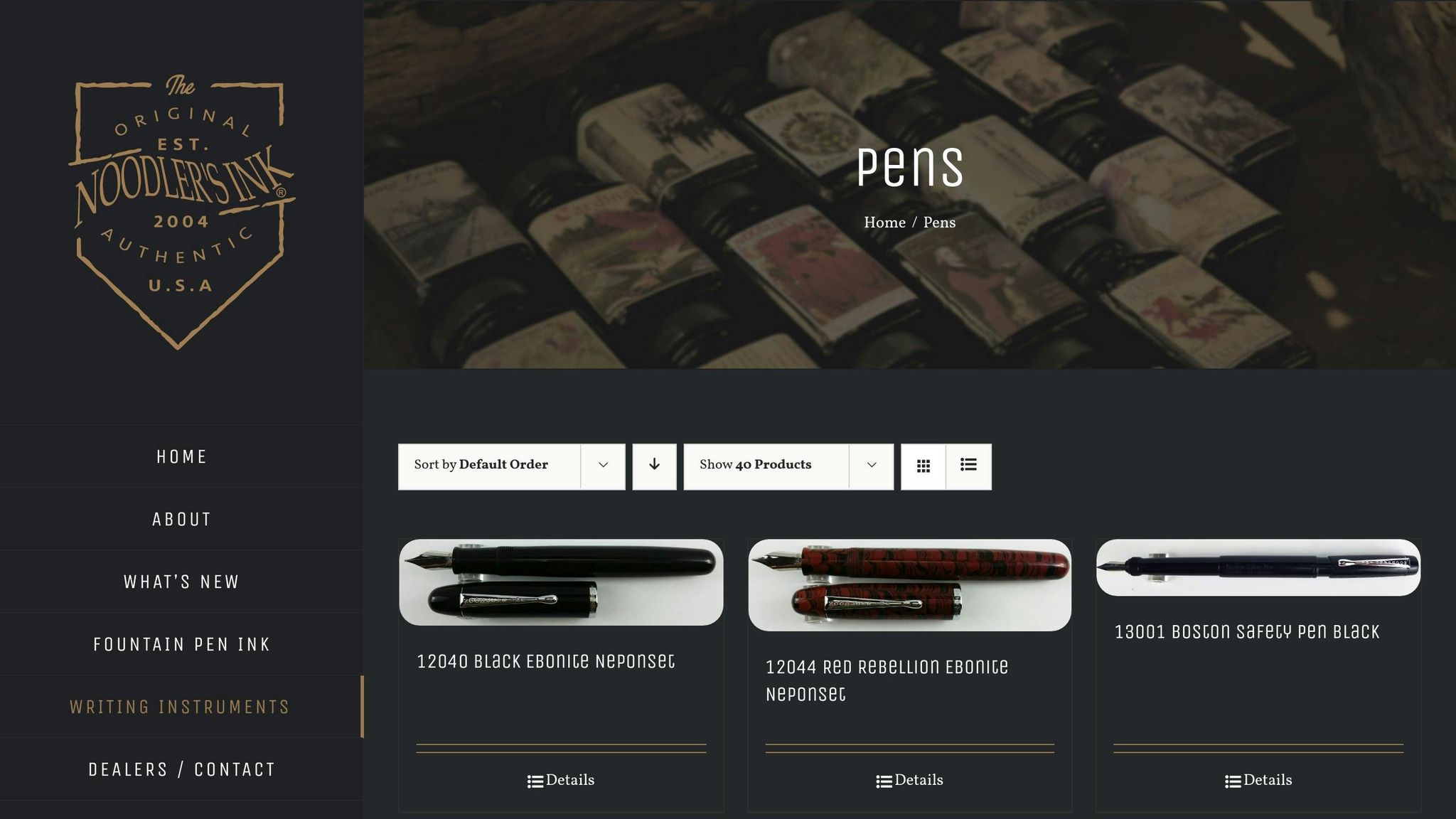
Noodler's Konrad (Ebonite and Acrylic)
sbb-itb-1dd4fe9
How Long Does Ebonite Last?
Ebonite has been a staple in pen manufacturing for over a century. Some vintage pens made from this material, dating back more than 130 years, are still functional today. This impressive durability comes from the vulcanization process, where natural rubber is treated with 20–50% sulfur at approximately 300°F. The result is a material far more robust and chemically stable than raw rubber. Let’s dive deeper into its resistance to wear and how aging affects its appearance.
Chemical and Wear Resistance
Ebonite’s chemical stability ensures it can withstand ink corrosion and exposure to acids, making it a reliable choice for long-term use. As jar, a Senior Member of FPGeeks, remarked:
Ebonite produces a pen body that is warm to the touch, non-slip, long lasting, durable, attractive and aesthetic.
Its durability also extends to daily wear and tear. Ebonite’s structure and ability to insulate against heat help prevent leaks caused by temperature changes. However, while it resists chemical damage, its mechanical strength is more limited, meaning it’s less resistant to physical impacts. Now, let’s explore how time and exposure can alter its appearance.
Aging and Oxidation
One of ebonite’s key vulnerabilities is oxidation, which primarily affects its appearance. Factors like light, humidity, and heat can cause sulfur to migrate to the surface, forming an oxidized layer that dulls the finish. Black ebonite often transitions to a dark brown tone before eventually lightening to a "biscuit" color over time. Vintage pen expert David Nishimura explains:
Hard rubber is a very stable material, but it is vulnerable to fading when exposed to bright light... once light-damaged even cold water may cause it to suddenly fade or spot.
To preserve ebonite’s appearance, it’s best to store pens away from direct sunlight and avoid prolonged water exposure. While polishing can remove the oxidized layer and restore the original finish, this process may also erase decorative details or manufacturer imprints. With proper care - such as keeping pens in dark storage and minimizing contact with moisture and heat - ebonite can maintain both its functionality and aesthetic appeal for over a century.
How Long Does Acrylic Last?
acrylic is a favorite material for modern ebonite and acrylic fountain pens, thanks to its chemical stability and resistance to the oxidation issues that can plague ebonite. When cared for properly, acrylic can last between 20–30 years, with regular use maintaining its clarity and performance for about 10–15 years. This durability sets it apart from ebonite, which, while sturdy, demands more meticulous upkeep to retain its appearance.
Acrylic’s synthetic nature ensures consistent quality and offers a wide range of vibrant color options. As Jon Szanto, a Senior Member at Fountain Pen Geeks, points out:
"Acrylic pens will likely come in more flamboyant colors, and frequently more color choices. I believe... that the acrylic is easier to machine."
Next, let’s explore how acrylic’s structure holds up to daily use and its overall resilience.
Structural Strength
Acrylic handles daily writing conditions well, though it is more brittle than ebonite when exposed to significant impacts. For instance, dropping an acrylic pen on a hard surface can lead to cracks or even a shattered barrel. However, under normal use, acrylic remains a dependable material. It’s prone to surface micro-scratches from everyday handling, but these are usually superficial and can be polished out using specialized plastic polishing compounds. This ability to restore its surface helps keep acrylic pens looking nearly new, even after years of use.
Staining and Maintenance
Proper maintenance is key to extending the lifespan of any pen material. Acrylic’s non-porous nature makes it resistant to ink stains. However, in eyedropper-style pens, where ink stays in contact with the barrel for extended periods, highly saturated inks may cause discoloration if not cleaned promptly. Vincent Li, Co-founder of Feilong Acrylic, explains:
"Acrylic plastic can last well over a decade. It stays clear, strong, and functional for 10 to 15 years or longer when you shield it from direct UV exposure, rough handling, and extreme temperatures."
To maintain acrylic pens, avoid using ammonia-based cleaners or alcohol, as these can cause fogging or micro-cracks. Instead, stick to mild soap, warm water, and a microfiber cloth for cleaning. With these simple precautions, acrylic pens can remain both visually appealing and functional for many years.
Ebonite vs Acrylic: Direct Comparison
Here’s a closer look at how ebonite and acrylic stack up against each other in terms of durability and longevity. Each material has its own advantages and challenges that can influence how well it holds up over time.
Ebonite, made from vulcanized natural rubber with 25%-80% sulfur, offers strong resistance to chemicals like acids and acetone. However, it’s highly sensitive to UV light and moisture, which can lead to oxidation. As Danny Watts from Fountain Pen Chronicles explains:
"Black ebonite is susceptible to sun damage that is not evident until the ebonite gets wet. Then the black or aged brown turns green."
On the other hand, acrylic, a thermoplastic, resists oxidation and retains its color and structure for decades. It’s more impact-resistant than ebonite, but it can crack if dropped on hard surfaces. While ebonite provides a warm, non-slip grip, acrylic feels cooler and smoother in the hand.
Comparison Table
| Factor | Ebonite | Acrylic |
|---|---|---|
| Chemical Resistance | Withstands acetone and acids but vulnerable to UV and moisture-based oxidation | Highly resistant to most chemicals, including acetone and cleaning solutions |
| Aging & Oxidation | High risk of discoloration from light and moisture exposure | Minimal risk; retains color and structure over the years |
| Impact Resistance | Low; prone to breaking if dropped | High; resists shattering under normal conditions |
| Tactile Feel | Warm, soft, and non-slip | Cool, hard, and smooth |
| Maintenance Difficulty | Requires careful storage away from light; cleaning can be tricky | Easy to clean with mild soap and water |
| Repairability | Hard to glue due to its chemical properties | Easier to fix with proper adhesives |
This breakdown shows that the decision between ebonite and acrylic depends on what you value most. If you’re drawn to the traditional, warm feel of ebonite, it’s a great choice - though it demands more care. Acrylic, however, offers durability and requires less upkeep, making it ideal for those who prefer low-maintenance materials. Both can last for decades, but acrylic’s resilience makes it easier to preserve over time. Up next, we’ll share tips to help you maintain your fountain pen for years to come.
Maintenance Tips for Long-Term Durability
Taking proper care of ebonite and acrylic fountain pens can ensure they last for decades. Each material has its own vulnerabilities, so understanding how to address these is key to preserving their beauty and functionality.
Caring for Ebonite Pens
Ebonite is particularly sensitive to UV light and moisture, which can trigger sulfur migration. This process may lead to discoloration and an unpleasant odor. To minimize this, store your ebonite pens in closed cases or drawers, away from direct sunlight or heat sources. These precautions can go a long way in maintaining the material's integrity.
If the pen's shine starts to fade, a specialized ebonite polish can help. As Stefan, a tobacconist and pipe enthusiast, explains:
"With minimal effort, the ebonite polish removes the sulphur contamination and restores the deep, wet gloss black of the ebonite."
When it comes to lubrication, avoid petroleum-based products, as they can damage the rubber components. Instead, opt for castor oil. Daniel, a senior member of FPGeeks, warns:
"Petroleum products dissolve latex rubber... hard rubber is latex rubber... it follows that petroleum jelly is harmful for hard rubber."
For threads, use pure silicone grease rather than petroleum jelly. Additionally, avoid cleaners containing diluted chlorine unless absolutely necessary, as they can erode the surface and leave it rough.
Now, let’s shift focus to acrylic pens, which require a slightly different approach.
Maintaining Acrylic Pens
Acrylic, being synthetic, doesn’t oxidize like ebonite but is more prone to scratches. To clean, use mild soap and warm water. Blow off any dust before wiping to prevent micro-scratches. Avoid ammonia-based cleaners or standard glass cleaners, as these can cloud the acrylic’s surface.
Keep acrylic pens out of direct sunlight and extreme heat to prevent warping or expansion. While many modern acrylics are UV-stabilized and can last up to 10 years in sunlight before yellowing, it’s still wise to limit exposure.
To keep the pen’s glossy finish, use a plastic polish like VuPlex. Acrylic surfaces can attract dust due to static buildup, so an anti-static spray can help reduce this. For minor scratches, a fine abrasive polish can restore the surface. For deeper scratches, use a wet sanding process starting with 600-grit sandpaper, then move to 800-grit and 1200-grit before applying a final polish.
Which Material Lasts Longer?
When it comes to longevity, both materials stand out in their own ways. Ebonite, a vulcanized natural rubber, has a proven track record of lasting over a century. Vintage pens made from ebonite still function smoothly, showcasing its durability. Its natural ability to maintain ink flow and the option to physically adjust or repair it over time make it a favorite among traditionalists. As Danny Watts, author of Fountain Pen Chronicles, puts it:
"With ebonite, you can make adjustments to the feed as needed. The feed can be sanded, milled, or bent to increase or decrease ink flow."
Acrylic, by contrast, offers exceptional structural strength and chemical stability. It resists warping, UV damage, and fading, keeping its vibrant colors intact with little effort. Unlike ebonite, acrylic doesn't demand specialized care or polishing, making it a "set it and forget it" option for those who value convenience.
Your choice ultimately depends on what matters most to you. If you appreciate repairability, a classic tactile feel, and a connection to tradition, ebonite might be the perfect fit. On the other hand, acrylic is ideal for those seeking low-maintenance durability, color retention, and resistance to ink stains.
For daily writers who prioritize ease of use, acrylic’s resilience is hard to beat. Meanwhile, collectors and enthusiasts drawn to the warmth and heritage of a century-old material may find ebonite more appealing. Both materials bring something unique to the table, catering to different writing needs and preferences.
FAQs
How can I prevent ebonite from oxidizing?
To keep ebonite from oxidizing, it's best to store it in a cool, dry spot, away from direct sunlight and high humidity. These conditions speed up oxidation and can lead to discoloration. Make sure to clean the surface regularly and use protective oils or treatments made specifically for vulcanite. This helps preserve its look and durability over time.
What should I do if my acrylic pen cracks?
If your acrylic pen develops a crack, it's best to stop using it right away to avoid worsening the damage. You might want to have it repaired by a professional or even replaced, depending on the severity. While acrylic is strong, it can still crack from impact or over time. Taking care of your pen and handling it gently can go a long way in keeping it in good condition.
Which material is better for everyday carry?
Acrylic tends to be a more practical choice for everyday use because of its toughness and resistance to impacts. It can handle daily wear and tear without cracking or sustaining significant damage. On the other hand, while ebonite has a warm and natural texture that many enjoy, it is more fragile and susceptible to cracking, which makes it less ideal for frequent handling. Additionally, acrylic requires less upkeep, adding to its convenience for regular use.