

Choosing the right custom pen clip can enhance both the functionality and look of your pen. Here's what to focus on:
- Style: Match the clip's design to your pen's proportions and overall aesthetic. Options like engravings or premium materials (e.g., Titanium Damascus) can add a personal touch.
- Material: Durable materials such as titanium or stainless steel are ideal for long-term use. Copper and bronze provide a unique patina over time but are heavier.
- Fit: Ensure the clip fits your pen's cap and attachment points precisely. Use tools like digital calipers for accurate measurements.
- Budget: Costs range from $1.00 for basic clips to $10.00+ for customized or premium designs. Spending more upfront often means better durability and fewer replacements.
Regular cleaning and inspections help maintain your clip’s appearance and functionality. Focus on proper materials, design, and fit to create a reliable and stylish addition to your pen.
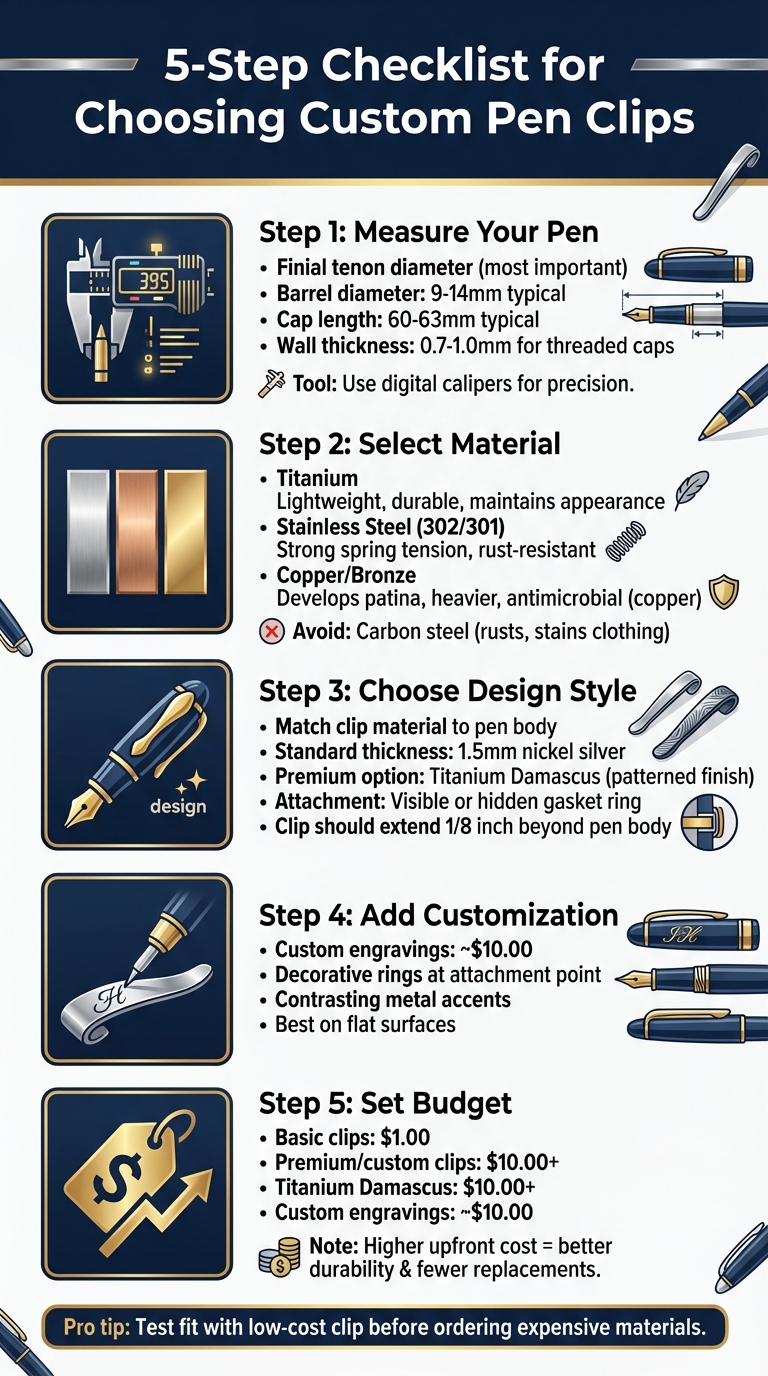
5-Step Checklist for Choosing Custom Pen Clips
Key Factors to Consider When Selecting Custom Pen Clips
Style and Appearance
When choosing a custom pen clip, its proportions - like length and width - should complement the pen's overall design. Classic examples from brands like Parker and Sheaffer showcase how these elements can harmonize beautifully. The way the clip attaches to the pen also plays a role in its visual appeal. You can opt for a visible gasket ring or a hidden (rebated) ring, but either way, the cap diameter must match the ring's outer diameter for a seamless look.
Adding a personal touch is another way to elevate the design. Consider themed shapes or engravings, which typically cost around $10.00. For something more striking, premium materials like Titanium Damascus create a one-of-a-kind aesthetic. Keep in mind that the material's finish may change over time - titanium remains consistent, but copper and bronze develop a patina, shifting from a bright "new penny" look to a more weathered "old penny" appearance. These details can help you craft a pen clip that’s both functional and visually appealing.
Material and Durability
The material of your pen clip directly affects its durability and performance. Stainless steel, particularly 302 spring-tempered, and titanium are popular choices because they’re strong and flexible enough to return to their original shape after bending. As Scott from Penturners.org points out:
Clips are probably the most difficult part of a pen for us penmakers to make on our own... They require a certain amount of flex, without being too flexible.
Titanium stands out for being lightweight yet incredibly strong, while also maintaining its appearance over time. On the other hand, copper and bronze, though heavier, develop a patina that some find appealing. Softer metals like silver or brass may bend and lose their shape unless reinforced with a longitudinal rib or work-hardened. Carbon steel is best avoided for custom clips as it can rust and stain clothing.
When selecting a material, balance durability with aesthetics and ensure the clip is tailored to fit your specific pen model.
Compatibility with Your Pen Model
A custom clip should fit your pen like a glove. Achieving this requires precise measurements. Most custom clips use a gasket ring secured by a threaded finial tenon. The clip’s inner diameter must align with the cap's finial tenon, and if the ring is visible, its outer diameter should match the cap. Digital calipers can help ensure accuracy, and the clip should ideally extend about 1/8 inch beyond the pen body.
For a rebated design with a hidden ring, the cap wall should be at least 0.5mm thick to avoid failure if the clip is bumped or flexed. Before committing to expensive materials, test the fit with a low-cost or damaged clip to confirm the rebate hole diameter. Lastly, the slot for the clip arm must be clean and square to prevent any sideways movement during use.
sbb-itb-1dd4fe9
Step-by-Step Checklist for Choosing the Right Custom Pen Clip
Measure Your Fountain Pen's Design and Dimensions
Start by measuring your fountain pen with precision tools like digital calipers. The finial tenon diameter is the most important measurement. This "neck" area is where the clip attaches, so its size must match the clip's inner diameter perfectly. For most high-quality pens, barrel diameters typically range between 9 mm and 14 mm.
Next, confirm the inner diameter (ID) to ensure the clip fits securely on the tenon. Check the cap length as well - usually between 60 mm and 63 mm - to avoid a clip that looks out of place, either too short or too long. If you’re adding a finial to your cap, you might need to drill out the tenon to allow the nib to pass through, creating a shorter, sleeker cap. For caps threaded with a finial, keep the wall thickness between 0.7 mm and 1.0 mm to avoid cracking under pressure.
Once your measurements are accurate, you’re ready to select a material that fits your needs.
Select Material Based on Your Usage and Environment
Different materials offer unique benefits depending on how and where you use your pen. Titanium is a great choice for its lightweight yet durable nature, while stainless steel (grade 301) provides excellent spring tension and resists rust. According to Tactile Turn, titanium combines strength and low weight, making it a reliable option.
For a more distinctive look, consider copper or bronze. Both materials develop a natural patina over time - copper starts with a bright "new penny" shine and gradually takes on a weathered appearance. Copper also has antimicrobial properties, which can help reduce bacteria and viruses on contact. However, avoid carbon steel for pocket clips, as it rusts easily and can stain clothing permanently.
Choose a Clip Design That Matches Your Style
To maintain a cohesive look, match the clip material to your pen body. For example, a titanium pen pairs well with a titanium clip. If you’re looking for something more eye-catching, Titanium Damascus offers a patterned, high-end aesthetic that stands out. You can also personalize your clip by adding decorative rings at the attachment point or soldering contrasting metals like bronze onto nickel silver for added depth.
Think about how the clip will age over time. Titanium retains its appearance through years of use, while materials like copper and bronze develop a patina that some users find appealing. Most custom clips are made from nickel silver sheets around 1.5 mm thick, striking a balance between durability and flexibility. Once you’ve chosen a design that complements your pen, consider engraving options for an extra touch of personalization.
Explore Customization Options
Custom engravings are an affordable way to personalize your clip, typically costing around $10.00. This option works best on clips with flat surfaces and allows you to add meaningful text or designs without altering the pen's overall shape. For custom creations, you can also enhance the clip with decorative rings or contrasting metal accents for added flair. Select finishes that align with your pen’s overall design while ensuring the clip maintains its functional spring tension.
Set a Budget and Compare Value
The cost of custom clips can vary significantly depending on the material and design complexity. Basic, ready-made clips start at just $1.00, while premium options featuring Titanium Damascus or custom engravings can add $10.00 or more to your total. When setting your budget, think about durability - a $1.00 clip might need replacing sooner, while a titanium clip could last for years.
If you’re looking for quality accessories without overspending, Fountain Pen Revolution offers affordable options for both beginners and seasoned enthusiasts. When weighing value, consider the clip’s lifespan, maintenance needs, and how well it complements your pen. Spending a bit more upfront on materials like stainless steel or titanium often saves money in the long run by reducing the need for replacements.
How to Care for and Maintain Your Custom Pen Clip
Cleaning and Polishing
To keep your custom pen clip in great shape, use a soft, lint-free cloth for regular cleaning. This helps remove skin oils, dust, and other residues that can build up over time. Make it a habit to wipe down the clip after each use. For harder-to-reach areas, like crevices, a soft toothbrush or a cotton swab works well without risking scratches.
If your clip needs a more thorough cleaning, mix a small amount of mild dish soap with water. Be cautious: never use acetone or rubbing alcohol, as they can cause lasting damage to your pen, even if you are using one of the best fountain pens for beginners. Also, avoid using hot water, which might warp or distort the clip or pen body. For tougher marks, you can try a diluted cleaning solution on non-sensitive metals, but skip ammonia if your clip is made of aluminum, brass, or copper - it can corrode these materials. Using distilled or filtered water instead of tap water helps prevent mineral deposits, especially if you live in an area with hard water.
After cleaning, gently pat the clip dry with a soft cloth and let it air dry completely to ensure no moisture gets trapped in the assembly. If your clip has a plated finish, inspect it regularly for flaking or peeling, especially at points of high tension. Clips made of raw metals like stainless steel or titanium are easier to maintain; you can restore their look with fine-grit abrasives or polishing cloths. Following these steps will help preserve both the appearance and functionality of your pen clip. Once cleaned, take a moment to inspect it for any signs of wear or damage.
Checking for Wear and Damage
Every few months, perform a flex test to check your clip’s resilience. Gently press the clip and see if it springs back to its original position. If it stays bent, the material might be failing or may not be true spring steel. As Aurelius, a member of the International Association of Penturners, explains:
Metal clips should be made of spring steel which means (not surprisingly) that they should be able to flex and then spring back after being flexed. The poor quality ones simply aren't spring steel and can, and often do, snap if you flex them too far.
Inspect the attachment points where the clip connects to the pen cap for any looseness. A loose clip not only risks the pen falling out of your pocket but can also damage the cap’s finish. If your clip uses rivets or solder to hold two pieces together, check these joints for separation or tiny cracks - these are signs that failure might be near. Finally, avoid clipping your pen onto materials thicker than 1/8", as this can permanently deform or even snap the clip. Regular checks and mindful use will ensure your custom pen clip stays in top condition.
Fountain Pen Clips: Design Considerations
When considering a clip for a compact pen, a Kaweco Liliput Series Clip offers a secure, slide-on design that complements the pen's minimalist aesthetic.
Conclusion
Selecting the right custom pen clip involves carefully considering design, material, and fit. Look for materials that offer a balance between durability and style, especially for everyday use.
While aesthetics matter, compatibility is equally crucial. Make sure the clip you choose works seamlessly with your pen's attachment method and dimensions.
Thoughtful selection goes a long way. Features like custom engravings (typically priced around $10.00) or premium finishes such as Titanium Damascus can turn a simple accessory into a reflection of your personal style.
Whether you're upgrading an existing pen or creating a custom writing instrument, Fountain Pen Revolution provides affordable options to help you build your ideal setup. With starter sets starting at $35.00 and a variety of nibs, inks, and cases, you can personalize your writing tools without overspending.
FAQs
How do I know if a clip will fit my pen?
To figure out if a clip works with your pen, focus on its thickness, flexibility, and attachment method. Compare the clip's width, thickness, and bend radius with your pen's measurements. Also, check if the clip's design - like stamped or bent metal - suits your pen's style and attachment points. These details are key to ensuring the clip fits properly, so take the time to confirm everything before making a choice.
What is the best clip material for daily carry?
Stainless steel is a great choice for everyday carry items thanks to its strength, resistance to corrosion, and durability. These features ensure it can handle daily use while maintaining its performance over time.
Can I add engraving without weakening the clip?
Yes, it’s possible to engrave pen clips, but it’s something that needs to be approached with care. If the clip has a flat surface suitable for engraving, methods like laser engraving can work well without affecting its strength. However, if the engraving cuts through thin plating or impacts the base metal, it could weaken the clip over time. It’s always a good idea to consult a professional engraver to make sure the material can handle the process without being damaged.