

Refillable pen systems are reshaping writing habits by offering cost savings, reduced waste, and access to a wide variety of ink options. Whether you're a casual writer or a fountain pen enthusiast, these systems provide practical solutions for everyday use.
- Types of Refillable Systems: Choose from cartridge-converter systems, piston-fillers, lever-fillers, eyedropper systems, which require specific eyedropper filling techniques, or vacuum-fillers. Each offers different ink capacities, ease of use, and maintenance needs.
- Cost Savings: Bottled ink is 60–75% cheaper per milliliter than disposable cartridges, making refillable pens a budget-friendly choice over time.
- Eco-Friendly: Refillable systems help cut down on plastic waste, aligning with more sustainable practices.
- Ink Variety: Thousands of bottled ink colors, including dye-based, pigment-based, and shimmering options, allow for endless customization.
- Maintenance Tips: Regular cleaning and piston lubrication (every 4–6 weeks) ensures smooth operation and prevents clogs, especially when switching ink types.
Quick Comparison:
| System | Ink Capacity | Ease of Use | Cost (Long-term) | Maintenance Needs |
|---|---|---|---|---|
| Cartridge | Low (0.7–1.0 ml) | High | High | Low |
| Converter | Very Low (0.4–1.2 ml) | Medium | Low | Medium |
| Piston-Filler | High (1.5–2.5 ml) | Medium | Low | Medium |
| Eyedropper | Very High (2.0–4.0 ml+) | Low | Very Low | High |
| Vacuum-Filler | High | Low | Low | Medium |
| Lever-Filler | Medium | Medium | Low | Medium |
Refillable pens are more than tools - they're investments in quality and style. Brands like Fountain Pen Revolution offer options for every budget, from beginner-friendly models to premium handcrafted designs. Whether you prioritize ink capacity, convenience, or aesthetics, there's a refillable pen system suited to your needs.
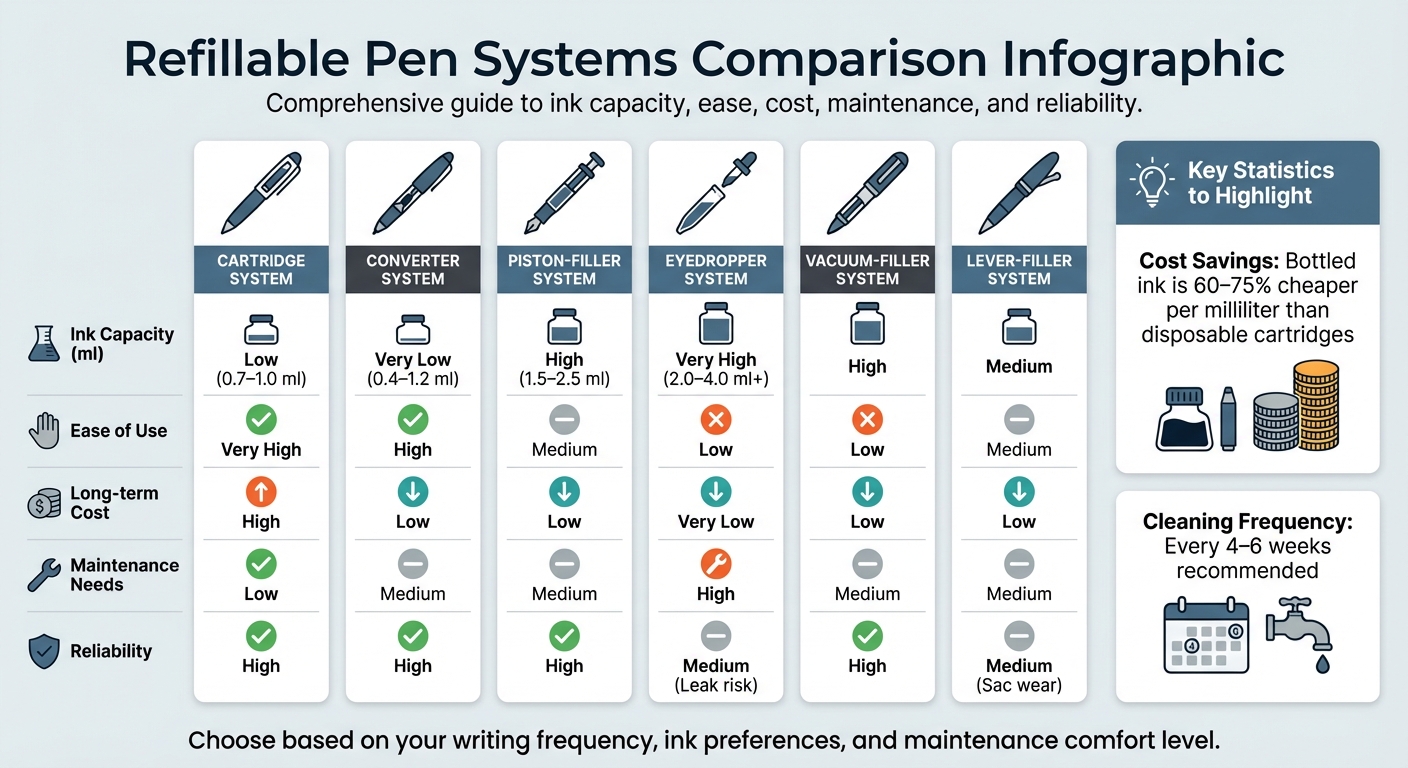
Refillable Pen Systems Comparison: Capacity, Cost, and Maintenance
Fountain Pen Filling Mechanisms: Cartridge-Converter | Piston | Lever Filler | Crescent | Button
sbb-itb-1dd4fe9
Types of Refillable Pen Systems
Choosing the right refillable pen system depends on how it works and what benefits it brings to your writing routine. The main options include cartridge-converter systems, piston-fillers, lever-fillers, and eyedropper/vacuum systems. Each has unique features catering to different preferences and levels of experience. Here's a closer look to help you decide what to consider when choosing a pen.
Cartridge-Converter Systems
Cartridge-converter systems are a flexible choice, combining the convenience of pre-filled cartridges with the adaptability of converters.
- Pre-filled cartridges hold 0.7–1.0 ml of ink, making them an easy, mess-free option for beginners or frequent travelers.
- Converters fit into the same slot but allow you to draw ink from bottles. They come in various styles like squeeze, piston-twist, or push-button, with capacities ranging from 0.4 ml to 1.2 ml. While they offer more ink choices, they may need refilling more often.
Some brands, such as Pilot, Lamy, and Platinum, use unique cartridge designs that aren't compatible with the International Standard system commonly used by many European brands. Always double-check compatibility before buying.
If you're looking for larger ink capacity and a more mechanical feel, piston-fillers might be a better fit.
Piston-Filling Mechanisms
Piston-fillers use the entire pen barrel as an ink reservoir. A twisting knob moves an internal piston to create suction, drawing ink directly from a bottle.
- These pens typically hold between 1.5 and 2.5 ml of ink, reducing the frequency of refills.
- A great example is the TWSBI ECO, an entry-level piston filler priced around $32.
While piston-fillers offer a satisfying mechanical experience and longer writing sessions, they exclusively use bottled ink. Regular maintenance is key: clean them every few months and apply silicone grease annually to keep them in top shape.
Lever-Filling Mechanisms
Lever-fillers rely on a small side lever to compress an internal rubber sac, which then draws ink when released. Though dependable, the rubber sac can deteriorate over time, making modern systems more appealing for everyday use.
Today, lever-fillers are mostly found in vintage or reproduction pens. They remain a nostalgic choice for those who appreciate classic designs.
If you're after high ink capacity and modern engineering, consider eyedropper or vacuum-fillers.
Eyedropper and Vacuum-Filling Systems
Eyedropper systems maximize ink capacity by filling the entire pen barrel with ink. These pens can hold between 2 ml and 4 ml or more, providing enough ink to last for weeks. However, they require sealing the barrel threads with silicone grease to prevent leaks. One potential drawback is "burping", where heat causes air inside the barrel to expand, pushing excess ink out through the nib. While they offer unmatched capacity, they demand careful handling.
Vacuum systems use a plunger mechanism to create pressure differences, drawing ink into the barrel when released. Like eyedroppers, they hold 2 ml or more of ink and feature advanced engineering. These pens are ideal for experienced users who value both capacity and precision but may not be the best choice for beginners.
Each refillable system offers its own blend of functionality and sustainability, helping you find the perfect match for your writing habits.
Ink Compatibility and Maintenance
Choosing the Right Ink
Picking the right ink is key to keeping your pen running smoothly and avoiding clogs. Dye-based inks are a safe bet for most refillable systems. They dissolve completely in water, making them easy to clean. These inks flow effortlessly and are great for beginners or anyone who writes daily.
If you're looking for water resistance and archival quality, pigment-based inks are a solid option. However, they contain tiny particles that can clog your pen if you skip regular cleaning. For those who prefer iron gall inks, they offer long-lasting permanence but can be harsh on metal components due to their acidity. Regular and careful cleaning is a must to prevent corrosion.
"A critical rule to remember is to NEVER use India ink or drawing inks in a fountain pen. These inks contain shellac... that will clog the pen's delicate feed system." - Mesmos
Shimmering inks, which include glitter particles, work best with broader nibs that allow for better flow. Avoid using them in fine nibs or pens with intricate feed systems, as they can cause blockages. By choosing the right ink for your pen, you can cut down on maintenance needs, though regular cleaning is always essential.
Cleaning and Maintenance Tips
Once you've selected the right ink, regular cleaning will help your pen perform at its best. Flushing your pen with cool water every 4–6 weeks or when switching ink colors is a simple way to prevent clogs and keep colors vibrant. For piston-fill pens, applying silicone grease to the threads once a year can keep the mechanism running smoothly.
If your pen sits unused for more than a week, a thorough cleaning is recommended. Issues like skipping or poor ink flow are often caused by dried ink or paper fibers blocking the feed, and a good flush with cool water usually resolves this. When traveling, either fill your pen completely or leave it empty, and always store it nib-up during flights to avoid leaks.
These cleaning tips apply to all refillable systems, whether you're using cartridge converters, piston fillers, or vacuum fillers. Keep in mind that piston and vacuum fillers require more thorough flushing when switching ink types compared to cartridge-converter systems. If you experience airlocks after refilling, try gently squeezing the cartridge or soaking the nib briefly in clean water to get the ink flowing again.
Comparison of Refillable Pen Systems
System Comparison Table
This table highlights the key features of various refillable pen systems, helping you weigh their benefits and drawbacks. Your choice will depend on factors like how often you write, how much ink you go through, and what matters most to you in a pen.
| System | Ink Capacity | Ease of Use | Cost (Long-term) | Reliability |
|---|---|---|---|---|
| Cartridge | Low (0.7–1.0 ml) | Very High | High | High |
| Converter | Very Low (0.4–1.2 ml) | High | Low | High |
| Piston-Filler | High (1.5–2.5 ml) | Medium | Low | High |
| Eyedropper | Massive (2.0–4.0 ml+) | Low | Very Low | Medium (Leak risk) |
| Vacuum-Filler | High | Low | Low | High |
| Lever-Filler | Medium | Medium | Low | Medium (Sac wear) |
Use this table as a quick reference to understand how each system measures up.
Pros and Cons of Each System
To dive deeper, here's an overview of the strengths and challenges associated with each pen system. Each one offers something different for those looking for a more sustainable and personalized writing experience.
Cartridge Systems:
Cartridge systems are incredibly convenient and easy to use, making them perfect for on-the-go writing. They require little upkeep and are less messy. However, they limit your ink choices, create more waste because of the disposable cartridges, and come with higher long-term costs.
Converter Systems:
Converters open up a world of ink options since they use bottled ink. They are relatively simple to use but need frequent refilling and regular cleaning and maintenance to keep them in good shape.
Piston-Filling Systems:
Piston-fillers are known for their large ink capacity and economical use over time. They provide a luxurious writing experience but require bottled ink exclusively. Cleaning them is more time-intensive, typically done quarterly or when changing ink colors.
Eyedropper Systems:
These pens hold a massive amount of ink, making them great for heavy writers. However, they come with a higher risk of leaks and ink "burping" caused by air expansion. Proper handling and sealing threads with silicone grease are essential.
Vacuum-Filling Systems:
Vacuum-fillers use a plunger mechanism to draw ink, offering a sleek and efficient design. While the initial investment is higher, they save money in the long run due to low ink costs. They are highly reliable but less user-friendly compared to other systems.
Lever-Filling Systems:
These pens have a nostalgic, vintage charm and use a side lever to compress an internal rubber sac. Over time, the rubber sac can wear out, which may impact their performance. They are a solid choice for those who appreciate classic designs.
Fountain Pen Revolution: Your Source for Refillable Pens
Affordable and Premium Options
Fountain Pen Revolution offers refillable fountain pens that blend sustainability with affordability, making them accessible for writers at all levels. If you're just starting out, the FPR Muft ($8.00) and FPR Guru ($11.00) are excellent choices to explore refillable systems without breaking the bank.
For those seeking a touch of sophistication, the Triveni Ebonite ($65.00) and Tanoshii Urushi Art collection ($129.95) showcase exceptional craftsmanship and premium materials. If you're after a truly elevated experience, the 14k Gold Nib Collection offers gold nibs priced between $280.00 and $303.00, providing unmatched flexibility and line variation for a luxurious writing feel.
Mid-range options like the FPR Himalaya V2 ($44.00) and FPR Ambassador ($49.00) strike a perfect balance between cost and quality. Plus, with free US shipping on orders over $65.00, it's easier than ever to upgrade your writing tools. Whether you're a beginner or a seasoned enthusiast, these pens deliver on quality and performance. And don’t forget to check out the carefully curated accessories to take your writing journey to the next level.
Accessories to Enhance the Experience
Fountain Pen Revolution also provides everything you need to maintain and customize your refillable pens. Replacement nibs start at just $4.00 for steel options, while the more specialized Ultra Flex nibs (sizes #5.5 and #6) are available for $17.00 to $20.00 - perfect for expressive writing styles that require higher ink flow.
Keep your pens in top shape with maintenance tools like 12,000-grit micro-mesh sheets ($5.00) for smoothing nibs and brass flossing sheets ($3.25) for cleaning. When it comes to ink, you’ll find an impressive selection, from FPR’s own classic, sheening, and shimmering inks to premium brands like Diamine, Colorverse, and J. Herbin. Ink samples are budget-friendly, starting at just $1.00 to $1.75, making it easy to experiment with different colors and finishes.
For storage, options like leather 6-pen roll-up pouches and 12-pen zippered cases - both priced at $39.00 - help keep your collection safe and organized. These thoughtful accessories are designed to complement your refillable pen system, ensuring a seamless and enjoyable writing experience.
Conclusion
Refillable pen systems present an eco-friendly and budget-conscious alternative to disposable pens. With bottled ink priced around $0.20 to $0.40 per mL compared to $0.80 to $1.20 per mL for cartridges, users can save 60–75% over time. Plus, this choice significantly reduces plastic waste while offering access to a vast array of ink colors - thousands, in fact.
Each type of refillable system caters to different preferences and lifestyles. Whether you value the travel convenience of cartridge-converter systems, the large ink capacity of piston fillers for marathon writing sessions, or the nostalgic charm of lever and eyedropper mechanisms, there’s a refillable pen to suit your needs.
"A disposable plastic pen is an advertisement for haste; a weighted pen is a statement of permanence."
- FANSTIK
Fountain Pen Revolution makes it simple to dive into the world of refillable pens without overspending. Their collection includes options for every budget and writing style, from beginner-friendly sets to high-end handcrafted pens. They also provide a variety of inks, nibs of various sizes, and maintenance tools to keep your writing instrument in top form. This approach not only supports sustainable practices but also enhances the joy of writing.
Choosing a refillable pen isn’t just about saving money or reducing waste - it’s about elevating your writing experience. These precision-crafted tools, when properly cared for, can last a lifetime, developing a unique character and patina along the way. A refillable pen isn’t just a writing instrument; it’s a companion that delivers a smoother, more enjoyable experience while standing the test of time.
FAQs
Which refill system is best for beginners?
For those just starting with fountain pens, cartridge and converter systems are a great choice. Cartridges are convenient, portable, and eliminate the mess, while converters provide access to a wider variety of inks and can save money over time. Both options are easy to handle and require little upkeep, making them ideal for beginners. Choosing one of these systems ensures a hassle-free and enjoyable first experience with fountain pens.
How do I avoid leaks and ink “burping”?
To keep your pen in top shape and avoid leaks or unexpected ink "burps", there are a few things you should keep in mind. First, avoid exposing your pen to extreme temperatures. When air inside the pen expands or contracts due to heat or cold, it can force ink out unexpectedly. Second, don’t overfill the ink reservoir. Always leave a small air gap to allow for ink expansion.
Make sure the cap seals tightly to prevent air from entering or ink from drying out. Also, check the nib and feed alignment regularly - any damage here can lead to leaks. When storing your pen, placing it nib-up or horizontally helps prevent ink from pooling where it shouldn’t. These small steps can go a long way in keeping your pen working smoothly.
What inks should I never use in a fountain pen?
Avoid using pigment-based, shimmer, or permanent inks in your fountain pen. These inks can clog the feed or leave behind residue that might harm the pen over time. Stick to inks that are specially made for fountain pens to keep your pen working smoothly and lasting longer.