

When your fountain pen isn’t writing smoothly, nib adjustments can often fix the issue. Common problems like scratchy writing, poor ink flow, or excessive ink flow typically stem from misaligned tines, tight or loose tine gaps, or incorrect nib and feed alignment. These issues are fixable with basic tools like a loupe (5x–10x magnification) and some practice. Here’s the key takeaway:
- Scratchy writing: Caused by misaligned tines. Use a loupe to check and gently adjust the higher tine downward.
- Poor ink flow: Tight tines restrict ink. Gently pry the tines apart or floss with quality paper.
- Excessive ink flow: Loose tines cause flooding. Press the tines closer together or roll the nib gently on a flat surface.
- Nib and feed misalignment: Check alignment with magnification and adjust until the nib slit aligns with the feed channel.
For valuable pens or severe damage (e.g., sprung tines or cracks), consult a professional nibmeister. DIY fixes are best practiced on inexpensive pens like Jinhao or Wing Sung. Tools like brass shims, micro-mesh sheets, and pre-tuned nibs are affordable options to get started. Regular cleaning and occasional adjustments can keep your pens writing smoothly without costly repairs.
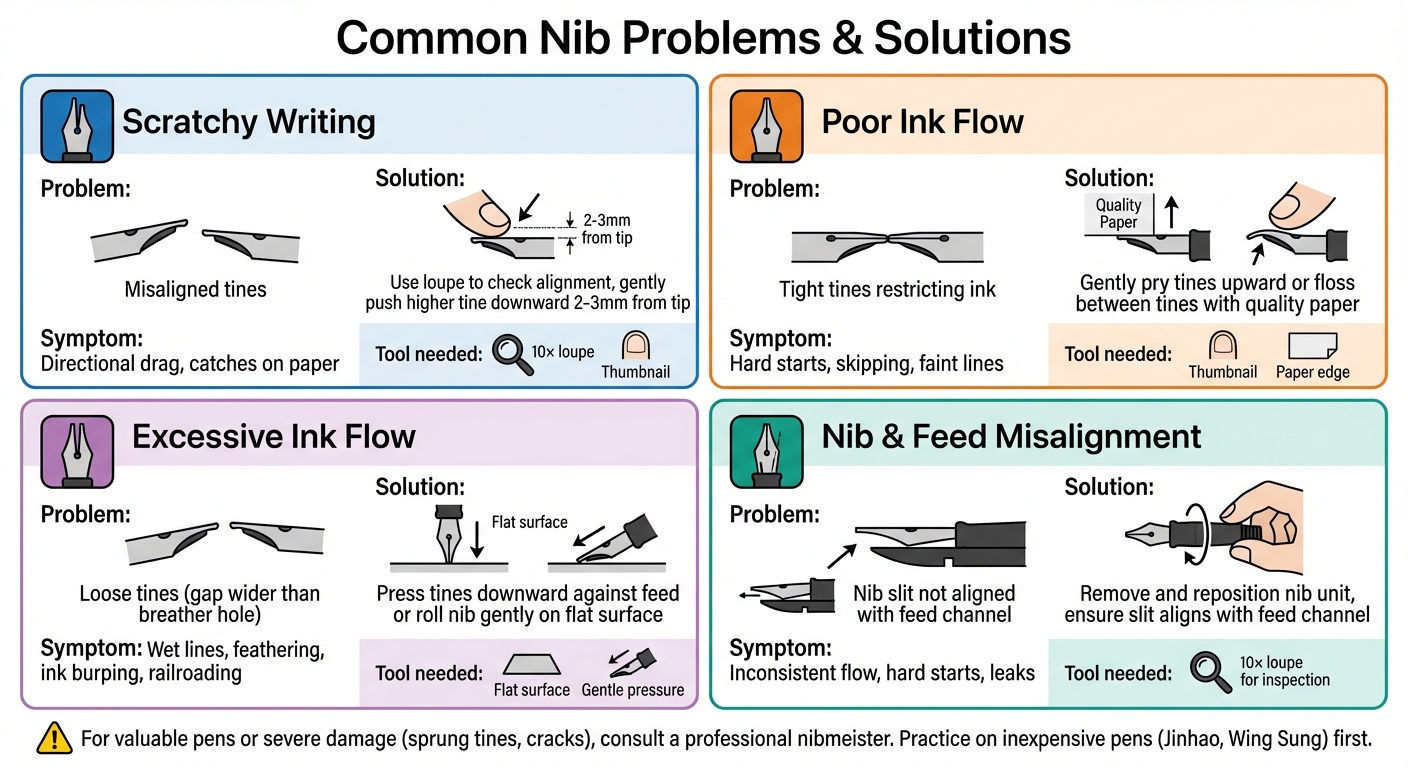
Common Fountain Pen Nib Problems and Solutions Guide
Nib Tuning 101 - How to Troubleshoot and Fix your Nib*
Common Nib Problems
Most nib troubles tend to fall into a few common categories. Knowing what’s causing the problem - and why - can make fixing it much simpler.
Scratchy Writing from Misaligned Tines
If one tine sits higher or lower than the other, the pen’s nib can catch or dig into the paper. This feels very different from the smooth, controlled feedback you’d expect when writing. Misalignment creates uneven contact, leading to directional drag - your pen might glide smoothly in one direction (like right-to-left) but feel scratchy in the opposite direction. The issue arises because the lower tine’s inner edge catches on paper fibers instead of gliding smoothly. ChrisR, a pen blogger, explains it well:
"The inner surfaces of the tines have quite sharp edges and if one of them is making stronger contact with the paper then it will dig in very slightly."
To check for this problem, use a loupe with 5x–10x magnification to examine the nib from both the front and the sides. Alternatively, run your fingernail lightly across the top of the tines - if your nail snags on one, the tines are likely misaligned.
Poor Ink Flow from Tight Tines
When the tines are pressed too closely together - especially at the tip - the ink flow can be restricted. This often leads to hard starts, skipping, or faint, inconsistent lines. To identify this issue, hold the nib up to a light source. The slit should taper toward the tip with a visible gap between the edges. If the tips are touching, the capillary bridge is broken, which disrupts ink flow. This can happen due to manufacturing flaws or accidental pressure during cleaning.
Too Much Ink Flow from Loose Tines
On the flip side, when the tines are spread too far apart, you might notice overly wet lines, extended drying times, feathering on absorbent paper, or even ink "burping" onto the page. A wide gap interferes with the capillary system, causing excessive ink to flow. Check the nib visually - if the gap at the tip is wider than the breather hole, the tines are likely splayed. Another sign of this issue is railroading, where ink separates into two streams, leaving gaps in your strokes.
Nib and Feed Alignment Issues
Sometimes, the problem isn’t with the tines but with how the nib and feed are aligned. The nib slit should sit directly over the feed’s ink channel, and the underside of the nib should rest snugly against the feed. Misalignment or looseness can break the capillary connection, leading to inconsistent ink flow, hard starts, or even leaks. Use a loupe to check if the nib slit aligns with the feed channel. If you spot a gap or notice that either part wobbles when touched, this is likely the issue.
Identifying these common nib problems is the first step toward correcting them safely. From here, you can explore proper techniques to make adjustments without causing damage.
How to Adjust Nibs Safely
When your fountain pen's nib isn't performing as it should, making adjustments at home can often restore smooth writing. However, this process requires patience, care, and the right tools. Start by flushing and drying the pen completely to remove any ink or debris that could be causing the problem. A 10× jewelry loupe is a must-have for diagnosing nib issues. As Ken Cavers, a custom pen maker, puts it:
"I believe it is a very useful thing for all fountain pen aficionados to make themselves familiar with the basics of cleaning, adjusting/tuning and smoothing of nibs."
If you're new to this, it's a good idea to practice on inexpensive steel nibs - brands like Jinhao, Wing Sung, or Baoer are great for building your skills - before attempting adjustments on more valuable pens. Below are techniques for addressing common nib problems.
Aligning Misaligned Tines
If the tines of your nib are misaligned, you can carefully adjust them using your thumbnail. Place your thumbnail about 2–3 mm back from the tipping material to ensure you're bending the entire tine, not just the delicate tip. Pen blogger ChrisR advises:
"We nearly always push the highest [tine] down, closer to the feed, because we want to keep the nib in close contact with it and pushing a tine up risks reducing that contact."
While applying pressure, brace the feed with your finger to prevent any damage. Make small adjustments - around 1 mm at a time - and test the nib by writing, then inspect it under magnification. For more stubborn cases, the edge of an old credit card can be used to adjust the tines without scratching the metal.
Adjusting Tine Gap for Better Ink Flow
If a tight tine gap is restricting ink flow, gently pry both tines upward using your thumbnail, positioning your contact point 2–3 mm from the tip. Ken Cavers suggests an alternative trick:
"I often just 'floss' between the tines with the edge of a piece of quality paper (clairefontaine etc), works well for me."
For the opposite issue - when the tines are too far apart and causing excessive ink flow - press the tines downward against the feed. Another method is the rolling technique: press the nib onto a flat surface and roll it gently from side to side to straighten flared tines. To check the tine gap, use a brass shim (about 0.001" thick) to ensure proper contact, but avoid using it to pry the tines apart, as this can create new alignment problems. After each adjustment, write a few lines to allow the nib to settle, then recheck with your loupe.
Repositioning Nib and Feed
If the nib and feed are out of alignment, you may need to remove and reposition them. This step is especially important if other adjustments haven't resolved the problem. Remove the nib and feed unit from the pen section - some brands, like Pelikan, make this easier with units that unscrew. Clean both components thoroughly before reassembling. When reinstalling, ensure the nib slit aligns perfectly with the feed's ink channel and that the nib sits snugly against the feed with no gaps. Use magnification to check the alignment from multiple angles. If the nib wobbles, adjust and reassemble until the contact is secure. Proper alignment ensures smooth capillary action and reliable ink flow.
For cracked nibs, missing tipping material, or high-value pens, it's best to leave the adjustments to a professional nibmeister.
sbb-itb-1dd4fe9
When to Get Professional Help
While basic fixes can resolve many nib issues, there are situations where a professional nibmeister is the best option. For valuable or rare pens, it's always safer to consult a specialist. Attempting DIY repairs on expensive or historic pens can lead to irreversible damage and a significant loss of value. As David Armstrong, a professional restorer, advises:
"Nib smoothing is one of the most challenging aspects of pen repair. It is easy to make the problem worse. And, because there is a limited amount of tipping on each pen, you could actually destroy the nib."
Some problems - like sprung tines, twisted tipping, or cracks in the nib structure - require immediate professional attention. In fact, much of the damage seen in vintage pens stems from failed DIY attempts rather than regular wear. Pens with complex nib designs, such as hooded nibs like those on the Parker 51, are especially tricky to adjust without risking damage to the surrounding hood.
Professionals also offer services that go beyond basic tuning, such as creating specialized grinds that aren't achievable with DIY methods. A simple tuning service typically costs between $25–$30, while more intricate specialty grinds can range from $60–$80. Joe from The Gentleman Stationer highlights the benefits of professional tuning:
"Tuning can better align the pen with your handwriting style... People hold pens at different angles and apply different amounts of pressure, meaning that a nib can feel perfectly smooth for one person but scratchy or toothy for another."
For those hesitant to attempt adjustments themselves, pre-tuned nibs offer a safer alternative. Brands like Fountain Pen Revolution provide pre-tuned nibs that are ready to use straight out of the box, removing the risk of damaging your pen. These are especially helpful for beginners exploring different writing styles, such as stubs or cursive italics, without making permanent changes to a cherished pen. Pre-tuned nibs ensure a reliable writing experience right away.
If your pen continues to skip or if ink flow worsens after basic adjustments, it's crucial to stop immediately. Persisting with DIY fixes may strip away the nib's limited tipping material, causing more harm than good. Persistent problems often indicate the need for professional diagnosis. This is particularly true for gold nibs above 14k, which are softer and more prone to damage, making professional care even more critical.
Conclusion
After diving into detailed tuning techniques, here's a quick recap to keep your fountain pen nib in top shape. Customizing your nib can turn a frustrating writing experience into a smooth, enjoyable one. Many common nib issues can be resolved with careful adjustments, and understanding how the nib and feed work together helps you identify problems and apply the right fix.
While basic adjustments are within reach for most pen enthusiasts, it's essential to know your limits. Simple fixes like realigning the nib or adjusting tine gaps can often be done at home with the right tools and a steady hand. However, for valuable pens, intricate nib designs, or damage like sprung tines, it's best to seek professional help to avoid causing further harm.
If you're eager to experiment without risking your prized pens, Fountain Pen Revolution offers budget-friendly options for nib customization. For instance, their #6 Extra Fine Flex Nib is priced at just $11.50, or you can grab a bundle of three for $28.00. They also sell handy maintenance tools, like 12,000 grit micro-mesh smoothing sheets for $6.40 and bulb syringes for $5.12. Fountain pen enthusiast Hans shared his thoughts on FPR's Ultra-Flex nibs:
"It's an exceptional bargain... honestly, it's quite hard to tell the difference in operation, between a very expensive gold nib and FPRs 'ultraflex' jobs".
Incorporating these practical tools and techniques into your routine care can make a world of difference. Whether you're addressing nib scratchiness or enhancing flex performance, timely adjustments help prevent damage and keep your pen performing at its best. Regular cleaning every 4–6 weeks, combined with occasional gentle adjustments, can significantly extend the life of your nibs.
FAQs
How can I tell if the nib is scratchy or just has normal feedback?
To figure out if you're dealing with a scratchy nib or just normal feedback, try writing on some high-quality paper. A scratchy nib feels rough or uneven, often because the tines are misaligned or bent. You might even notice it pulling up paper fibers as you write. On the other hand, normal feedback gives a smooth, consistent sensation, almost like a gentle texture - especially with wetter or broader nibs. The key is to notice whether the feeling is harsh and unpleasant or naturally textured and balanced.
How can I safely adjust flow without damaging the tipping?
To ensure smooth ink flow, start by thoroughly cleaning your pen to clear out any dried ink or debris that might be causing blockages. Use a magnifier to closely examine the nib for any signs of misaligned tines or uneven tipping. If you notice misalignment, carefully adjust the tines, but be gentle to avoid applying too much force. For more complicated fixes, it’s best to seek help from a professional to avoid accidental damage. Always handle the nib delicately to maintain its functionality and protect the tipping.
How do I know when to stop and use a nibmeister?
If your nib continues to feel scratchy in one direction (a sign of tine misalignment), experiences uneven ink flow, skipping, hard starts, or shows visible damage even after cleaning and minor tweaks, it’s time to consult a nibmeister. Don’t push further with troubleshooting if these problems persist or if you’re uncertain about making precise adjustments on your own - leave it to the professionals.