

Celluloid pens are delicate and require special care to avoid damage. Unlike modern materials, celluloid is flammable, sensitive to moisture, and prone to deterioration over time. Improper cleaning can ruin these vintage treasures. Here’s how to clean them safely:
- Use the right tools: Stick to soft microfiber or 100% cotton cloths, distilled water, and gentle solutions like baking soda or a fountain pen cleaning kit for maintenance. Avoid harsh chemicals like alcohol, acetone, or petroleum-based products.
- Avoid soaking: Moisture can speed up decay. If water is needed, use a damp cloth sparingly and dry the pen immediately.
- Disassemble carefully: Remove the nib and feed for cleaning but avoid taking apart complex mechanisms unless necessary.
- Dry thoroughly: Let all parts air-dry for 12–24 hours before reassembly. Avoid heat sources like hair dryers.
- Store properly: Keep pens in a cool, dry, dark place, away from sunlight, heat, and humidity. Use soft pouches or lined cases to prevent scratches.
Tools and Materials You'll Need
Safe Cleaning Tools
Cleaning celluloid pens doesn’t require anything fancy - just a few simple tools. Start with a dry cloth for a basic wipe-down, which is often enough for most pens. For tougher stains, you can use a damp cloth, but make sure to dry the pen immediately afterward to avoid any moisture damage.
If water is necessary, stick to distilled water instead of tap water. Tap water contains minerals that can leave unsightly stains or a cloudy residue on the pen’s surface. For a deeper clean, Shirley Dunn, author of Celluloid Collectibles, advises using lukewarm water mixed with a small amount of pine solvent. She also suggests regular washes in a baking soda solution to help prevent spots or deterioration over time.
When it comes to polishing and restoring, micromesh sticks and pads are incredibly useful. They help remove excess material and bring back the pen’s shine without causing damage. Always opt for 100% cotton or soft microfiber cloths for cleaning, as synthetic fibers may contain abrasives that could scratch the delicate celluloid surface.
What Not to Use
Using the wrong materials can seriously harm celluloid pens, so it’s important to know what to avoid. Stay away from alcohol, acetone, nail polish remover, and other organic solvents, as they can chemically break down the celluloid. Experts Richard Binder, Linda Kennedy, and Mike Kennedy emphasize:
Do not use alcohol or other organic solvents such as nail polish remover to clean pens made of celluloid or other cellulosic resins. These solvents will damage the celluloid material.
Avoid ultrasonic cleaners, as the heat and energy they generate can damage the pen’s structure, especially in models with built-in heaters. Similarly, steer clear of waxes, even high-grade ones like Renaissance Wax or carnauba wax. These can trap acidic gases that naturally escape from celluloid, speeding up its decomposition.
Petroleum-based products like WD-40, 3-in-One Oil, or lubricating with silicone grease are also off-limits since their distillates can harm the pen’s components. Finally, avoid applying cellotape, retail stickers, or pressure-sensitive labels, as their adhesives can be hard to remove and may leave permanent marks on the pen’s finish.
sbb-itb-1dd4fe9
Pen Resurrection Sunday Ep 126 How to Polish Plastic
How to Clean Your Celluloid Pen
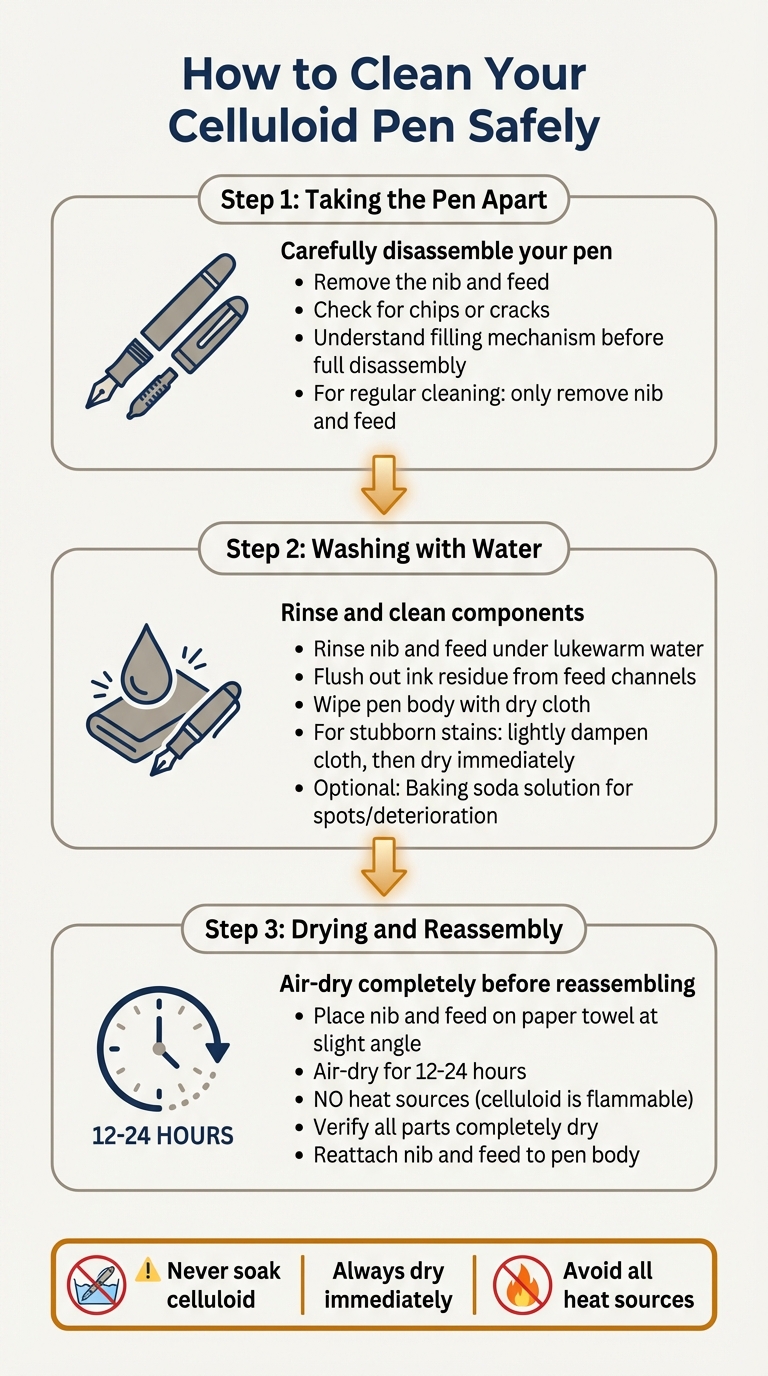
Safe Celluloid Pen Cleaning Process: 3-Step Guide
Ready to clean your celluloid pen? Follow these steps to ensure you do it safely and effectively.
Taking the Pen Apart
Start by carefully disassembling your pen. Remove the nib and feed, and take a moment to check for any chips or cracks. This step is crucial because celluloid can be fragile, especially if it’s already showing signs of wear. Handle with care to avoid causing further damage.
Pay attention to the pen’s filling mechanism. For example, if you’re dealing with a clutchless piston-filled fountain pen, make sure you understand how it works before attempting a complete disassembly. For regular cleaning, though, removing just the nib and feed is usually enough - you don’t need to take apart the entire filling system.
Washing with Water
Once disassembled, rinse the nib and feed under lukewarm water. Focus on flushing out ink residue from the feed channels. For the pen body, use a dry cloth to wipe it clean.
If you notice stubborn stains on the barrel, lightly dampen a cloth and gently wipe the area, then immediately dry it with a separate cloth. Timing is key here - celluloid should never stay wet for long. If your pen has spots or early signs of deterioration, a quick soak in a baking soda and water solution might help slow down the damage.
After cleaning, it’s time to move on to drying and reassembly.
Drying and Putting It Back Together
Drying requires patience. Place the nib and feed on a paper towel at a slight angle and let them air-dry for 12–24 hours. This allows gravity to pull out any remaining water from the feed channels. Avoid using heat sources like hair dryers - celluloid is highly flammable and reacts poorly to heat.
Before reassembling, double-check that every part is completely dry. Even a tiny bit of moisture can lead to celluloid rot or speed up deterioration. Once everything is thoroughly dry, reattach the nib and feed to the pen body. And just like that, your pen is clean and ready to use again!
Safe vs. Harmful Cleaning Materials
When it comes to cleaning celluloid pens, not all products are safe to use. The wrong cleaning agent can lead to cracking, dissolving, or even permanent damage. To keep your pen in good condition, it’s essential to know which materials are gentle on celluloid and what to consider to avoid harm.
Celluloid is a delicate and flammable material that reacts poorly to strong chemicals and excessive heat - even substances that seem mild can be harmful. Shirley Dunn suggests a cautious approach: clean with lukewarm water and a small amount of pine solvent for safe and effective maintenance.
If you notice signs of celluloid rot, such as cracking, crumbling, or chipping, it’s crucial to act fast. A mixture of baking soda and water can help slow the deterioration. Additionally, isolating the affected pen is vital, as Penultimate Dave explains:
Celluloid rot or a diseased Celluloid, can transfer to other pieces in the environment... so if you identify new cracks, chips, crumbling... it would be in your best interest to isolate these pieces.
By separating damaged items, you can help prevent further harm to your collection.
Comparison of Cleaning Materials
Here’s a quick look at how common cleaning materials affect celluloid pens:
| Material | Safety Status | Effect on Celluloid |
|---|---|---|
| Dry Cloth | Safe | Ideal for routine cleaning and removing surface dust. |
| Warm/Lukewarm Water | Safe (Limited) | Gentle for washing but unsuitable for soaking. |
| Mild Pine Solvent | Safe | Removes stains and dirt effectively when used gently. |
| Baking Soda Solution | Safe/Protective | Slows celluloid rot and addresses spots. |
| Acetone | Harmful | Dissolves celluloid; only used for repair paste. |
| Airtight Plastic Bags | Harmful | Traps gases, accelerating chemical breakdown. |
Understanding which materials to use - and which to avoid - can make all the difference in preserving your celluloid pens for years to come.
Storage and Maintenance
How to Store Your Pen
Celluloid pens are particularly sensitive to their surroundings. Heat, direct sunlight, and high humidity are their biggest threats. Sunlight's UV rays can lead to discoloration and chemical breakdown, while heat accelerates the aging process. On the other hand, high humidity can soften the material and even cause crystallization over time.
To keep your pen in great condition, store it in a cool, dry, and dark place. Aim for a stable temperature of around 68-72°F (20-22°C). Avoid keeping pens near radiators, air vents, or windowsills where temperature and light exposure fluctuate. Use a soft cloth pouch or a lined case to shield them from dust and scratches. If you’re storing multiple pens together, ensure they don’t touch each other - this is especially important if any of the pens show early signs of deterioration.
Pen stands and cases, like those from Fountain Pen Revolution, are excellent options to shield your celluloid pens from environmental harm.
Taking these precautions not only safeguards your pens but also works hand-in-hand with regular maintenance to extend their lifespan.
Regular Maintenance Schedule
Consistent care is just as important as proper storage. Regular maintenance helps you avoid bigger problems down the road. Inspect your celluloid pens every 3-6 months if they’re in storage, and give them a gentle wipe with a soft, 100% cotton cloth to clear away dust. If you use your pen frequently, a quick weekly check can help you spot any potential issues early.
For the pen’s internal components, flushing with water is essential to keep it functioning smoothly. The frequency depends on how often you use it: heavy users should clean their pens monthly, while occasional writers can do so every 3 months. Disassemble the pen carefully and follow standard water flush and drying techniques to prevent ink buildup and protect its delicate parts.
Conclusion
Caring for celluloid pens requires attention to detail to keep them both functional and visually stunning. These pens are crafted from a delicate and highly flammable thermoplastic that can break down over time - a phenomenon collectors often refer to as "celluloid rot".
To protect your celluloid pen, clean it carefully with a slightly damp 100% cotton cloth, avoiding any harsh chemicals. Store it in a cool, dry, and dark environment to minimize exposure to factors that can accelerate deterioration. As Penultimate Dave explains:
Celluloid is affected and will deteriorate over time based on chemical reaction, thermal reaction and the physical environment.
By following these steps, you can extend the life of your pen and maintain its charm. Regular inspections are crucial - look for early signs of damage and isolate any affected pens to prevent further issues.
With proper care and storage, your celluloid fountain pens can continue to provide a distinctive writing experience for years to come.
FAQs
How can I tell if my pen has celluloid rot?
You can spot celluloid rot by checking for permanent darkening or discoloration on your pen. This usually shows up as darkening (not fading) and is often triggered by reactive sulfur compounds released from degrading ink sacs. It's particularly frequent in button filler pens with sealed barrels.
What should I do if ink is stuck in the feed?
To clean ink stuck in the feed, flush it thoroughly with lukewarm water. Rinse the nib and feed gently under running water or let them soak until the ink is fully removed. Avoid using hot water or any household cleaners, as these could damage the pen. Make sure all parts are completely dry before putting them back together. This method helps remove dried ink and ensures smooth ink flow.
Can I polish a celluloid pen without scratching it?
Polishing celluloid pens can do more harm than good, as it typically requires abrasive materials that might scratch their delicate surface. A safer approach is to clean them carefully with a soft microfiber cloth - either dry or slightly damp. Steer clear of soaking the pen or using any harsh cleaning agents to maintain its finish and avoid potential damage.