

Fountain pens can significantly reduce waste compared to disposable pens. While disposable plastic pens emit around 55 g CO2e per unit and contribute to 1.6 billion discarded pens annually in the U.S., refillable fountain pens spread their carbon cost over years of use. Their refillable design reduces waste, making them a long-term, eco-conscious choice.
Key insights:
- Disposable pens: High waste, short lifespan, ~55 g CO2e per pen.
- Fountain pens: Durable, refillable, with lower emissions per use over time.
- Materials matter: Recycled plastics and renewable options like bamboo lower emissions.
- Ink production: Soy-based and water-based inks are more eco-friendly alternatives.
Carbon Emissions in Fountain Pen Production
Raw Material Extraction and Processing
The production of fountain pens begins with the extraction of raw materials, which is a significant source of carbon emissions. Plastics, commonly used in barrels and caps, and metals for nibs and clips undergo energy-heavy extraction and refinement processes. These initial steps in the supply chain contribute heavily to the pen's overall environmental impact, setting the tone for the energy demands of subsequent manufacturing stages.
Manufacturing Processes
The manufacturing phase involves processes like injection molding, machining, assembly, and precision metalworking for nib production. Each of these steps consumes a substantial amount of energy, further increasing the carbon footprint of the pen before it even reaches the consumer.
Distribution and Transportation
Transportation plays a major role in the carbon footprint of fountain pens. Global shipping - whether via freight ships, cargo planes, or ground transport - generates a significant amount of greenhouse gas emissions. As highlighted by the Wood Fountain Pen Team:
The manufacturing and transportation of ink can contribute to greenhouse gas emissions.
Shipping products across continents has a much higher environmental cost compared to sourcing locally. With the growth of the market, transportation emissions are also on the rise. Opting for locally manufactured products or inks produced within the same region can help minimize the environmental impact caused by long-distance shipping.
sbb-itb-1dd4fe9
Life Cycle Impact of Fountain Pens
Production vs. Usage Emissions
When it comes to fountain pens, the environmental impact is heavily concentrated in the production phase. A significant portion of emissions comes from the extraction and processing of raw materials. For example, petroleum-based plastics alone contribute to a whopping 77.8% of total production emissions. On top of that, creating steel and aluminum components - like nibs and clips - requires energy-intensive processes, further adding to the carbon footprint.
However, once the pen is produced, its operational emissions are almost negligible. Fountain pens are built to last and use biodegradable, water-based inks, which are far kinder to the environment. While the initial carbon cost of manufacturing is high, the emissions per use drop significantly over time, making them a more sustainable option in the long run.
End-of-Life Disposal
Disposable pens pose a serious waste problem. Consider this:
"Every year, Americans alone consume and discard an astounding 1.6 billion disposable pens, which ultimately end up in landfills, incinerators, or our oceans".
Fountain pens tackle this issue with their refillable and reusable design. Instead of throwing away the entire pen when the ink runs out, you simply refill it. This reduces plastic waste and lessens the long-term environmental impact, offering a much-needed alternative to the disposable pen dilemma.
How are fountain pens environmentally-friendly?
Comparing Carbon Footprints of Different Pen Types
Carbon Footprint Comparison of Writing Instruments
Carbon Footprint Data Table
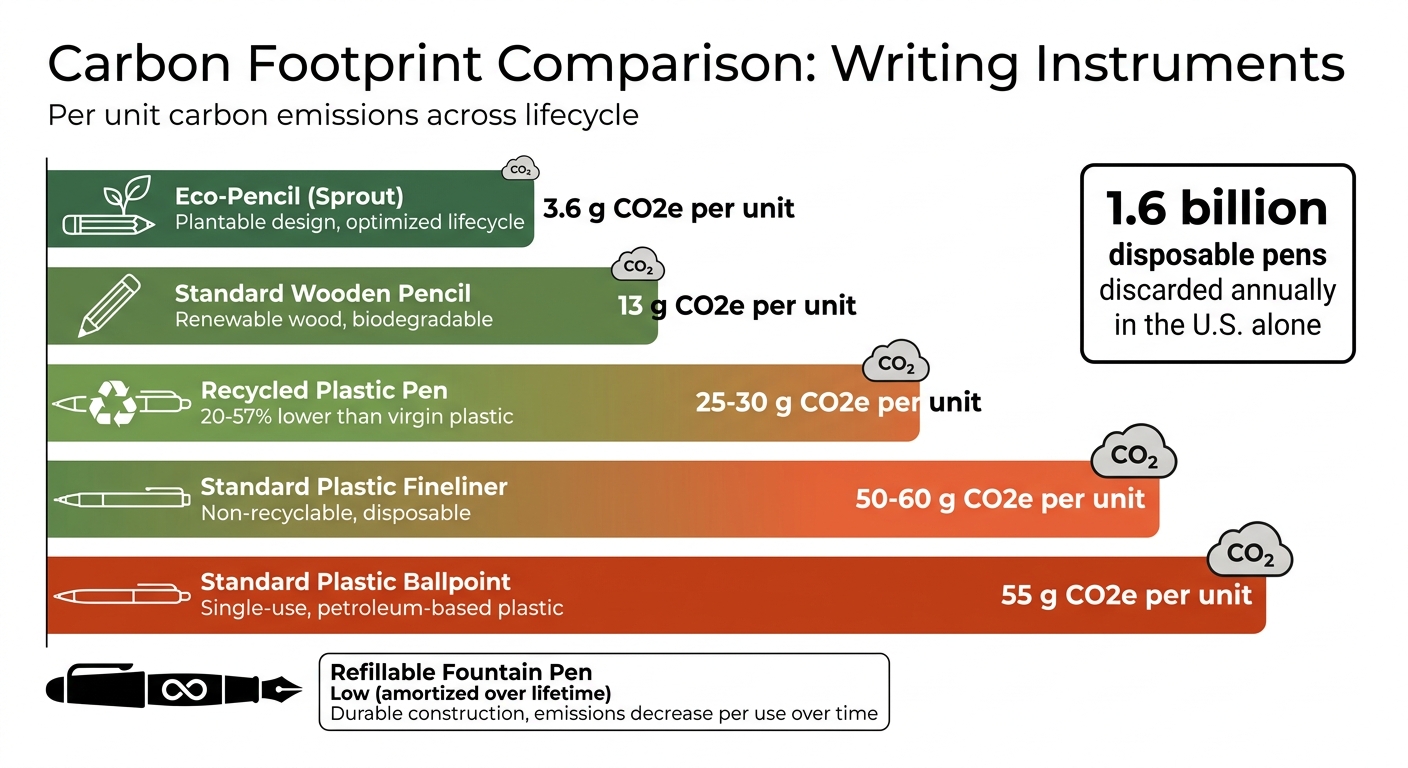
When it comes to carbon footprints, not all writing tools are created equal. A standard plastic ballpoint pen generates about 55 g CO2e throughout its lifecycle, while plastic fineliners fall within a similar range of 50 g to 60 g CO2e per pen. In contrast, a standard wooden pencil has a much smaller impact, producing only around 13 g CO2e.
Using recycled materials can cut emissions significantly. Pens made from recycled plastic have a footprint of about 25 g to 30 g CO2e, which is a 20% to 57% reduction compared to pens made from virgin plastic. Eco-friendly pencils, like those from Sprout, have an even smaller footprint at just 3.6 g CO2e, making them one of the most environmentally conscious options. Here's a breakdown of these differences:
| Pen Type | Carbon Footprint (per unit) | Key Characteristics |
|---|---|---|
| Standard Plastic Ballpoint | ~55 g CO2e | Single-use, petroleum-based plastic |
| Standard Plastic Fineliner | 50–60 g CO2e | Non-recyclable, disposable design |
| Recycled Plastic Pen | 25–30 g CO2e | 20–57% lower footprint than virgin plastic |
| Standard Wooden Pencil | ~13 g CO2e | Renewable wood, biodegradable |
| Eco-Pencil (e.g., Sprout) | ~3.6 g CO2e | Optimized life-cycle, plantable design |
| Refillable Fountain Pen | Low (amortized over lifetime) | Durable construction, biodegradable ink options |
Refillable fountain pens deserve special attention. They may have higher emissions during production due to materials like metal or acrylic, but their per-use emissions drop significantly over time. A single fountain pen, designed to last a lifetime, can replace hundreds of disposable pens. This durability makes it one of the most environmentally friendly options in the long term. The comparison clearly shows how refillable designs support sustainability over time.
Design Strategies for Lower-Carbon Fountain Pens
Refillable and Reusable Mechanisms
One of the standout eco-friendly features of fountain pens is their refillable nature. Instead of tossing out an entire pen once the ink runs dry, you simply refill it - cutting down on disposable plastic waste. Pens like the TWSBI Eco, with its piston filling system, or cartridge-based pens equipped with converters, let users refill directly from ink bottles. This approach not only reduces waste but also keeps the focus on reusability. Beyond the refill systems, the materials used in the pen’s construction also play a big role in reducing environmental impact.
Eco-Friendly Materials and Inks
The choice of materials significantly influences a fountain pen's environmental footprint. Options like sustainably sourced wood or bamboo provide renewable alternatives, absorbing carbon as they grow and offering a greener choice compared to plastics derived from petroleum. Recycled plastics are another smart option, as they cut down the need for new plastic production. Durable metals like stainless steel and aluminum, while requiring more energy to produce, last much longer, spreading out their environmental cost over time.
When it comes to ink, there are greener options, too. Soy-based inks, made from renewable soybean oil, have a smaller carbon footprint than petroleum-based alternatives and are biodegradable. Water-based inks are another environmentally conscious choice, breaking down naturally without the harsh chemicals found in many disposable pens.
Longer Product Lifespans
Fountain pens are built to last, making them a sustainable writing tool. Features like iridium-alloy nibs resist wear, while corrosion-resistant materials like stainless steel and gold alloys can handle years of ink exposure without degrading. Inner cap seals also help keep the ink fresh and prevent clogging, reducing the need for aggressive cleaning methods that might harm the pen.
With proper care - like regular cleaning of the nib and feed - fountain pens can last for decades, even generations. This durability spreads out the environmental cost of production over many years of use, making them a thoughtful choice for those looking to reduce their carbon footprint.
Key Takeaways
Here’s a closer look at how design choices influence the environmental impact of fountain pens:
Fountain pens stand out for their durability and thoughtful use. In the U.S., around 1.6 billion disposable pens are thrown away each year, contributing significantly to microplastic pollution in both landfills and oceans. Unlike their disposable counterparts, fountain pens are designed to last for decades, spreading out their production footprint over a much longer lifespan.
Refillable systems are a game-changer when it comes to reducing waste. Features like piston fillers and converters let users refill pens directly from glass ink bottles, cutting out the need for single-use plastic cartridges and barrels. Pair these systems with eco-conscious inks - such as biodegradable or soy-based options - and fountain pens become an even greener choice.
The materials used also make a big difference. Options like bio-based plastics (made from corn, sugarcane, or castor oil) reduce dependence on petroleum, and using recycled plastics lowers the demand for new raw materials. Some manufacturers are leading the charge in sustainable production. For example, Schneider has been operating with 100% renewable energy since 2010, utilizing solar, combined heat, and hydropower. Schneider emphasizes the importance of durability in their approach:
The longevity of our writing instruments... is the most important contribution to avoiding waste.
FAQs
How long until a fountain pen beats disposables on CO2e?
A fountain pen can balance out its CO2e emissions compared to disposable pens within just a few years. This becomes even more feasible as manufacturers incorporate recycled and upcycled materials into production, helping to cut down the long-term environmental footprint.
Which fountain pen materials have the lowest footprint?
Materials such as recycled plastics, reclaimed wood, and natural fiber composites are excellent choices for fountain pen design when aiming to reduce environmental impact. These materials help cut down on waste, lower emissions, and preserve natural resources, making them smart, eco-conscious options.
What’s the greenest way to buy and use fountain pen ink?
The greenest way to purchase and use fountain pen ink is by selecting inks crafted from recycled or repurposed materials. This approach cuts down on waste and lowers emissions. Pair this with refillable pens to reduce disposable waste and promote eco-conscious habits.