

If you write for long stretches, I’d pick ebonite. If you want more heft for short notes, I’d look at brass.
Here’s the short answer: brass is heavier, cooler, and often more tiring over time, while ebonite is lighter, warmer, and easier to hold for longer sessions. In the article, brass pens often land around 27–48 g, with some larger models reaching 60–70 g. By contrast, full-size ebonite pens are often around 20–30 g capped and 14–21 g uncapped.
What matters most to me:
- Weight: brass puts more load on the hand
- Balance: posted brass can feel back-heavy
- Grip feel: ebonite usually feels warmer and less slick
- Fatigue: brass may feel fine at first, then wear on the hand after 15–20 minutes
- Use case: brass fits short, deliberate writing; ebonite fits long sessions
My take: if you deal with hand pain, grip tightly, or write page after page, ebonite is usually the safer pick. If you like a solid, planted pen and write in short bursts, brass can still feel good, especially unposted and with more weight near the front.
ēnsso Japanese Ebonite Review
Quick Comparison
| Factor | Brass | Ebonite |
|---|---|---|
| Weight | 27–48 g typical; some 60–70 g | 20–30 g capped, 14–21 g uncapped |
| Feel in hand | Heavy, solid, cool at first | Light, warm, matte |
| Balance | Can feel steady unposted; may turn back-heavy when posted | More neutral in use |
| Grip | Smooth can feel slick | Light texture helps grip |
| Long writing | More hand fatigue for many writers | Less strain over time |
| Best for | Short notes, signatures, deliberate writing | Journaling, class notes, meetings, long sessions |
So in plain English: brass gives you mass and steadiness, while ebonite gives you comfort and ease. The rest of the article explains how weight, balance, posting, grip width, and surface feel shape that trade-off in daily use.
Brass: weight, balance, and hand feel
Heft and balance in brass builds
Brass pens feel solid and planted in the hand. That extra mass gives them a strong sense of substance, and on the page, they can feel steadier and more settled.
But weight alone doesn't tell the whole story. Balance is just as big a deal. A front-weighted brass pen, where more of the heft sits near the section and front of the barrel, tends to move across the page with less effort. For many people, that feels easier and more natural in day-to-day writing.
A back-heavy brass pen is a different story. When the balance point sits behind the grip, the pen can feel harder to steer. Your fingers end up doing more of the work, and fatigue can show up sooner.
This becomes even more noticeable when you post the cap. A heavy brass cap can pull the balance point backward and make the pen feel much heavier in use than the specs imply. In practice, posting a heavy brass cap often hurts comfort. One survey found that comfortable fits dropped from 34% unposted to 16% posted.
So yes, heft can help with control. It also sets a higher bar for comfort once the writing session starts to stretch out.
Grip fatigue and surface feel with brass
Bare brass usually starts out cool to the touch, especially in air-conditioned rooms, then warms up as you write. That change can feel pleasant, but surface finish matters too. A polished or very smooth brass finish can get slick, and that often makes people squeeze harder without noticing it.
Section diameter also has a big effect. Narrow sections, under about 9–10 mm at the pinch point, focus pressure into a smaller area. Pair that with a heavier brass body, and hand fatigue can creep in faster.
A slightly thicker section, around 10–11.5 mm, tends to spread that pressure out better. Your fingers can stay looser, which makes the same pen easier to use over 15–20 minutes of steady writing. A brushed or bead-blasted finish can help too, since it adds grip without making the pen bulkier.
That’s the push and pull with brass: some writers love the grounded feel, while others start to feel the strain pretty fast.
Who brass tends to suit
Brass tends to suit writers who like weight and mostly write in shorter bursts. Think quick notes, a few paragraphs of journaling, or signing documents. If you already write with a light touch, a well-balanced brass pen can feel controlled and reassuring.
For writers dealing with arthritis, carpal tunnel, or repetitive strain, heavy brass builds are more likely to feel tiring, especially after 15–20 minutes of writing. In those cases, brass may still work well as an occasional pen or a pen for special use, but it’s often less comfortable for long daily sessions.
Ebonite pushes that same trade-off in the other direction, with less weight and less strain on the hand.
sbb-itb-1dd4fe9
Ebonite: lower weight, warmer grip, and long-session comfort
Lighter feel and more neutral balance
If brass gives you control through extra mass, ebonite takes the opposite path: it cuts hand strain by keeping the pen light. Because ebonite is much lighter than brass, the pen usually feels more neutral in the hand and less tiring during long writing sessions. A good example is the ebonite-bodied FPR Ashoka, which weighs about 23 g (0.8 oz) empty. That lighter build can make the grip feel easier from the first few lines.
Warm surface feel and reduced grip strain
Ebonite has a warm, matte feel, which helps fingers hold it steady without squeezing as hard. In plain terms, you don't have to clamp down on the section to stay in control. Over a long session, that can mean less grip pressure and less hand fatigue.
Who ebonite tends to suit
Ebonite tends to work well for students, journalers, and anyone who writes for long stretches, such as lecture notes, meetings, or several pages at a time. If you're filling page after page, a full-size ebonite pen can still feel easy to handle at about 23 g (0.8 oz) empty.
Still, it won't suit everyone. Some writers like the planted, grounded feel of a heavier pen, and a very light ebonite body can feel a bit too airy by comparison. That's the trade-off: less strain over time, but not always the same sense of weight and presence you get from brass. That difference stands out even more in a side-by-side look.
Brass vs ebonite: a direct comparison
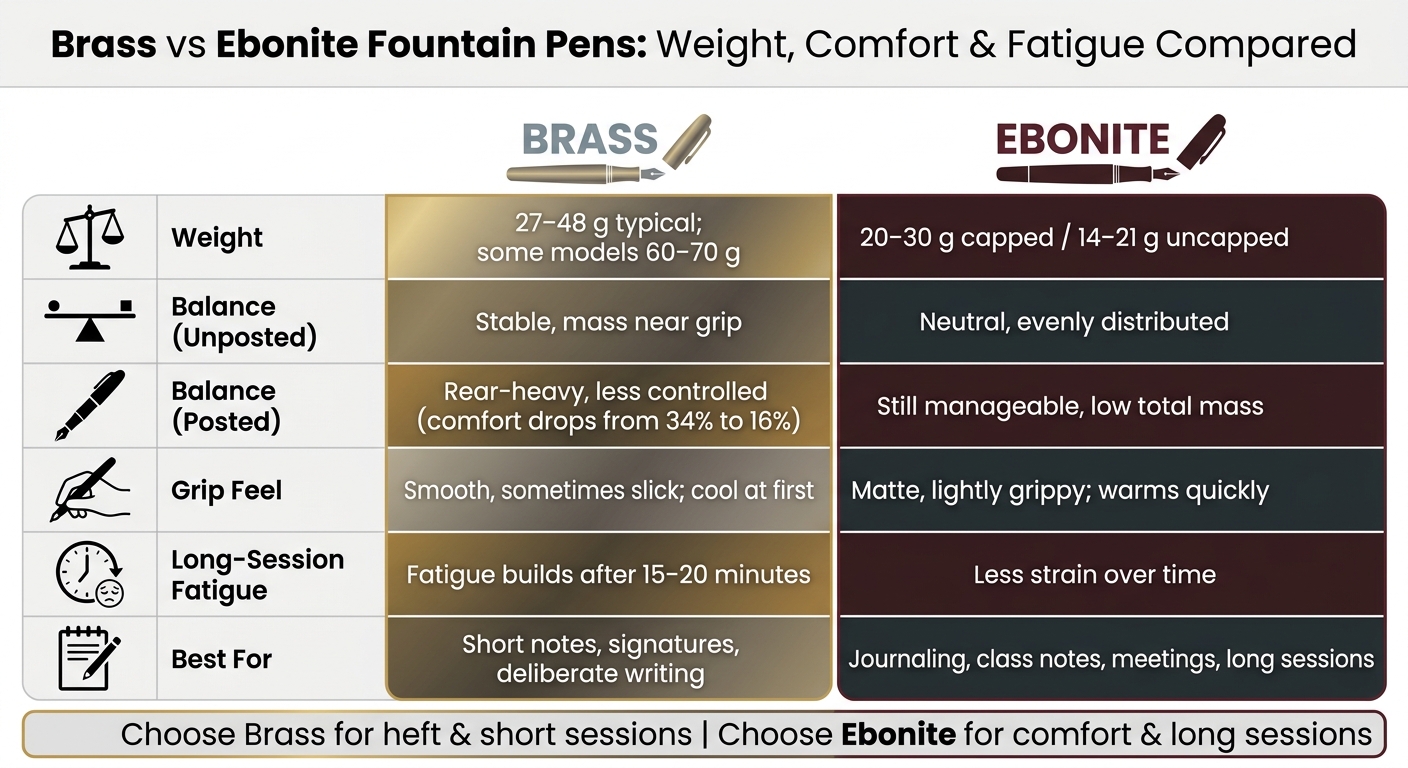
Brass vs Ebonite Fountain Pens: Weight, Comfort & Fatigue Compared
Set side by side, brass gives you heft but asks more from your hand. Ebonite goes the other way. It keeps things light and easy, which tends to matter more once the writing session starts to stretch out.
Comparison table: weight, balance, and fatigue
The biggest split comes down to balance, grip pressure, and how tired your hand feels over time.
| Factor | Brass | Ebonite |
|---|---|---|
| Weight | Usually much heavier in hand | Light to moderate; usually far lighter than brass |
| Balance unposted | Stable, with mass closer to the grip | Neutral and evenly distributed in hand |
| Balance posted | Can become rear-heavy and feel less controlled | Still manageable because the overall mass stays low |
| Short-session comfort | Suited to signatures and quick notes | Easy from the first line |
| Long-session comfort | Comfortable at first, but fatigue can build | Better for long writing because it reduces strain |
In plain English, posted brass often shifts too much weight toward the back. That can make the pen feel less settled in motion. Ebonite is usually simpler to handle because there’s less total mass to manage.
That tradeoff shows up fast in use. Weight tends to shape fatigue. Surface feel tends to shape grip pressure.
Comparison table: surface feel, aging, and care
Weight isn't the whole story. During a long writing session, the way a pen sits in your fingers can matter just as much.
| Factor | Brass | Ebonite |
|---|---|---|
| Temperature in hand | Cool at first | Warms quickly |
| Grip texture | Smooth, sometimes slick | Matte and lightly grippy |
| Slipperiness | Higher, especially with dry fingers | Lower, with light drag that helps keep fingers steady |
| Aging / patina | Develops patina from skin oils and air | Can discolor or fade with strong UV exposure |
| Basic care | Wipe down after use; polish if you prefer a bright finish | Avoid prolonged direct sunlight and clean with a damp cloth |
Brass starts out cool and smooth, which some people like. But that same smoothness can feel slick, especially if your fingers are dry. Ebonite warms up fast and has a matte feel with a bit of drag, so it often feels more planted in the hand.
Aging is different too. Brass picks up patina from skin oils and air. Ebonite’s main wear issue is discoloration or fading from strong UV exposure.
How mixed-material builds adjust comfort
Mixed-material builds can soften the tradeoff. A maker can use brass where extra mass helps balance, then put ebonite where your fingers actually touch the pen. That way, you get some of the steadiness of brass without taking on all of its hand feel.
Conclusion: which material fits your writing style
After looking at weight, balance, and feel, the decision is pretty simple: it mostly comes down to how you want the pen to feel in your hand.
Brass brings more mass and a steadier, more planted feel. Ebonite feels lighter and tends to be easier on the hand over longer writing sessions. In day-to-day use, ebonite builds usually feel less tiring during extended writing, while brass sits in a heavier comfort zone.
Choose ebonite if you deal with hand sensitivity, joint pain, or you spend a long time writing. Choose brass if you like a planted feel and tend to write in shorter, more deliberate sessions. If you go with brass, it usually works best unposted and front-balanced.
That trade-off between mass and comfort is the main thing to watch.
A mixed-material build under 1.0 oz with a forward balance often lands in the sweet spot.
FAQs
Does section width matter as much as weight?
Yes - section width, or grip diameter, can matter just as much as material weight when it comes to comfort. A wider grip often helps your fingers rest in a more natural position, which can ease grip pressure and cut down on hand fatigue.
That said, balance has the biggest effect on how steady the pen feels on the page. If you're choosing between brass and ebonite, look at balance first. Then pick the grip width that feels right in your hand for longer writing sessions.
Should I post a brass pen or use it unposted?
Try it both posted and unposted, then stick with the one that feels better in your hand.
Posting can change the balance point. If the cap is heavy, the pen may feel back-heavy, and that can make you press harder just to keep the nib steady.
Using it unposted often feels more natural, especially with heavier brass pens. That said, it comes down to personal fit. Start unposted and see if it feels more comfortable and easier on your hand, then test it again posted with your specific pen.
How do brass and ebonite age over time?
Brass holds up well over time, but day-to-day use can change how the surface looks. When it stays exposed, it may start to show discoloration or develop a patina, depending on the conditions.
Ebonite (hard rubber) can last for decades and handles acidic inks well. That said, long exposure to sunlight, moisture, and heat can lead to discoloration and oxidation. It’s also brittle, so a hard knock or drop may cause cracks.